Matthew C. Bagger - Böcker
Visar alla böcker från författaren Matthew C. Bagger. Handla med fri frakt och snabb leverans.
4 produkter
4 produkter
640 kr
Skickas inom 7-10 vardagar
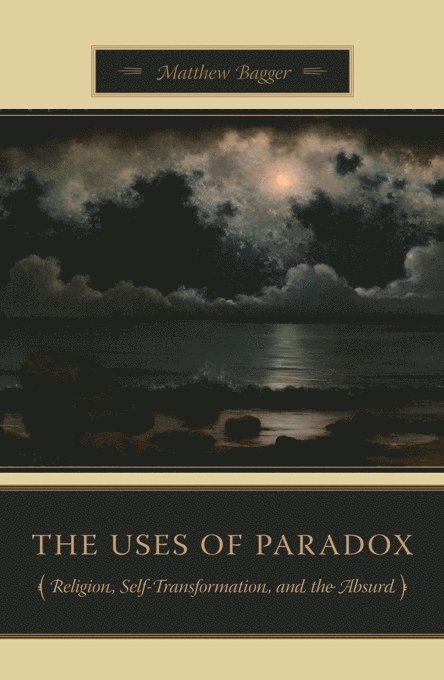
In this groundbreaking comparative study, Matthew Bagger investigates the role of paradox in Western and Asian religious discourse. Drawing on both philosophy and social scientific theory, he offers a naturalistic explanation of religion's oft-noted propensity to sublime paradox and argues that religious thinkers employ intractable paradoxes as the basis for various techniques of self-transformation. Considering the writings of Kierkegaard, Pseudo-Dionysus, St. John of the Cross, N?g?rjuna, and Chuang-tzu, among others, Bagger identifies two religious uses of paradox: cognitive asceticism, which wields the psychological discomfort of paradox as an instrument of self-transformation, and mysticism, which seeks to transform the self through an alleged extraordinary cognition that ineffably comprehends paradox. Bagger contrasts these techniques of self-transformation with skepticism, which cultivates the appearance of contradiction in order to divest a person of beliefs altogether. Bagger further contends that a thinker's social attitudes determine his or her response to paradox.Attitudes concerning crossing the boundary of a social group prefigure attitudes concerning supposed truths that lie beyond the boundaries of understanding. Individuals who fear crossing the boundary of their social group and would prohibit them tend to use paradox ascetically, while individuals who find the controlled incorporation of outsiders enriching commonly find paradox revelatory. Although scholars have long noted that religious discourse seems to cultivate and perpetuate paradox, their scholarship tends to ratify religious attitudes toward paradox instead of explaining the unusual reaction paradox provokes. A vital contribution to discussions of mystical experience, The Uses of Paradox reveals how much this experience relies on social attitudes and cosmological speculation.
Pragmatism and Naturalism
Scientific and Social Inquiry After Representationalism
Inbunden, Engelska, 2018
1 323 kr
Skickas inom 3-6 vardagar
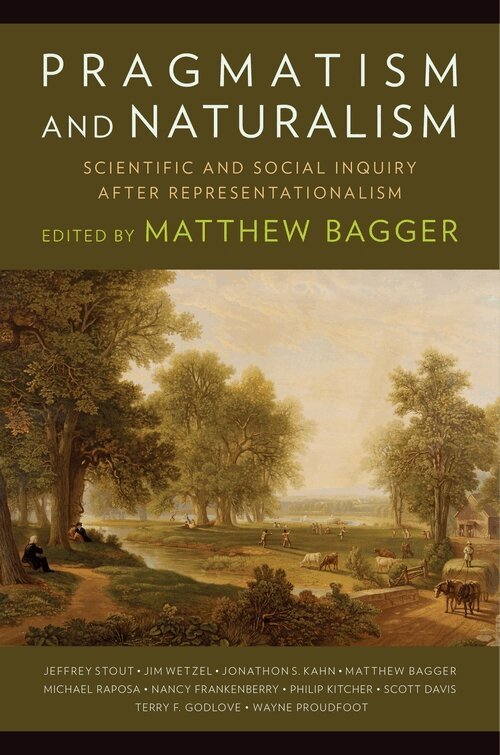
Most contemporary philosophers would call themselves naturalists, yet there is little consensus on what naturalism entails. Long signifying the notion that science should inform philosophy, debates over naturalism often hinge on how broadly or narrowly the terms nature and science are defined. The founding figures of American Pragmatism—C. S. Peirce (1839–1914), William James (1842–1910), and John Dewey (1859–1952)—developed a distinctive variety of naturalism by rejecting reductive materialism and instead emphasizing social practices. Owing to this philosophical lineage, pragmatism has made original and insightful contributions to the study of religion as well as to political theory.In Pragmatism and Naturalism, distinguished scholars examine pragmatism’s distinctive form of nonreductive naturalism and consider its merits for the study of religion, democratic theory, and as a general philosophical orientation. Nancy Frankenberry, Philip Kitcher, Wayne Proudfoot, Jeffrey Stout, and others evaluate the contribution pragmatism can make to a viable naturalism, explore what distinguishes pragmatic naturalism from other naturalisms on offer, and address the pertinence of pragmatic naturalism to methodological issues in the study of religion. In parts dedicated to historical pragmatists, pragmatism in the philosophy and the study of religion, and pragmatism and democracy, they display the enduring power and contemporary relevance of pragmatic naturalism.
428 kr
Skickas inom 7-10 vardagar
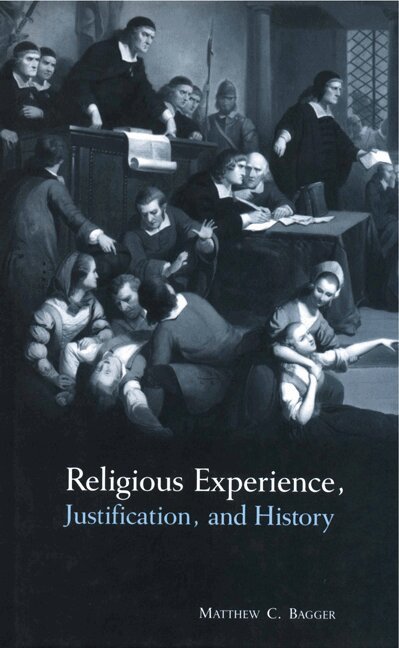
Many philosophers of religion have sought to defend the rationality of religious belief by shifting the burden of proof onto the critic of religious belief. Some have appealed to extraordinary religious experience in making their case. Religious Experience, Justification and History restores neglected explanatory and historical considerations to the debate. Through a study of William James, it contests the accounts of religious experience offered in recent works. Through reflection on the history of philosophy, it also unravels the philosophical use of the term 'justification'. Matthew Bagger argues that the commitment to supernatural explanations implicit in the religious experiences employed to justify religious belief contradicts the modern ideal of human flourishing. For contrast, and to demonstrated the indispensability of history, he includes a study of Teresa of Avila's mystical theology. The controversial supernatural explanations implicit in extraordinary religious experience places the burden of proof on the believer.
1 245 kr
Skickas inom 7-10 vardagar
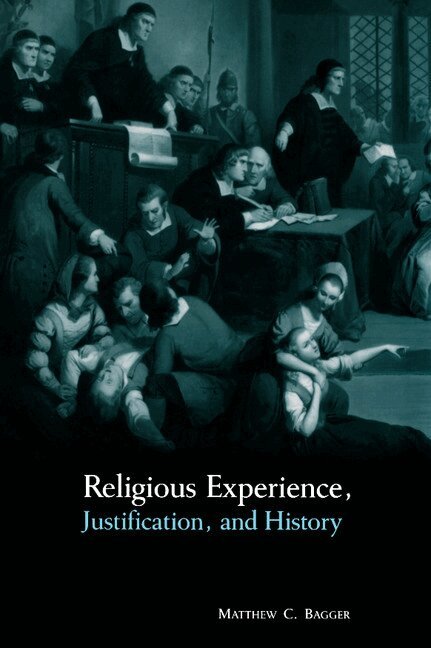
Many philosophers of religion have sought to defend the rationality of religious belief by shifting the burden of proof onto the critic of religious belief. Some have appealed to extraordinary religious experience in making their case. Religious Experience, Justification and History restores neglected explanatory and historical considerations to the debate. Through a study of William James, it contests the accounts of religious experience offered in recent works. Through reflection on the history of philosophy, it also unravels the philosophical use of the term 'justification'. Matthew Bagger argues that the commitment to supernatural explanations implicit in the religious experiences employed to justify religious belief contradicts the modern ideal of human flourishing. For contrast, and to demonstrated the indispensability of history, he includes a study of Teresa of Avila's mystical theology. The controversial supernatural explanations implicit in extraordinary religious experience places the burden of proof on the believer.