Matthew Christopher Hulbert - Böcker
Visar alla böcker från författaren Matthew Christopher Hulbert. Handla med fri frakt och snabb leverans.
7 produkter
7 produkter
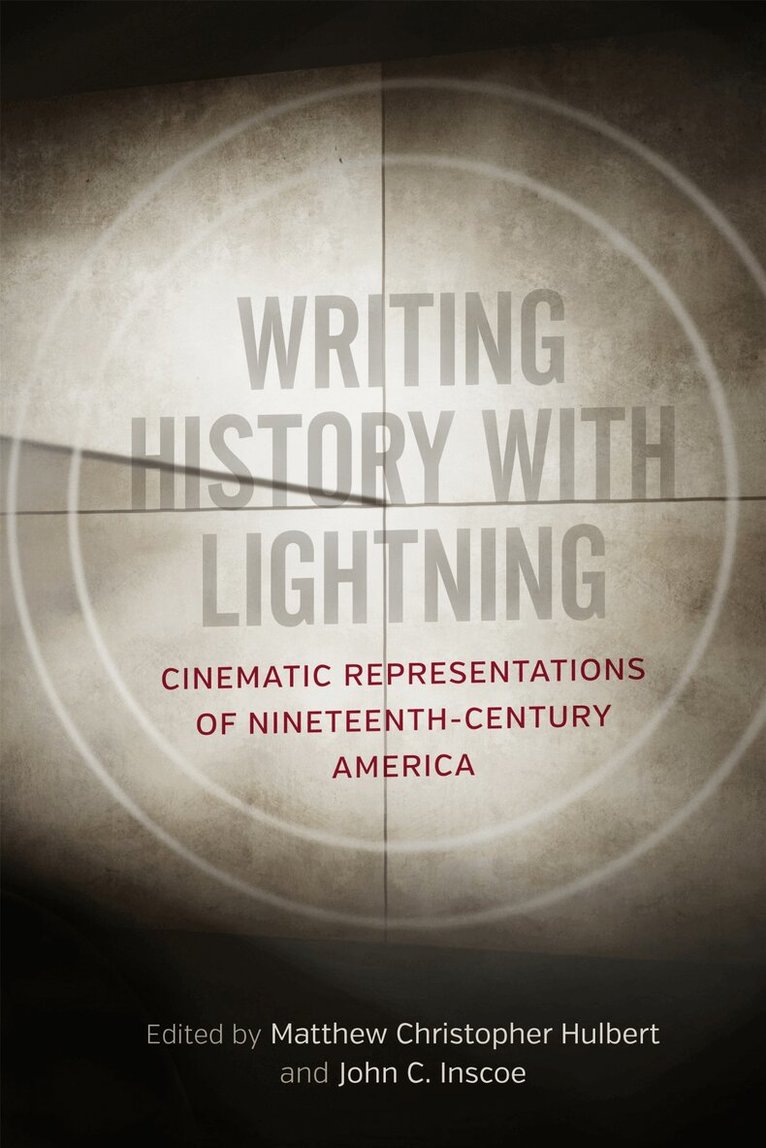
Writing History with Lightning
Cinematic Representations of Nineteenth-Century America
Inbunden, Engelska, 2019
603 kr
Skickas inom 7-10 vardagar
Films possess virtually unlimited power for crafting broad interpretations of American history. Nineteenth-century America has proven especially conducive to Hollywood imaginations, producing indelible images like the plight of Davy Crockett and the defenders of the Alamo, Pickett's doomed charge at Gettysburg, the proliferation and destruction of plantation slavery in the American South, Custer's fateful decision to divide his forces at Little Big Horn, and the onset of immigration and industrialization that saw Old World lifestyles and customs dissolve amid rapidly changing environments. Balancing historical nuance with passion for cinematic narratives, Writing History with Lightning confronts how movies about nineteenth-century America influence the ways in which mass audiences remember, understand, and envision the nation's past. In these twenty-six essays- divided by the editors into sections on topics like frontiers, slavery, the Civil War, the Lost Cause, and the West- notable historians engage with films and the historical events they ostensibly depict. Instead of just separating fact from fiction, the essays contemplate the extent to which movies generate and promulgate collective memories of American history. Along with new takes on familiar classics like Young Mr. Lincoln and They Died with Their Boots On, the volume covers several films released in recent years, including The Revenant, 12 Years a Slave, The Birth of a Nation, Free State of Jones, and The Hateful Eight. The authors address Hollywood epics like The Alamo and Amistad, arguing that these movies flatten the historical record to promote nationalist visions. The contributors also examine overlooked films like Hester Street and Daughters of the Dust, considering their portraits of marginalized communities as transformative perspectives on American culture. By surveying films about nineteenth-century America, Writing History with Lightning analyzes how movies create popular understandings of American history and why those interpretations change over time.
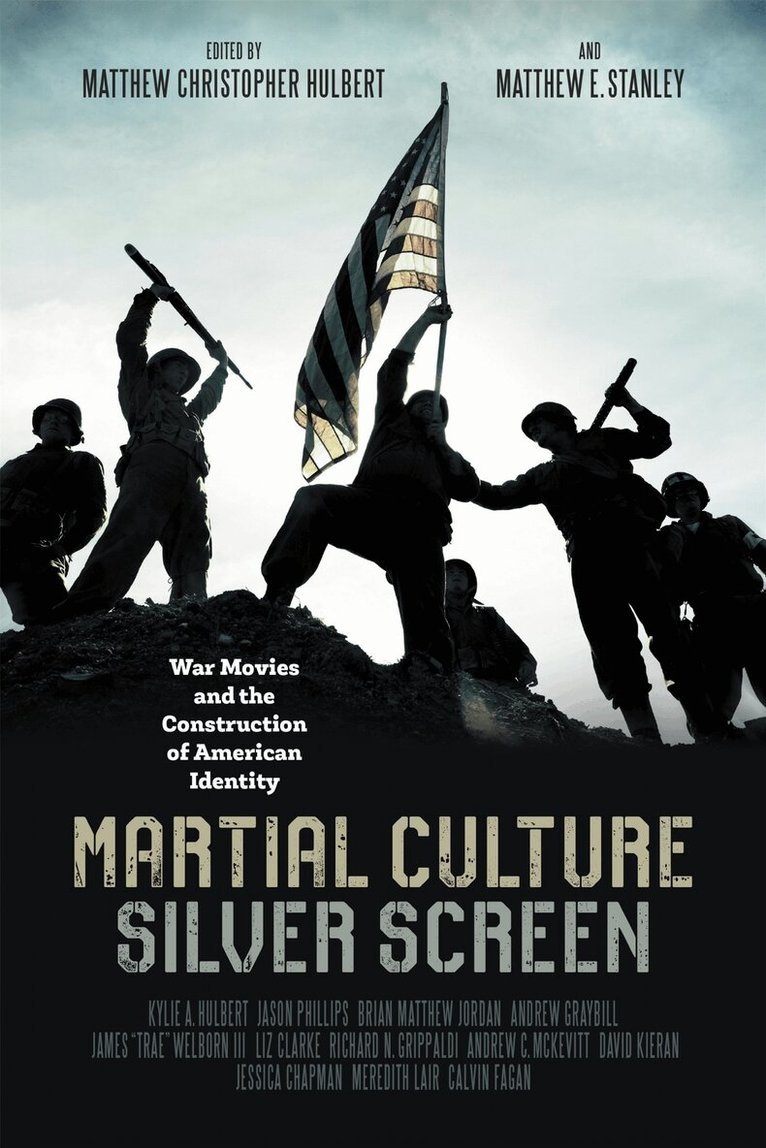
Martial Culture, Silver Screen
War Movies and the Construction of American Identity
Inbunden, Engelska, 2020
832 kr
Skickas inom 10-15 vardagar
Martial Culture, Silver Screen analyzes war movies, one of the most popular genres in American cinema, for what they reveal about the narratives and ideologies that shape U.S. national identity.Edited by Matthew Christopher Hulbert and Matthew E. Stanley, this volume explores the extent to which the motion picture industry, particularly Hollywood, has played an outsized role in the construction and evolution of American self-definition.Moving chronologically, eleven essays highlight cinematic versions of military and cultural conflicts spanning from the American Revolution to the War on Terror. Each focuses on a selection of films about a specific war or historical period, often foregrounding recent productions that remain understudied in the critical literature on cinema, history, and cultural memory. Scrutinizing cinema through the lens of nationalism and its "invention of tradition", Martial Culture, Silver Screen considers how movies possess the power to frame ideologies, provide social coherence, betray collective neuroses and fears, construct narratives of victimhood or heroism, forge communities of remembrance, and cement tradition and convention. Hollywood war films routinely present broad, identifiable narratives such as that of the rugged pioneer or the "good war" through which filmmakers invent representations of the past, establishing narratives that advance discrete social and political functions in the present. As a result, cinematic versions of wartime conflicts condition and reinforce popular understandings of American national character as it relates to violence, individualism, democracy, militarism, capitalism, masculinity, race, class, and empire.Approaching war movies as identity-forging apparatuses and tools of social power, Martial Culture, Silver Screen lays bare how cinematic versions of warfare have helped define for audiences what it means to be American.
Martial Culture, Silver Screen
War Movies and the Construction of American Identity
Häftad, Engelska, 2020
433 kr
Skickas inom 10-15 vardagar
Martial Culture, Silver Screen analyzes war movies, one of the most popular genres in American cinema, for what they reveal about the narratives and ideologies that shape U.S. national identity. Edited by Matthew Christopher Hulbert and Matthew E. Stanley, this volume explores the extent to which the motion picture industry, particularly Hollywood, has played an outsized role in the construction and evolution of American self-definition.Moving chronologically, eleven essays highlight cinematic versions of military and cultural conflicts spanning from the American Revolution to the War on Terror. Each focuses on a selection of films about a specific war or historical period, often foregrounding recent productions that remain understudied in the critical literature on cinema, history, and cultural memory. Scrutinizing cinema through the lens of nationalism and its "invention of tradition", Martial Culture, Silver Screen considers how movies possess the power to frame ideologies, provide social coherence, betray collective neuroses and fears, construct narratives of victimhood or heroism, forge communities of remembrance, and cement tradition and convention. Hollywood war films routinely present broad, identifiable narratives such as that of the rugged pioneer or the "good war" through which filmmakers invent representations of the past, establishing narratives that advance discrete social and political functions in the present. As a result, cinematic versions of wartime conflicts condition and reinforce popular understandings of American national character as it relates to violence, individualism, democracy, militarism, capitalism, masculinity, race, class, and empire.Approaching war movies as identity-forging apparatuses and tools of social power, Martial Culture, Silver Screen lays bare how cinematic versions of warfare have helped define for audiences what it means to be American.
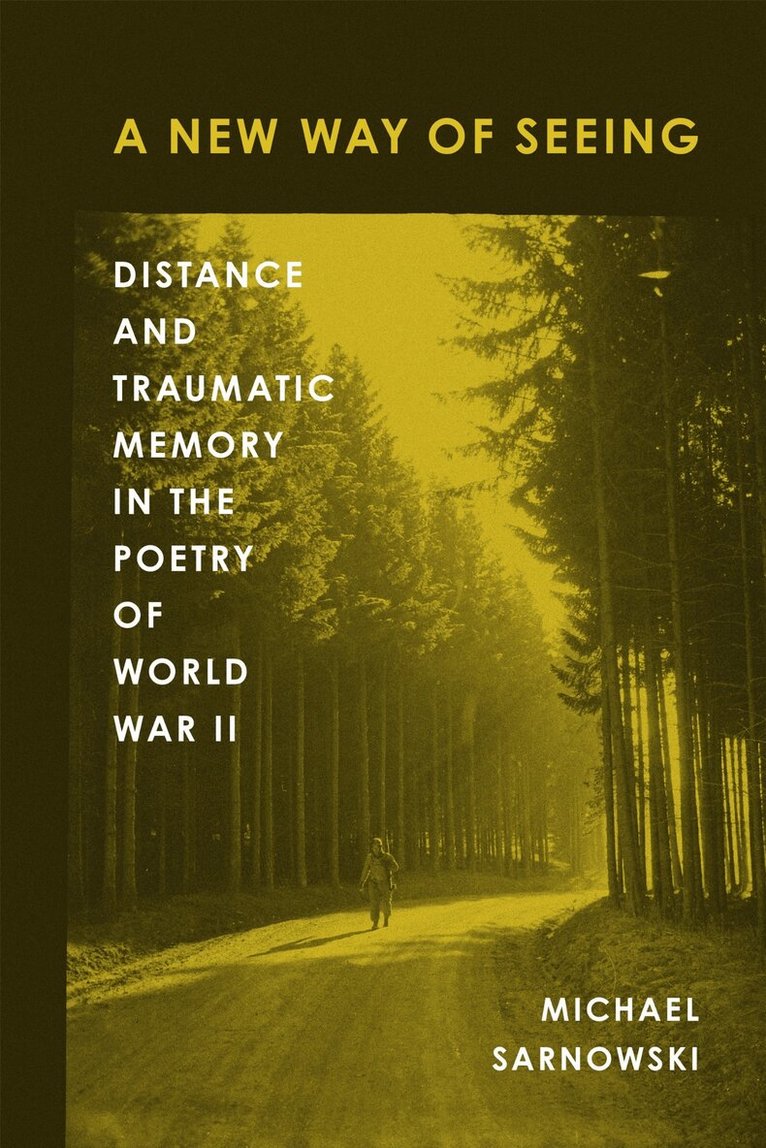
New Way of Seeing
Distance and Traumatic Memory in the Poetry of World War II
Inbunden, Engelska, 2025
560 kr
Skickas inom 10-15 vardagar
A New Way of Seeing considers the poetry of five writers—Louis Simpson, Keith Douglas, Richard Hugo, Howard Nemerov, and Randall Jarrell—whose work draws on their activities as soldiers in World War II. Basing his examination on extensive primary-source research, Michael Sarnowski identifies distance, both literal and figurative, and traumatic memory as two interconnected elements of how these poets internalized the war and made sense of the events they witnessed. The book is structured on a gradient related to each poet's proximity to combat, as the chapters in turn focus on an infantryman (Simpson), a tank commander (Douglas), a bombardier (Hugo), a pilot (Nemerov), and a stateside flight instructor (Jarrell). Sarnowski relies on a wealth of archival material overlooked by previous scholarship, including poem drafts, correspondence, flight logs, and personal belongings. The conclusion revisits notions of legacy and representation by assessing factors that contributed to the early labeling of World War II soldiers as a "Silent Generation," in contrast to the outpouring of poetry published during and following the First World War. By exploring how poets processed their wartime experiences, A New Way of Seeing offers a stark reminder of why it remains vital to recognize the physical, mental, and psychological consequences endured by veterans.
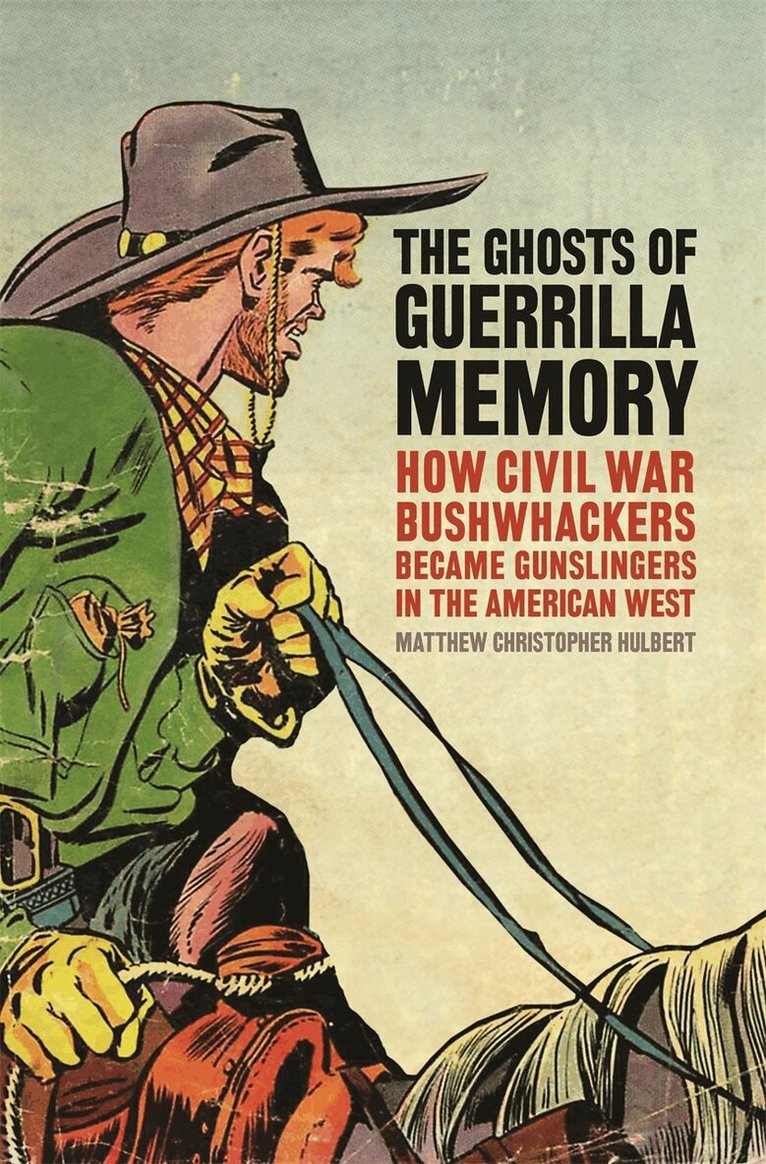
Ghosts of Guerrilla Memory
How Civil War Bushwhackers Became Gunslingers in the American West
Inbunden, Engelska, 2016
1 395 kr
Skickas inom 5-8 vardagar
The Civil War tends to be remembered as a vast sequence of battles, with a turning point at Gettysburg and a culmination at Appomattox. But in the guerrilla theater, the conflict was a vast sequence of home invasions, local traumas, and social degeneration that did not necessarily end in 1865. This book chronicles the history of “guerrilla memory,” the collision of the Civil War memory “industry” with the somber realities of irregular warfare in the borderlands of Missouri and Kansas.In the first accounting of its kind, Matthew Christopher Hulbert’s book analyzes the cultural politics behind how Americans have remembered, misremembered, and re-remembered guerrilla warfare in political rhetoric, historical scholarship, literature, and film and at reunions and on the stage. By probing how memories of the guerrilla war were intentionally designed, created, silenced, updated, and even destroyed, Hulbert ultimately reveals a continent-wide story in which Confederate bushwhackers—pariahs of the eastern struggle over slavery—were transformed into the vanguards of American imperialism in the West.
Ghosts of Guerrilla Memory
How Civil War Bushwhackers Became Gunslingers in the American West
Häftad, Engelska, 2016
406 kr
Skickas inom 3-6 vardagar
The Civil War tends to be remembered as a vast sequence of battles, with a turning point at Gettysburg and a culmination at Appomattox. But in the guerrilla theater, the conflict was a vast sequence of home invasions, local traumas, and social degeneration that did not necessarily end in 1865. This book chronicles the history of “guerrilla memory,” the collision of the Civil War memory “industry” with the somber realities of irregular warfare in the borderlands of Missouri and Kansas.In the first accounting of its kind, Matthew Christopher Hulbert’s book analyzes the cultural politics behind how Americans have remembered, misremembered, and re-remembered guerrilla warfare in political rhetoric, historical scholarship, literature, and film and at reunions and on the stage. By probing how memories of the guerrilla war were intentionally designed, created, silenced, updated, and even destroyed, Hulbert ultimately reveals a continent-wide story in which Confederate bushwhackers—pariahs of the eastern struggle over slavery—were transformed into the vanguards of American imperialism in the West.
398 kr
Skickas inom 7-10 vardagar
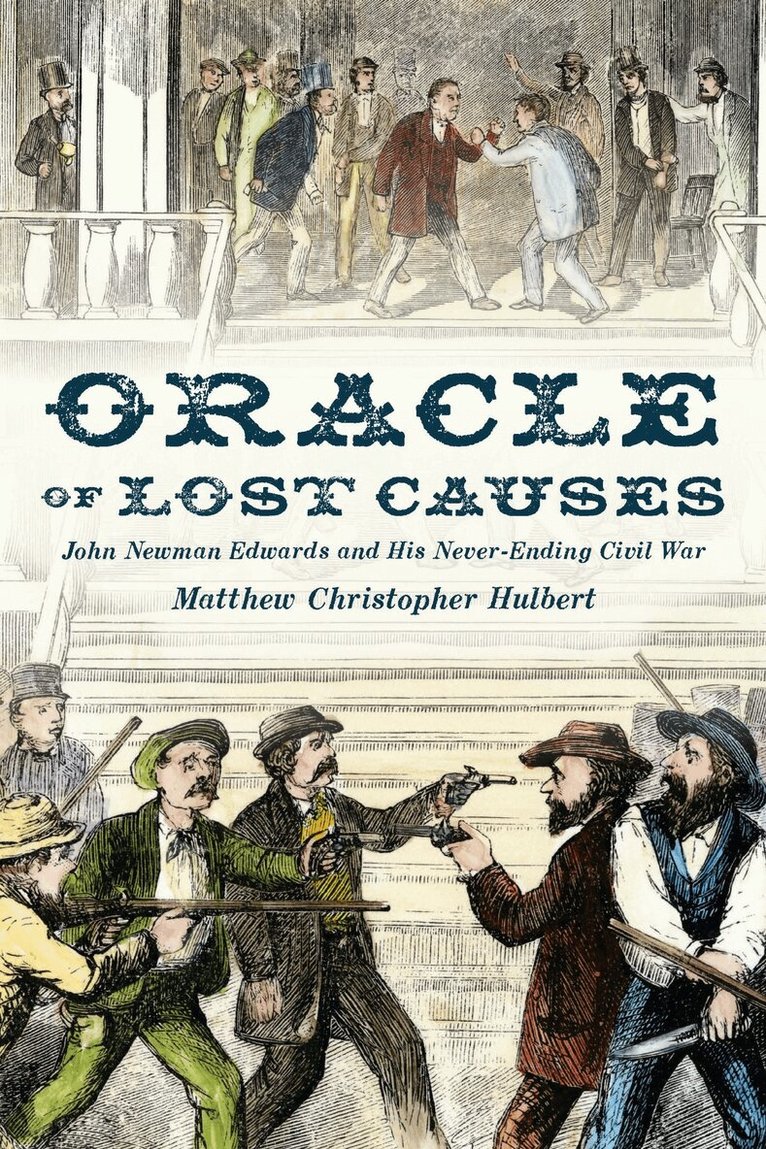
Finalist for the 2024 Spur AwardJohn Newman Edwards was a soldier, a father, a husband, and a noted author. He was also a virulent alcoholic, a duelist, a culture warrior, and a man perpetually at war with the modernizing world around him. From the sectional crisis of his boyhood and the battlefields of the western borderlands to the final days of the Second Mexican Empire and then back to a United States profoundly changed by the Civil War, Oracle of Lost Causes chronicles Edwards’s lifelong quest to preserve a mythical version of the Old World-replete with aristocrats, knights, damsels, and slaves-in North America.This odyssey through nineteenth-century American politics and culture involved the likes of guerrilla chieftains William Clarke Quantrill and “Bloody Bill” Anderson, notorious outlaws Frank and Jesse James, Confederate general Joseph Orville Shelby, and even Emperor Maximilian I and Empress Charlotte of Mexico. It is the story of a man who experienced Confederate defeat not once but twice, and how he sought to shape and weaponize the memory of those grievous losses. Historian Matthew Christopher Hulbert ultimately reveals how the Civil War determined not only the future of the vast West but also the extent to which the conflict was part of a broader, international sequence of sociopolitical uprisings.