Matthew Curr – författare
Visar alla böcker från författaren Matthew Curr. Handla med fri frakt och snabb leverans.
2 produkter
2 produkter
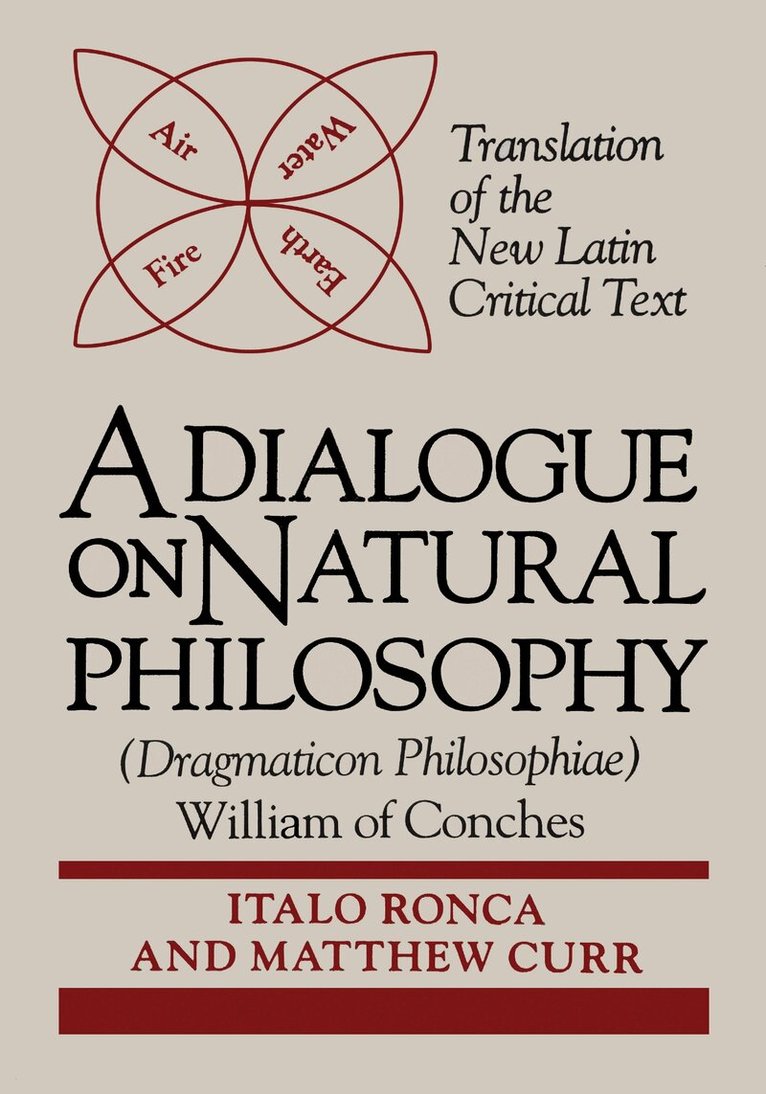
Dialogogue on Natural Philosophy (Dragmaticon Philosophiae)
Translation of the New Latin Critical Text
Inbunden, Engelska, 1997
438 kr
Skickas
This long-awaited English translation of William of Conche's Dragmaticon Philosophiae now makes available what is arguably the most original and systematic synthesis of western thought concerning the structure of the physical universe, as it was understood in the twelfth century.The Dragmaticon represents the scientific thought of the philosopher of Conches (died ca. 1154). This major work deals with the structure of the known physical universe, starting from the 'macrocosm' (primeval chaos, stars, planets, atmospheric phenomena, the earth) and ending with the 'microcosm' (the human body, the four "humors" and related complexions, and the soul and its faculties).The dialogue is divided into six parts, each corresponding to the six days of creation. It is purported to have taken place—in Platonic, Ciceronian, and Augustinian fashion—in six days at one of the castles of Geoffrey Plantagenet, Count of Anjou and Duke of Normandy (William's protector and father of King Henry II of England). The duke assumes the role of the questioner and sometimes that of the stern defensor fidei. William himself participates anonymously, answering all questions as a "philosopher without name" in order to circumvent the danger of being accused of heresy as he dares to explain the physical universe and its inherent order with arguments derived from reason and not from the church fathers or biblical authority.William's text fills the scientific gap between late antiquity and Newton and has influenced the thought of countless writers and thinkers. Medievalists, theologians, and scholars working in the fields of philosophy and history of science will welcome this first-ever English translation of the Dragmaticon, especially for its systematic annotations and full references to doctrinal and literary sources.
533 kr
Skickas inom 5-8 vardagar
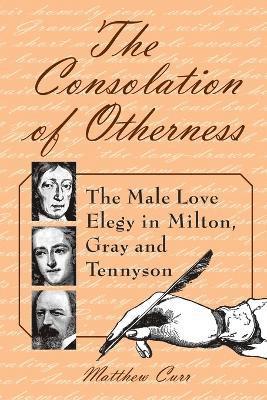
The social and religious constraints of their time may have prevented John Milton, Thomas Gray, and Alfred Tennyson from conscious expression or even unconscious recognition of the true extent of their love and devotion to their young male friends, but it lies at the heart of their emotional lives and poetry. Connected by the extraordinary coincidence that each of their loved ones died young, Milton, Gray, and Tennyson are also connected by the male-love elegies that sprang from their grief.This work examines the relationships between John Milton and Charles Diodati, Thomas Gray and Richard West, and Alfred Tennyson and Arthur Hallam through a critical study of Milton's "Epitaphium Damonis," Gray's "Elegy," and Tennyson's "In Memoriam." It shows how their concepts of otherness and difference from the people around them provided comfort after the loss of their loved ones. It discusses Milton's use of Latin to mourn his friend and screen the most resounding expressions of his love while keeping at bay those not ready to understand his concept of otherness, how Gray used both Latin and the vernacular to express his grief while conforming to social and religious constraints by also addressing larger concerns; and Tennyson's ability to use the vernacular with complete security to speak out and yet hold back private thoughts about the person he loved more than almost any other in his life.