Matthew D. Shapiro – författare
Visar alla böcker från författaren Matthew D. Shapiro. Handla med fri frakt och snabb leverans.
4 produkter
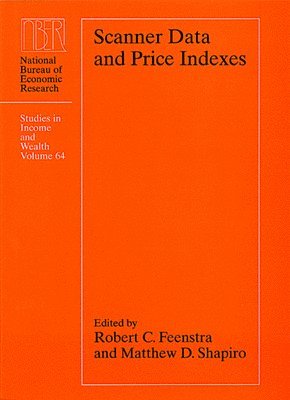
Scanner Data and Price Indexes
Av Robert C. Feenstra, Matthew D. Shapiro
Inbunden, 2002
853 kr
Lägg i varukorg
The data from bar-code scanners offers a number of attractive features for economists and statisticians, because they are collected continuously, are available quickly and record prices for all items sold, not just a sample. But scanner data also presents a number of difficulties for current …
Scanner Data and Price Indexes
Av Matthew D. Shapiro, Robert C. Feenstra
E-bok, 2007
1932 kr
Lägg i varukorg
Every time you buy a can of tuna or a new television, its bar code is scanned to record its price and other information. These "scanner data" offer a number of attractive features for economists and statisticians, because they are collected continuously, are available quickly, and record prices for …
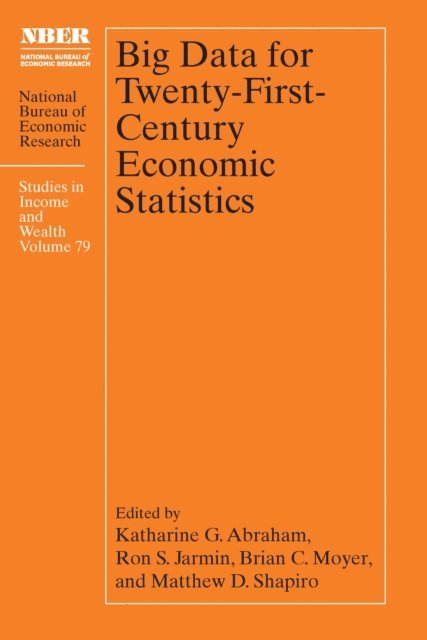
Big Data for Twenty-First-Century Economic Statistics
Av Katharine G. Abraham, Ron S. Jarmin m. fl.
Inbunden, 2022
1417 kr
Lägg i varukorg
The papers in this volume analyze the deployment of Big Data to solve both existing and novel challenges in economic measurement. The existing infrastructure for the production of key economic statistics relies heavily on data collected through sample surveys and periodic censuses, together with …
Big Data for Twenty-First-Century Economic Statistics
Av Matthew D. Shapiro, Brian C. Moyer m. fl.
E-bok, 2022
3122 kr
Lägg i varukorg
The papers in this volume analyze the deployment of Big Data to solve both existing and novel challenges in economic measurement. The existing infrastructure for the production of key economic statistics relies heavily on data collected through sample surveys and periodic censuses, together with …