Matthew Dirst - Böcker
Visar alla böcker från författaren Matthew Dirst. Handla med fri frakt och snabb leverans.
4 produkter
4 produkter
873 kr
Skickas inom 7-10 vardagar
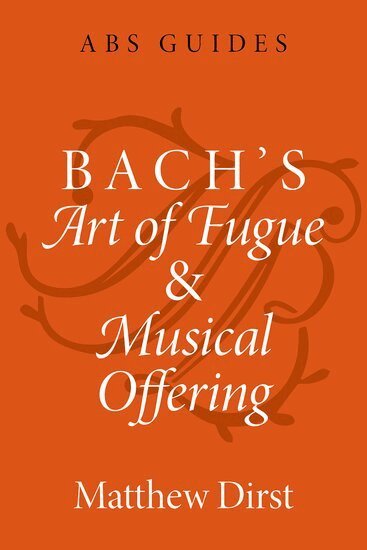
The initial volume in a series of American Bach Society Guides, Bach's Art of Fugue and Musical Offering is a comprehensive study of two closely related masterworks of the late Baroque fugal style. This compact guide, intended for practitioners, music scholars, and a general readership, summarizes a considerable body of knowledge about these famously cerebral collections in an engaging and accessible style. Bach specialist and keyboard player Matthew Dirst explains the Art of Fugue and Musical Offering's idiosyncratic musical language while reviewing how both projects took shape during Bach's final decade. They reflect Bach's lifelong fascination with learned counterpoint, as demonstrated in elaborate series of fugues and canons in both and in an unusually intricate trio sonata in the latter. Dirst provides commentary on individual movements and groups of pieces and on the historical reception of this music, including its impact on other disciplines. Recurring themes include Bach's diligent exploration of contrapuntal types and techniques, his embrace of musical games, and his creative assimilation of diverse musical styles.
217 kr
Skickas
The initial volume in a series of American Bach Society Guides, Bach's Art of Fugue and Musical Offering is a comprehensive study of two closely related masterworks of the late Baroque fugal style. This compact guide, intended for practitioners, music scholars, and a general readership, summarizes a considerable body of knowledge about these famously cerebral collections in an engaging and accessible style. Bach specialist and keyboard player Matthew Dirst explains the Art of Fugue and Musical Offering's idiosyncratic musical language while reviewing how both projects took shape during Bach's final decade. They reflect Bach's lifelong fascination with learned counterpoint, as demonstrated in elaborate series of fugues and canons in both and in an unusually intricate trio sonata in the latter. Dirst provides commentary on individual movements and groups of pieces and on the historical reception of this music, including its impact on other disciplines. Recurring themes include Bach's diligent exploration of contrapuntal types and techniques, his embrace of musical games, and his creative assimilation of diverse musical styles.
657 kr
Skickas inom 7-10 vardagar
The official publication of the American Bach Society, Bach Perspectives pioneers new areas of research into the life, times, and music of the master composer. In Volume 10 of the series, Matthew Dirst edits a collection of groundbreaking essays exploring various aspects of Bach's organ-related activities. Lynn Edwards Butler reconsiders Bach's report on Johann Scheibe's organ at St. Paul's Church in Leipzig. Robin Leaver clarifies the likely provenance and purpose of a collection of chorale harmonizations copied in Dresden. George Stauffer investigates the ways various independent trio movements served Bach as an artist and teacher. In separate contributions, Christoph Wolff and Gregory Butler seek the origins of concerted Bach cantata movements spotlighting the organ and propose family trees of both parent works and offspring. Finally, Matthew Cron provides a broad cultural frame for such pieces and notes how their components engage in a larger discourse about the German Baroque organ's intimation of heaven.
1 282 kr
Skickas inom 7-10 vardagar
More than any other part of Bach's output, his keyboard works conveyed the essence of his inimitable art to generations of admirers. The varied responses to this repertory - in scholarly and popular writing, public lectures, musical composition and transcription, performances and editions - ensured its place in the canon and broadened its creator's appeal. The early reception of Bach's keyboard music also continues to affect how we understand and value it, though we rarely recognize that historical continuity. Here, Matthew Dirst investigates how Bach's music intersects with cultural, social and music history, focusing on a repertory which is often overshadowed in scholarly and popular literature on Bach reception. Organized around the most productive ideas generated by Bach's keyboard works from his own day to the middle of the nineteenth century, this study shows how Bach's remarkable and long-lasting legacy took shape amid critical changes in European musical thought and practice.