Matthew Frank, Stevens – författare
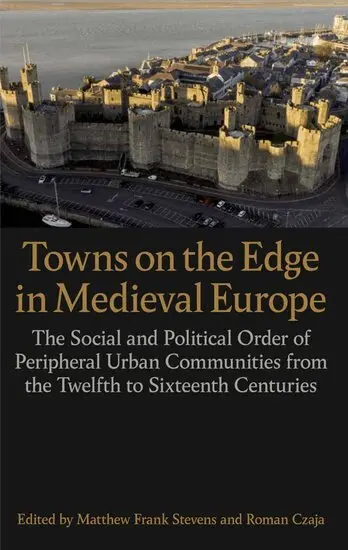
Towns on the Edge in Medieval Europe
The Social and Political Order of Peripheral Urban Communities from the Twelfth to Sixteenth Centuries
1 216 kr
Skickas inom 5-8 vardagar
643 kr
Skickas inom 7-10 vardagar
382 kr
Läs direkt efter köp
382 kr
Läs direkt efter köp
This book uses, principally but not only, a case study of the Denbighshire town of Ruthin to discuss both the significance of Englishness versus Welshness and of gender distinctions in the network of small Anglo-Welsh urban centres which emerged in north Wales following the English conquest of 1282. It carefully constructs an image of the way in which townspeople''s everyday lives were influenced by their ethnic background, gender, wealth and social status. In this manner it explores and explains the motivations of English and welsh townspeople to work together in the mutual pursuit of prosperity and social stability.
382 kr
Läs direkt efter köp
This book surveys the economy of Wales from the first Norman intrusions of 1067 to the Act of Union of England and Wales in 1536. Key themes include the evolution of the agrarian economy; the foundation and growth of towns; the adoption of a money economy; English colonisation and economic exploitation; the collapse of Welsh social structures and rise of economic individualism; the disastrous effect of the Glyndŵr rebellion; and, ultimately, the alignment of the Welsh economy to the English economy. Comprising four chapters, a narrative history is presented of the economic history of Wales, 1067–1536, and the final chapter tests the applicability in a Welsh context of the main theoretical frameworks that have been developed to explain long-term economic and social change in medieval Britain and Europe.
382 kr
Läs direkt efter köp
This book surveys the economy of Wales from the first Norman intrusions of 1067 to the Act of Union of England and Wales in 1536. Key themes include the evolution of the agrarian economy; the foundation and growth of towns; the adoption of a money economy; English colonisation and economic exploitation; the collapse of Welsh social structures and rise of economic individualism; the disastrous effect of the Glyndŵr rebellion; and, ultimately, the alignment of the Welsh economy to the English economy. Comprising four chapters, a narrative history is presented of the economic history of Wales, 1067–1536, and the final chapter tests the applicability in a Welsh context of the main theoretical frameworks that have been developed to explain long-term economic and social change in medieval Britain and Europe.
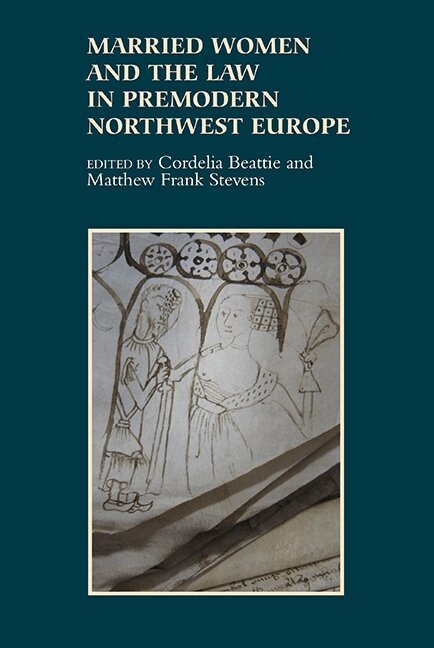
Married Women and the Law in Premodern Northwest Europe
1 238 kr
Skickas inom 5-8 vardagar