Matthew H. Bowker – författare
Visar alla böcker från författaren Matthew H. Bowker. Handla med fri frakt och snabb leverans.
12 produkter
12 produkter
Inbunden, Engelska, 2013
2 227 kr
Skickas inom 10-15 vardagar
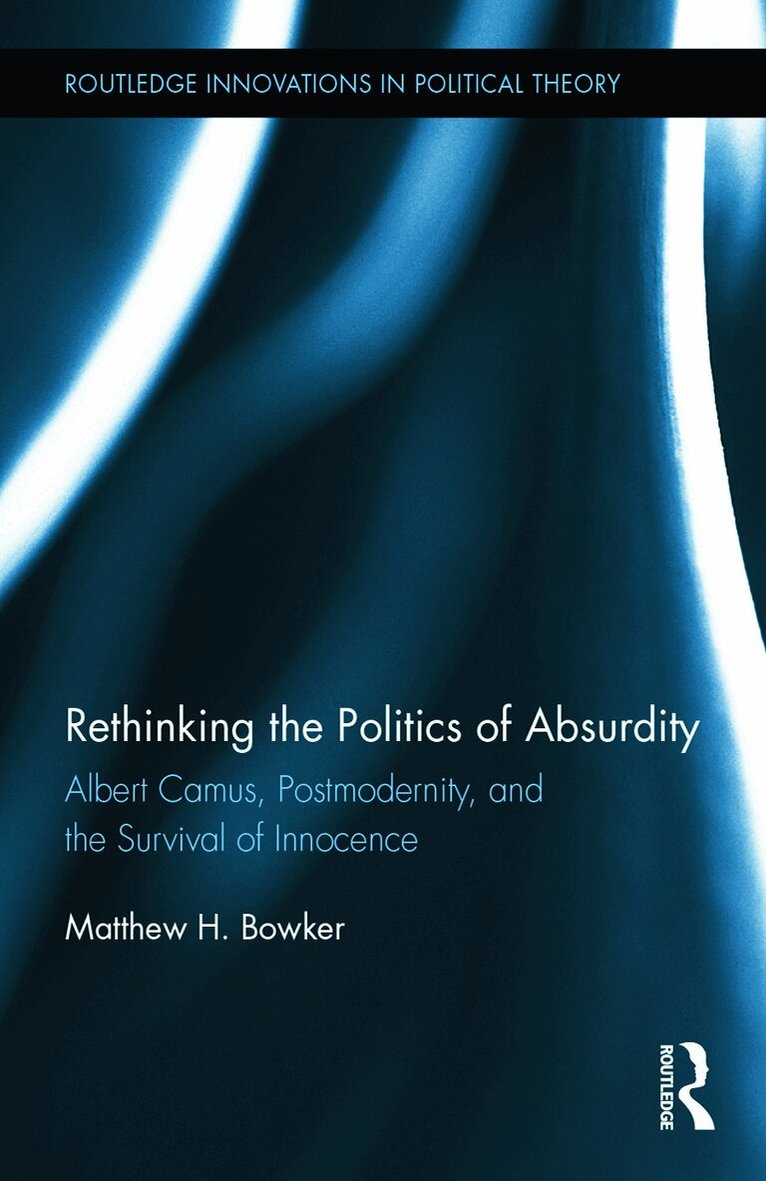
What does it mean to describe something or someone as absurd? Why did absurd philosophy and literature become so popular amidst the violent conflicts and terrors of the mid- to late-twentieth century? Is it possible to understand absurdity not as a feature of events, but as a psychological posture or stance? If so, what are the objectives, dynamics, and repercussions of the absurd stance? And in what ways has the absurd stance continued to shape postmodern thought and contemporary culture? In Rethinking the Politics of Absurdity, Matthew H. Bowker offers a surprising account of absurdity as a widespread endeavor to make parts of our experience meaningless. In the last century, he argues, fears about subjects’ destructive desires have combined with fears about rationality in a way that has made the absurd stance seem attractive. Drawing upon diverse sources from philosophy, literature, politics, psychoanalysis, theology, and contemporary culture, Bowker identifies the absurd effort to make aspects of our histories, our selves, and our public projects meaningless with postmodern revolts against reason and subjectivity. Weaving together analyses of the work of Albert Camus, Georges Bataille, Judith Butler, Emmanuel Levinas, and others with interview data and popular narratives of apocalypse and survival, Bowker shows that the absurd stance and the postmodern revolt invite a kind of bargain, in which meaning is sacrificed in exchange for the survival of innocence. Bowker asks us to consider that the very premise of this bargain is false: that ethical subjects and healthy communities cannot be created in absurdity. Instead, we must make meaningful even the most shocking losses, terrors, and destructive powers with which we live.Bowker's book will be of interest to scholars and practitioners in the fields of political science, philosophy, literature, psychoanalysis, sociology, and cultural studies.
Inbunden, Engelska, 2013
1 372 kr
Skickas inom 10-15 vardagar
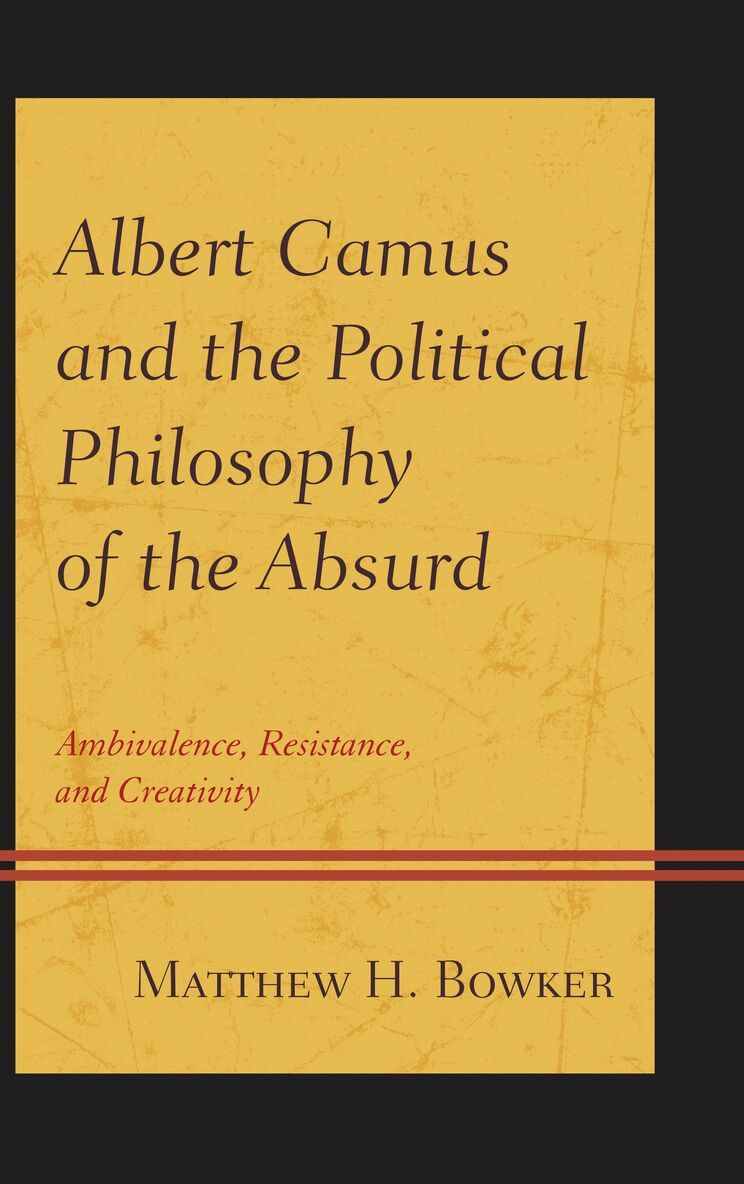
This book demonstrates that Albert Camus’ concept of absurdity is best understood when decoupled from what might be called its ontological aspirations. Rather than pretend that absurdity usefully describes ‘the human condition,’ ‘the silence of god,’ ‘the deprivation of transcendence,’ or ‘metaphysical revolt,’ I argue that, for absurdity to be a fruitful idea, it must be approached as a psychological disposition and its basic tenets must be translated into phenomenal and psychological language. The book defines the particular psychological disposition of absurdity by analogizing it with the constructs of ambivalence, integration, conscious resistance, and creativity. Its central contention is that absurdity may be interpreted as a kind of ambivalence and, thus, as an aspect of psychological experience that demands a creative and mature response. Absurdists’ cries of spiritual anguish need not persuade us that the conditions of loss, terror, alienation, and deprivation they describe are objectively ‘real’. If, instead, descriptions of absurdity may be understood as psychological accounts of the powerfully ambivalent impulses toward merger and toward separateness, toward group-immersion and toward subjectivity, then absurd revolt involves recognizing, resisting, and integrating such impulses in order to facilitate mature ethical action. It may be possible, I argue, by examining the dynamics of absurdity, ambivalence, resistance, and creativity, to develop a new grounding for an absurd political morality. This book asks what unique properties and advantages this renewed political morality offers and applies this grounding to some of the political and moral crises of Camus’ time and of our own.
Inbunden, Engelska, 2025
728 kr
Skickas inom 10-15 vardagar
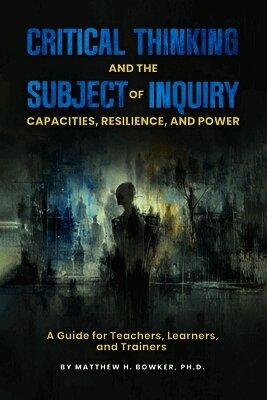
Amid countless prescriptive self-help manuals, The Power of Being a Subject: Transcending Myth and Machine emerges as a refreshing intellectual cornerstone in contemporary psychology and personal development literature.Dr. Bowker dismantles the persistent "myth of human mechanics" – the flawed belief that individuals and their psyches "function" like computers or machines. He argues compellingly that authentic self-improvement demands embracing our full subjectivity, with all of its putative dysfunction, and recognizing our agency, creativity, and complexity. Through thoughtful exploration, readers learn how critical thinking, honesty, patience, and bravery can help them achieve deeper maturity and genuine freedom.This is essential reading for those disillusioned with surface-level solutions and hungry for meaningful transformation.
Inbunden, Engelska, 2016
2 296 kr
Skickas inom 10-15 vardagar
Matthew H. Bowker offers a novel analysis of "experience": the vast and influential concept that has shaped Western social theory and political practice for the past half-millennium.While it is difficult to find a branch of modern thought, science, industry, or art that has not relied in some way on the notion of "experience" in defining its assumptions or aims, no study has yet applied a politically-conscious and psychologically-sensitive critique to the construct of experience. Doing so reveals that most of the qualities that have been attributed to experience over the centuries — particularly its unthinkability, its correspondence with suffering, and its occlusion of the self — are part of unlikely fantasies or ideologies. By analyzing a series of related cases, including the experiential education movement, the ascendency of trauma theory, the philosophy of the social contract, and the psychological study of social isolation, the book builds a convincing case that ideologies of experience are invoked not to keep us close to lived realities and ‘things-in-themselves,’ but, rather, to distort and destroy true knowledge of ourselves and others.In spite of enduring admiration for those who may be called champions of experience, such as Michel de Montaigne, Ralph Waldo Emerson, and others treated throughout the work, the ideologies of experience ultimately discourage individuals and groups from creating, resisting, and changing our experience, urging us instead to embrace trauma, failure, deprivation, and self-abandonment.
Häftad, Engelska, 2016
590 kr
Skickas inom 10-15 vardagar
Matthew H. Bowker offers a novel analysis of "experience": the vast and influential concept that has shaped Western social theory and political practice for the past half-millennium.While it is difficult to find a branch of modern thought, science, industry, or art that has not relied in some way on the notion of "experience" in defining its assumptions or aims, no study has yet applied a politically-conscious and psychologically-sensitive critique to the construct of experience. Doing so reveals that most of the qualities that have been attributed to experience over the centuries — particularly its unthinkability, its correspondence with suffering, and its occlusion of the self — are part of unlikely fantasies or ideologies. By analyzing a series of related cases, including the experiential education movement, the ascendency of trauma theory, the philosophy of the social contract, and the psychological study of social isolation, the book builds a convincing case that ideologies of experience are invoked not to keep us close to lived realities and ‘things-in-themselves,’ but, rather, to distort and destroy true knowledge of ourselves and others.In spite of enduring admiration for those who may be called champions of experience, such as Michel de Montaigne, Ralph Waldo Emerson, and others treated throughout the work, the ideologies of experience ultimately discourage individuals and groups from creating, resisting, and changing our experience, urging us instead to embrace trauma, failure, deprivation, and self-abandonment.
Häftad, Engelska, 2015
631 kr
Skickas inom 10-15 vardagar
What does it mean to describe something or someone as absurd? Why did absurd philosophy and literature become so popular amidst the violent conflicts and terrors of the mid- to late-twentieth century? Is it possible to understand absurdity not as a feature of events, but as a psychological posture or stance? If so, what are the objectives, dynamics, and repercussions of the absurd stance? And in what ways has the absurd stance continued to shape postmodern thought and contemporary culture? In Rethinking the Politics of Absurdity, Matthew H. Bowker offers a surprising account of absurdity as a widespread endeavor to make parts of our experience meaningless. In the last century, he argues, fears about subjects’ destructive desires have combined with fears about rationality in a way that has made the absurd stance seem attractive. Drawing upon diverse sources from philosophy, literature, politics, psychoanalysis, theology, and contemporary culture, Bowker identifies the absurd effort to make aspects of our histories, our selves, and our public projects meaningless with postmodern revolts against reason and subjectivity. Weaving together analyses of the work of Albert Camus, Georges Bataille, Judith Butler, Emmanuel Levinas, and others with interview data and popular narratives of apocalypse and survival, Bowker shows that the absurd stance and the postmodern revolt invite a kind of bargain, in which meaning is sacrificed in exchange for the survival of innocence. Bowker asks us to consider that the very premise of this bargain is false: that ethical subjects and healthy communities cannot be created in absurdity. Instead, we must make meaningful even the most shocking losses, terrors, and destructive powers with which we live.Bowker's book will be of interest to scholars and practitioners in the fields of political science, philosophy, literature, psychoanalysis, sociology, and cultural studies.
Häftad, Engelska, 2018
329 kr
Skickas inom 10-15 vardagar
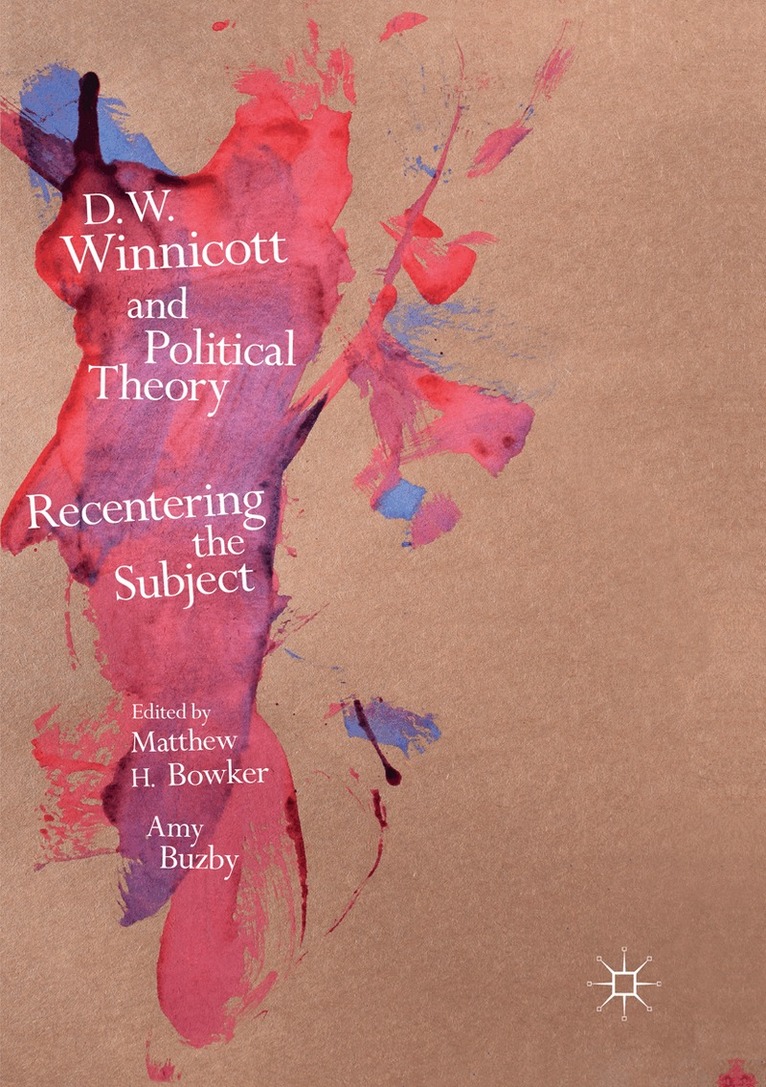
The editors and contributors demonstrate that Winnicott’s thought contains underappreciated political insights, discoverable in his reflections on the nature of the maturational process, and useful in working through difficult impasses confronting contemporary political theorists.
Häftad, Engelska, 2018
407 kr
Skickas inom 10-15 vardagar
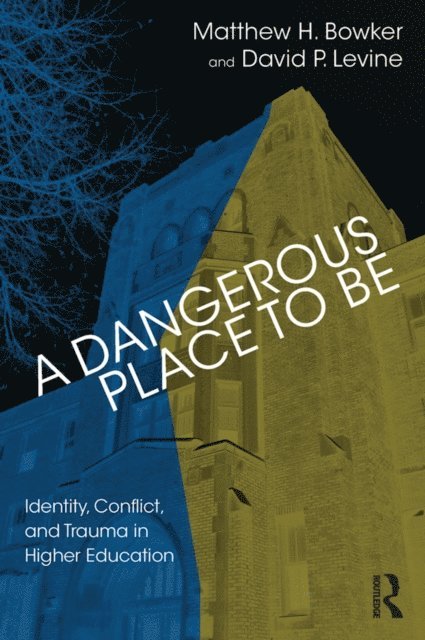
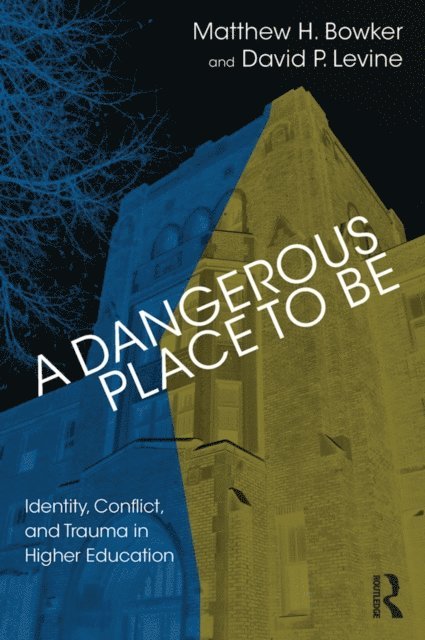
This book investigates recent conflictual events on college and university campuses, including protests directed at university leaders deemed victimizers, debates over the inclusion of "trigger warnings" on course materials, demands for "safe spaces," denials of venue to controversial speakers, rejections of free speech as a norm governing campus interactions, and calls for the resignation or expulsion of students, faculty, and administrators. The authors suggest that such conflicts in universities express, with particular poignancy, difficulties encountered in the process of identity-formation, difficulties that include the management of ambivalent desires and fantasies concerning the relations between the ideal of self-determination and the protection offered by groups, the interpretation of encounters with difference, the movement from life in the family to life in civil society, and the need to find safety in the inner world as well as danger in the world outside. What makes the links between university-based conflict and the vicissitudes of identity difficult to see is that most controversies have been marked by efforts to ignore or disguise experiences in individuals' inner worlds and to focus, instead, on groups, group identities, and group fantasies about victimization that offer collective (social) defenses. A Dangerous Place to Be strives to clarify these links by applying psychoanalytic insights to several cases emblematic of recent university conflicts, revealing them to be enactments of inner dramas involving the discovery of difference in the self and in others.
Häftad, Engelska, 2025
359 kr
Skickas inom 5-8 vardagar
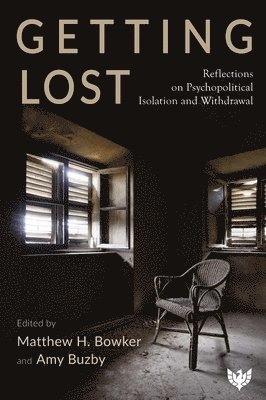
With contributions from Matthew H. Bowker, Amy Buzby, Jack Fong, Evangelia Galanaki, Jill Gentile, Nathan Gerard, Theofilos Gkinopoulos, Dan Livney, Elliott Schwebachand, and Michael J. Thompson.The prime example or idée clef that unites the chapters of this volume is the experience of the global Covid-19 pandemic from 2019 to 2023, in which we witnessed forms of isolation and withdrawal that meant something more than separation. Withdrawal and isolation work on the self, although they may not do so consciously. Whereas it is possible to be separated from others simply as a matter of fact and from the ‘outside,’ Getting Lost focuses on complex internal and psychopolitical processes involving retreat or removal of selves from the worlds of politics, society, and culture.When we feel isolated or we withdraw ourselves, something tends to arise in our place: be it a defense system, a constellation of symptoms, or the deeply repressed psychic material giving rise to either or both. Thus, it was not coincidental that, as millions died from Covid, and as millions more experienced severely ‘broken sociality’ in the Covidian world of risk, quarantine, and/or lockdown, we also found ourselves witnessing explosions of extremism in popular discourse, in large-scale border closures, in encroachments on women’s and reproductive rights, in physical attacks on the Capitol Building in Washington, DC, in domestic and spousal violence and youth suicide, in a war of aggression waged by Russia on Ukraine, and much more.We advance the term ‘psychopolitical isolation and withdrawal’ in order to capture not only temporary periods of isolation but also detachments from reality and perverse attachments to unreality, visible on small and large scales. This partial or perverse facing of our self-experience and shared experience suggests the possibility that the post-Covidian era brings with it altered relationships to both the private and the public home, and, with them, the meanings of citizenship, sociality, publicity, thinking, and being.Plainly put, the impact of Covid-19 worldwide has damaged people’s relationship to reality and we are still coming to terms with and uncovering the many ways in which this manifests. This book aims to signal an immediate, existential threat to psychosocial and political life and to inspire further thinking, debate, and work on these vital topics that affect us all.
Häftad, Engelska, 2019
430 kr
Skickas inom 5-8 vardagar
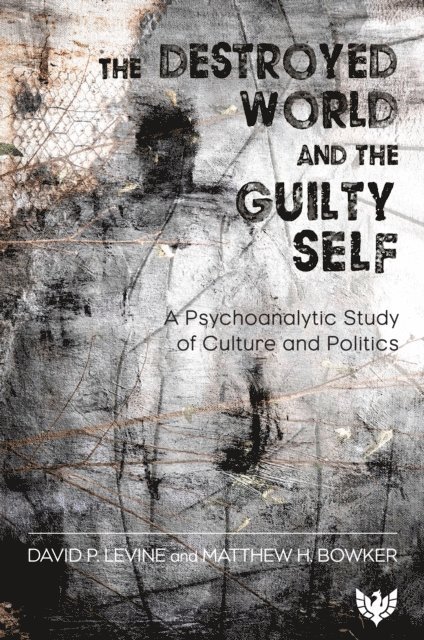
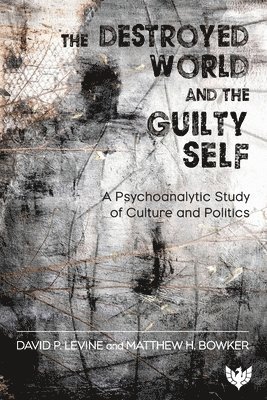
David Levine and Matthew Bowker explore cultural and political trends organized around the conviction that the world we live in is a dangerous place to be, that it is dominated by hate and destruction, and that in it our primary task is to survive by carrying on a life-long struggle against hostile forces. Their method involves the analysis of public fantasies to reveal their hidden meanings. The central fantasy explored is the fantasy of a destroyed world, which appears most commonly in the form of post-apocalyptic and dystopian narratives. Their special concern in the book is with defenses against the painful consequences of the dominance of this fantasy in the inner world, especially defenses involving the use of guilt to assure that something can be done to repair the destroyed world.Topics explored include: the formation of internal fortresses and their projection into the world outside, forms of guilt including bystander guilt and survivor guilt, the loss of and search for home, and manic forms of reparation.
Häftad, Engelska, 2025
359 kr
Skickas inom 3-6 vardagar
Inbunden, Engelska, 2025
519 kr
Skickas inom 3-6 vardagar