• Fri frakt över 249 kr
  • •
  • Snabba leveranser
  • •
  • Billiga böcker
Kundservice

Du är på sajten för privatpersoner.

Företag, bibliotek eller offentlig verksamhet?

Du handlar på classic.bokus.com, där alla dina funktioner finns intakta.
Till classic.bokus.com
Bokus logotyp. Gå till startsidan.
  • Erbjudanden
  • Nyheter
  • Student
  • Topplistor
  • Barn & ungdom
  • Bokus Play
  • E-böcker
  • Pocketböcker
  • Spel & pussel

10% rabatt på allt med kod: NYSTART10 →

Sidfot

Mina sidor

    Hjälp

    • Kundservice
    • Vanliga frågor och svar
    • Frakt och leverans
    • Retur vid ångerrätt
    • Reklamera vara
    • Betalning
    • Köpvillkor
    • Allmänna villkor
    • Information om webbplatsens tillgänglighet

    Om Bokus

    • Om oss
    • Pressrum
    • För studenter
    • För företag
    • För bibliotek och offentlig verksamhet
    • För leverantörer
    • Hållbarhet

    Populärt

    • Aktuella erbjudanden
    • Presentkort
    • Studentlitteratur
    • Nya böcker
    • Topplistor
    • Signerade böcker
    • Engelska böcker

    Inspiration

    • Boktips
    • BookTok
    • Populära bokserier
    • Barnbokskaraktärer
    • Populära författare
    Logotyp för Bokus
    Följ oss på Facebook (extern länk)Följ oss på Instagram (extern länk)Följ oss på YouTube (extern länk)Följ oss på TikTok (extern länk)
    bokus @ CookiesAnpassa cookiesIntegritetspolicyKöpvillkor
    Till Citymail hemsida (extern länk)Till Budbee hemsida (extern länk)Till Postnord hemsida (extern länk)Till Schenker hemsida (extern länk)Till Early Bird hemsida (extern länk)Till Walleys hemsida (extern länk)
    1. Samhälle och politik
    2. Samhälle och kultur
    3. Kultur och medier
    4. Kulturvetenskap

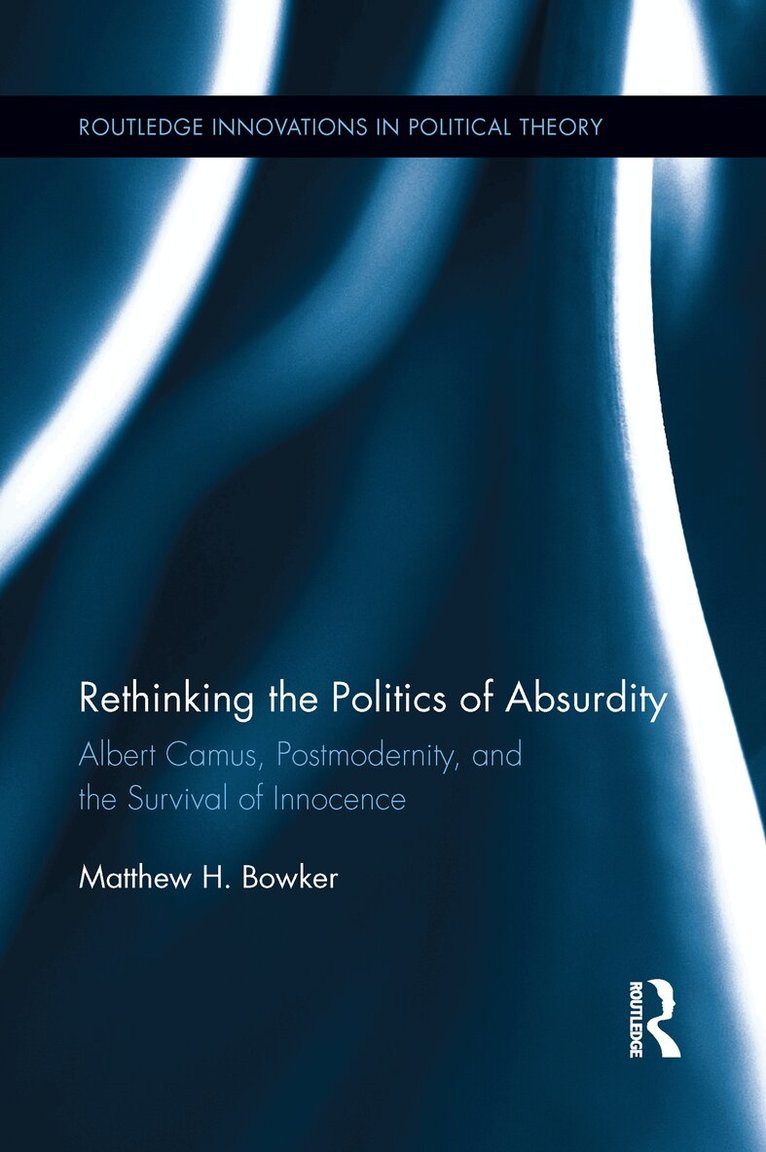
    Rethinking the Politics of Absurdity

    Albert Camus, Postmodernity, and the Survival of Innocence

    AvMatthew H. Bowker

    Inbunden, Engelska, 2013

    Del i serien Routledge Innovations in Political Theory

    2 421 kr

    Beställningsvara. Skickas inom 10-15 vardagar. Fri frakt över 249 kr.

    Fler format och utgåvor

    Häftad

    667 kr

    E-bok

    909 kr

    E-bok

    906 kr

    Beskrivning

    What does it mean to describe something or someone as absurd? Why did absurd philosophy and literature become so popular amidst the violent conflicts and terrors of the mid- to late-twentieth century? Is it possible to understand absurdity not as a feature of events, but as a psychological posture or stance? If so, what are the objectives, dynamics, and repercussions of the absurd stance? And in what ways has the absurd stance continued to shape postmodern thought and contemporary culture? In Rethinking the Politics of Absurdity, Matthew H. Bowker offers a surprising account of absurdity as a widespread endeavor to make parts of our experience meaningless. In the last century, he argues, fears about subjects’ destructive desires have combined with fears about rationality in a way that has made the absurd stance seem attractive. Drawing upon diverse sources from philosophy, literature, politics, psychoanalysis, theology, and contemporary culture, Bowker identifies the absurd effort to make aspects of our histories, our selves, and our public projects meaningless with postmodern revolts against reason and subjectivity. Weaving together analyses of the work of Albert Camus, Georges Bataille, Judith Butler, Emmanuel Levinas, and others with interview data and popular narratives of apocalypse and survival, Bowker shows that the absurd stance and the postmodern revolt invite a kind of bargain, in which meaning is sacrificed in exchange for the survival of innocence. Bowker asks us to consider that the very premise of this bargain is false: that ethical subjects and healthy communities cannot be created in absurdity. Instead, we must make meaningful even the most shocking losses, terrors, and destructive powers with which we live.Bowker's book will be of interest to scholars and practitioners in the fields of political science, philosophy, literature, psychoanalysis, sociology, and cultural studies.

    Produktinformation

    • Utgivningsdatum:2013-11-01
    • Mått:152 x 229 x 14 mm
    • Vikt:430 g
    • Format:Inbunden
    • Språk:Engelska
    • Serie:Routledge Innovations in Political Theory
    • Antal sidor:132
    • Förlag:Taylor & Francis Ltd
    • ISBN:9780415717618

    Utforska kategorier

    • Kulturvetenskap inom Samhälle och politik
    • Sociologi inom Samhälle och politik
    • Filosofiska discipliner inom Filosofi och religion

    Mer om författaren

    Matthew H. Bowker, Ph.D. is Visiting Assistant Professor of Liberal Arts at Medaille College. Educated at Columbia University and the University of Maryland, College Park, he applies psychoanalytic and literary-critical approaches to topics in political philosophy. He is the author of numerous books, journal articles, and chapters, including Ideologies of Experience: Trauma, Failure, Deprivation, and the Abandonment of the Self (Routledge, 2016).

    Recensioner i media

    "A valuable addition to the literature that contests the fashionable celebration of an absurd existence. This is an insightful and important work."—Stephen Eric Bronner, Rutgers University"Bowker rescues absurdity from literary and philosophical neglect, showing how it affects the work of diverse authors such as Dylan Thomas, Judith Butler, Giorgio Agamben, and Emmanuel Levinas, not to mention a television show about zombies. Absurdity, he argues, is a protest and defense against the meaningful experience of loss. Especially valuable is Bowker’s playing off the literature of absurdity with his own qualitative research on the topic. The book is a dazzling display of erudition by an intellectual who has his feet on the ground, a rare combination of virtues."—C. Fred Alford, University of Maryland, College Park"Matthew Bowker has written a welcome exploration and critique of the treatment of subjectivity in contemporary literature. Especially notable is Bowker’s treatment of grief and the insistence on the part of some authors that acceptance of loss is neither possible nor desirable. In developing his ideas, Bowker poses and suggests answers to a number of genuinely important questions including whether what he refers to as the "absurd experience" offers freedom from illusion or instead "a regressive and melancholy illusion about the value of perpetual grief whose goal is to incapacitate subjects so that all may share the same absurd fate." This is an engaging book filled with sharp insights into matters of importance. It offers a much needed counterpoint to the celebration of suffering that is so much a part of our intellectual and political landscape."—David Levine, University of Denver"Matthew H. Bowker’s rigorously researched volume provides a welcome contribution to the ongoing debate surrounding this author and his work. Ultimately, it is the aim of this thoughtfully written work (which includes a full index and bibliography) to 'make absurdity meaningful' through a process of rethinking; by the end, the reader is left in no doubt that such a laudable objective has been achieved.The book can be highly recommended to both the specialist and non-specialist reader, who will doubtless discover that a topic which was thought to have been researched to its limits still has many intellectual surprises in store."- Mark Orme, University of Central Lancashire, French Studies: A Quarterly Review, Vol 68, #4"In these two books, Matthew Bowker brings welcome attention to the concept of the absurd, which has largely been neglected in recent political theory and philosophy.Bowker’s treatment of the concept breathes new life into the absurd and makes an interesting contribution to the recent rethinking of Albert Camus’s ethical and political thought."-- Antony Lyon, University of California, San Diego

    Innehållsförteckning

    • Preface. 1. Introduction. 2. Absurd Protest and the Refusal to Mourn. 3. Absurd Encounters — Interviews on Absurd Experience. 4. Rupture, Absurdity, and the ‘Value of Grief’ in the Constitution of Postmodern Communities. 5: Absurd Terror and Legitimate Violence. 6: Surviving the Absurd and the Anti-Subject.