
Matthew Lindauer – författare
Visar alla böcker från författaren Matthew Lindauer. Handla med fri frakt och snabb leverans.
3 produkter
3 produkter

654 kr
Skickas inom 5-8 vardagar
Can philosophical concepts do real work in improving our world? Should we, when evaluating competing understandings of concepts like 'justice' and 'solidarity,' take into account whether these different understandings can actually help us to fight injustice and promote solidarity between people? The Fruitfulness of Normative Concepts is the first book-length attempt to argue that the answer to both of these questions is an emphatic “yes.” In doing so, it provides a bold new defense of a tight relationship between theory and practice. Drawing on cutting-edge scientific research, the book also demonstrates that we now have the tools to evaluate the practical value of normative concepts.Moral and political philosophers should be and have often been, explicitly or implicitly, interested in a number of dimensions of fruitfulness that Matthew Lindauer delineates, and it is an empirical question whether a given concept is fruitful in these ways. These dimensions of fruitfulness include the extent to which moral and political concepts (i) motivate the right kinds of behavior when internalized (Motivational Fruitfulness), (ii) prevent the wrong kinds of behavior (Prevention Fruitfulness), (iii) help us fight back against problematic social phenomena such as bias and discrimination (Resilience Fruitfulness), (iv) are capable of achieving consensus to a sufficient extent among people committed to cooperation and peaceful coexistence (Consensus Fruitfulness), and (v) can serve as useful guides in solving practical problems that we need to solve (Guidance Fruitfulness). Lindauer's research establishes that, rather than merely clearing the way for philosophical work to be done, empirical research is an important part of the philosophical enterprise, is continuous with traditional a priori research methods, and will be required to resolve at least some important debates in moral and political philosophy.
1 217 kr
Skickas inom 10-15 vardagar
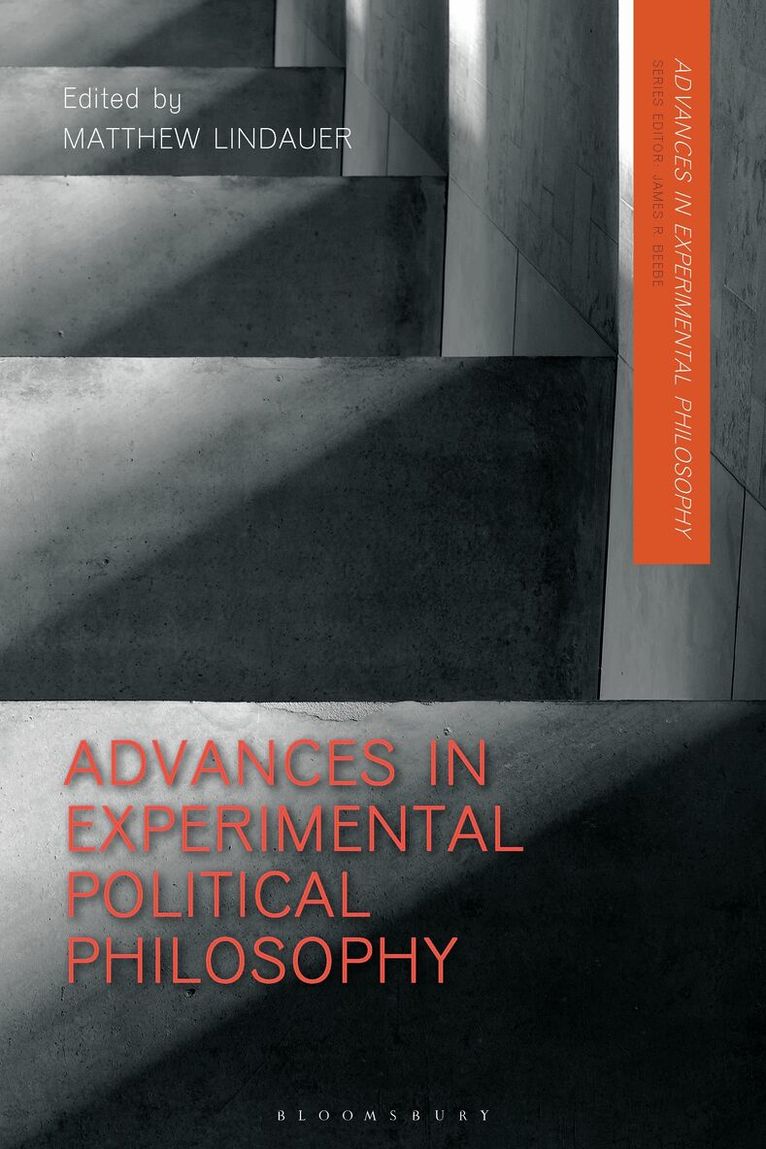
Political philosophy asks questions of great importance to our lives, both as individuals and members of political communities: What is justice? What does the state owe to its citizens? Under which conditions are different forms of government likely to be stable? The relevance of empirical research to such questions, however, has been largely underexplored.Introducing experimental political philosophy as a burgeoning field of inquiry, this volume brings together leading scholars using empirical methods to shed light on questions of justice and politics, and encourages them to reflect on the relationship of their methodologies to less empirically-focused approaches. Chapters cover traditional topics including distributive justice, egalitarianism, property rights, and healthcare justice, as well as outlining new directions and applications, such as the problem of misogynistic extremist movements, the public justification of immigration enforcement, and the relationship between gender norms and support for care labor organizing. The result is a unique collection that paves the way for further debates in the field and meaningful reflection on what it means for political philosophy to be empirically informed.
397 kr
Skickas inom 10-15 vardagar
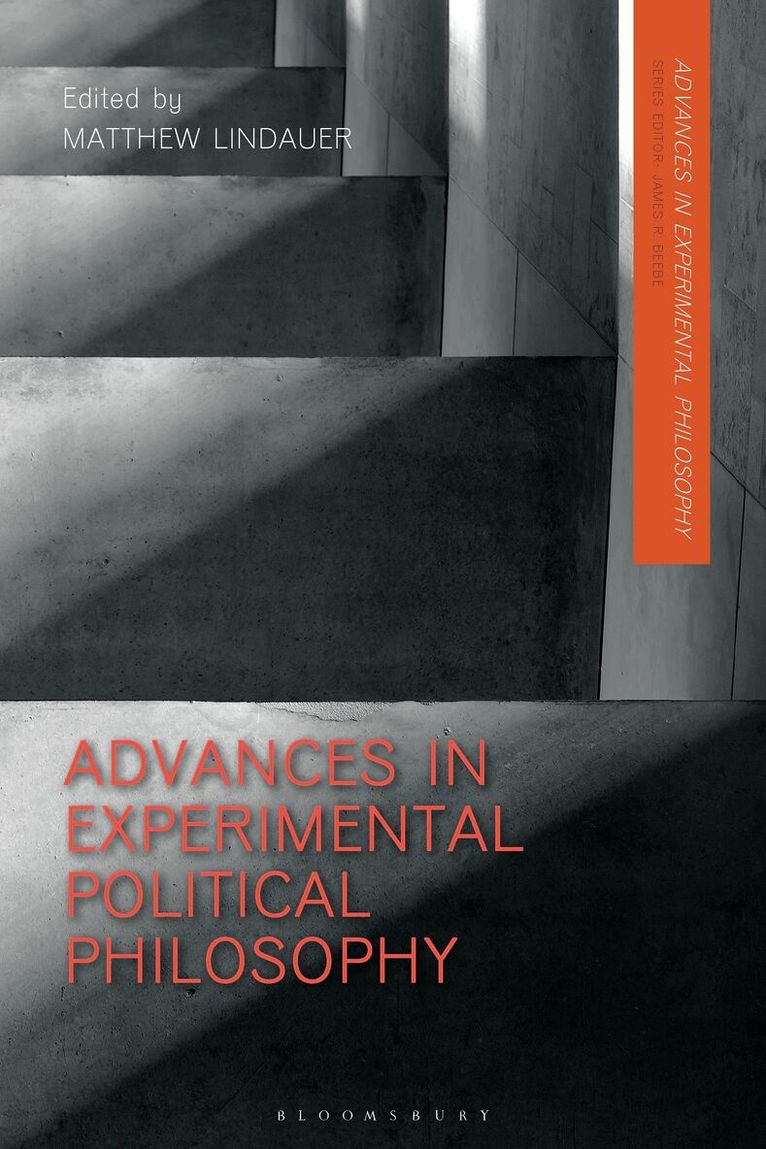
Political philosophy asks questions of great importance to our lives, both as individuals and members of political communities: What is justice? What does the state owe to its citizens? Under which conditions are different forms of government likely to be stable? The relevance of empirical research to such questions, however, has been largely underexplored.Introducing experimental political philosophy as a burgeoning field of inquiry, this volume brings together leading scholars using empirical methods to shed light on questions of justice and politics, and encourages them to reflect on the relationship of their methodologies to less empirically-focused approaches. Chapters cover traditional topics including distributive justice, egalitarianism, property rights, and healthcare justice, as well as outlining new directions and applications, such as the problem of misogynistic extremist movements, the public justification of immigration enforcement, and the relationship between gender norms and support for care labor organizing. The result is a unique collection that paves the way for further debates in the field and meaningful reflection on what it means for political philosophy to be empirically informed.