Matthew Reeves - Böcker
Visar alla böcker från författaren Matthew Reeves. Handla med fri frakt och snabb leverans.
6 produkter
6 produkter
531 kr
Skickas
This publication, the first of its kind in many decades, draws together thirty-six rare and sumptuous European textiles created between the late fourteenth and late sixteenth centuries. Incorporating objects made both for secular and liturgical use, it explores the contexts of their creation, their functions and purpose, and their changing fortunes over the course of the subsequent centuries. After goldsmiths' work, tapestries and embroideries were among the costliest art forms of the Middle Ages, due to their precious materials and the countless hours required to produce them. Whether hung on the wall or worn about the person, textiles provided a potent display of their owners’ wealth and status. Their vivid decoration also provided the perfect backdrop for courtly pageants, royal ceremonies, and liturgical festivals. Even the quickest glance at late medieval paintings shows just how forcefully textiles shaped the visual texture of the occasions they depict. Though always the works of specialist craftsmen, in the later Middle Ages textiles were often made following designs supplied by the leading painters and designers of their age. Yet only a tiny fraction of what was made has survived. The fragility of the fabrics, light damage and insects, together with alterations of use, have made this material extremely rare. This catalog includes thirty-six late medieval and Renaissance textiles, many published for the first time, that together span a period of almost two hundred years. They are organized by country, starting with otherwise unrecorded examples of ‘opus anglicanum’ made in English workshops between around 1400 and the eve of the Reformation. They are followed by textiles from France, the Netherlands, Germany, Italy, and Spain. Different materials and classes of textile are grouped together within each of these regional divisions. For instance, liturgical vestments and altar hangings sit side by side with sumptuous velvets and delicately embroidered tablecloths. Together, they encapsulate the incredible breadth of Europe’s flourishing textile industries during this period. Rosamund Garrett and Matthew Reeves have carefully recorded the physical structure, processes of manufacture, and condition of these remarkable and sometimes complex works, and have situated them within the wider contexts of their production and the cultural climate in which they were made.
293 kr
Skickas inom 7-10 vardagar
350 kr
Skickas inom 7-10 vardagar
Mindfulness
Harnessing Mindfulness for Business Success (Using Mindfulness Techniques to Attract Abundance and Happiness)
Häftad, Engelska, 2023
224 kr
Skickas inom 5-8 vardagar
85 kr
Skickas inom 7-10 vardagar
Pains on Trains is the perfect way to take the tedium out of commuting, guaranteed to become as indispensable to the seasoned traveller as the blow-up pillow and water sterilising tablets. In Pains on Trains, Andrew Holmes and Matthew Reeves set their sights on the scourge of the modern office worker - other office workers who clog up trains, buses, boats and planes with their annoying habits and depressing clothes. Pains on Trains is dedicated to the rush-hour veteran and consists of a 'pain-spotting' guide to the very worst people you meet on your daily commute. Each painful character is illustrated in their usual context and supported by a short narrative.
464 kr
Skickas inom 7-10 vardagar
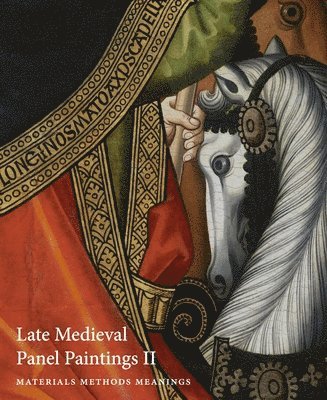
This beautiful and extensively illustrated catalogue presents in-depth case studies of twenty-four rare and remarkable Late Medieval panel paintings, many from the German-speaking regions of Europe, but also from Spain, France and the Southern Netherlands. These works – often fragments of larger altarpieces designed for liturgical performance and communal or private devotion – can be monumental and dramatic or small and intimate, but all on close examination prove to be rich in meaning – even in cases where the painters remain anonymous, and the precise contexts of their creation have become obscured or fragmented. The collected essays will encompass a broad spectrum of artistic styles, techniques, and interests, including in some instances the works’ original frames, and the attendant meanings they give to the imagery housed within. The group will also be augmented by a rare and important small-scale tapestry altarpiece with close links to panel painting. The inclusion of such a piece, one of the many newly resurfaced works to be included in the catalogue, will offer an innovative approach to the scholarship of Medieval paintings, and enrich our understanding of the cross-pollination of ideas between mediums and the role played by painters in tapestry production at the turn of the sixteenth century. The book, a follow-up to Susie Nash’s important 2011 catalogue, considers the physical history, original form, condition and technique of the assembled works, using wood analysis and dendrochronology, paint samples, infrared, x-rays and macro photography to document the materials and methods involved in their making and the alterations and transformations they have undergone with time. This new information is combined with close readings of their imagery and its presentation to explore issues of meaning, creative process, patronal intervention and artistic intention, leading in many cases to new reconstructions, attributions, dates and iconographic readings. The text is extensively illustrated with a series of images of all of the works, along with technical photographs and comparative material.