Matthew S. Seligmann – författare
Visar alla böcker från författaren Matthew S. Seligmann. Handla med fri frakt och snabb leverans.
12 produkter
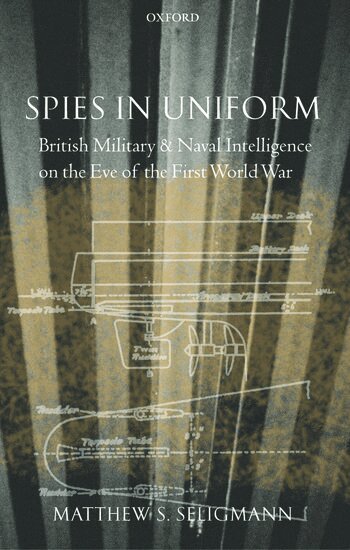
Spies in Uniform
British Military and Naval Intelligence on the Eve of the First World War
Inbunden, 2006
4732 kr
Lägg i varukorg
Why did the British government declare war on Germany in August 1914? Was it because Germany posed a threat to British national security? Today many prominent historians would argue that this was not the case and that a million British citizens died needlessly for a misguided cause. This book …
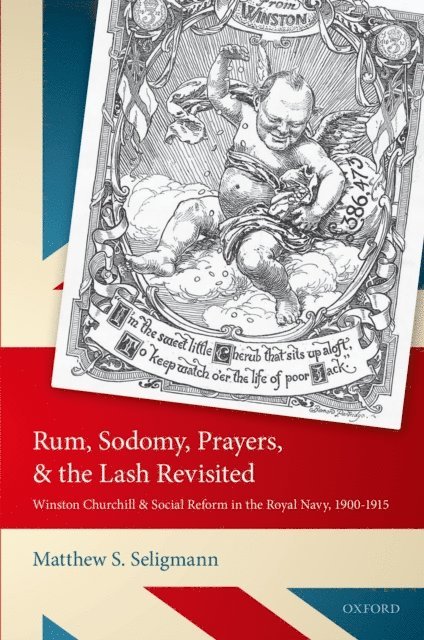
Rum, Sodomy, Prayers, and the Lash Revisited
Winston Churchill and Social Reform in the Royal Navy, 1900-1915
E-bok, 2018
1171 kr
Lägg i varukorg
''Naval tradition? Naval tradition? Monstrous. Nothing but rum, sodomy, prayers and the lash.'' This quotation, from Winston Churchill, is frequently dismissed as apocryphal or a jest, but, interestingly, all four of the areas of naval life singled out in it were ones that were subject to major …
Spies in Uniform
British Military and Naval Intelligence on the Eve of the First World War
E-bok, 2006
2605 kr
Lägg i varukorg
Why did the British government declare war on Germany in August 1914? Was it because Germany posed a threat to British national security? Today many prominent historians would argue that this was not the case and that a million British citizens died needlessly for a misguided cause.This book …
Royal Navy and the German Threat 1901-1914
Admiralty Plans to Protect British Trade in a War Against Germany
E-bok, 2012
1756 kr
Lägg i varukorg
When and why did the Royal Navy come to view the expansion of German maritime power as a threat to British maritime security? Contrary to current thinking, Matthew S. Seligmann argues that Germany emerged as a major threat at the outset of the twentieth century, not because of its growing battle …
Royal Navy and the German Threat 1901-1914
Admiralty Plans to Protect British Trade in a War Against Germany
E-bok, 2012
1756 kr
Lägg i varukorg
When and why did the Royal Navy come to view the expansion of German maritime power as a threat to British maritime security? Contrary to current thinking, Matthew S. Seligmann argues that Germany emerged as a major threat at the outset of the twentieth century, not because of its growing battle …
Seapower in an Age of Rivalry
Britain and the Maritime Realm, 1898–1914
Inbunden, 2027
503 kr
Kommande
A bold and wide-ranging reassessment of British seapower on the cusp of the First World War.In the decade and a half before the First World War, Britain was at the height of its global dominance and British seapower played an increasingly important role in national life. The sea enriched the …
Rum, Sodomy, Prayers, and the Lash Revisited
Winston Churchill and Social Reform in the Royal Navy, 1900-1915
Inbunden, 2018
1883 kr
Lägg i varukorg
'Naval tradition? Naval tradition? Monstrous. Nothing but rum, sodomy, prayers and the lash.' This quotation, from Winston Churchill, is frequently dismissed as apocryphal or a jest, but, interestingly, all four of the areas of naval life singled out in it were ones that were subject to major …
The Royal Navy and the German Threat 1901-1914
Admiralty Plans to Protect British Trade in a War Against Germany
Inbunden, 2012
2800 kr
Lägg i varukorg
When and why did the Royal Navy come to view the expansion of German maritime power as a threat to British maritime security? Contrary to current thinking, Matthew S. Seligmann argues that Germany emerged as a major threat at the outset of the twentieth century, not because of its growing battle …
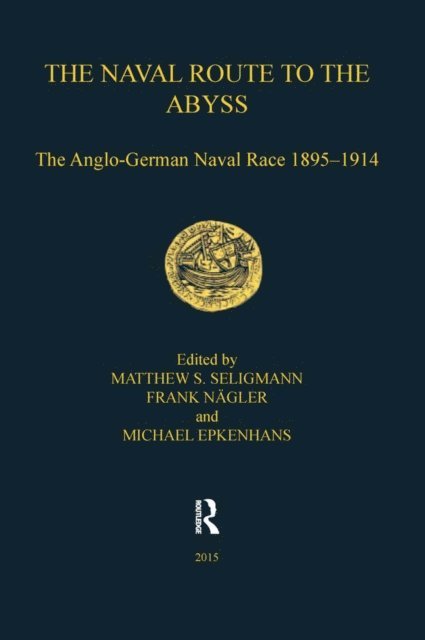
Naval Route to the Abyss
The Anglo-German Naval Race 1895-1914
Av Frank Nagler, Matthew S. Seligmann m. fl.
E-bok, 2016
970 kr
Lägg i varukorg
The intense rivalry in battleship building that took place between Britain and Germany in the run up to the First World War is seen by many as the most totemic of all armaments races. Blamed by numerous commentators during the inter-war years as a major cause of the Great War, it has become …
Naval Route to the Abyss
The Anglo-German Naval Race 1895-1914
Av Frank Nagler, Matthew S. Seligmann
E-bok, 2016
999 kr
Lägg i varukorg
The intense rivalry in battleship building that took place between Britain and Germany in the run up to the First World War is seen by many as the most totemic of all armaments races. Blamed by numerous commentators during the inter-war years as a major cause of the Great War, it has become …
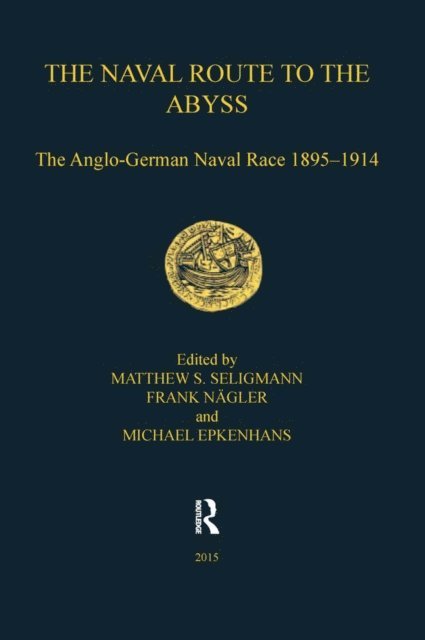
Naval Route to the Abyss
The Anglo German Naval Race 1895-1914
Av Matthew S Seligmann, Frank Nägler m. fl.
Inbunden, 2015
1741 kr
Lägg i varukorg
This publication is an essential volume for any serious student of naval policy in the pre-First World War era. The intense rivalry in battleship building that took place between Britain and Germany in the run up to the First World War is seen by many as the most totemic of all armaments races. It …
Naval Route to the Abyss
The Anglo-German Naval Race 1895-1914
Av Matthew S. Seligmann, Frank Nägler
Häftad, 2019
849 kr
Lägg i varukorg
The intense rivalry in battleship building that took place between Britain and Germany in the run up to the First World War is seen by many as the most totemic of all armaments races. Blamed by numerous commentators during the inter-war years as a major cause of the Great War, it has become …