Matthew Willis - Böcker
Visar alla böcker från författaren Matthew Willis. Handla med fri frakt och snabb leverans.
9 produkter
9 produkter
Del 151 - Duel
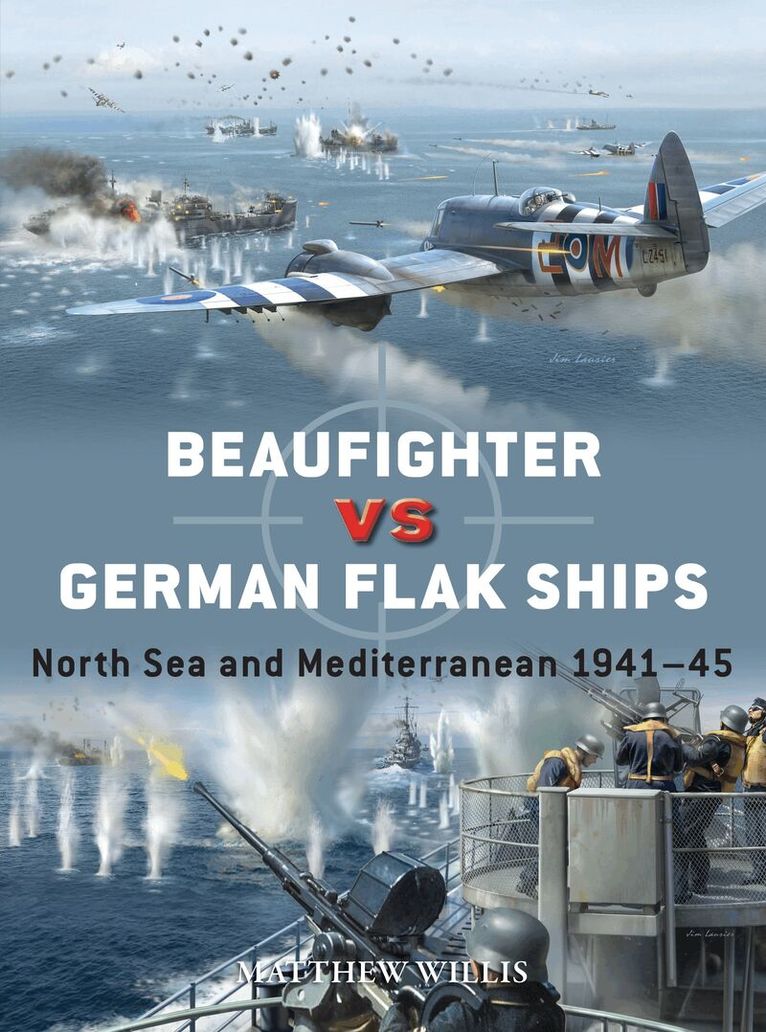
Beaufighter vs German Flak Ships
North Sea and Mediterranean 1941–45
Häftad, Engelska, 2026
185 kr
Skickas inom 7-10 vardagar
An illustrated study of RAF Coastal Command’s deployment of the Beaufighter against German supply lines in 1941 and the long-running ‘arms race’ with Kriegsmarine Flak ships that followed.Crucial German shipping lines faced a new threat in 1941 when RAF Coastal Command debuted the iconic long-range Beaufighter. The aircraft and its subsequent Mk VIC and Mk X versions gave the Allies a tough, relatively fast and very hard-hitting platform for air attack on German convoys, and so it became essential for the Kriegsmarine to fit ever-heavier anti-aircraft batteries to its escort vessels, and even to develop specialist Flak vessels. In this compelling study, naval aviation historian Matthew Willis chronicles the little-explored arms race that saw RAF Coastal Command and the Kriegsmarine engaged in a fierce battle of one-upmanship until war’s end. New artwork, rare archive photography and contemporary records of Beaufighter operations add depth to fascinating historical accounts, including the actions of the famous North Coates Strike Wing against shipping in the North Sea and the exploits of Beaufighter units tasked with severing Rommel’s all-important supply lines.
378 kr
Kommande
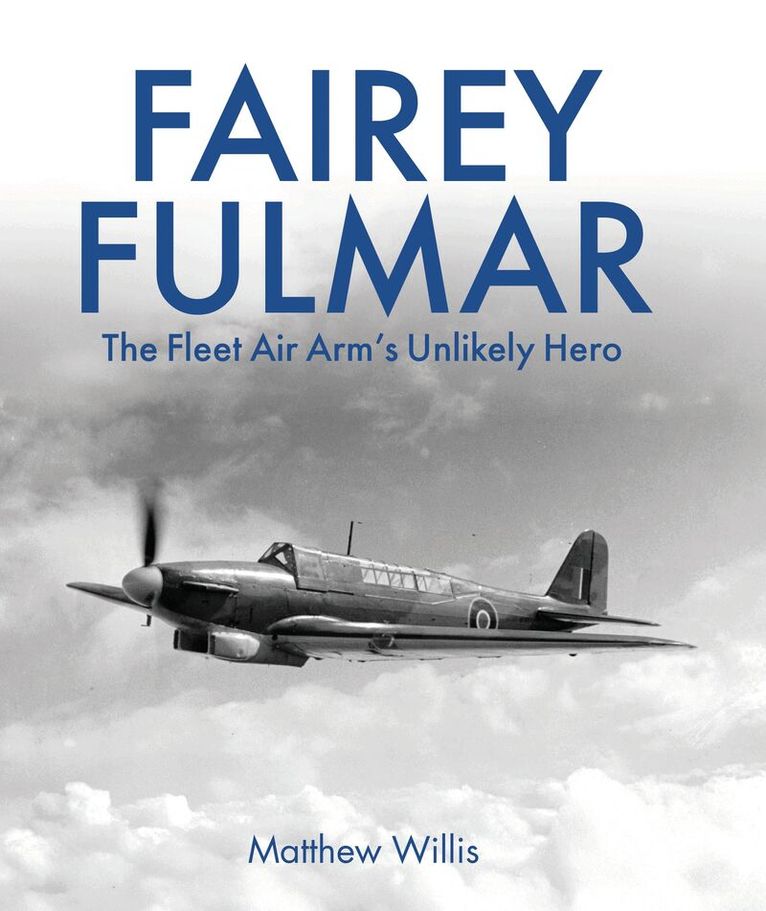
The remarkable story of how a make-do fighter proved itself indispensable in the harshest theatres of war Fairey Fulmar –The Fleet Air Arm’s Unlikely Hero charts, for the first time, the full history of the Fairey Fulmar naval fighter. A hastily converted light bomber, rejected by the RAF and increasingly obsolete against Messerschmitts and Zeroes, somehow the Fulmar became the top-scoring Royal Navy fighter aircraft of World War II. The Fairey Fulmar was the Fleet Air Arm’s top-scoring fighter of World War II. However, this simple fact belies the contradictions at the heart of the Fulmar’s story – how a hastily converted light bomber, rejected by the RAF and increasingly obsolete against Messerschmitts and Zeroes, held the line during the Royal Navy’s darkest hour. When it entered service in 1940, at the height of the Battle of Britain, the Fulmar seemed to put the Navy’s aviators on an equal footing with ‘The Few’, as it was the first naval fighter to share the eight-gun armament and the legendary Rolls-Royce Merlin engine of the RAF’s Spitfires and Hurricanes. However, the Fulmar was no nimble interceptor. Converted from a failed light bomber to fill a gap in the Fleet Air Arm’s hopelessly inadequate armoury, the Fulmar was big, heavy and no match for the best Axis fighters in a dogfight. Even so, it possessed hidden strengths that enabled naval pilots to turn the tables on the enemy when all seemed lost. From the battles of Taranto and Matapan to the cauldron of Malta in the Mediterranean, from the freezing wastes of the Arctic convoy routes to the Japanese thrust into the Indian Ocean and, later, making the first, faltering steps towards radar-guided night-fighting, the Fulmar rose above its unpromising origins to play a vital role in the Allied victory.
174 kr
Skickas inom 7-10 vardagar
Drawing on rare, historical photography and specially commissioned artwork, Matthew Willis explores the heroic feats of the few Royal Navy’s obsolescent biplanes that stood between the state-of-the-art Axis warships and their objectives.Focusing on the technical specifications of both opponents, using original records, and detailed armament and cockpit views, this book explores the key attributes and drawbacks of the disadvantaged Royal Navy torpedo-bombers against the mighty Regia Marina and Kriegsmarine destroyers and raiders, covering a wide range of sea battles, from the more famous attacks such as the strike on the Bismarck, the tragic events of the Channel Dash or the clash with the Italian battle fleet at Taranto, to less covered sea battles such as the Battle of Matapan.Despite their powerful weaponry and heavy armour protection, the Axis warships proved vulnerable to a skillfully and audaciously flown torpedo-bomber, thanks to innovative commanders exploiting every possible advantage. Including rare personal recollections from the airmen who flew the torpedo-bombers and historical accounts from the Axis warship crews, this book describes each and every facet of this dramatic duel.
196 kr
Skickas inom 7-10 vardagar
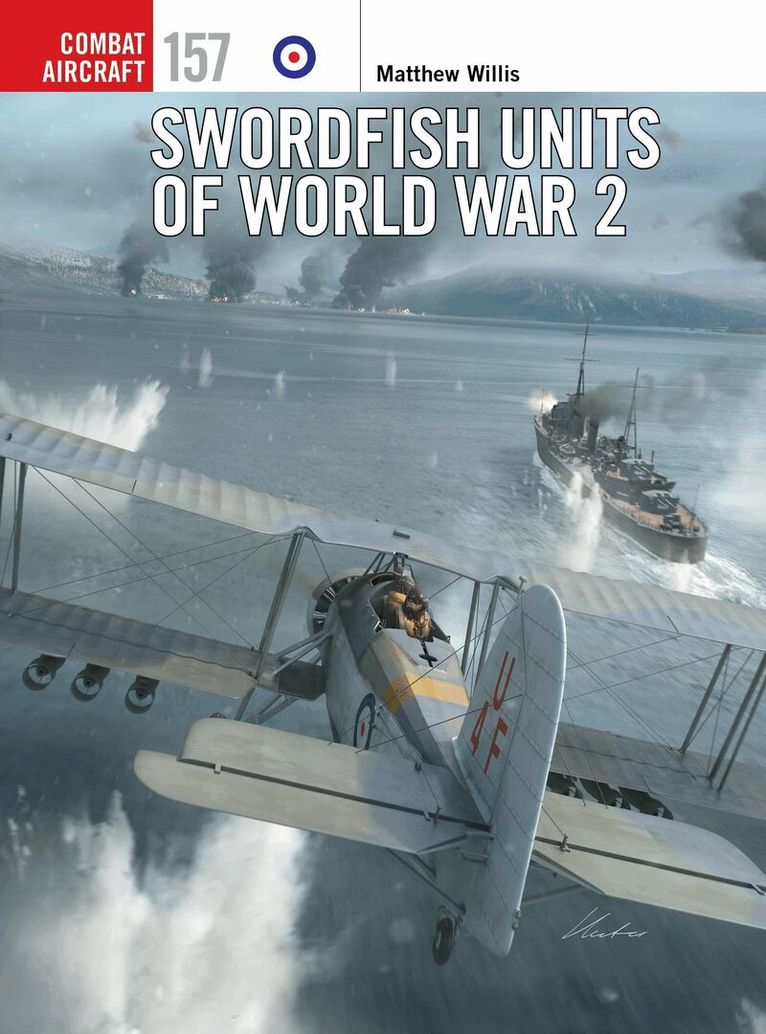
A fully illustrated account of the World War 2 combat career of the Fairey Swordfish torpedo-bomber, one of the Royal Navy's most resilient and effective aircraft of the period.During the 1930s, the Royal Navy’s Fleet Air Arm sought an aircraft to combine the functions of torpedo attack, reconnaissance and gunnery spotting, eventually realising this goal with the Swordfish biplane. Despite competition from more modern types like the Blackburn Shark and Barracuda, the Swordfish made a key contribution to some of Britain’s greatest naval successes of World War 2, helping to tip the balance during operations such as the raid on the Italian battle fleet at Taranto in November 1940, and the attacks on the German battleship Bismarck in May 1941. Elsewhere, it assumed an anti-submarine role both in the Battle of the Atlantic and when escorting Arctic convoys, and was used by the RAF for anti-shipping work during the D-Day landings and the final stages of the European war.With this fascinating study, historian Matthew Willis draws on Admiralty files, operational records and interviews with Fleet Air Arm aircrew to assemble a wide-ranging history of one of the Royal Navy’s most important aircraft. Archival photographs and 22 newly commissioned colour profiles help to chart the development of the Swordfish, detailing the aircraft’s resilience and adaptability through both its many victories and its equally eventful defeats.
332 kr
Kommande
214 kr
Skickas
178 kr
Skickas
282 kr
Skickas inom 5-8 vardagar
231 kr
Skickas inom 5-8 vardagar