
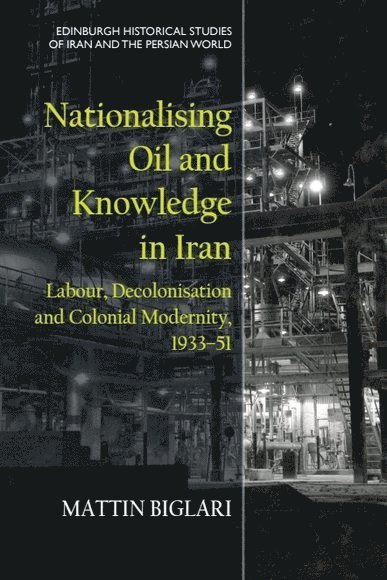
Mattin Biglari - Böcker
Visar alla böcker från författaren Mattin Biglari. Handla med fri frakt och snabb leverans.
2 produkter
2 produkter
Nationalising Oil and Knowledge in Iran
Labour, Decolonisation and Colonial Modernity, 1933–51
Inbunden, Engelska, 2025
1 728 kr
Skickas inom 3-6 vardagar
Iran's nationalisation of oil in 1951 was a key catalyst for the rise of resource nationalism as an animating force of global decolonisation, expelling the Anglo-Iranian Oil Company (AIOC, now known as BP) after nearly fifty years of domination in southwest Iran. Nationalising Oil & Knowledge in Iran turns attention to the origins of nationalisation in the everyday struggles between the oil company and subaltern actors in the city of Abadan, then home to the world's largest oil refinery and deeply imbricated in networks of colonialism and racial capitalism. Engaging with energy history, postcolonial/subaltern studies, and science & technology studies, the book focuses on the politics of expertise: how nationalisation reproduced the epistemic coloniality of the oil company, which rested on local dispossession, social engineering, as well as racial and gendered segregation. It argues that nationalisation diverged from subaltern contestations of oil expertise in Abadan, which presented a more fundamental challenge to colonial modernity.
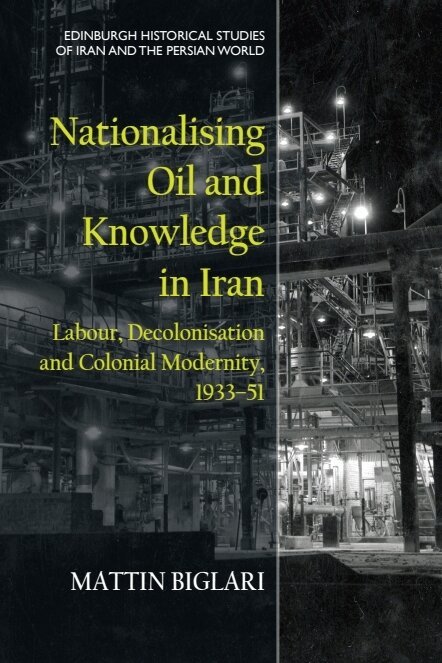
Nationalising Oil and Knowledge in Iran
Labour, Decolonisation and Colonial Modernity, 1933–51
Häftad, Engelska, 2026
306 kr
Kommande
Iran’s nationalisation of oil in 1951 was a key catalyst for the rise of resource nationalism as an animating force of global decolonisation, expelling the Anglo-Iranian Oil Company (AIOC, now known as BP) after nearly fifty years of domination in southwest Iran. Nationalising Oil & Knowledge in Iran turns attention to the origins of nationalisation in the everyday struggles between the oil company and subaltern actors in the city of Abadan, then home to the world’s largest oil refinery and deeply imbricated in networks of colonialism and racial capitalism. Engaging with energy history, postcolonial/subaltern studies, and science & technology studies, the book focuses on the politics of expertise: how nationalisation reproduced the epistemic coloniality of the oil company, which rested on local dispossession, social engineering, as well as racial and gendered segregation. It argues that nationalisation diverged from subaltern contestations of oil expertise in Abadan, which presented a more fundamental challenge to colonial modernity.