Maurizio Meloni - Böcker
Visar alla böcker från författaren Maurizio Meloni. Handla med fri frakt och snabb leverans.
6 produkter
6 produkter
635 kr
Kommande
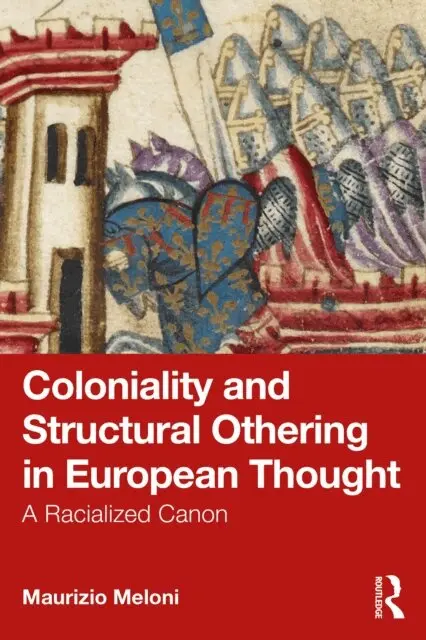
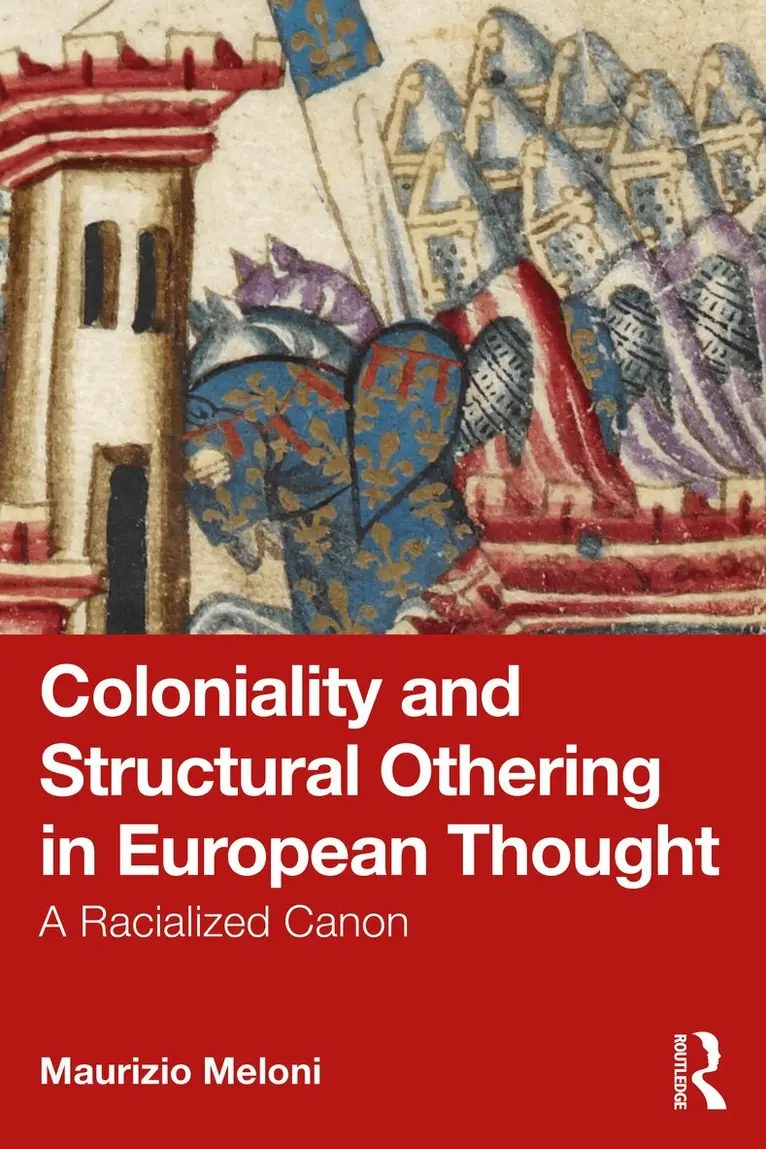
This book provides a historical and conceptual analysis of patterns of racialized otherness in European thought, traversing primary sources, historical periods, and national archives, to show that the longue durée of structural othering beyond individual disciplinary canons is essential to making sense of epistemic violence and structural coloniality in the European canon.Through the analysis of published texts and personal letters, the book brings to light racializing tropes and patterns of othering in four canonical authors each representing a different Western European country: Italian father of humanism Francesco Petrarca (Petrarch), Charles Darwin, Norbert Elias and Michel Foucault. The chapters on Italian humanism begin by highlighting how one of the founding myths of European modernity was shaped by a protocolonial mentality and the violent excision of Arabic sources, whilst the chapter on Darwin analyses the importance of shooting and frontier wars in the Beagle voyage and the vicissitudes of the term ‘extermination’ in Darwin’s thought. Elias’s civilizing narrative is unpacked to highlight his omission of colonial violence in parallel to the development of court etiquette in the metropoles. Finally, Foucault’s belief in the uniqueness of the Greek experience goes in parallel with his deletion of Islamic presence in the genealogy of modern governmentality. The initial and final chapters offer an ethnography of forgotten ethnic violence and racialized monuments in Italy linked with the distinctive history of Italian colonialism and ‘eternal fascism’.It will appeal to scholars, researchers and students with interests in social theory, sociology, political theory, cultural studies, history, history of science, and postcolonial and ethnic studies.
2 325 kr
Kommande
This book provides a historical and conceptual analysis of patterns of racialized otherness in European thought, traversing primary sources, historical periods, and national archives, to show that the longue durée of structural othering beyond individual disciplinary canons is essential to making sense of epistemic violence and structural coloniality in the European canon.Through the analysis of published texts and personal letters, the book brings to light racializing tropes and patterns of othering in four canonical authors each representing a different Western European country: Italian father of humanism Francesco Petrarca (Petrarch), Charles Darwin, Norbert Elias and Michel Foucault. The chapters on Italian humanism begin by highlighting how one of the founding myths of European modernity was shaped by a protocolonial mentality and the violent excision of Arabic sources, whilst the chapter on Darwin analyses the importance of shooting and frontier wars in the Beagle voyage and the vicissitudes of the term ‘extermination’ in Darwin’s thought. Elias’s civilizing narrative is unpacked to highlight his omission of colonial violence in parallel to the development of court etiquette in the metropoles. Finally, Foucault’s belief in the uniqueness of the Greek experience goes in parallel with his deletion of Islamic presence in the genealogy of modern governmentality. The initial and final chapters offer an ethnography of forgotten ethnic violence and racialized monuments in Italy linked with the distinctive history of Italian colonialism and ‘eternal fascism’.It will appeal to scholars, researchers and students with interests in social theory, sociology, political theory, cultural studies, history, history of science, and postcolonial and ethnic studies.
2 164 kr
Skickas inom 10-15 vardagar
This comprehensive handbook synthesizes the often-fractured relationship between the study of biology and the study of society. Bringing together a compelling array of interdisciplinary contributions, the authors demonstrate how nuanced attention to both the biological and social sciences opens up novel perspectives upon some of the most significant sociological, anthropological, philosophical and biological questions of our era. The six sections cover topics ranging from genomics and epigenetics, to neuroscience and psychology to social epidemiology and medicine. The authors collaboratively present state-of-the-art research and perspectives in some of the most intriguing areas of what can be called biosocial and biocultural approaches, demonstrating how quickly we are moving beyond the acrimonious debates that characterized the border between biology and society for most of the twentieth century. This landmark volume will be an extremely valuable resource for scholars and practitioners in all areas of the social and biological sciences.The chapter 'Ten Theses on the Subject of Biology and Politics: Conceptual, Methodological, and Biopolitical Considerations' is open access under a CC BY 4.0 license via link.springer.com.Versions of the chapters 'The Transcendence of the Social', 'Scrutinizing the Epigenetics Revolution', 'Species of Biocapital, 2008, and Speciating Biocapital, 2017' and 'Experimental Entanglements: Social Science and Neuroscience Beyond Interdisciplinarity' are available open access via third parties. For further information please see license information in the chapters or on link.springer.com.
Impressionable Biologies
From the Archaeology of Plasticity to the Sociology of Epigenetics
Inbunden, Engelska, 2019
2 288 kr
Skickas inom 10-15 vardagar
During the twentieth century, genes were considered the controlling force of life processes, and the transfer of DNA the definitive explanation for biological heredity. Such views shaped the politics of human heredity: in the eugenic era, controlling heredity meant intervening in the distribution of "good" and "bad" genes. However, since the turn of the twenty-first century, this centrality of genes has been challenged by a number of "postgenomic" disciplines. The rise of epigenetics in particular signals a shift from notions of biological fixedness to ideas of plasticity and "impressionability" of biological material.This book investigates a long history of the beliefs about the plasticity of human biology, starting with ancient medicine, and analyses the biopolitical techniques required to govern such permeability. It looks at the emergence of the modern body of biomedicine as a necessary displacement or possibly reconfiguration of earlier plastic views. Finally, it analyses the returning of plasticity to contemporary postgenomic views and argues that postgenomic plasticity is neither a modernistic plasticity of instrumental management of the body nor a postmodernist celebration of potentialities. It is instead a plasticity that disrupts clear boundaries between openness and determination, individual and community, with important implications for notions of risk, responsibility and intervention.
Impressionable Biologies
From the Archaeology of Plasticity to the Sociology of Epigenetics
Häftad, Engelska, 2019
649 kr
Skickas inom 10-15 vardagar
During the twentieth century, genes were considered the controlling force of life processes, and the transfer of DNA the definitive explanation for biological heredity. Such views shaped the politics of human heredity: in the eugenic era, controlling heredity meant intervening in the distribution of "good" and "bad" genes. However, since the turn of the twenty-first century, this centrality of genes has been challenged by a number of "postgenomic" disciplines. The rise of epigenetics in particular signals a shift from notions of biological fixedness to ideas of plasticity and "impressionability" of biological material.This book investigates a long history of the beliefs about the plasticity of human biology, starting with ancient medicine, and analyses the biopolitical techniques required to govern such permeability. It looks at the emergence of the modern body of biomedicine as a necessary displacement or possibly reconfiguration of earlier plastic views. Finally, it analyses the returning of plasticity to contemporary postgenomic views and argues that postgenomic plasticity is neither a modernistic plasticity of instrumental management of the body nor a postmodernist celebration of potentialities. It is instead a plasticity that disrupts clear boundaries between openness and determination, individual and community, with important implications for notions of risk, responsibility and intervention.
1 625 kr
Skickas inom 10-15 vardagar
This comprehensive handbook synthesizes the often-fractured relationship between the study of biology and the study of society. Bringing together a compelling array of interdisciplinary contributions, the authors demonstrate how nuanced attention to both the biological and social sciences opens up novel perspectives upon some of the most significant sociological, anthropological, philosophical and biological questions of our era. The six sections cover topics ranging from genomics and epigenetics, to neuroscience and psychology to social epidemiology and medicine. The authors collaboratively present state-of-the-art research and perspectives in some of the most intriguing areas of what can be called biosocial and biocultural approaches, demonstrating how quickly we are moving beyond the acrimonious debates that characterized the border between biology and society for most of the twentieth century. This landmark volume will be an extremely valuable resource for scholars and practitioners in all areas of the social and biological sciences.The chapter 'Ten Theses on the Subject of Biology and Politics: Conceptual, Methodological, and Biopolitical Considerations' is open access under a CC BY 4.0 license via link.springer.com.Versions of the chapters 'The Transcendence of the Social', 'Scrutinizing the Epigenetics Revolution', 'Species of Biocapital, 2008, and Speciating Biocapital, 2017' and 'Experimental Entanglements: Social Science and Neuroscience Beyond Interdisciplinarity' are available open access via third parties. For further information please see license information in the chapters or on link.springer.com.