Max L. Moorhead - Böcker
Visar alla böcker från författaren Max L. Moorhead. Handla med fri frakt och snabb leverans.
4 produkter
4 produkter
241 kr
Skickas inom 10-15 vardagar
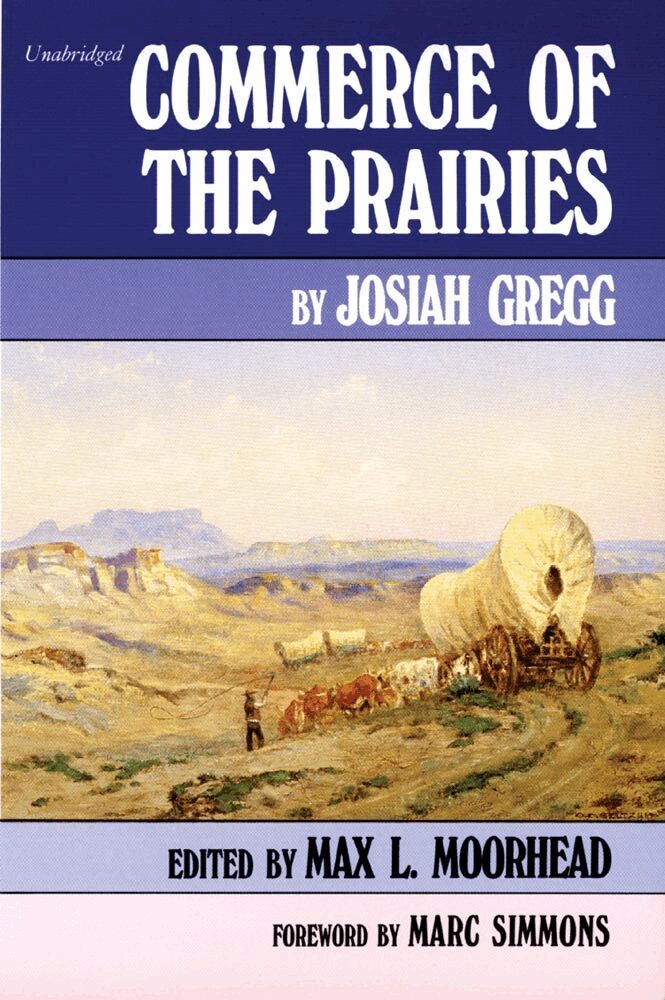
Written as a scrupulously accurate guidebook to the prairies and as an authoritative account of the early Santa Fe trade, Commerce of the Prairies has been a favorite of historians, ethnologists, naturalists, and collectors of Western Americana for generations. But Gregg's masterpiece is not for specialists alone: its vivid descriptions of desert mirages, wagon caravans, Indian alarms and attacks, buffalo hunts, and other early Western phenomena will delight all who wish to know the country as it was before the great herds of buffalo were slaughtered and the roving Indians confined to reservations, before the landscape was transformed by barbed wire, domestic cattle, plowed fields, and modern highways.Josiah Gregg, a man of rare sensitivity and passionate science interest, joined a caravan of traders bound for Santa Fé in 1831 and almost immediately developed a fascination for the adventure-packed life of Santa Fé trader. And during the ten years that he engaged in the San Fé trade, Gregg took copious notes on the life and landscape of the American prairies and the Mexican plateau, later utilizing them in Commerce of the Prairies.This new edition faithfully follows the rare first edition, to and including the maps and illustrations. It will be welcomed both by readers familiar with the importance and interest of Gregg's work and by readers who have yet to discover its attraction.
Apache Frontier
Jacob Ugarte and Spanish-Indian Relations in Northern New Spain, 1769–1791
Häftad, Engelska, 1968
241 kr
Skickas inom 10-15 vardagar
When the tide of Spanish settlement in America reached the range of the Apache nation, it was abruptly halted. For two centuries marauding Apaches baffled the defending Spanish troops and exacted a fearful toll from the terrorized colonists.This book relates how Commandant General Jacobo Ugarte faced the problem and the extent to which he was able to solve it, using a new Indian policy adopted by Spain in 1786. Political circumstances prevented Ugarte from completing the pacification of the Apaches, but it is significant that his stratagems were essentially the same as those employed with complete success by the Americans a century later.Ugarte himself was an unusual Spanish administrator, a soldier by profession but a diplomat by inclination. The courage of his convictions bordered on insubordination, but in the end history proved him right.Utilizing correspondence from officers in the field, post commanders, governors, viceroys, and royal administrators, the author reveals how the policy of 1786 worked in practice and how the Apaches reacted to it.
241 kr
Skickas inom 10-15 vardagar
The presidio was as essential an element of Spanish civilization in the Mexican North and the American Southwest as the communities it was established to protect-missions, settlements, mines, and ranches. A fortified outpost in hostile Indian country, it not only assured Spanish occupation and retention of that vast region but also participated in its development.The presidio was first and foremost a garrisoned fort presiding over a military district. It was most often situated strategically in hostile terrain, forming an enclave of Spanish civilization and Christianity in an alien and ""pagan"" surrounding, as was its prototype in Spanish Morocco.Militarily the presidio played a role that the United States Army fort was later to assume in the West. But in its other functions as market center, sanctuary, social unit, religious outpost, and administrative seat, it had an impact on the frontier that was much more than military.The Presidio is the first full account of this important aspect of the Spanish dominion in the New World. The author spent many years in the United States, Mexico, and Spain, searching out the sites of the presidios-most of which have now crumbled to dust. In Spain he discovered detailed plans of many of them, which are included in the book.This is an indispensable work for every historian of the West and Mexico.
241 kr
Skickas inom 10-15 vardagar
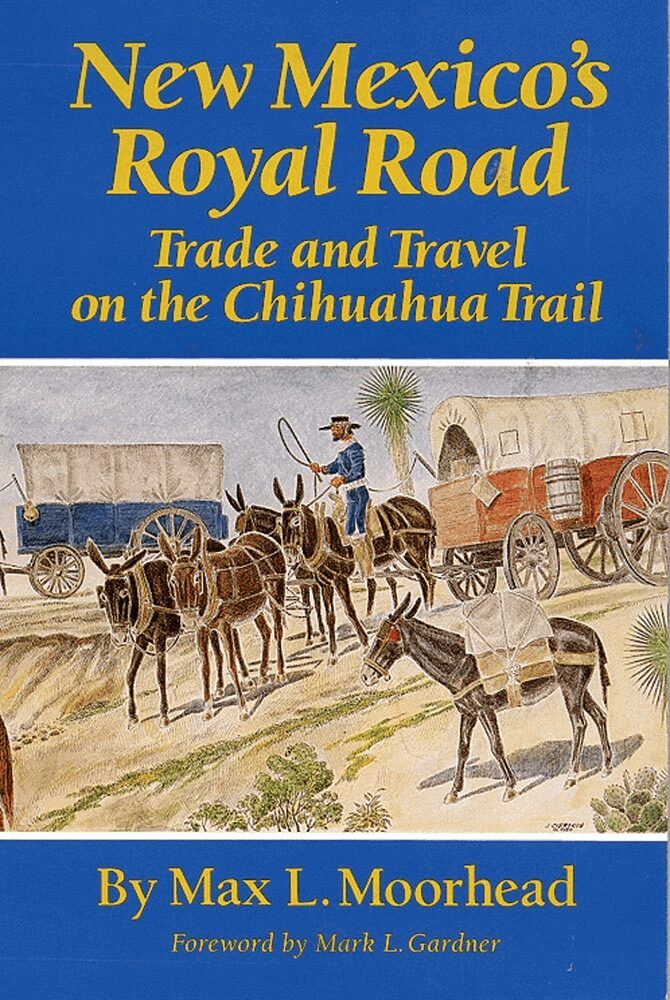
The arrival of Missourian William Becknell's party at Santa Fé in 1821 ushered in the era of the annual ""Santa Fé trade"" between the United States and the Mexican settlements to the south and opened the famous route known as the Santa Fé Trail. Of even greater significance, but largely overlooked today, is the fact that it also opened a road from the United States connecting with a major Mexican high way, for Santa Fé was the terminus of the 1,600-mile Camino Real, the ""King's Highway,"" stretching southward to Chihuahua and the interior cities of Mexico.Over this Royal Road between Santa Fe and Chihuahua lumbered the caravans of the Santa Fe traders, who exchanged American dry goods and hardware for Mexican silver and mules. Over it, too, traveled Colonel Doniphan's Missouri Volunteers, bent on establishing the boundary of Texas at the Río Grande. Indeed, without this main artery of travel, the history of both the United States and Mexico might have been vastly different. This book tells the exciting story of the Chihuahua Trail, of the volume and value of the frontier commerce, its peculiar trade practices, the risks of the road, and the government controls exercised by both countries. But, more than that, it tells of the traders themselves and their influence on the government and citizenry of New Mexico, an influence strong enough to destroy that province's will to resist when the Mexican War broke out in 1846, and of their role in the war and their importance in making New Mexico into an American territory.