Max M. Häggblom – författare
Visar alla böcker från författaren Max M. Häggblom. Handla med fri frakt och snabb leverans.
4 produkter
4 produkter
2 117 kr
Skickas inom 10-15 vardagar
In every respect, human development and human security are closely linked to the productivity of ecosystems. Our future rests squarely on their continued viability. UNDP, UNEP, World Bank, World Resources Institute: World Resources 2000- 2001. People and Ecosystems. The Fraying Web of Life. 1. OBJECTIVE OF THE BOOK Soil, surface waters/sediments and shallow unprotected groundwater aquifers are interrelated compartments of the environment that are particularly easy to compromise, sensitive to short- and long-term pollution and directly affect sustainability of ecosystems and human health. Routine human activity such as application of fertilizers and pesticides in agriculture and forestry, or wet and dry deposition of atmospheric pollutants emitted from industrial plants, waste disposal and other practices adversely affect soil and water quality that already increasingly suffers from mismanagement in many areas. The predominant sources of pollution result in non-point contamination that is particularly difficult to reduce and control. Wars, accidents and natural emergency cases such as catastrophic floods that occur partly due to anthropogenically disturbed global water balance also add to overall increase of diverse contaminant loads in soil and water. Beneficial properties of some bulk waste materials such as biosolids (sewage sludge), biowaste (e. g. municipal waste composts) or fly ash from coal combustion xi xii Preface encourage applying these waste to land as a source of nutrients and organic matter, or as a soil amendment.
2 117 kr
Skickas inom 10-15 vardagar
In every respect, human development and human security are closely linked to the productivity of ecosystems. Our future rests squarely on their continued viability. UNDP, UNEP, World Bank, World Resources Institute: World Resources 2000- 2001. People and Ecosystems. The Fraying Web of Life. 1. OBJECTIVE OF THE BOOK Soil, surface waters/sediments and shallow unprotected groundwater aquifers are interrelated compartments of the environment that are particularly easy to compromise, sensitive to short- and long-term pollution and directly affect sustainability of ecosystems and human health. Routine human activity such as application of fertilizers and pesticides in agriculture and forestry, or wet and dry deposition of atmospheric pollutants emitted from industrial plants, waste disposal and other practices adversely affect soil and water quality that already increasingly suffers from mismanagement in many areas. The predominant sources of pollution result in non-point contamination that is particularly difficult to reduce and control. Wars, accidents and natural emergency cases such as catastrophic floods that occur partly due to anthropogenically disturbed global water balance also add to overall increase of diverse contaminant loads in soil and water. Beneficial properties of some bulk waste materials such as biosolids (sewage sludge), biowaste (e. g. municipal waste composts) or fly ash from coal combustion xi xii Preface encourage applying these waste to land as a source of nutrients and organic matter, or as a soil amendment.
1 589 kr
Skickas inom 10-15 vardagar
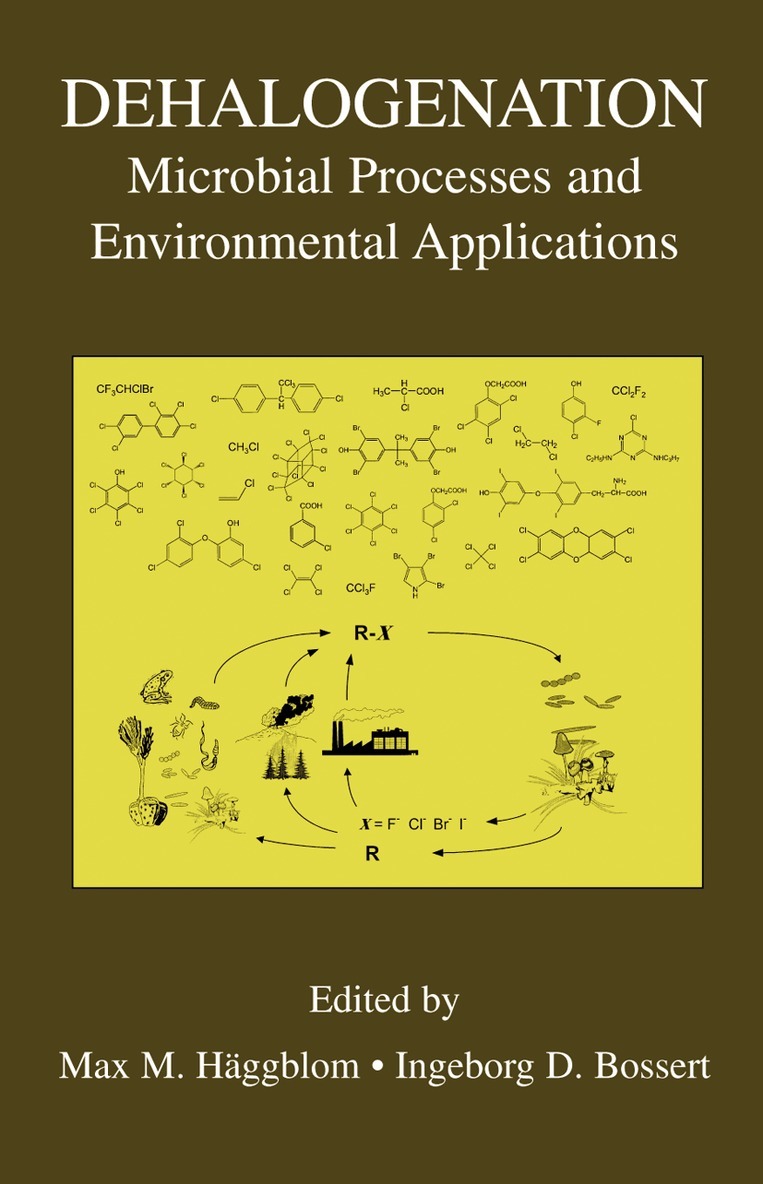
Halogenated organic compounds constitute one of the largest groups of environmental chemicals. The industrial production of new halogenated organic compounds has increased throughout the last century and these compounds are integral to a variety of industrial applications. Although organohalide compounds are typically considered to be anthropogenic industrial compounds, these have their counterpart in several thousands of natural biogenic and geogenic organohalides, representing most classes of organic chemicals. Natural sources account for a significant portion of the global organohalogen budget. This volume, authored by leading experts in the field, provides a current perspective on how both natural and synthetic organohalides are formed and degraded, and how these processes are incorporated into a global halogen cycle. The list of organohalides that can be utilized by microbes continues to increase dramatically, as do the number of dehalogenating microorganisms that have been identified and characterized.A critical step in the degradation of organohalides is cleavage of the carbon-halogen bond, and microorganisms have evolved a variety of metabolic strategies for dehalogenation. The chapters provide a global perspective on the diversity of dehalogenating microorganisms, explore their ecology, biochemistry and genetics, and review the range of biologically-mediated dehalogenation mechanisms. Many of the problematic organohalides, such as pesticides, chlorofluorocarbons, chlorinated solvents, polychlorinated dibenzo-p-dioxins and polychlorinated biphenyls, are covered in detail. The book provides a comprehensive overview of fate of these compounds in the environment, practical applications in the laboratory and the field, and strategies for the development of bioremediation technologies for organohalide-contaminated sites. Detailed information on biodegradation and biotransformation mechanisms for a variety of organohalides and on the microorganisms mediating these processes has greatly increased our understanding of the cycling and fate of these unique and widespread compounds in our environment.The book will serve as a comprehensive resource on the processes and applications of microbial degradation of halogenated organic compounds.
1 589 kr
Skickas inom 10-15 vardagar
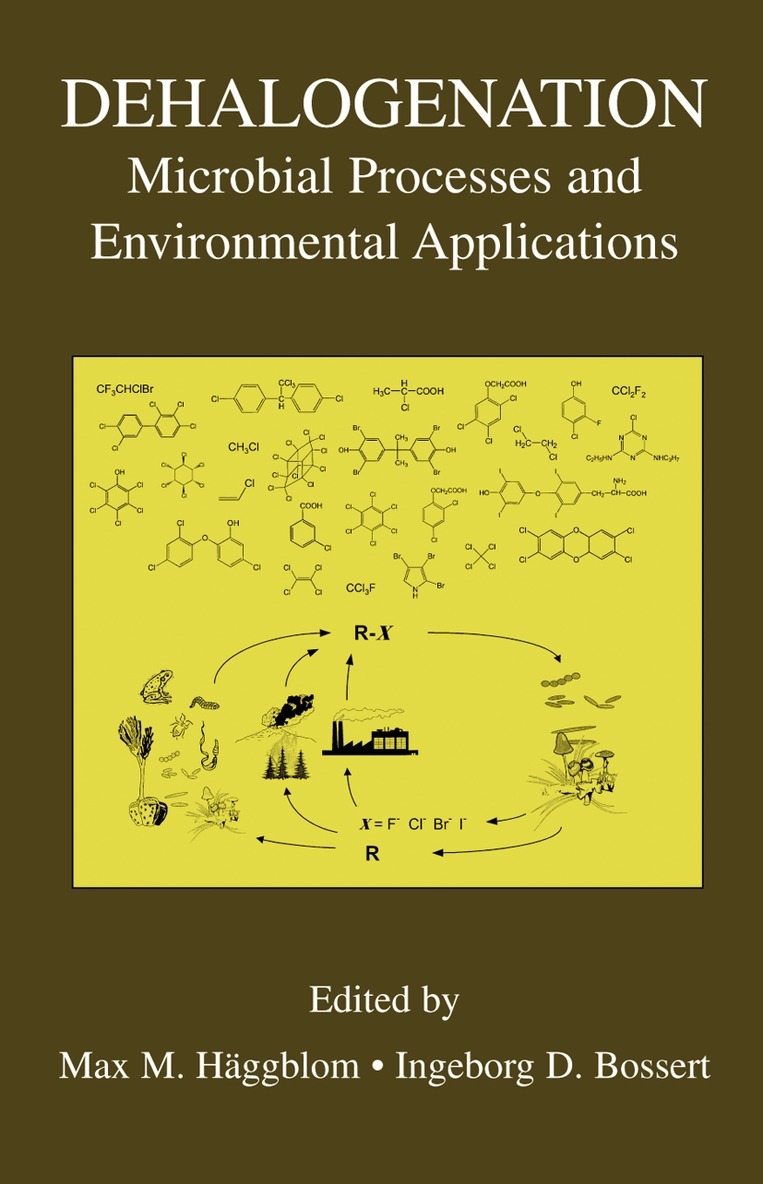
Halogenated organic compounds constitute one of the largest groups of environmental chemicals. The industrial production of new halogenated organic compounds has increased throughout the last century peaking in the 1960s, and continuing in widespread use today. Organohalides are integral to a variety of industrial applications, including use as solvents, degreasing agents, biocides, pharmaceuticals, plasticizers, hydraulic and heat transfer fluids, and intermediates for chemical synthesis, to name a few. It is important to recognize the beneficial aspects of halogenated organic compounds, as well as their potentially deleterious impact on the environment and health. Recognition ofthe adverse environmental effects ofmanytypes oforganohalide compounds has led to efforts to reduce or eliminate the most problematic ones. Although organohalide compounds are typically considered to be anthropogenic industrial compounds, they have their counterpart in several thousands of natural biogenic and geogenic organohalides, representing most classes of organic chemicals. Natural sources account for a significant portion of the global organohalogen budget. This volume authored by recognized experts in the field provides a current perspective on how both natural and synthetic organohalides are formed and degraded, and how these processes are incorporated into a global halogen cycle. The focus is on microbial processes, since these play a major role both in the production and degradation, i. e. , cycling of halogenated organic compounds inthe environment. This book is organized into five parts. Part I, Introduction, provides a global perspective on the issues of organohalides and their fate in the environment.