Maxine Berg – författare
Visar alla böcker från författaren Maxine Berg. Handla med fri frakt och snabb leverans.
23 produkter
Luxury and Pleasure in Eighteenth-Century Britain
Av Maxine Berg
E-bok, 2005
839 kr
Lägg i varukorg
In this book, Maxine Berg explores the invention, making, and buying of new, semi-luxury, and fashionable consumer goods during the eighteenth century. It follows these goods, from china tea ware to all sorts of metal ornaments such as candlesticks, cutlery, buckles, and buttons, as they were made …
Writing the History of the Global
Challenges for the Twenty-First Century
Av Berg, Maxine Berg
Häftad, 2013
363 kr
Lägg i varukorg
The early part of the twenty-first century has witnessed a profound turn in history writing and museum culture towards global and world history. Historians and curators are rapidly changing what they do: no longer satisfied with traditional national histories and area studies, they are pursuing …
Luxury and Pleasure in Eighteenth-Century Britain
Av Maxine Berg
Häftad, 2007
1393 kr
Lägg i varukorg
In this book, Maxine Berg explores the invention, making, and buying of new, semi-luxury, and fashionable consumer goods during the eighteenth century. It follows these goods, from china tea ware to all sorts of metal ornaments such as candlesticks, cutlery, buckles, and buttons, as they were made …
Luxury and Pleasure in Eighteenth-Century Britain
Av Maxine Berg
Inbunden, 2005
2333 kr
Lägg i varukorg
Luxury and Pleasure in Eighteenth-Century Britain explores the invention, making, and buying of new, semi-luxury, and fashionable consumer goods during the eighteenth century. It follows these goods, from china tea ware to all sorts of metal ornaments such as candlesticks, cutlery, buckles, and …
Age of Manufactures, 1700-1820
Industry, Innovation and Work in Britain
Av Maxine Berg
Inbunden, 1994
2581 kr
Lägg i varukorg
This new edition of The Age of Manufactures provides an exciting alternative overview of the eighteenth-century British economy. Recent macro-economic history has discounted many of the achievements of the Industrial Revolution. Maxine Berg argues that at the heart of the Industrial Revolution, we …
Age of Manufactures, 1700-1820
Industry, Innovation and Work in Britain
Av Maxine Berg
Häftad, 1994
665 kr
Lägg i varukorg
This new edition of The Age of Manufactures provides an exciting alternative overview of the eighteenth-century British economy. Recent macro-economic history has discounted many of the achievements of the Industrial Revolution. Maxine Berg argues that at the heart of the Industrial Revolution, we …
Markets and Manufacture in Early Industrial Europe (Routledge Revivals)
Av MAXINE Berg
Inbunden, 2013
3149 kr
Lägg i varukorg
This edited collection, first published in 1991, focuses on the commercial relations, marketing structures and development of consumption that accompanied early industrial expansion. The papers examine aspects of industrial structure and work organisation, including women’s work, and highlight the …
Markets and Manufacture in Early Industrial Europe (Routledge Revivals)
Av MAXINE Berg
Häftad, 2015
845 kr
Lägg i varukorg
This edited collection, first published in 1991, focuses on the commercial relations, marketing structures and development of consumption that accompanied early industrial expansion. The papers examine aspects of industrial structure and work organisation, including women’s work, and highlight the …
The Machinery Question and the Making of Political Economy 1815-1848
Av Maxine Berg
Häftad, 1982
838 kr
Lägg i varukorg
For those who lived through it, Britain's Industrial Revolution was experienced as the Machinery Question. It was far from clear to contemporaries whether the first forms of mechanized factory production heralded an inevitable economic revolution, or were but one course among several which might be …
A Woman in History
Eileen Power, 1889-1940
Av Maxine Berg
Inbunden, 1996
1593 kr
Lägg i varukorg
This 1996 book tells the fascinating story of the life and work of Eileen Power, a major British historian who once ranked in fame alongside Tawney, Trevelyan and Toynbee. Using letters, diaries and reminiscences, Maxine Berg recreates the life of this charismatic personality, describing, for the …
A Woman in History
Eileen Power, 1889-1940
Av Maxine Berg
Häftad, 1996
754 kr
Lägg i varukorg
This 1996 book tells the fascinating story of the life and work of Eileen Power, a major British historian who once ranked in fame alongside Tawney, Trevelyan and Toynbee. Using letters, diaries and reminiscences, Maxine Berg recreates the life of this charismatic personality, describing, for the …
Manufacture in Town and Country Before the Factory
Av Maxine Berg, Pat Hudson m. fl.
Häftad, 2002
754 kr
Lägg i varukorg
The internal organisation of production before the development of the factory system is still shrouded in historical mystery. How goods were made before machines, how work was organised before the factory system, how artisans and labourers perceived and lived their work are questions to which we …
Age of Manufactures, 1700-1820
Industry, Innovation and Work in Britain
Av Maxine Berg, Dr Maxine Berg
E-bok, 2005
696 kr
Lägg i varukorg
This new edition of The Age of Manufactures provides an exciting alternative overview of the eighteenth-century British economy. Recent macro-economic history has discounted many of the achievements of the Industrial Revolution. Maxine Berg argues that at the heart of the Industrial Revolution, we …
Age of Manufactures, 1700-1820
Industry, Innovation and Work in Britain
Av Maxine Berg, Dr Maxine Berg
E-bok, 2005
696 kr
Lägg i varukorg
This new edition of The Age of Manufactures provides an exciting alternative overview of the eighteenth-century British economy. Recent macro-economic history has discounted many of the achievements of the Industrial Revolution. Maxine Berg argues that at the heart of the Industrial Revolution, we …
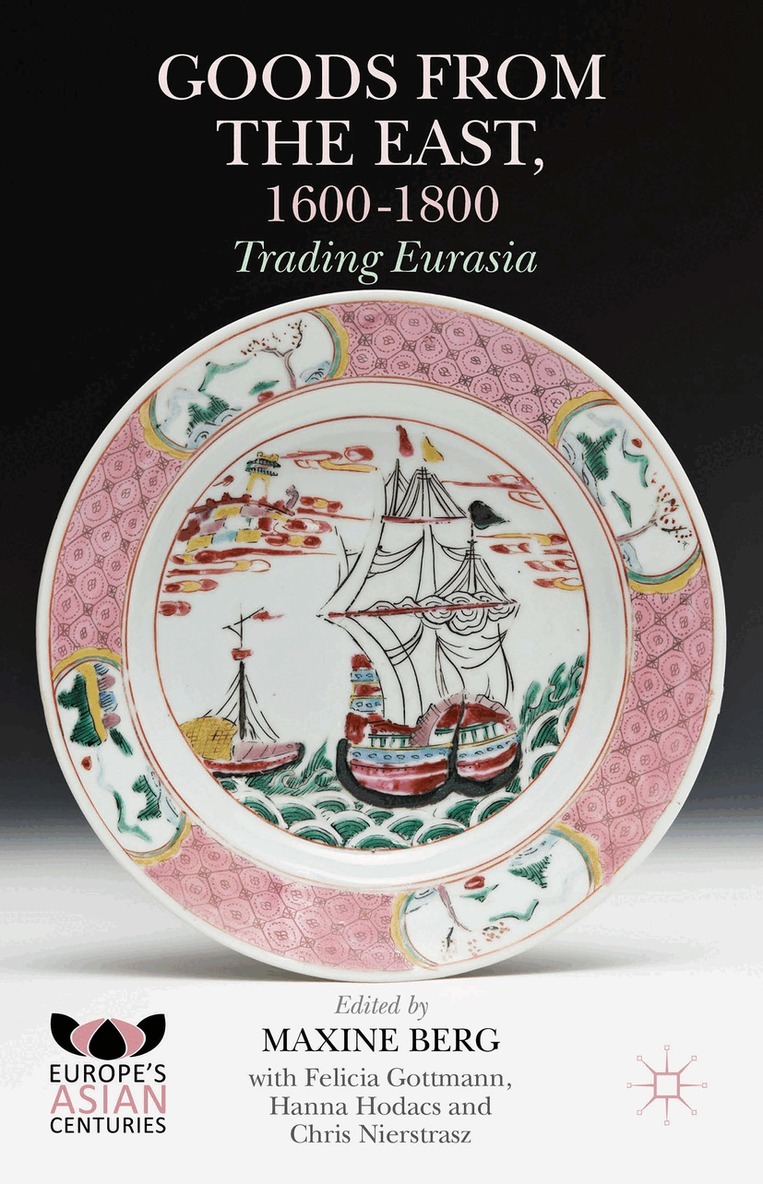
Goods from the East, 1600-1800
Trading Eurasia
Av Felicia Gottmann, Maxine Berg m. fl.
Inbunden, 2015
1122 kr
Lägg i varukorg
Goods from the East focuses on the fine product trade's first Global Age: how products were made, marketed and distributed between Asia and Europe between 1600 and 1800. It brings together established scholars as well as new, to provide a full comparative and connective study of this trade.
Goods from the East, 1600-1800
Trading Eurasia
Av Chris Nierstrasz, Hanna Hodacs m. fl.
E-bok, 2015
1596 kr
Lägg i varukorg
Goods from the East focuses on the fine product trade''s first Global Age: how products were made, marketed and distributed between Asia and Europe between 1600 and 1800. It brings together established scholars as well as new, to provide a full comparative and connective study of this trade.
Markets and Manufacture in Early Industrial Europe (Routledge Revivals)
Av Maxine Berg
E-bok, 2014
977 kr
Lägg i varukorg
This edited collection, first published in 1991, focuses on the commercial relations, marketing structures and development of consumption that accompanied early industrial expansion. The papers examine aspects of industrial structure and work organisation, including women’s work, and highlight …
Markets and Manufacture in Early Industrial Europe (Routledge Revivals)
Av Maxine Berg
E-bok, 2014
999 kr
Lägg i varukorg
This edited collection, first published in 1991, focuses on the commercial relations, marketing structures and development of consumption that accompanied early industrial expansion. The papers examine aspects of industrial structure and work organisation, including women’s work, and highlight …
Slavery, Capitalism and the Industrial Revolution
Inbunden, 2023
331 kr
Lägg i varukorg
The role of slavery in driving Britain's economic development is often debated, but seldom given a central place.In their remarkable new book, Maxine Berg and Pat Hudson 'follow the money' to document in revealing detail the role of slavery in the making of Britain’s industrial revolution. Slavery …
Slavery, Capitalism and the Industrial Revolution
Häftad, 2025
223 kr
Lägg i varukorg
The role of slavery in driving Britain's economic development is often debated, but seldom given a central place.In their remarkable new book, Maxine Berg and Pat Hudson 'follow the money' to document in revealing detail the role of slavery in the making of Britain’s industrial revolution. Slavery …
Slavery, Capitalism and the Industrial Revolution
E-bok, 2023
247 kr
Lägg i varukorg
The role of slavery in driving Britain''s economic development is often debated, but seldom given a central place. In their remarkable new book, Maxine Berg and Pat Hudson ''follow the money'' to document in revealing detail the role of slavery in the making of Britain’s industrial revolution. …
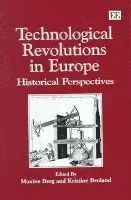
technological revolutions in europe
Historical Perspectives
Av Maxine Berg, Kristine Bruland
Inbunden, 1998
2331 kr
Lägg i varukorg
This major new book contains contributions by many of the leading historians of technology. The contributors argue that culture, institutions and learning either made the way for, or blocked technological and industrial transformation. Their essays include broad comparative frameworks between …
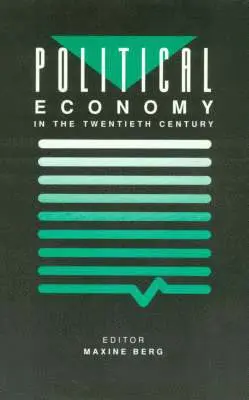
Political Economy in Twentieth Century
Av Maxine Berg
Inbunden, 1990
781 kr
Tillfälligt slut
This collection of previously unpublished essays discusses the work of a select number of major intellectuals of the recent past (Joan Robinson, Piero Sraffa, Maurice Dobb, Michal Kalecki, Paul Sweezy and Joseph Schumpeter). These are not the figures who dominated established economic traditions; …