• Fri frakt över 249 kr
  • •
  • Snabba leveranser
  • •
  • Billiga böcker
Kundservice

Du är på sajten för privatpersoner.

Företag, bibliotek eller offentlig verksamhet?

Du handlar på classic.bokus.com, där alla dina funktioner finns intakta.
Till classic.bokus.com
Bokus logotyp. Gå till startsidan.
  • Erbjudanden
  • Nyheter
  • Student
  • Topplistor
  • Barn & ungdom
  • Bokus Play
  • E-böcker
  • Pocketböcker
  • Spel & pussel

10% rabatt på allt med kod: NYSTART10 →

Sidfot

Mina sidor

    Hjälp

    • Kundservice
    • Vanliga frågor och svar
    • Frakt och leverans
    • Retur vid ångerrätt
    • Reklamera vara
    • Betalning
    • Köpvillkor
    • Allmänna villkor
    • Information om webbplatsens tillgänglighet

    Om Bokus

    • Om oss
    • Pressrum
    • För studenter
    • För företag
    • För bibliotek och offentlig verksamhet
    • För leverantörer
    • Hållbarhet

    Populärt

    • Aktuella erbjudanden
    • Presentkort
    • Studentlitteratur
    • Nya böcker
    • Topplistor
    • Signerade böcker
    • Engelska böcker

    Inspiration

    • Boktips
    • BookTok
    • Populära bokserier
    • Barnbokskaraktärer
    • Populära författare
    Logotyp för Bokus
    Följ oss på Facebook (extern länk)Följ oss på Instagram (extern länk)Följ oss på YouTube (extern länk)Följ oss på TikTok (extern länk)
    bokus @ CookiesAnpassa cookiesIntegritetspolicyKöpvillkor
    Till Citymail hemsida (extern länk)Till Budbee hemsida (extern länk)Till Postnord hemsida (extern länk)Till Schenker hemsida (extern länk)Till Early Bird hemsida (extern länk)Till Walleys hemsida (extern länk)
    1. Ekonomi och Ledarskap
    2. Nationalekonomi

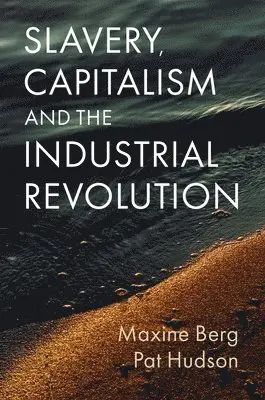
    Slavery, Capitalism and the Industrial Revolution

    AvMaxine Berg,Pat Hudson

    Inbunden, Engelska, 2023

    319 kr

    Beställningsvara. Skickas inom 5-8 vardagar. Fri frakt över 249 kr.

    Fler format och utgåvor

    Häftad

    218 kr

    Beskrivning

    The role of slavery in driving Britain's economic development is often debated, but seldom given a central place.In their remarkable new book, Maxine Berg and Pat Hudson 'follow the money' to document in revealing detail the role of slavery in the making of Britain’s industrial revolution. Slavery was not just a source of wealth for a narrow circle of slave owners who built grand country houses and filled them with luxuries. The forces set in motion by the slave and plantation trades seeped into almost every aspect of the economy and society.In textile mills, iron and copper smelting, steam power, and financial institutions, slavery played a crucial part. Things we might think far removed from the taint of slavery, such as eighteenth-century fashions for indigo-patterned cloth, sweet tea, snuff boxes, mahogany furniture, ceramics and silverware, were intimately connected. Even London’s role as a centre for global finance was partly determined by the slave trade as insurance, financial trading and mortgage markets were developed in the City to promote distant and risky investments in enslaved people.The result is a bold and unflinching account of how Britain became a global superpower, and how the legacy of slavery persists. Acknowledging Britain's role in slavery is not just about toppling statues and renaming streets. We urgently need to come to terms with slavery's inextricable links with Western capitalism, and the ways in which many of us continue to benefit from slavery to this day.

    Produktinformation

    • Utgivningsdatum:2023-06-16
    • Mått:163 x 231 x 31 mm
    • Vikt:726 g
    • Format:Inbunden
    • Språk:Engelska
    • Antal sidor:282
    • Förlag:Polity Press
    • ISBN:9781509552689

    Utforska kategorier

    • Nationalekonomi inom Ekonomi och Ledarskap

    Mer om författaren

    Maxine Berg is Professor Emeritus of History at the University of Warwick.Pat Hudson is Professor Emeritus of Economic History at Cardiff University.

    Recensioner i media

    "In this impeccably wresearched piece of scholarship, Berg and Hudson provide a comprehensive account of how slavery shaped British industrialisation. Building on the pioneering insights of Eric Williams, the authors forensically demonstrate the dynamic role of the slave economy across a wide range of sectors of economic, social and cultural activity in Britain. Written in a lucid and accessible style, this landmark study makes a powerful contribution to our understanding of the global history of slavery, and lays an ideal foundation for developing a mature public conversation about slavery in contemporary Britain."Sudhir Hazareesingh, University of Oxford, and author of Black Spartacus: the Epic Life of Toussaint Louverture"Inspired by recent debates, Berg and Hudson--eminent historians of British industrialisation--address its ignominious connections to slavery. They bring to that crucial and challenging task a wealth of historical knowledge, an intellectual boldness and subtlety, as well as the humility to learn from other scholars. The book that results encourages us to reflect on the manifold and complex ways in which the enslavement and exploitation of millions of human beings shaped the historical trajectories and legacies of British capitalism."Mary O’Sullivan, University of Geneva"The past four decades have seen a revolution in our understanding of the take-off to economic growth. Modern scholarship increasingly rejects simplistic accounts based on the experiences of countries viewed in isolation; instead, it emphasises international linkages of many kinds, including slavery. In this volume, two of the leading historians of the Industrial Revolution provide an authoritative, accessible and indispensable account of the role played by slavery in that momentous transformation."Kevin O’Rourke, New York University, Abu Dhabi"One of the most important political economy books published this century. Maxine Berg and Pat Hudson's wake-up call for greater awareness of slavery's role in Britain's economic pre-eminence is backed by their expert detective work uncovering the sheer size and reach of the tentacles of the slave trade in the British economy since the 17th century. Slavery, Capitalism and the Industrial Revolution should be essential reading in order to understand the real cost and legacy of slavery and empire."Colin Thain, University of Birmingham"They mine an extraordinary range of numbers and blend them with contemporary testimony, marshalling all the evidence to reach one emphatic conclusion—that slavery’s role in the story of how Britain got rich was, almost literally, incalculable."Prospect“a fantastic synthesis work by two renowned historians”Northern History

    Innehållsförteckning

    • IntroductionChapter 1: Slavery and the British economy: how the slave and plantation trades worked and how they changedChapter 2: Slavery and the British industrial revolution: misleading measuresChapter 3: A revolution in consumption: sugar and other plantation productsChapter 4: Plantation innovation and Atlantic scienceChapter 5: British ‘slave ports’ and their hinterlands: structural and regional transformationChapter 6: Iron and copper revolutions: metals, hardware and miningChapter 7: Textile revolutionsChapter 8: Financial capitalismChapter 9: Slavery after slavery: legacies of race and inequalityChapter 10: Slavery, capitalism and the economic history of Britain