Maxine N. Lurie - Böcker
Visar alla böcker från författaren Maxine N. Lurie. Handla med fri frakt och snabb leverans.
5 produkter
5 produkter
503 kr
Skickas inom 10-15 vardagar
This anthology contains seventeen essays covering eighteenth-century agrarian unrest, the Revolutionary War, politics in the Jackson era, feminism and the women's movements, slavery from the seventeenth to the nineteenth centuries, strikes and labor struggles, land use and regional planning issues, Blacks in Newark, the current political state of New Jersey, and more. The contributors are Michal R. Belknap, Lynn W. Dorsett, Gregory Evans Dowd, Charles E. Funnell, Steve Golin, Maxine N. Lurie, Richard P. McCormick, Gary Mitchell, Simeon F. Moss, Marie Marmo Mullaney, Mary R. Murrin, Gerald M. Pomper, Clement A. Price, Thomas L. Purvis, Daniel Schaffer, Warren E. Stickle III, Maurice Tandler.
486 kr
Skickas inom 5-8 vardagar
This anthology contains seventeen essays covering eighteenth-century agrarian unrest, the Revolutionary War, politics in the Jackson era, feminism and the women's movements, slavery from the seventeenth to the nineteenth centuries, strikes and labor struggles, land use and regional planning issues, Blacks in Newark, the current political state of New Jersey, and more. The contributors are Michal R. Belknap, Lynn W. Dorsett, Gregory Evans Dowd, Charles E. Funnell, Steve Golin, Maxine N. Lurie, Richard P. McCormick, Gary Mitchell, Simeon F. Moss, Marie Marmo Mullaney, Mary R. Murrin, Gerald M. Pomper, Clement A. Price, Thomas L. Purvis, Daniel Schaffer, Warren E. Stickle III, Maurice Tandler.
442 kr
Skickas inom 7-10 vardagar
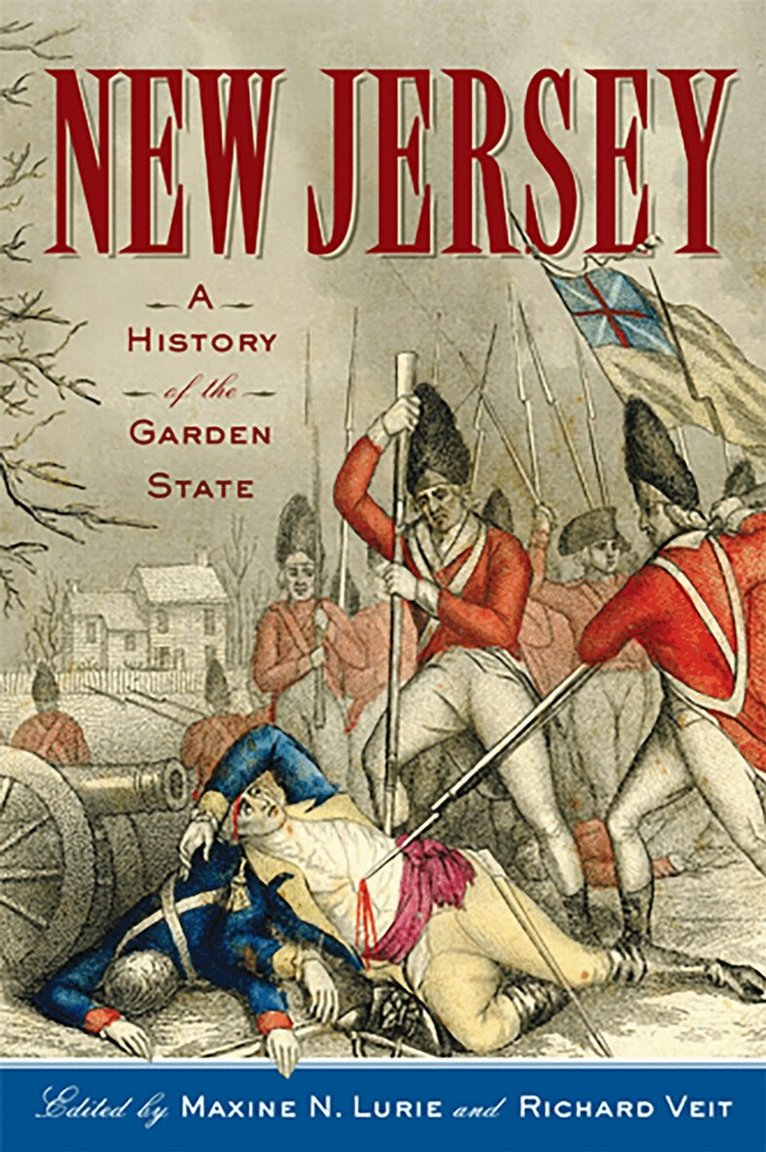
New Jersey: A History of the Garden State presents a fresh, comprehensive overview of New Jersey’s history from the prehistoric era to the present. The findings of archaeologists, political, social, and economic historians provide a new look at how the Garden State has evolved.The state has a rich Native American heritage and complex colonial history. It played a pivotal role in the American Revolution, early industrialization, and technological developments in transportation, including turnpikes, canals, and railroads. The nineteenth century saw major debates over slavery. While no Civil War battles were fought in New Jersey, most residents supported it while questioning the policies of the federal government.Next, the contributors turn to industry, urbanization, and the growth of shore communities. A destination for immigrants, New Jersey continued to be one of the most diverse states in the nation. Many of these changes created a host of social problems that reformers tried to minimize during the Progressive Era. Settlement houses were established, educational institutions grew, and utopian communities were founded. Most notably, women gained the right to vote in 1920. In the decades leading up to World War II, New Jersey benefited from back-to-work projects, but the rise of the local Ku Klux Klan and the German American Bund were sad episodes during this period.The story then moves to the rise of suburbs, the concomitant decline of the state’s cities, growing population density, and changing patterns of wealth. Deep-seated racial inequities led to urban unrest as well as political change, including such landmark legislation as the Mount Laurel decision. Today, immigration continues to shape the state, as does the tension between the needs of the suburbs, cities, and modest amounts of remaining farmland.Well-known personalities, such as Jonathan Edwards, George Washington, Woodrow Wilson, Dorothea Dix, Thomas Edison, Frank Hague, and Albert Einstein appear in the narrative. Contributors also mine new and existing sources to incorporate fully scholarship on women, minorities, and immigrants. All chapters are set in the context of the history of the United States as a whole, illustrating how New Jersey is often a bellwether for the nation..
401 kr
Skickas inom 7-10 vardagar
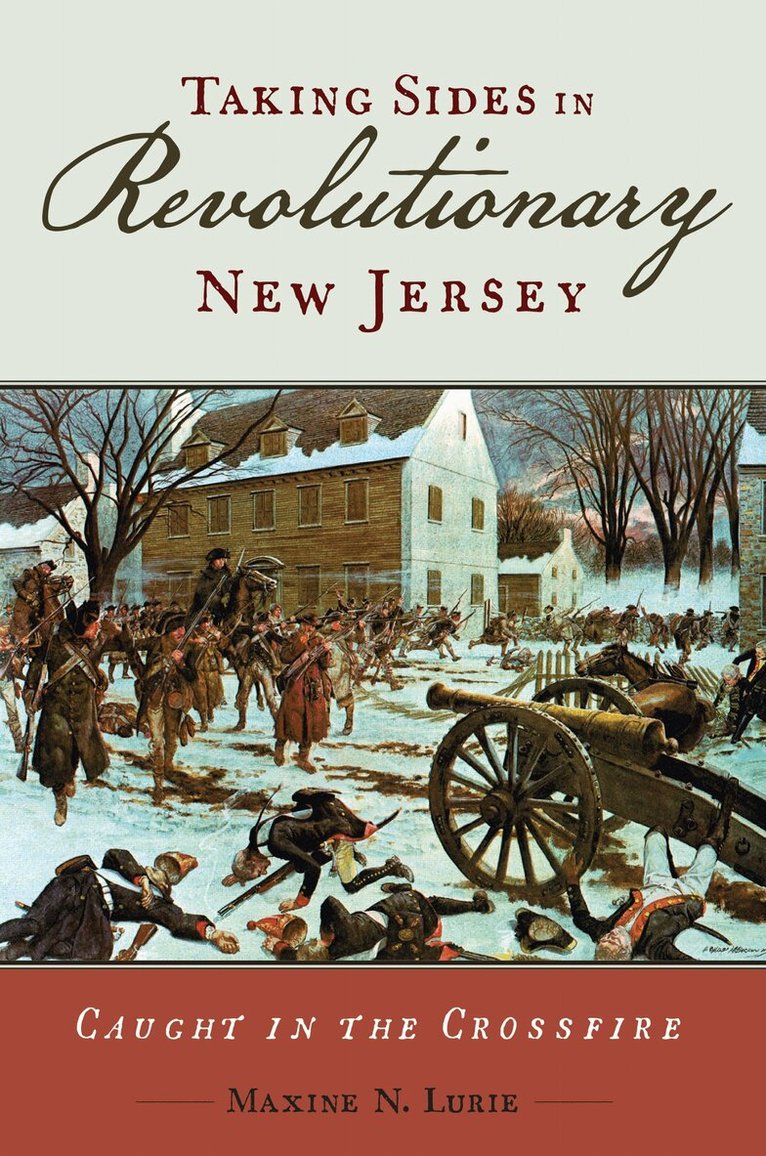
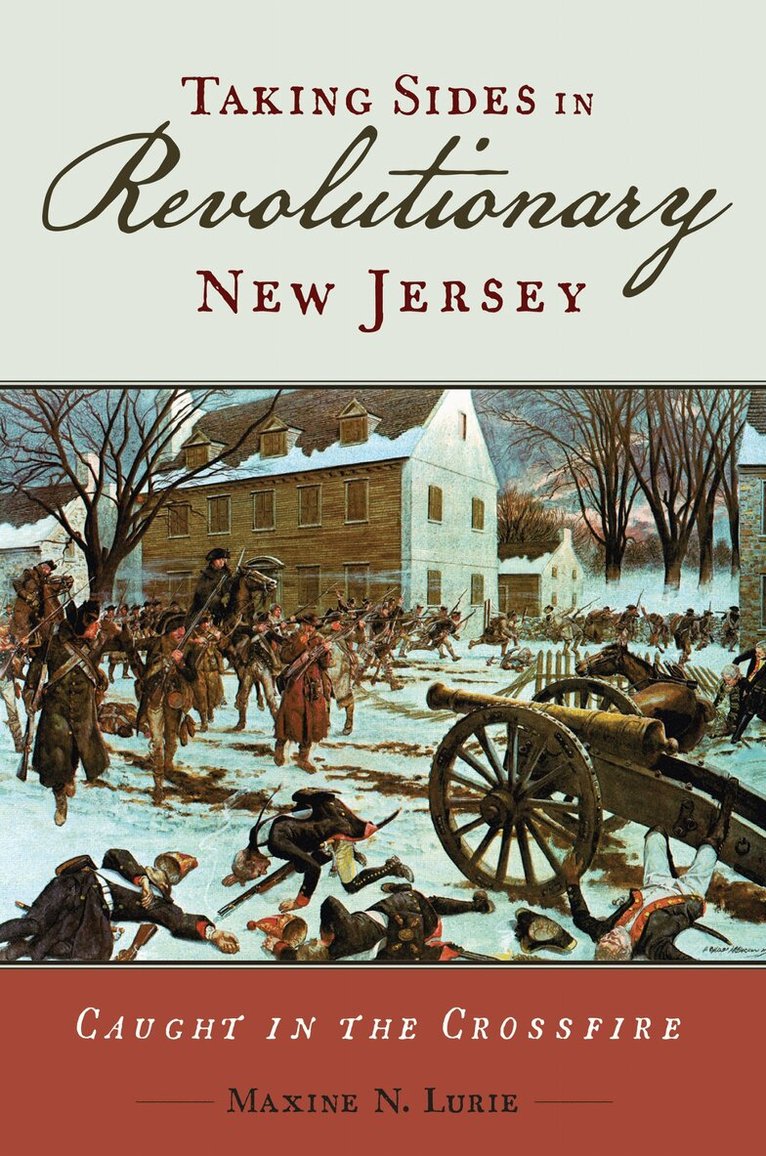
The American Revolution in New Jersey lasted eight long years, during which many were caught in the middle of a vicious civil war. Residents living in an active war zone took stands that varied from “Loyalist” to “Patriot” to neutral and/or "trimmer" (those who changed sides for a variety of reasons). Men and women, Blacks and whites, Native Americans, and those from a wide variety of ethnic backgrounds, with different religious affiliations all found themselves in this difficult middle ground. When taking sides, sometimes family was important, sometimes religion, or political principles; the course of the war and location also mattered. Lurie analyzes the difficulties faced by prisoners of war, the refugees produced by the conflict, and those Loyalists who remained, left as exiles, or surprisingly later returned. Their stories are interesting, often dramatic, and include examples of those literally caught in the crossfire. They illustrate the ways in which this was an extremely difficult time and place to live. In the end more of the war was fought in New Jersey than elsewhere, resulting in the highest number of casualties, and a great deal of physical damage. The costs were high no matter what side individuals took. Taking Sides uses numerous brief biographies to illustrate the American Revolution’s complexity; it quotes from documents, pamphlets, diaries, letters, and poetry, a variety of sources to provide insight into the thoughts and reactions of those living through it all. It focuses on people rather than battles and provides perspective for the difficult choices we make in our own times.Supplemental Instructor Resources for Taking Sides in Revolutionary New Jersey:Questions (https://d3tto5i5w9ogdd.cloudfront.net/wp-content/uploads/2022/07/19144155/Taking-Sides-Supplementary-Instructor-Resources-Questions.pdf)Bibliography (https://d3tto5i5w9ogdd.cloudfront.net/wp-content/uploads/2022/07/19144154/Taking-Sides-Supplementary-Instructor-Resources-Bibliography.pdf)
917 kr
Skickas inom 7-10 vardagar
The American Revolution in New Jersey lasted eight long years, during which many were caught in the middle of a vicious civil war. Residents living in an active war zone took stands that varied from “Loyalist” to “Patriot” to neutral and/or "trimmer" (those who changed sides for a variety of reasons). Men and women, Blacks and whites, Native Americans, and those from a wide variety of ethnic backgrounds, with different religious affiliations all found themselves in this difficult middle ground. When taking sides, sometimes family was important, sometimes religion, or political principles; the course of the war and location also mattered. Lurie analyzes the difficulties faced by prisoners of war, the refugees produced by the conflict, and those Loyalists who remained, left as exiles, or surprisingly later returned. Their stories are interesting, often dramatic, and include examples of those literally caught in the crossfire. They illustrate the ways in which this was an extremely difficult time and place to live. In the end more of the war was fought in New Jersey than elsewhere, resulting in the highest number of casualties, and a great deal of physical damage. The costs were high no matter what side individuals took. Taking Sides uses numerous brief biographies to illustrate the American Revolution’s complexity; it quotes from documents, pamphlets, diaries, letters, and poetry, a variety of sources to provide insight into the thoughts and reactions of those living through it all. It focuses on people rather than battles and provides perspective for the difficult choices we make in our own times.Supplemental Instructor Resources for Taking Sides in Revolutionary New Jersey:Questions (https://d3tto5i5w9ogdd.cloudfront.net/wp-content/uploads/2022/07/19144155/Taking-Sides-Supplementary-Instructor-Resources-Questions.pdf)Bibliography (https://d3tto5i5w9ogdd.cloudfront.net/wp-content/uploads/2022/07/19144154/Taking-Sides-Supplementary-Instructor-Resources-Bibliography.pdf)