Maxwell J. Mehlman - Böcker
Visar alla böcker från författaren Maxwell J. Mehlman. Handla med fri frakt och snabb leverans.
4 produkter
4 produkter
351 kr
Skickas inom 10-15 vardagar
Wondergenes not only imagines a future world in which genetic enhancement is the norm, but asserts that this future has already begun. Genetically engineered substances are already in use by athletes, in vitro fertilization already provides the primitive means by which parents can "select" an embryo, and the ability to create new forms of genetically engineered human beings is not far off. What happens when gene therapy becomes gene enhancement? Who will benefit and who might be left behind? What are the costs to our values and beliefs, and to the future of our society? To answer these questions, Maxwell J. Mehlman provides an overview of the scientific advances that have led to the present state of genetic enhancement and explains how these advances will be used in the future to redefine what we think of as a normal human being. He explores the ethical dilemmas already facing researchers and medical practitioners, and the dilemmas we will all be expected to face. In his forecast of the dangers inherent in this technology, he is particularly concerned with the emergence of a "genobility" made up of those able to afford increasingly expensive enhancement.Wondergenes is a serious, accessible introduction to the social and personal implications of genetic engineering. Mehlman weighs the social and economic costs of the many proposals to regulate or limit genetic engineering and provides six concrete policy recommendations—from professional licensing to a ban on germ-line enhancement—that propose to make the future of genetic enhancement more equitable and safe.
Price of Perfection
Individualism and Society in the Era of Biomedical Enhancement
Inbunden, Engelska, 2009
566 kr
Skickas inom 5-8 vardagar
Few would question the necessity of artificial limbs for amputees. But what of surgery to lengthen the legs of children who are merely shorter than average? Hardly anyone would challenge the decision to prescribe Aricept to people with dementia. But is it acceptable to give the same medication to airline pilots seeking sharper mental focus on long-haul flights? Humans have engaged in biological self-improvement since long before recorded history, from the impotence-curing wild lotus brew of the ancient Egyptians to the herbal energy drink favored by early Olympians. Now biomedical enhancements are pushing the boundaries of possibility and acceptability. Where do we draw the line? How do we know the true ramifications of pioneering medicine? What price are we willing to pay for perfection? Maxwell J. Mehlman's provocative examination of these issues speaks to fundamental questions of what it means to be human. He finds public officials ill-equipped to handle the ethical, scientific, and public policy quandaries of biomedical enhancement.Instead of engaging difficult questions of morality, access, fairness, and freedom, elected officials have crafted toothless and counterproductive laws and regulations. Mehlman outlines policy options to boost the societal benefits and minimize the risks from these technologies. In the process, he urges the public to face the ethical issues surrounding biomedical enhancement, lest our quest for perfection compromise our very humanity.
611 kr
Skickas inom 7-10 vardagar
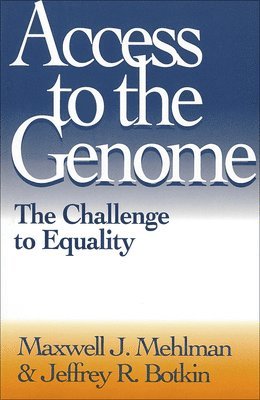
Completion of the Human Genome Project will make possible a staggering array of new medical technologies, including new diagnostic and screening tests for inherited disorders, gene therapies, and the ability to manipulate a person's inherited, non-disease traits. Most of the attention given to the social implications of these technologies has focused on their potential to harm the individual, for example, by denying employment or insurance. This book explores instead the potential harm to society if we unfairly distribute the enormous benefits of genetic technologies. The resulting division of society into genetic haves and have-nots would undermine the basic foundation of Western democratic society - the belief in equality of opportunity. This book explains, in terms that can be understood by the general reader, how DNA works, what the Human Genome Project is, what these genetic technologies are and what they promise, and how they could disrupt our democratic society.In an original contribution to the literature, the book then discusses the alternatives for avoiding the creation of a genetic underclass, ranging from halting the Human Genome Project itself to making genetic technologies available without regard to ability to pay. The authors' provocative conclusion is that a lottery in which everyone has a chance to obtain access to these technologies is the only feasible option. This book will be of interest to anyone who wishes to learn more about the Human Genome Project and the genetic revolution that it will create, as well as those who already are familiar with the project and are concerned about the social consequences of its scientific developments.
Transhumanist Dreams and Dystopian Nightmares
The Promise and Peril of Genetic Engineering
Inbunden, Engelska, 2012
503 kr
Skickas inom 7-10 vardagar
Transhumanists advocate for the development and distribution of technologies that will enhance human intellectual, physical, and psychological capacities, even eliminate aging. What if the dystopian futures and transhumanist utopias found in the pages of science journals, Margaret Atwood novels, films like "Gattaca", and television shows like "Dark Angel" are realized? What kind of world would humans have created? Maxwell J. Mehlman considers the promises and perils of using genetic engineering in an effort to direct the future course of human evolution. He addresses scientific and ethical issues without choosing sides in the dispute between transhumanists and their challengers. However, "Transhumanist Dreams and Dystopian Nightmares" reveals that radical forms of genetic engineering could become a reality much sooner than many people think, and that we need to encourage risk management efforts. Whether scientists are dubious or optimistic about the prospects for directed evolution, they tend to agree on two things.First, however long it takes to perfect the necessary technology, it is inevitable that humans will attempt to control their evolutionary future, and second, in the process of learning how to direct evolution, we are bound to make mistakes. Our responsibility is to learn how to balance innovation with caution.