Jeffrey R. Botkin - Böcker
Visar alla böcker från författaren Jeffrey R. Botkin. Handla med fri frakt och snabb leverans.
2 produkter
2 produkter
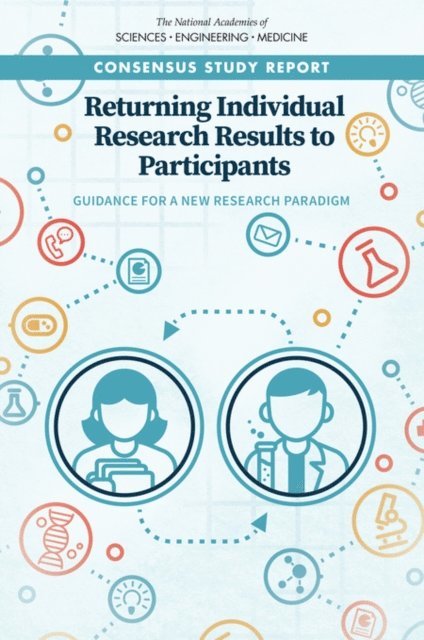
Returning Individual Research Results to Participants
Guidance for a New Research Paradigm
Häftad, Engelska, 2018
1 024 kr
Tillfälligt slut
When is it appropriate to return individual research results to participants? The immense interest in this question has been fostered by the growing movement toward greater transparency and participant engagement in the research enterprise. Yet, the risks of returning individual research results—such as results with unknown validity—and the associated burdens on the research enterprise are competing considerations.Returning Individual Research Results to Participants reviews the current evidence on the benefits, harms, and costs of returning individual research results, while also considering the ethical, social, operational, and regulatory aspects of the practice. This report includes 12 recommendations directed to various stakeholders—investigators, sponsors, research institutions, institutional review boards (IRBs), regulators, and participants—and are designed to help (1) support decision making regarding the return of results on a study-by-study basis, (2) promote high-quality individual research results, (3) foster participant understanding of individual research results, and (4) revise and harmonize current regulations.
611 kr
Skickas inom 7-10 vardagar
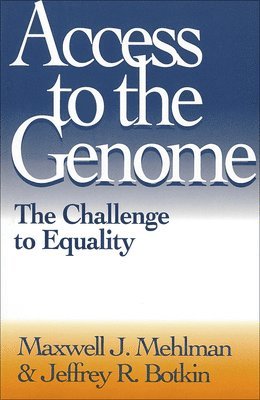
Completion of the Human Genome Project will make possible a staggering array of new medical technologies, including new diagnostic and screening tests for inherited disorders, gene therapies, and the ability to manipulate a person's inherited, non-disease traits. Most of the attention given to the social implications of these technologies has focused on their potential to harm the individual, for example, by denying employment or insurance. This book explores instead the potential harm to society if we unfairly distribute the enormous benefits of genetic technologies. The resulting division of society into genetic haves and have-nots would undermine the basic foundation of Western democratic society - the belief in equality of opportunity. This book explains, in terms that can be understood by the general reader, how DNA works, what the Human Genome Project is, what these genetic technologies are and what they promise, and how they could disrupt our democratic society.In an original contribution to the literature, the book then discusses the alternatives for avoiding the creation of a genetic underclass, ranging from halting the Human Genome Project itself to making genetic technologies available without regard to ability to pay. The authors' provocative conclusion is that a lottery in which everyone has a chance to obtain access to these technologies is the only feasible option. This book will be of interest to anyone who wishes to learn more about the Human Genome Project and the genetic revolution that it will create, as well as those who already are familiar with the project and are concerned about the social consequences of its scientific developments.