M.B. Jackson – författare
Visar alla böcker från författaren M.B. Jackson. Handla med fri frakt och snabb leverans.
6 produkter
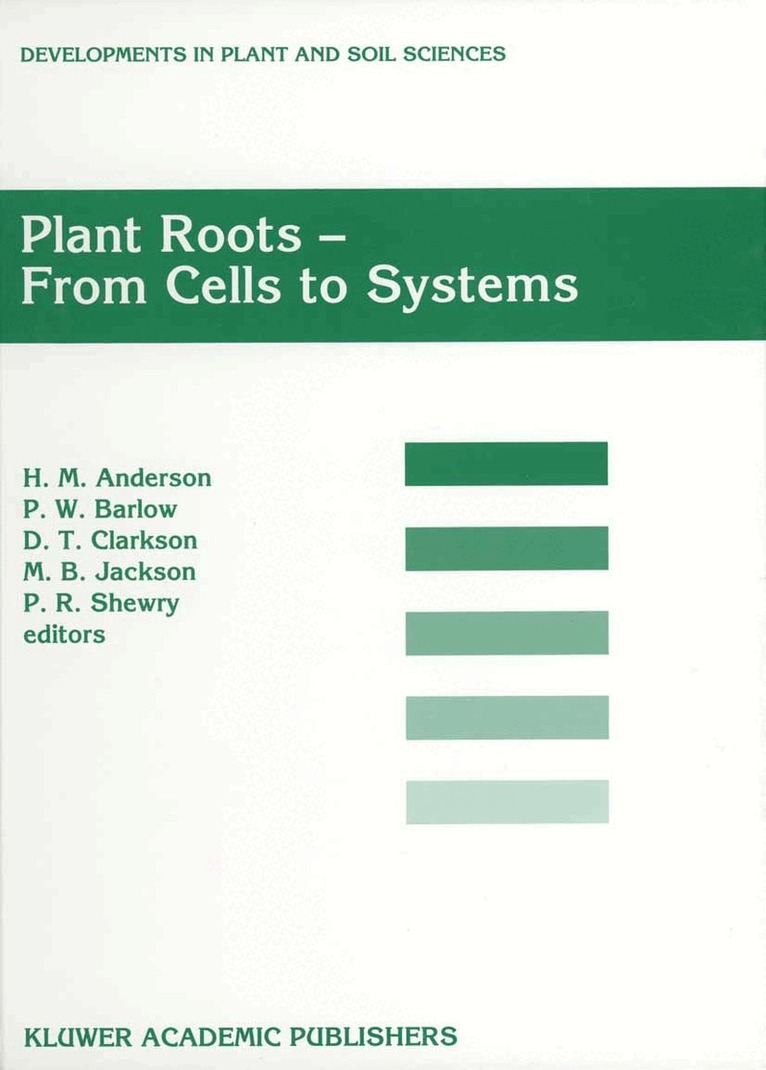
Plant Roots - From Cells to Systems
Proceedings of the 14th Long Ashton International Symposium Plant Roots — From Cells to Systems, held in Bristol, U.K., 13–15 September 1995
Av H.M. Anderson, Peter W. Barlow m. fl.
Inbunden, 1997
1098 kr
Lägg i varukorg
Proceedings of the 14th Long Ashton International Symposium: Plant Roots - From Cells to Systems held in Bristol, UK, 13-15 September 1995
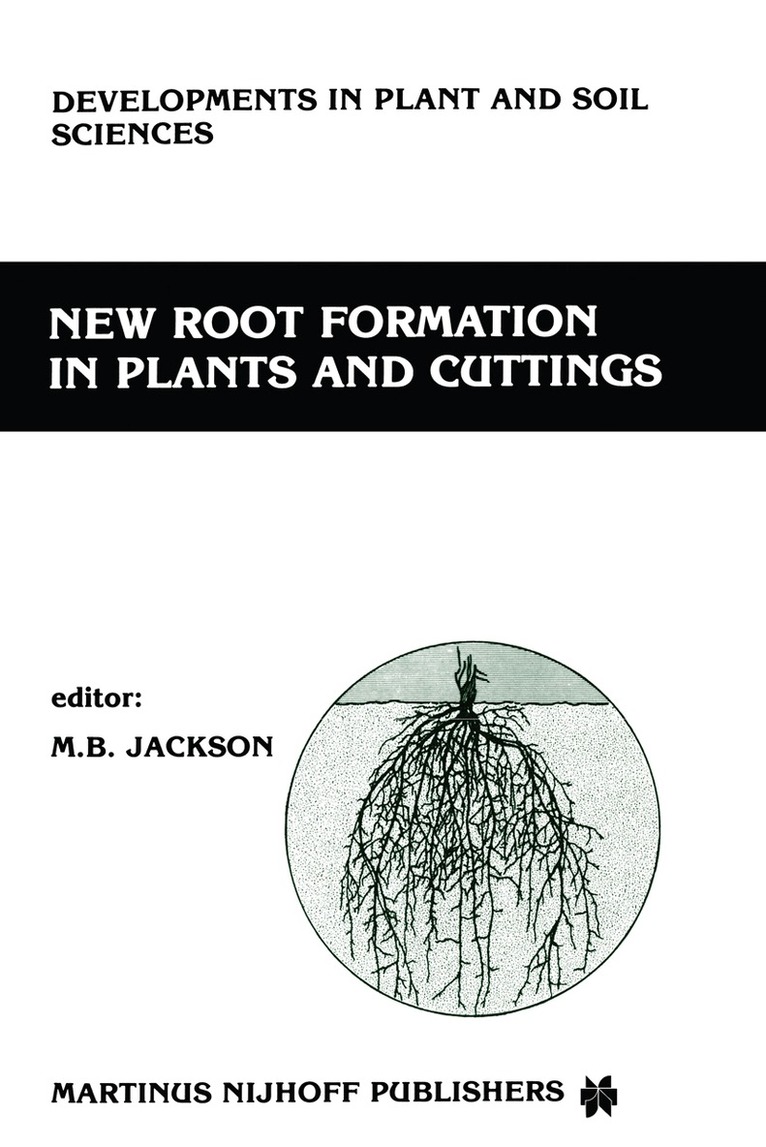
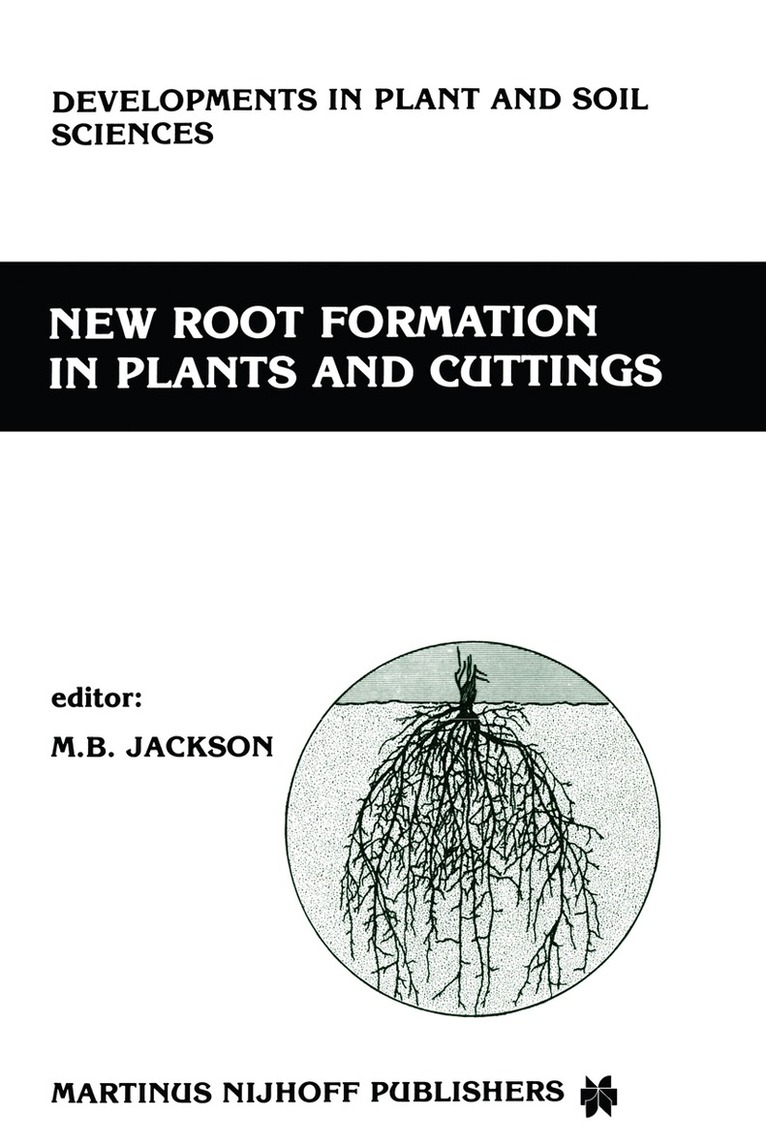
New Root Formation in Plants and Cuttings
Av M.B. Jackson
Inbunden, 1986
1098 kr
Lägg i varukorg
The formation of roots is in some respects one of the least fundamentally understood of all plant functions. Propagation by cuttings is the aspect that will occur first to most gardeners and horticulturists, and it is certainly the most useful application. But any observant traveller in the tropics …
New Root Formation in Plants and Cuttings
Av M.B. Jackson
E-bok, 2012
1459 kr
Lägg i varukorg
The formation of roots is in some respects one of the least fundamentally understood of all plant functions. Propagation by cuttings is the aspect that will occur first to most gardeners and horticulturists, and it is certainly the most useful application. But any observant traveller in the tropics …
Plant Roots - From Cells to Systems
Proceedings of the 14th Long Ashton International Symposium Plant Roots — From Cells to Systems, held in Bristol, U.K., 13–15 September 1995
Av H.M. Anderson, Peter W. Barlow m. fl.
Häftad, 2012
1098 kr
Lägg i varukorg
tests the suitability of using mannitol as an osmoticum during experiments. Pressure probe and SiCSA techniques The expanding maize root tip Use of the cell pressure probe (Htisken et aI. , 1978) and single-cell sampling and analysis (SiCSA; Tomos Individual cells expand to many times their ongl- …
New Root Formation in Plants and Cuttings
Av M.B. Jackson
Häftad, 2013
1098 kr
Lägg i varukorg
The formation of roots is in some respects one of the least fundamentally understood of all plant functions. Propagation by cuttings is the aspect that will occur first to most gardeners and horticulturists, and it is certainly the most useful application. But any observant traveller in the tropics …
Plant Roots - From Cells to Systems
Proceedings of the 14th Long Ashton International Symposium Plant Roots — From Cells to Systems, held in Bristol, U.K., 13–15 September 1995
Av Peter R. Shewry, M.B. Jackson m. fl.
E-bok, 2012
1413 kr
Lägg i varukorg