M.B. King - Böcker
Visar alla böcker från författaren M.B. King. Handla med fri frakt och snabb leverans.
2 produkter
2 produkter
2 101 kr
Skickas inom 10-15 vardagar
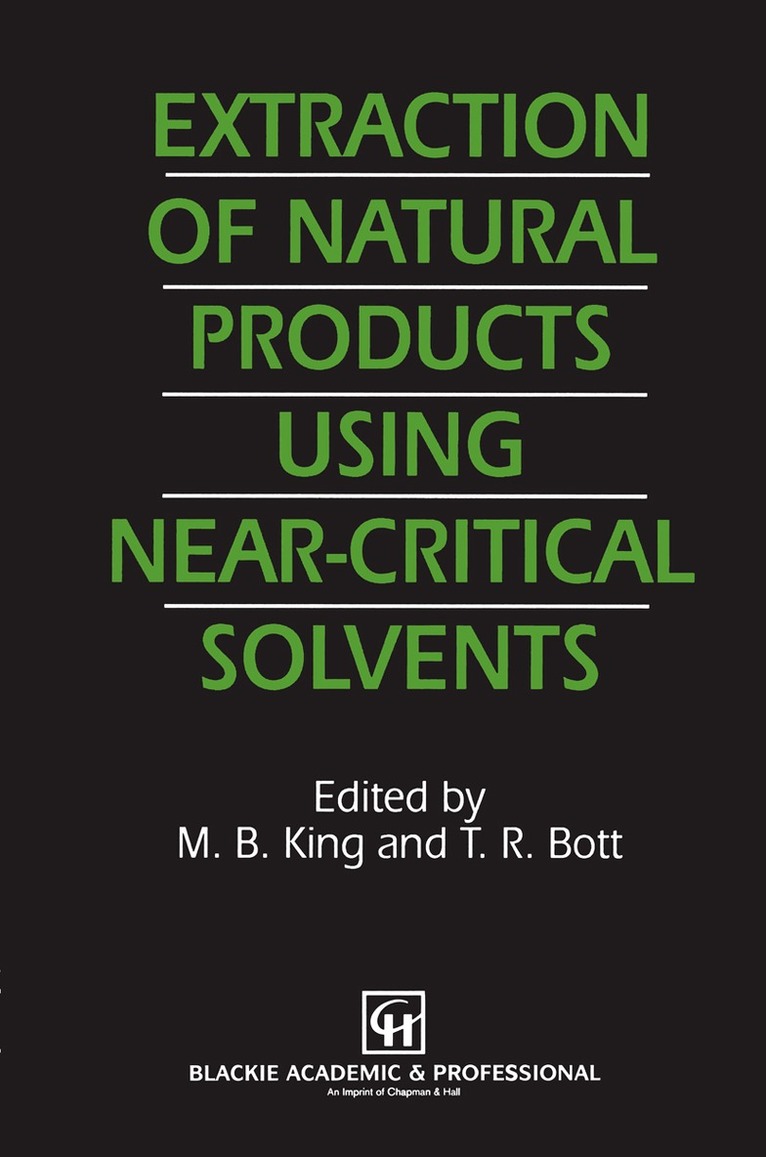
This study describes a technology for extracting natural products with compressed gaseous solvents or liquified gases. The principle advantage of these techniques is that they leave the products uncontaminated. The term "near-critical" is used because the temperature at which the extraction operations are carried out is close to the critical temperature of the solvent. Commercial applications are mainly in the food, beverage and perfumery industries where carbon dioxide is usually used due to its health and safety characteristics. Uses include extraction of hop essences from hops, extraction of essences from herbs and spices, and decaffeination of tea and coffee. Consumer resistance to the use of synthetic organic solvents in food processing and the banning of other solvents due to their effect on the ozone layer mean that the use of near-critical CO2 is increasing and will continue to increase. This book describes in detail the near-critical extraction processes in use today in a practical way with reference to background theory and relevant market trends.Other ways in which solutions in near-critical solvents are useful, for example as reaction and recrystallization media, are also described.
2 101 kr
Skickas inom 10-15 vardagar
The aim of this book is to present the current state of the art of extracting natural products with near-critical solvents and to view the possibilities of further extensions of the technique. Relevant background theory is given but does not dominate the book. Carbon dioxide is the near-critical solvent used in most recent applications and inevitably receives prominence. In addition to general descriptions and reviews, the book contains three chapters by indus trial practitioners who describe in detail the operation of their processes and discuss the market for their products. Sections on the design of the pressure vessels and pumps required in these processes and on the acquisition of the data required for design are included. The costing of the processes is also discussed. There is good scope for combining a near-critical extraction step with other process steps in which the properties of near-critical solvents are utilised, for example as a reaction or crystallisation medium and a chapter is devoted to these important aspects. It is hoped that the work will be found to contain a great deal of specific information of use to those already familiar with this field. However the style of presentation and content is such that it will also be useful as an introduction. In particular it will be helpful to those wondering if this form of separation method has anything to offer for them, whether they are engineers, chemists or managers in industry, or in academic or research institutions.