Meaghan M. Peuramaki-Brown – Författare
Visar alla böcker från författaren Meaghan M. Peuramaki-Brown. Handla med fri frakt och snabb leverans.
2 produkter
2 produkter
254 kr
Kommande
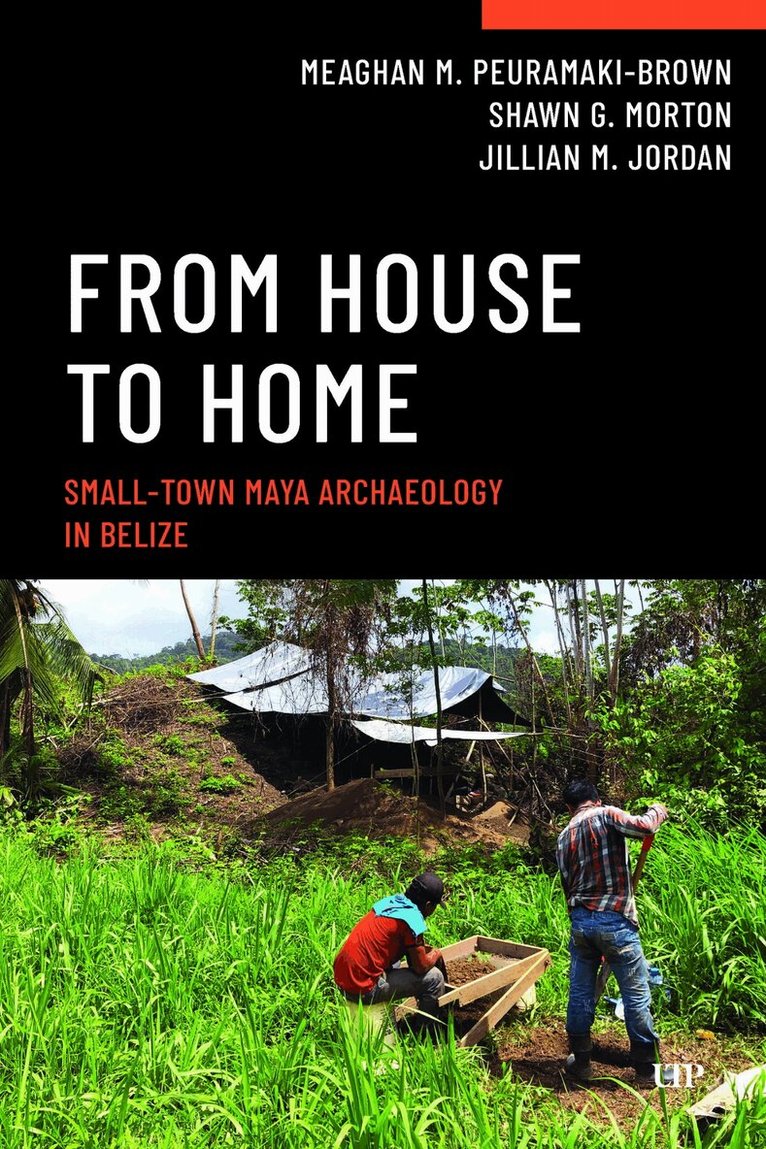
How and why do archaeologists start a project? Where do they begin? What do they do?This book presents a case study from the ongoing Stann Creek Regional Archaeology Project (SCRAP) in Belize, Central America. The authors explore their long-term archaeology research project involving foreign researchers working together with local Maya villagers.Archaeologists Meaghan M. Peuramaki-Brown, Shawn G. Morton, and Jillian M. Jordan deviate from popular narratives surrounding the civilization by studying a small, relatively short-lived (ca. 700–900 AD) Ancestral Maya town along the eastern frontier, focusing on the educational processes involved in archaeological thought and practice. They examine the culture of archaeology in Belize and the Maya Peoples involved in engaging and transforming this culture and the resulting research. They liken the building of their research project to the construction of a traditional Mopan Maya house or nah. Each chapter is linked to a stage of house construction and correlated elements of the project's development and ends with the creation of a home or otoch.Through this framing of SCRAP’s story within a central aspect of a present-day Mopan Maya community, this book attempts to turn archaeology from the study of the past to a conversation with the present.
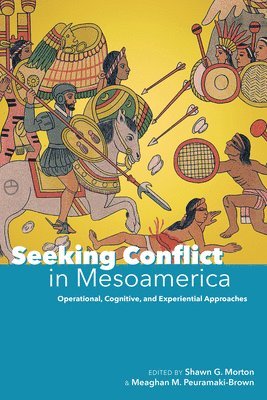
Seeking Conflict in Mesoamerica
Operational, Cognitive, and Experiential Approaches
Inbunden, Engelska, 2019
932 kr
Tillfälligt slut
Seeking Conflict in Mesoamerica focuses on the conflicts of the ancient Maya, providing a holistic history of Maya hostilities and comparing them with those of neighboring Mesoamerican villages and towns. Contributors to the volume explore the varied stories of past Maya conflicts through artifacts, architecture, texts, and images left to posterity. Many studies have focused on the degree to which the prevalence, nature, and conduct of conflict has varied across time and space. This volume focuses not only on such operational considerations but on cognitive and experiential issues, analyzing how the Maya understood and explained conflict, what they recognized as conflict, how conflict was experienced by various groups, and the circumstances surrounding conflict. By offering an emic (internal and subjective) understanding alongside the more commonly researched etic (external and objective) perspective, contributors clarify insufficiencies and address lapses in data and analysis. They explore how the Maya defined themselves within the realm of warfare and examine the root causes and effects of intergroup conflict. Using case studies from a wide range of time periods, Seeking Conflict in Mesoamerica provides a basis for understanding hostilities and broadens the archaeological record for the “seeking” of conflict in a way that has been largely untouched by previous scholars. With broad theoretical reach beyond Mesoamerican archaeology, the book will have wide interdisciplinary appeal and will be important to ethnohistorians, art historians, ethnographers, epigraphers, and those interested in human conflict more broadly. Contributors:Matthew Abtosway, Karen Bassie-Sweet, George J. Bey III, M. Kathryn Brown, Allen J. Christenson, Tomás Gallareta Negrón, Elizabeth Graham, Helen R. Haines, Christopher L. Hernandez, Harri Kettunen, Rex Koontz, Geoffrey McCafferty, Jesper Nielsen, Joel W. Palka, Kerry L. Sagebiel, Travis W. Stanton, Alexandre Tokovinine