
Mehdi Aminrazavi – författare
Visar alla böcker från författaren Mehdi Aminrazavi. Handla med fri frakt och snabb leverans.
8 produkter
8 produkter

380 kr
Tillfälligt slut
Leading authorities offer insights on tolerance along with cultural, social, religious, and philosophical implications.Philosophy, Religion, and the Question of Intolerance is a diverse collection of essays united by a common starting point and theme-the awareness that intolerance is a phenomenon encountered in diverse places and circumstances and often handled with limited success. The question of toleration, together with its cultural, social, religious, and philosophical implications, is addressed by leading authorities who offer insights from an interdisciplinary perspective.The book begins with essays by three distinguished scholars, Robert Cummings Neville, J. B. Schneewind, and John McCumber. They assess the origins of intolerance, the genesis of our concept of toleration, and the outlook for the practice of tolerance in contemporary society.Beyond the opening essays, the collection is divided into three sections. The first concentrates on the relationship of religious faith and practice to toleration and inquires how religion might either impede or promote toleration. The second section deals primarily with questions regarding tolerance in the face of modern political realities. The final section discusses ethics, namely the philosophical analysis and definition of toleration as a virtue.
426 kr
Skickas inom 11-20 vardagar
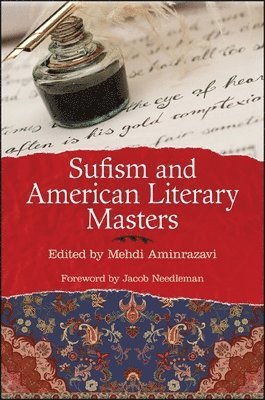
Explores the influence of Sufism on nineteenth- and early twentieth-century writers.This book reveals the rich, but generally unknown, influence of Sufism on nineteenth- and early twentieth-century American literature. The translation of Persian poets such as Hafiz and Sa'di into English and the ongoing popularity of Omar Khayyam offered intriguing new spiritual perspectives to some of the major American literary figures. As editor Mehdi Aminrazavi notes, these Sufi influences have often been subsumed into a notion of "Eastern," chiefly Indian, thought and not acknowledged as having Islamic roots. This work pays considerable attention to two giants of American literature, Ralph Waldo Emerson and Walt Whitman, who found much inspiration from the Sufi ideas they encountered. Other canonical figures are also discussed, including Mark Twain, Herman Melville, Henry David Thoreau, and Henry Wadsworth Longfellow, along with literary contemporaries who are lesser known today, such as Paschal Beverly Randolph, Thomas Lake Harris, and Lawrence Oliphant.
1 209 kr
Tillfälligt slut
Explores the influence of Sufism on nineteenth- and early twentieth-century writers.This book reveals the rich, but generally unknown, influence of Sufism on nineteenth- and early twentieth-century American literature. The translation of Persian poets such as Hafiz and Sa'di into English and the ongoing popularity of Omar Khayyam offered intriguing new spiritual perspectives to some of the major American literary figures. As editor Mehdi Aminrazavi notes, these Sufi influences have often been subsumed into a notion of "Eastern," chiefly Indian, thought and not acknowledged as having Islamic roots. This work pays considerable attention to two giants of American literature, Ralph Waldo Emerson and Walt Whitman, who found much inspiration from the Sufi ideas they encountered. Other canonical figures are also discussed, including Mark Twain, Herman Melville, Henry David Thoreau, and Henry Wadsworth Longfellow, along with literary contemporaries who are lesser known today, such as Paschal Beverly Randolph, Thomas Lake Harris, and Lawrence Oliphant.
948 kr
Skickas inom 10-15 vardagar
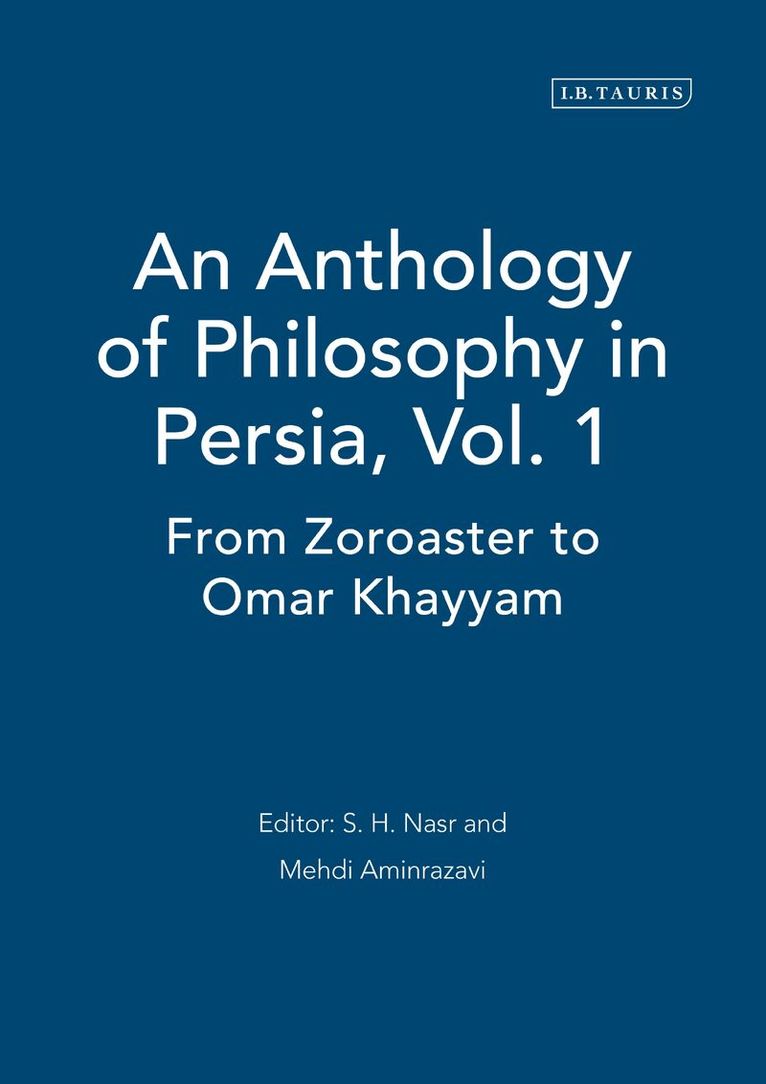
The tradition of philosophy in the Persian-speaking world is extraordinarily rich, creative and diverse. This anthology, which is divided into three volumes, aims to communicate something of that richness and diversity. The term 'philosophy' is understood to in its widest sense to include theological debate, philosophical Sufism and philosophical hermeneutics (ta'wil). Extending over a period of more than two millennia, and showcasing translations by well-established scholars, the anthology offers full bibliographical references throughout. For anyone interested in exploring, in all their varied manifestations, the fascinating philosophical traditions of Persia, such a wide-ranging and ambitious work will be an indispensable resource. Volume 1 starts with the Zoroastrian period and extends to the time of Biruni and Oma Khayyam, paying special attenton to the peripatetic school associated with Ibn Sina (Avicenna).During the pre-Islamic period philosophy was intertwined with religion, and it is within Persian religious texts such as the "Gathas", the "Denkard", and the Zoroastrian texts of the "Bundahisn" that philosophical discussions of subjects ranging from metaphysics to cosmology and eschatology are to be found.
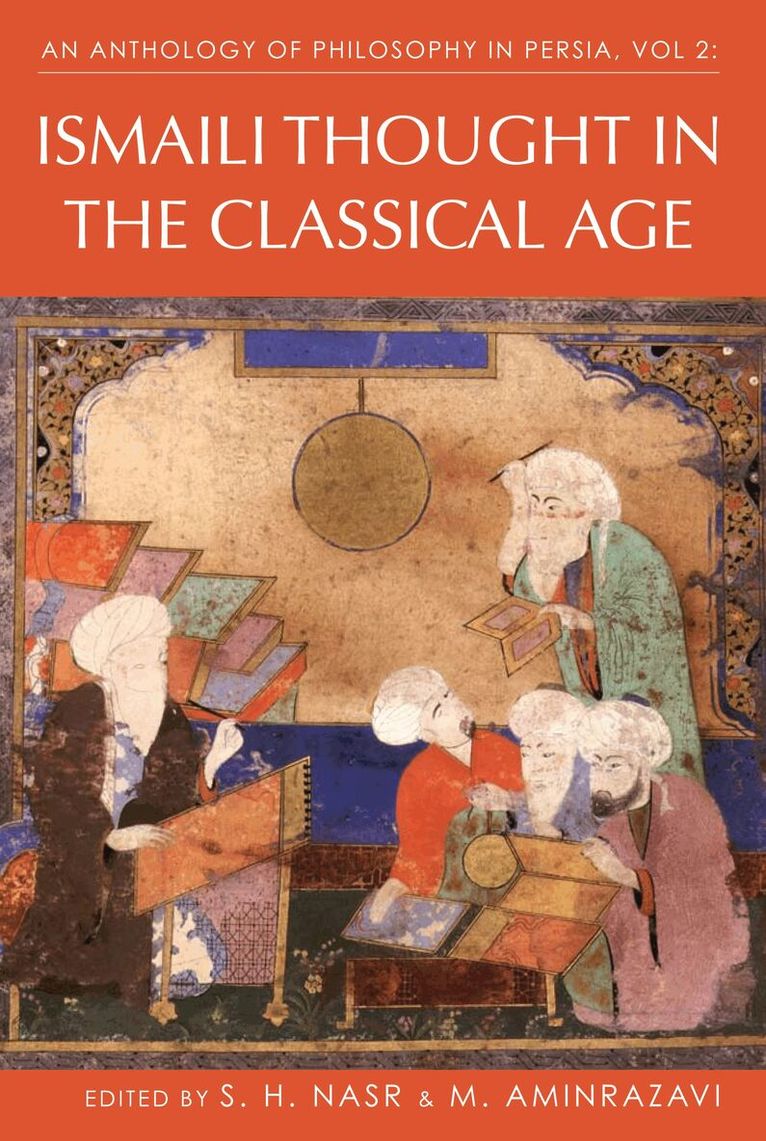
Anthology of Philosophy in Persia, Vol. 2
Ismaili Thought in the Classical Age
Inbunden, Engelska, 2008
948 kr
Skickas inom 10-15 vardagar
The tradition of philosophy in the Persian-speaking world is extraordinarily rich, creative and diverse. This anthology, which is divided into three volumes, aims to communicate something of that richness and diversity. The term 'philosophy' is understood to in its widest sense to include theological debate, philosophical Sufism and philosophical hermeneutics (ta'wil). Extending over a period of more than two millennia, and showcasing translations by well-established scholars, the anthology offers full bibliographical references throughout. For anyone interested in exploring, in all their varied manifestations, the fascinating philosophical traditions of Persia, such a wide-ranging and ambitious work will be an indispensable resource. Volume 2 covers five centuries of Ismaili philosophy, and includes extracts from outstanding Ismaili works including the "Rasa'il Ikhwan al-Safa" ("Treatises of the Brethren of Purity") and the philosophical odes of Nasir Khusraw. It is of great siginificance that, in the early centuries of Islam, philosophers were influenced by Pythagorean and Hermetic ideas, which are usually associated with Shi'i thought in general and Ismailism in particular.Ismaili philosophy at this time was able to integrate strands of Greco-Alexandrian thought such as Hermeticism and Neo-Pythagoreanism, as well as aspects of Mazdaeism and Manichaeism. It also showed marked interest in Neo-platonism.
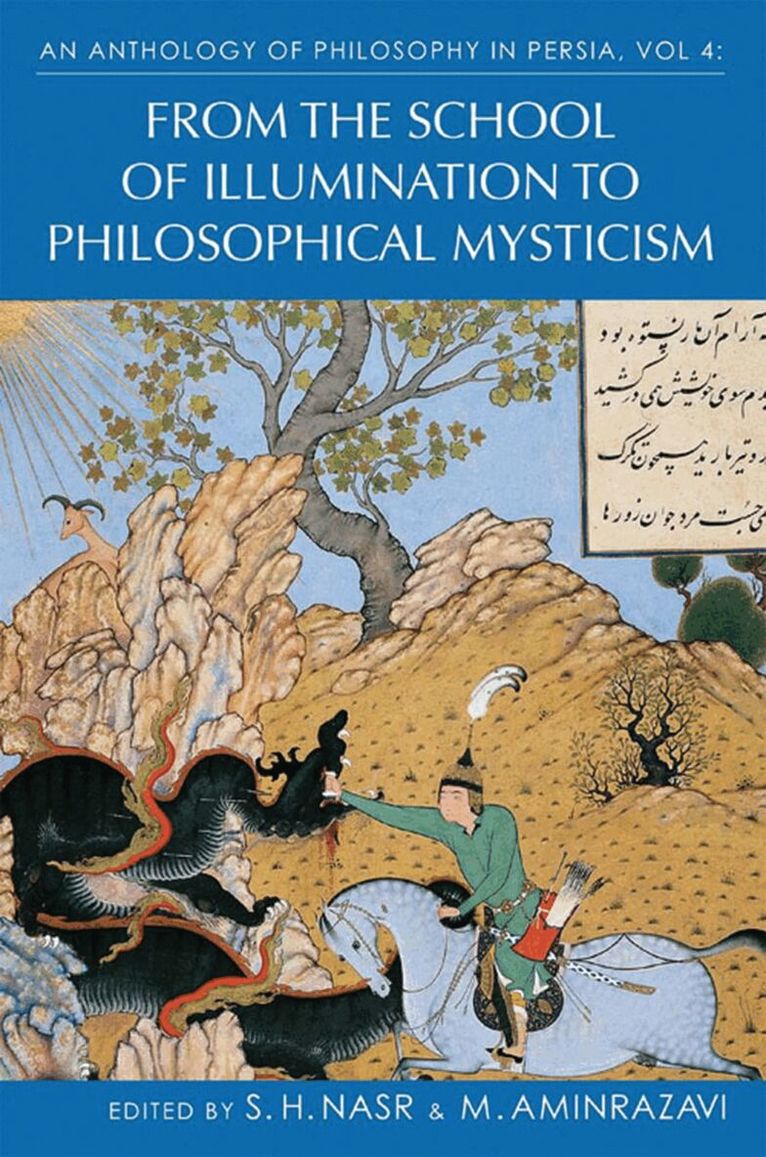
Anthology of Philosophy in Persia, Vol. 4
From the School of Illumination to Philosophical Mysticism
Inbunden, Engelska, 2012
948 kr
Skickas inom 10-15 vardagar
The fourth volume of the Anthology of Philosophy in Persia deals with one of the richest and yet least known periods of philosophical life in Persia, the centuries between the seventh/thirteenth century, that saw the eclipse of the school of Khorosan, and the tenth/sixteenth century that coincided with the rise of the Safavids. The main schools dealt with in this volume are the Peripatetic (mashsha'i) School, the School of Illumination (ishraq) of Suhrawardi, and various forms of philosophical Sufism, especially the school of Ibn 'Arabi, that had its origins in the works of Ghazzali and 'Ayn al-Qudat Hamadani. This period was also notable for the philosopher-scientists such as Nasir al-Din Tusi and Qutb al-Din Shirazi.
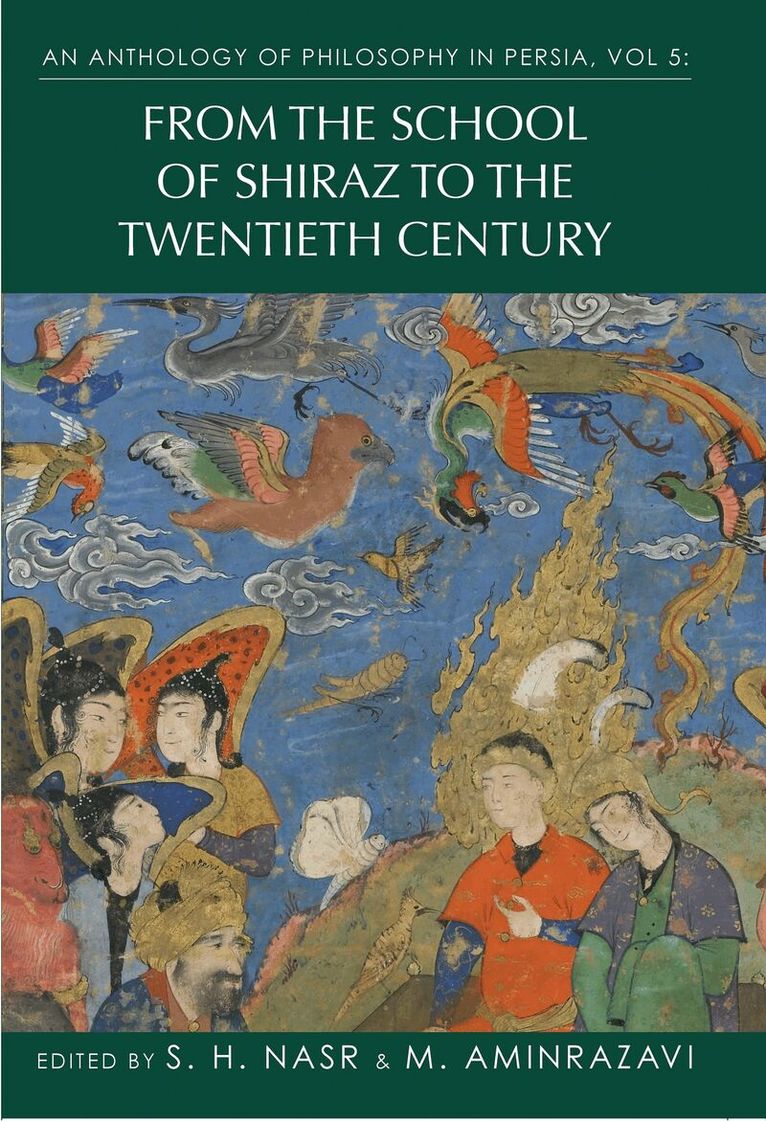
Anthology of Philosophy in Persia, Vol. 5
From the School of Shiraz to the Twentieth Century
Inbunden, Engelska, 2014
948 kr
Skickas inom 10-15 vardagar
Persia is home to one of the few civilizations in the world that has had a continuous tradition of philosophical thought lasting more than two and a half millennia. From the time Zoroaster brought the Gathas, the sacred scripture of Zoroastrianism, until today, it has had a philosophical tradition comprising diverse schools and various languages including Avestan and Pahlavi as well as Arabic and Persian. The West has seen surveys of Persian art and anthologies of Persian literature, but this work is the first to present a millennial tradition of philosophy in Persia in the form of translated selections and introductory sections for each period and figure. Existing translations have been used where possible but most of the selections have been newly translated for this work which, with the help of the explanatory introductions, makes possible an intellectual journey into a philosophical continent much of which has been uncharted for Westerners until now. The fifth and final volume of An Anthology of Philosophy in Persia deals with some seven centuries of Islamic thought stretching from the era following the Mongol invasion to the end of the Qajar period.Organized around the cities which became the main centres of philosophical activity during this long period, the volume is divided into three parts: 'The School of Shiraz', whose importance not only for Persia but also for Ottoman Turkey and Muslim India is only now being recognized; 'The School of Isfahan', which marks the integration of some eight centuries of Islamic thought and culminates with Mulla Sadra; and finally 'The School of Tehran', where traditional philosophy first encountered modern thought in Persia, bringing this series into present times.
462 kr
Skickas inom 5-8 vardagar
The intoxicating message of Khayyam’s famous Ruba‘iyyat created an image of exotic Orientalism in the West but, as author Mehdi Aminrazavi reveals, Khayyam’s achievements went far beyond the intoxicating message within these verses. Philosopher, mathematician, scientist, and mystic – his many different identities are examined here in detail, creating a coherent picture of this complex and often misunderstood figure.