Mel Scult - Böcker
Visar alla böcker från författaren Mel Scult. Handla med fri frakt och snabb leverans.
9 produkter
9 produkter
487 kr
Skickas inom 10-15 vardagar
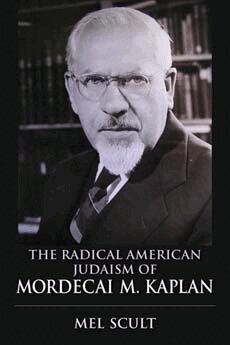
Mordecai M. Kaplan, founder of the Jewish Reconstructionist movement, is the only rabbi to have been excommunicated by the Orthodox rabbinical establishment in America. Kaplan was indeed a radical, rejecting such fundamental Jewish beliefs as the concept of the chosen people and a supernatural God. Although he valued the Jewish community and was a committed Zionist, his primary concern was the spiritual fulfillment of the individual. Drawing on Kaplan's 27-volume diary, Mel Scult describes the development of Kaplan's radical theology in dialogue with the thinkers and writers who mattered to him most, from Spinoza to Emerson and from Ahad Ha-Am and Matthew Arnold to Felix Adler, John Dewey, and Abraham Joshua Heschel. This gracefully argued book, with its sensitive insights into the beliefs of a revolutionary Jewish thinker, makes a powerful contribution to modern Judaism and to contemporary American religious thought.
309 kr
Skickas inom 7-10 vardagar
Mordecai M. Kaplan, founder of the Jewish Reconstructionist movement, is the only rabbi to have been excommunicated by the Orthodox rabbinical establishment in America. Kaplan was indeed a radical, rejecting such fundamental Jewish beliefs as the concept of the chosen people and a supernatural God. Although he valued the Jewish community and was a committed Zionist, his primary concern was the spiritual fulfillment of the individual. Drawing on Kaplan's 27-volume diary, Mel Scult describes the development of Kaplan's radical theology in dialogue with the thinkers and writers who mattered to him most, from Spinoza to Emerson and from Ahad Ha-Am and Matthew Arnold to Felix Adler, John Dewey, and Abraham Joshua Heschel. This gracefully argued book, with its sensitive insights into the beliefs of a revolutionary Jewish thinker, makes a powerful contribution to modern Judaism and to contemporary American religious thought.
276 kr
Skickas inom 10-15 vardagar
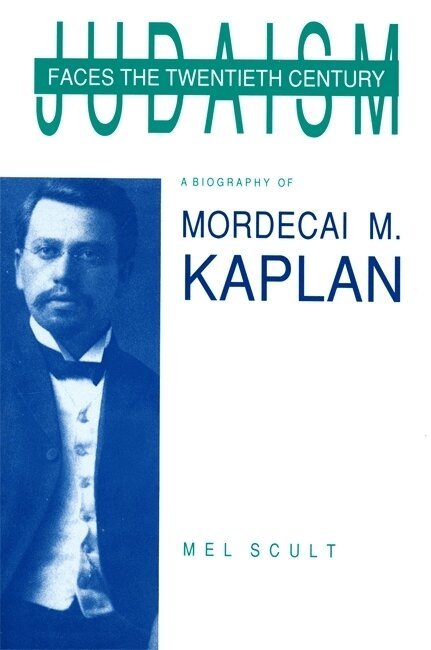
This critical examination of the life of Mordecai Kaplan is based on Kaplan's unpublished 27-volume diary, thousands of personal letters, sermons, and Scult's own long-term relationship with Kaplan.
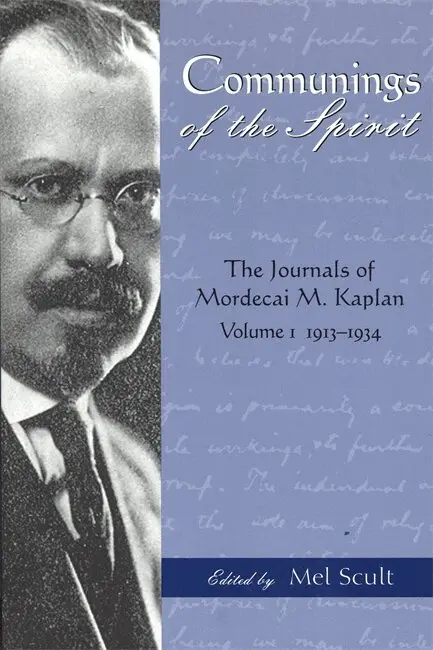
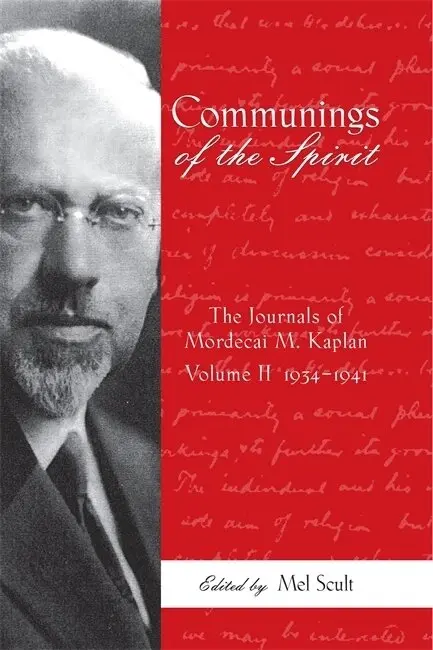
Communings of the Spirit Vol. 1
The Journals of Mordecai M.Kaplan, Volume. 1; 1913-1934
Häftad, Engelska, 2002
333 kr
Skickas inom 10-15 vardagar
This text provides selections from the diary of Rabbi Mordecai Kaplan, founder of Reconstructionism in America. It has been edited by Mel Scult, a professor of Judaic studies and history, whose previous work includes ""The American Judaism of Mordecai Kaplan"" and ""Judaism Faces the Twentieth Century: A Biography of Mordecai Kaplan"". The selections contained in this particular volume cover Mordecai Kaplan's writings between the years 1913 and 1934.
Communings of the Spirit Vol. 2
The Journals of Mordecai M. Kaplan, Volume 2: 1934 - 1941
Inbunden, Engelska, 2016
560 kr
Skickas inom 10-15 vardagar
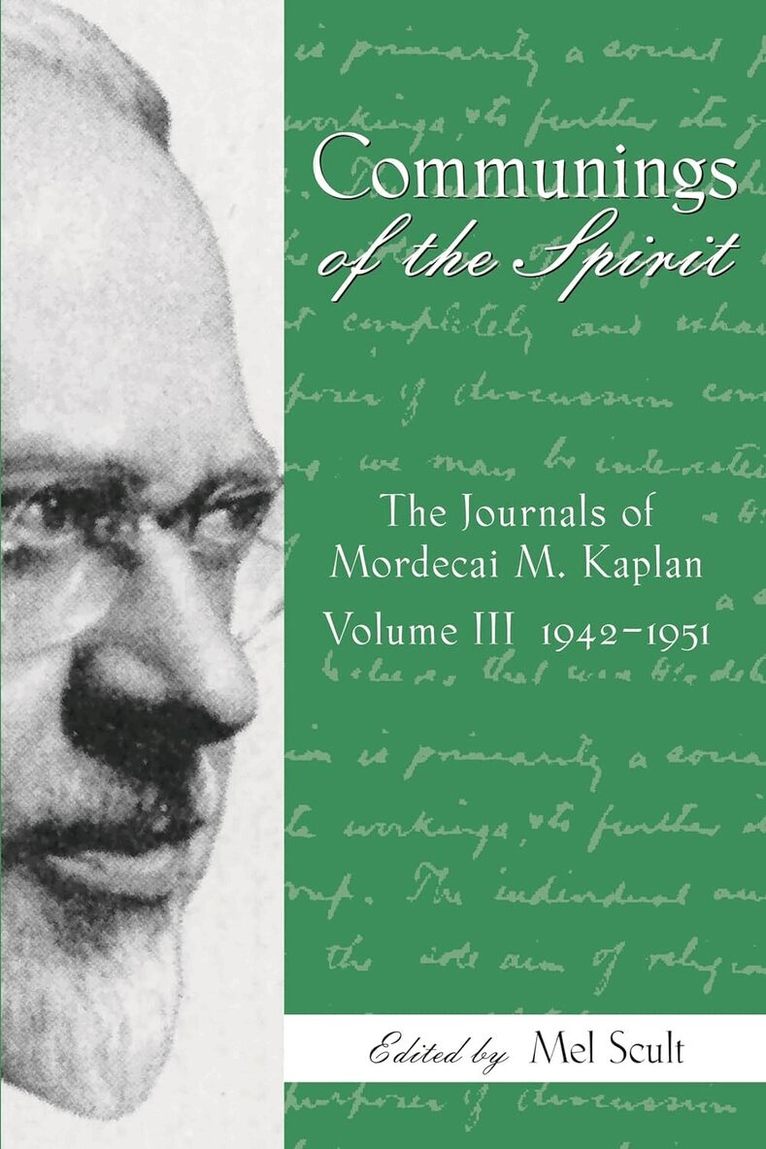
Mordecai M. Kaplan (1881–1983), founder of Reconstructionism, is the preeminent American Jewish thinker and rabbi of our times. His life embodies the American Jewish experience of the first half of the twentieth century. With passionate intensity and uncommon candor, Kaplan compulsively recorded his experience in his journals, some ten thousand pages. At times, Kaplan thought his ideas were too radical or complex to share with his congregation, and what he could not share publicly he put into his journals. In this diary we find his uncensored thoughts on a variety of subjects. Thus, the diary was much more sophisticated and radical than anything he published while living.While in the first volume of Communings of the Spirit, editor Mel Scult covers Kaplan's early years as a rabbi, teacher of rabbis, and community leader, in the second volume we experience through Kaplan the economic problems of the thirties and their shattering impact on the Jewish community. It becomes clear that Kaplan, like so many others during this period, was attracted to the solutions offered by communism, notwithstanding some hesitation because of the anti-religiousnature of communist ideology. Through Kaplan we come to understand the Jewish community in the yishuv (Jews in Palestine) as Kaplan spent two years teaching at the Hebrew University in Jerusalem and his close circle of friends included Martin Buber, Judah Leon Magnes, and other prominent personalities. It is also during this time that the specter of Nazi Germany begins to haunt American Jews, and Kaplan, sensitive to the threats, is obsessed with Jewish security, both in Europe and Palestine.More than anything else, this diary is the chronicle of Kaplan’s spiritual and intellectual journey in the early 1930s and 1940s. With honesty and vivid detail,Kaplan explores his evolving beliefs on religious naturalism and his uncertainties and self-doubts as he grapples with a wide range of theological issues.
Communings of the Spirit, Volume III
The Journals of Mordecai M. Kaplan, 1942-1951
Inbunden, Engelska, 2020
1 074 kr
Skickas inom 10-15 vardagar
Mordecai M. Kaplan (1881-1983), founder of Reconstructionism and the rabbi who initiated the first Bat Mitzvah, also produced the longest Jewish diary on record. In twenty-seven volumes, written between 1913 and 1978, Kaplan shares not only his reaction to the great events of his time but also his very personal thoughts on religion and Jewish life.In Communings of the Spirit: The Journals of Mordecai M. Kaplan Volume III, 1942-1951, readers experience his horror at the persecution of the European Jews, as well as his joy in the founding of the State of Israel. Above all else, Kaplan was concerned with the survival and welfare of the Jewish people. And yet he also believed that the well-being of the Jewish people was tied to the safety and security of all people. In his own words, "Such is the mutuality of human life that none can be saved, unless all are saved".In the first volume of Communings of the Spirit, editor Mel Scult covers Kaplan's early years as a rabbi, teacher of rabbis, and community leader. In the second volume, readers experience the economic problems of the 1930s and their shattering impact on the Jewish community. The third volume chronicles Kaplan's spiritual and intellectual journey in the 1940s. With candour and vivid detail, Kaplan explores his evolving beliefs concerning a democratic Judaism; religious naturalism; and the conflicts, uncertainties, and self-doubts he faced in the first half of the twentieth century, including his excommunication by the ultra-Orthodox in 1945 for taking a more progressive approach to the liturgy.In his publications, Kaplan eliminated the time-honored declarations of Jewish chosen-ness as well as the outdated doctrines concerning the resurrection of the dead. He wanted a prayer book that Jews could feel reflected their beliefs and experiences; he believed that people must mean what they say when they pray. Kaplan was a man of contradictions, but because of that, all the more interesting and significant.Scholars of Judaica and rabbinical studies will value this honest look at the preeminent American Jewish thinker and rabbi of our times.
Communings of the Spirit, Volume III
The Journals of Mordecai M. Kaplan, 1942-1951
Häftad, Engelska, 2020
420 kr
Skickas inom 10-15 vardagar
Mordecai M. Kaplan (1881-1983), founder of Reconstructionism and the rabbi who initiated the first Bat Mitzvah, also produced the longest Jewish diary on record. In twenty-seven volumes, written between 1913 and 1978, Kaplan shares not only his reaction to the great events of his time but also his very personal thoughts on religion and Jewish life.In Communings of the Spirit: The Journals of Mordecai M. Kaplan Volume III, 1942-1951, readers experience his horror at the persecution of the European Jews, as well as his joy in the founding of the State of Israel. Above all else, Kaplan was concerned with the survival and welfare of the Jewish people. And yet he also believed that the well-being of the Jewish people was tied to the safety and security of all people. In his own words, "Such is the mutuality of human life that none can be saved, unless all are saved".In the first volume of Communings of the Spirit, editor Mel Scult covers Kaplan's early years as a rabbi, teacher of rabbis, and community leader. In the second volume, readers experience the economic problems of the 1930s and their shattering impact on the Jewish community. The third volume chronicles Kaplan's spiritual and intellectual journey in the 1940s. With candour and vivid detail, Kaplan explores his evolving beliefs concerning a democratic Judaism; religious naturalism; and the conflicts, uncertainties, and self-doubts he faced in the first half of the twentieth century, including his excommunication by the ultra-Orthodox in 1945 for taking a more progressive approach to the liturgy.In his publications, Kaplan eliminated the time-honored declarations of Jewish chosen-ness as well as the outdated doctrines concerning the resurrection of the dead. He wanted a prayer book that Jews could feel reflected their beliefs and experiences; he believed that people must mean what they say when they pray. Kaplan was a man of contradictions, but because of that, all the more interesting and significant.Scholars of Judaica and rabbinical studies will value this honest look at the preeminent American Jewish thinker and rabbi of our times.
719 kr
Skickas inom 7-10 vardagar
Mordecai M. Kaplan, a pioneering figure in the reinterpretation and redefinition of Judaism in the 20th century, embraced religious liberalism, naturalism, and empiricism, and gave expression to a unique American attitude in philosophy and theology. This volume, the first comprehensive treatment of Kaplan since his death in 1983 . . . illustrates Kaplan's links to traditional Jewish roots and demonstrates his evolutionary philosophy of Jewish culture, his Zionist orientation, and the vast range of his thought and action. The volume also features a complete bibliography of Kaplan's writings. -- ChoiceA must for every serious thinker probing American Jewish culture, history and theology.-- Alfred GottschalkPresident, Hebrew Union College--Jewish Institute of ReligionThese highly knowledgeable essays provide us with a new and more complex image of a central personality in 20th century American Jewish life. They are indispensable for understanding the influences that helped shape Mordecai Kaplan's thought and personality, the nature of his relationships with significant contemporaries, and the various aspects of his ideology and practical program for American Jewry.-- Professor Michael A. MeyerDepartment of Jewish HistoryHebrew Union College--Jewish Institute of ReligionThis leading American Jewish thinker of the pre-war period is still the point of departure for any attempt to construct a Judaism for this new age in the history of the Jewish people. The volume brings them an and this thought to life.-- Dr. Arthur GreenPresident, Reconstructionist Rabbinical College
309 kr
Skickas inom 7-10 vardagar
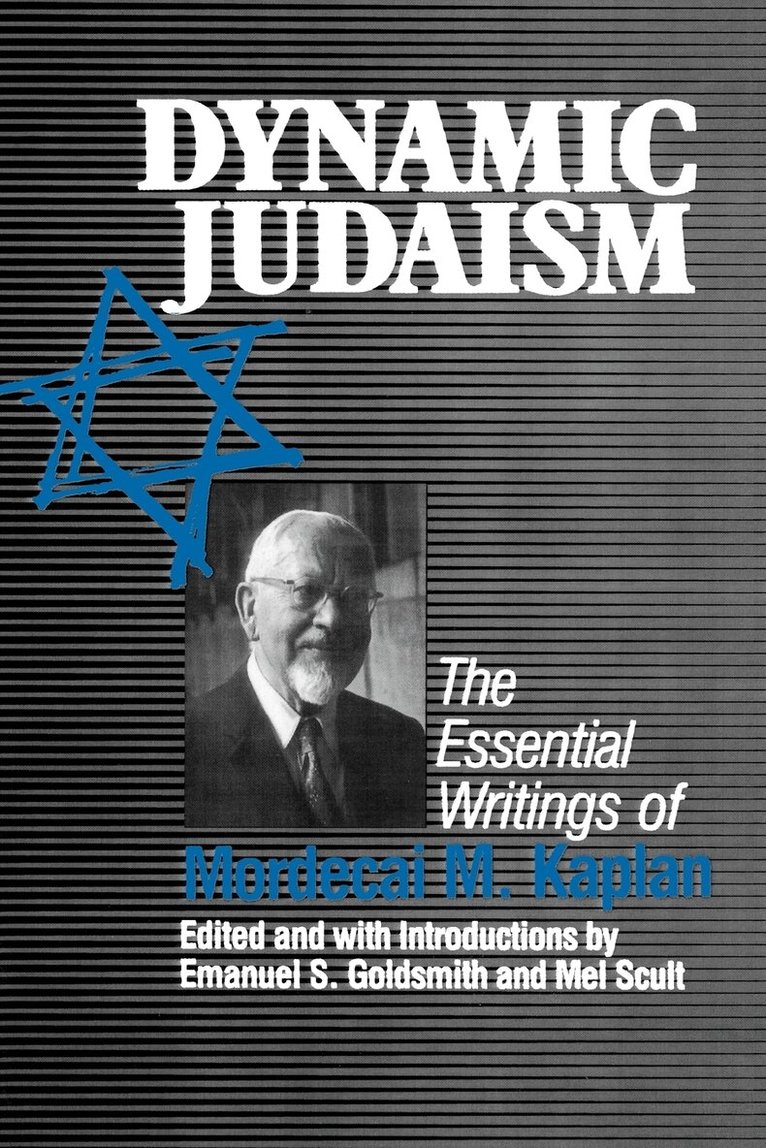
Available in a new digital edition with reflowable text suitable for e-readersMordecai M. Kaplan was born in a small Lithuanian town on the outskirts of Vilna on a Friday evening in June of 1881. Kaplan was raised in a predominately Jewish atmosphere, which is shown by the fact that he knew his day of birth only by the Jewish calendar until he went to the New York Public Library as a young man to look up the corresponding date. His family was extremely traditional, and his father, Israel Kaplan, was a learned man.Kaplan's concept of Judaism as an evolving religious civilization was widely influential in 20th-century American Jewish life, and his founding of the Reconstructionist Rabbinical College created a new denomination. This book contains a biographical essay and excerpts from all of his major works.