Melissa M. Littlefield - Böcker
Visar alla böcker från författaren Melissa M. Littlefield. Handla med fri frakt och snabb leverans.
6 produkter
6 produkter
1 453 kr
Skickas inom 7-10 vardagar
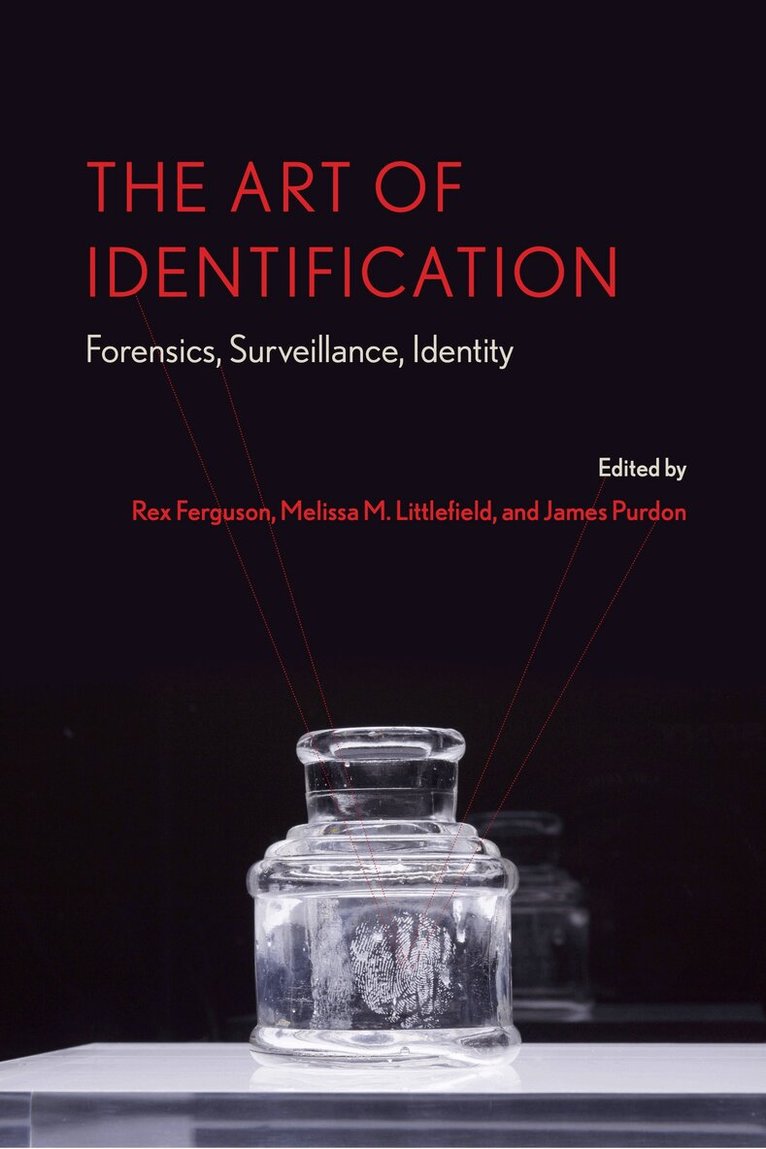
Since the mid-nineteenth century, there has been a notable acceleration in the development of the techniques used to confirm identity. From fingerprints to photographs to DNA, we have been rapidly amassing novel means of identification, even as personal, individual identity remains a complex chimera. The Art of Identification examines how such processes are entangled within a wider sphere of cultural identity formation.Against the backdrop of an unstable modernity and the rapid rise and expansion of identificatory techniques, this volume makes the case that identity and identification are mutually imbricated and that our best understanding of both concepts and technologies comes through the interdisciplinary analysis of science, bureaucratic infrastructures, and cultural artifacts. With contributions from literary critics, cultural historians, scholars of film and new media, a forensic anthropologist, and a human bioarcheologist, this book reflects upon the relationship between the bureaucratic, scientific, and technologically determined techniques of identification and the cultural contexts of art, literature, and screen media. In doing so, it opens the interpretive possibilities surrounding identification and pushes us to think about it as existing within a range of cultural influences that complicate the precise formulation, meaning, and reception of the concept.In addition to the editors, the contributors to this volume include Dorothy Butchard, Patricia E. Chu, Jonathan Finn, Rebecca Gowland, Liv Hausken, Matt Houlbrook, Rob Lederer, Andrew Mangham, Victoria Stewart, and Tim Thompson.
429 kr
Skickas inom 7-10 vardagar
Since the mid-nineteenth century, there has been a notable acceleration in the development of the techniques used to confirm identity. From fingerprints to photographs to DNA, we have been rapidly amassing novel means of identification, even as personal, individual identity remains a complex chimera. The Art of Identification examines how such processes are entangled within a wider sphere of cultural identity formation.Against the backdrop of an unstable modernity and the rapid rise and expansion of identificatory techniques, this volume makes the case that identity and identification are mutually imbricated and that our best understanding of both concepts and technologies comes through the interdisciplinary analysis of science, bureaucratic infrastructures, and cultural artifacts. With contributions from literary critics, cultural historians, scholars of film and new media, a forensic anthropologist, and a human bioarcheologist, this book reflects upon the relationship between the bureaucratic, scientific, and technologically determined techniques of identification and the cultural contexts of art, literature, and screen media. In doing so, it opens the interpretive possibilities surrounding identification and pushes us to think about it as existing within a range of cultural influences that complicate the precise formulation, meaning, and reception of the concept.In addition to the editors, the contributors to this volume include Dorothy Butchard, Patricia E. Chu, Jonathan Finn, Rebecca Gowland, Liv Hausken, Matt Houlbrook, Rob Lederer, Andrew Mangham, Victoria Stewart, and Tim Thompson.
349 kr
Skickas inom 7-10 vardagar
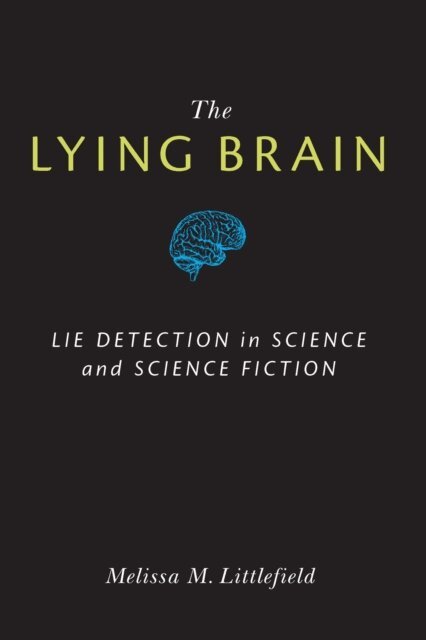
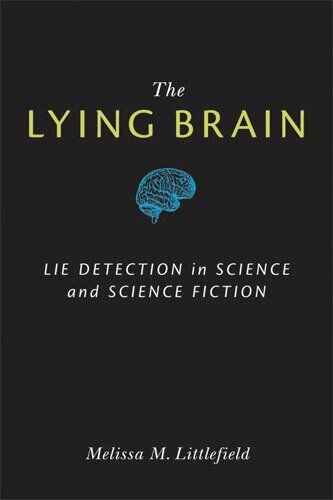
"The Lying Brain is a study to take seriously. Its argument is timely, clear, and of particular importance to the enlargement of our understanding of the relationships among science studies, literary studies, and technology studies."---Ronald Schleifer, University of OklahomaReal and imagined machines, including mental microscopes, thought translators, and polygraphs, have long promised to detect deception in human beings. Now, via fMRI and EEG, neuroscientists seem to have found what scientists, lawyers, and law enforcement officials have sought for over a century: foolproof lie detection. But are these new lie detection technologies any different from their predecessors? The Lying Brain is the first book to explore the cultural history of an array of lie detection technologies: their ideological assumptions, the scientific and fictional literatures that create and market them, and the literacies required for their interpretation. By examining a rich archive of materials about lie detection---from science to science fiction---The Lying Brain demonstrates the interconnections of science, literature, and popular culture in the development and dissemination of deception detection in the American cultural imagination. As Melissa Littlefield demonstrates, neuroscience is not building a more accurate lie detector; it is simply recycling centuries-old ideologies about deception and its detection. Cover art: "Human Brain" © Denis Barbulet, courtesy of Shutterstock.com
1 288 kr
Skickas inom 7-10 vardagar
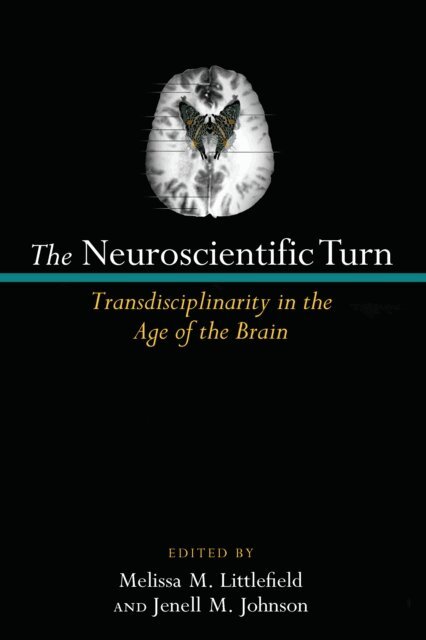
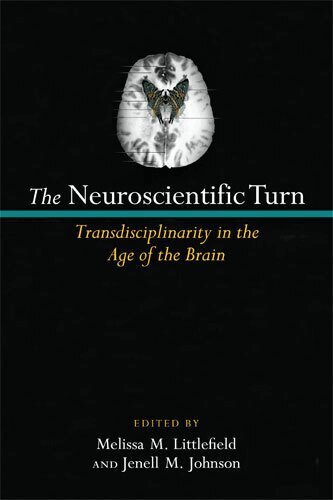
The Neuroscientific Turn brings together 19 scholars from a variety of fields to reflect on the promises of and challenges facing emergent "neurodisciplines" such as neuroethics, neuroeconomics, and neurohistory. In the aftermath of the Decade of the Brain, neuroscience has become one of the hottest topics of study---not only for scientists but also, increasingly, for scholars from the humanities and social sciences. While the popular press has simultaneously lauded and loathed the coming "neurorevolution," the academy has yet to voice any collective speculations about whether there is any coherence to this neuroscientific turn; what this turn will and should produce; and what implications it has for inter- or transdisciplinary inquiry. Melissa M. Littlefield and Jenell M. Johnson provide an initial framework for this most recent of "turns" by bringing together 14 original essays by scholars from the humanities, social sciences, and neurosciences. The resulting collection will appeal to neuroscientists curious about their colleagues' interest in their work; scholars and students both in established neurodisciplines and in disciplines such as sociology or English wondering about how to apply neuroscience findings to their home disciplines; and to science, technology, and society scholars and students interested in the roles of interdisciplinarity and transdisciplinarity in the construction of knowledge.
525 kr
Skickas inom 7-10 vardagar
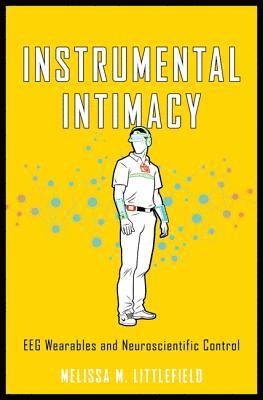
A critical examination of the rise of wearable EEG monitors.From Fitbits to GPS trackers, wearables promise to help us understand and improve ourselves in quantified ways. We count our steps, track our location, and even monitor our brain waves as we strive to achieve better fitness, clearer direction, or a more focused mind. But why do we rely on wearables to learn about ourselves? In Instrumental Intimacy, Melissa M. Littlefield questions our desire for mechanistic guidance by examining brain-based EEG wearables that promise to improve sleep, relationships, self-knowledge, and learning. Littlefield focuses specifically on EEGs’ transition out of the laboratory and into the hands of consumers. While other brain-imaging technologies (such as MRI, PET, and MEG) are used only in specialized laboratories, human electroencephalography (a.k.a. EEG) is embedded in portable, user-friendly devices. These direct-to-consumer wearables visualize brain activity as accessible data, and many offer the promise of self-optimization.Littlefield’s illuminating book brings the histories of EEG to bear on the contemporary development of EEG wearables via case studies of EEG-based sleep aids, bio-mapping instruments, fashionable surveillance tools, and athletic training devices. The author argues that, over the past century, applied uses of EEG helped to create new states of mind to be monitored and manipulated, as well as discourses about the existence of brain waves and their viability as a tool for brain optimization. By contextualizing and analyzing EEG wearables, Instrumental Intimacy provides a crucial intervention in an emergent consumer market and in the scholarly fields of STS, critical neuroscience, and the history of technology.
363 kr
Kommande
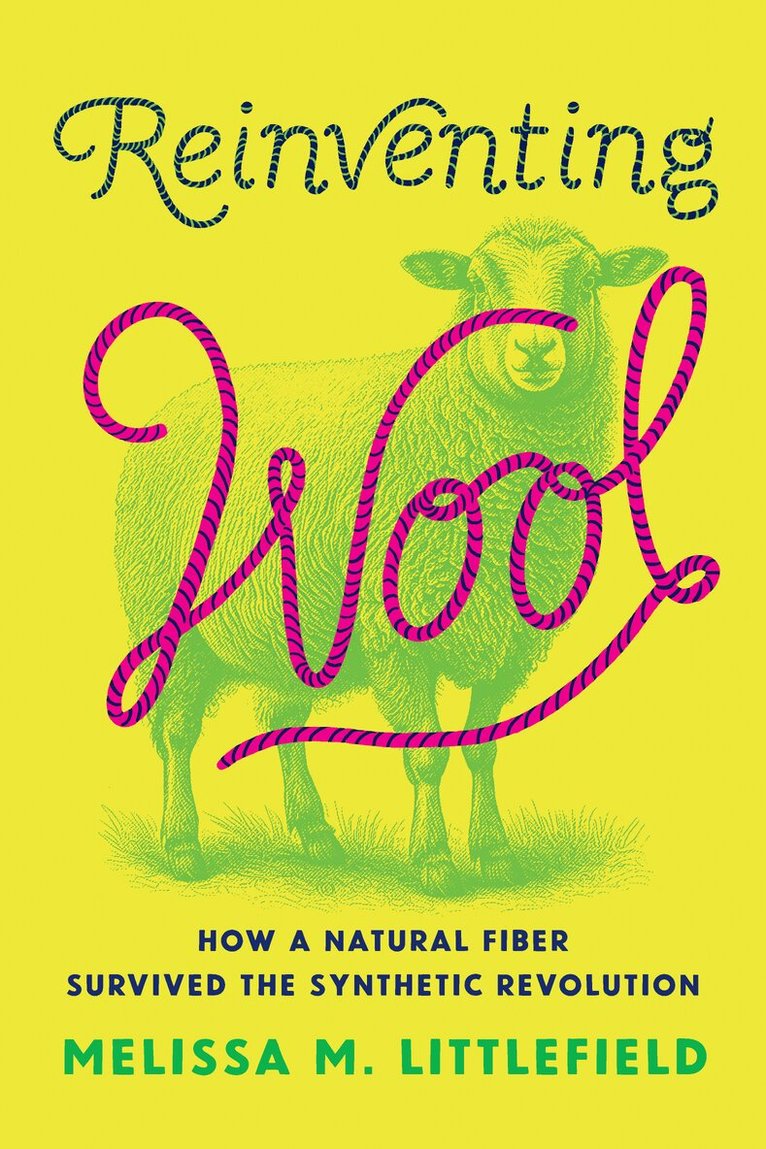
How chemistry, culture, and industry remade a natural fiber—and reshaped our closets.Wool once shaped daily life in the United States. The ubiquitous textile clothed soldiers and filled civilian wardrobes; sheep even grazed on the White House lawn. Today, however, wool apparel represents a sliver of the global textile market. In Reinventing Wool, Melissa M. Littlefield uncovers the surprising story behind this dramatic shift.Rather than fading quietly as synthetics rose to prominence, wool became the focus of a sweeping mid-twentieth-century effort to "modernize" natural fibers through chemistry, industry, and politics. Littlefield reveals how, between the 1930s and 1960s, wool was recast as a material in need of technological rescue. Industrial chemists coated it with resins, laboratories experimented with moth-killing compounds, and federal agencies promoted new treatments that promised convenience to modern consumers. Detailing stories like Woolite's cold-water campaigns—complete with department-store sheep baths—the invention of washable wool, and the USDA's little-known DDT-based mothproofing agent EQ-53, Reinventing Wool traces how a once-revered fiber was repeatedly reengineered to fit the ideals and anxieties of an increasingly synthetic age.Weaving together textile science, advertising archives, governmental reports, and her own experience as a fiber artist, Littlefield highlights the cultural forces that reshaped wool's reputation. She shows how mid-century interventions altered not only the fiber itself but also public understanding of what counts as "natural," "improved," or "modern." The consequences extend well into the present, influencing how we value materials, evaluate environmental claims, and imagine the future of textiles. Reinventing Wool offers a fresh perspective on the intertwined histories of chemistry, agriculture, fashion, and consumer culture.