Melissa Macauley – författare
Visar alla böcker från författaren Melissa Macauley. Handla med fri frakt och snabb leverans.
3 produkter
3 produkter
390 kr
Skickas inom 7-10 vardagar
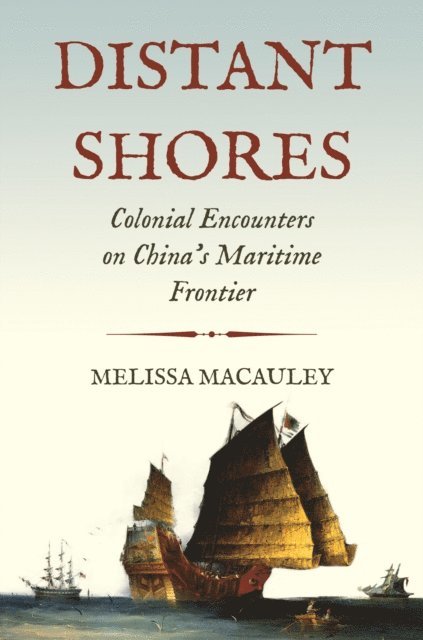
A pioneering history that transforms our understanding of the colonial era and China's place in itChina has conventionally been considered a land empire whose lack of maritime and colonial reach contributed to its economic decline after the mid-eighteenth century. Distant Shores challenges this view, showing that the economic expansion of southeastern Chinese rivaled the colonial ambitions of Europeans overseas.In a story that dawns with the Industrial Revolution and culminates in the Great Depression, Melissa Macauley explains how sojourners from an ungovernable corner of China emerged among the commercial masters of the South China Sea. She focuses on Chaozhou, a region in the great maritime province of Guangdong, whose people shared a repertoire of ritual, cultural, and economic practices. Macauley traces how Chaozhouese at home and abroad reaped many of the benefits of an overseas colonial system without establishing formal governing authority. Their power was sustained instead through a mosaic of familial, fraternal, and commercial relationships spread across the ports of Bangkok, Singapore, Saigon, Hong Kong, Shanghai, and Swatow. The picture that emerges is not one of Chinese divergence from European modernity but rather of a convergence in colonial sites that were critical to modern development and accelerating levels of capital accumulation.A magisterial work of scholarship, Distant Shores reveals how the transoceanic migration of Chaozhouese laborers and merchants across a far-flung maritime world linked the Chinese homeland to an ever-expanding frontier of settlement and economic extraction.
251 kr
Skickas inom 7-10 vardagar
A pioneering history that transforms our understanding of the colonial era and China's place in itChina has conventionally been considered a land empire whose lack of maritime and colonial reach contributed to its economic decline after the mid-eighteenth century. Distant Shores challenges this view, showing that the economic expansion of southeastern Chinese rivaled the colonial ambitions of Europeans overseas.In a story that dawns with the Industrial Revolution and culminates in the Great Depression, Melissa Macauley explains how sojourners from an ungovernable corner of China emerged among the commercial masters of the South China Sea. She focuses on Chaozhou, a region in the great maritime province of Guangdong, whose people shared a repertoire of ritual, cultural, and economic practices. Macauley traces how Chaozhouese at home and abroad reaped many of the benefits of an overseas colonial system without establishing formal governing authority. Their power was sustained instead through a mosaic of familial, fraternal, and commercial relationships spread across the ports of Bangkok, Singapore, Saigon, Hong Kong, Shanghai, and Swatow. The picture that emerges is not one of Chinese divergence from European modernity but rather of a convergence in colonial sites that were critical to modern development and accelerating levels of capital accumulation.A magisterial work of scholarship, Distant Shores reveals how the transoceanic migration of Chaozhouese laborers and merchants across a far-flung maritime world linked the Chinese homeland to an ever-expanding frontier of settlement and economic extraction.
880 kr
Skickas inom 7-10 vardagar
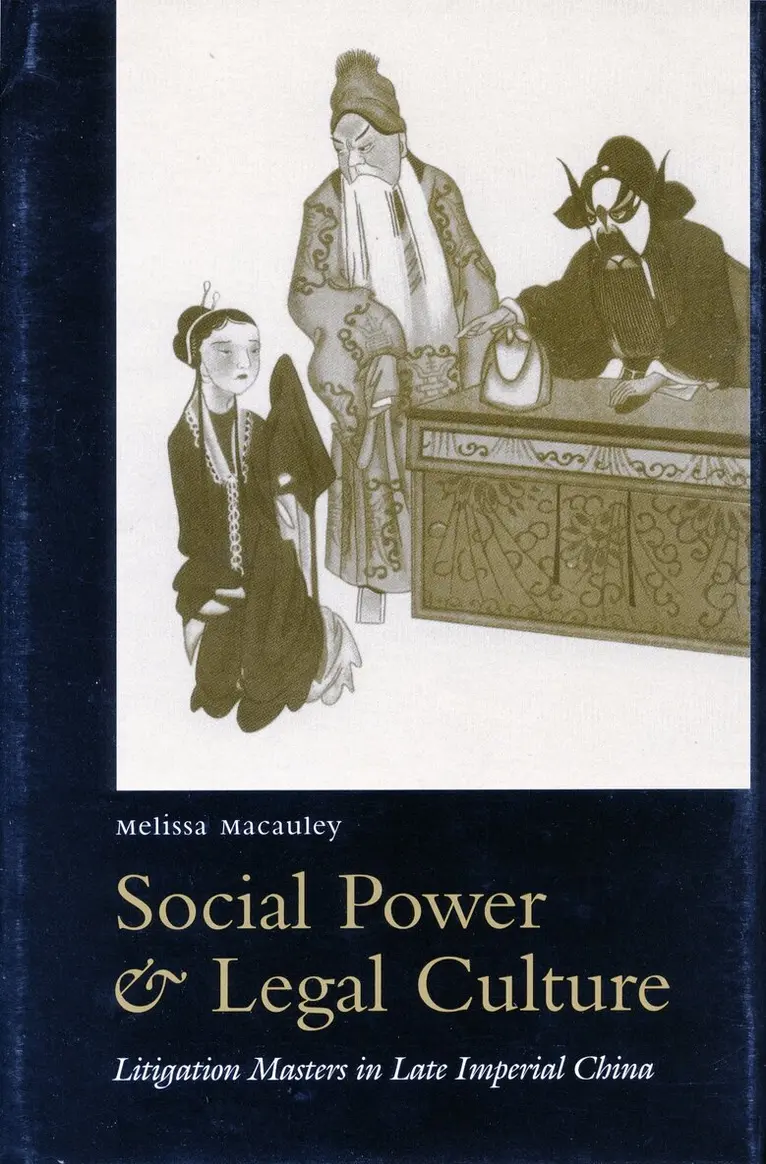
Asserting that litigation in late imperial China was a form of documentary warfare, this book offers a social analysis of the men who composed legal documents for commoners and elites alike. Litigation masters—a broad category of legal facilitators ranging from professional plaintmasters to simple but literate men to whom people turned for assistance—emerge in this study as central players in many of the most scandalous cases in eighteenth- and nineteenth-century China. These cases reveal the power of scandal to shape entire categories of law in the popular and official imaginations.The author characterizes litigation masters as entrepreneurs of power, intermediaries who typically emerge in the process of limited state expansion to provide links between local interests and the infrastructure of the state. These powermongers routinely acted in the interests of the local elite and the male lineage. But cases preserved in criminal archives also reveal a clientele surprisingly composed of the subordinate actors in legal disputes—widows fighting in-laws and other men, debtors contesting creditors, younger brothers disputing older ones, and common people charging the rich. Challenging earlier scholarship claiming that the Chinese legal system simply maintained the hegemony of elites and the patriarchal order, this study shows how the legal tools of domination were often transformed into weapons of social resistance and revenge.The book also examines the manifold ways in which legal practice, Confucian ideology, and popular entertainments like opera and storytelling coalesced into Chinese legal culture. Popular traditions in particular did not simply reflect legal culture but actively influenced it, shaping common presumptions about law that transcended differences of class and region. Exploring Chinese legal culture in the structural contexts of commercialization, changes in property transactions, and ineradicable litigation backlogs, the author explains why litigation was condemned by all classes of Chinese men and women even as all classes litigated.