Meredith L. Weiss - Böcker
Visar alla böcker från författaren Meredith L. Weiss. Handla med fri frakt och snabb leverans.
20 produkter
20 produkter
283 kr
Skickas inom 7-10 vardagar
While homophobia is commonly characterized as individual and personal prejudice, this collection of essays instead explores homophobia as a transnational political phenomenon. Editors Meredith L. Weiss and Michael J. Bosia theorize homophobia as a distinct configuration of repressive state-sponsored policies and practices with their own causes, explanations, and effects on how sexualities are understood and experienced in a variety of national contexts. The essays cover a broad range of geographic cases, including France, Ecuador, Iran, Lebanon, Poland, Singapore, and the United States. Combining rich empirical analysis with theoretical synthesis, these studies examine how homophobia travels across complex and ambiguous transnational networks, how it achieves and exerts decisive power, and how it shapes the collective identities and strategies of those groups it targets. The first comparative volume to focus specifically on the global diffusion of homophobia and its implications for an emerging worldwide LGBT movement, Global Homophobia opens new avenues of debate and dialogue for scholars, students, and activists. Contributors are Mark Blasius, Michael J. Bosia, David K. Johnson, Kapya J. Kaoma, Christine (Cricket) Keating, Katarzyna Korycki, Amy Lind, Abouzar Nasirzadeh, Conor O'Dwyer, Meredith L. Weiss, and Sami Zeidan.
2 693 kr
Skickas inom 10-15 vardagar
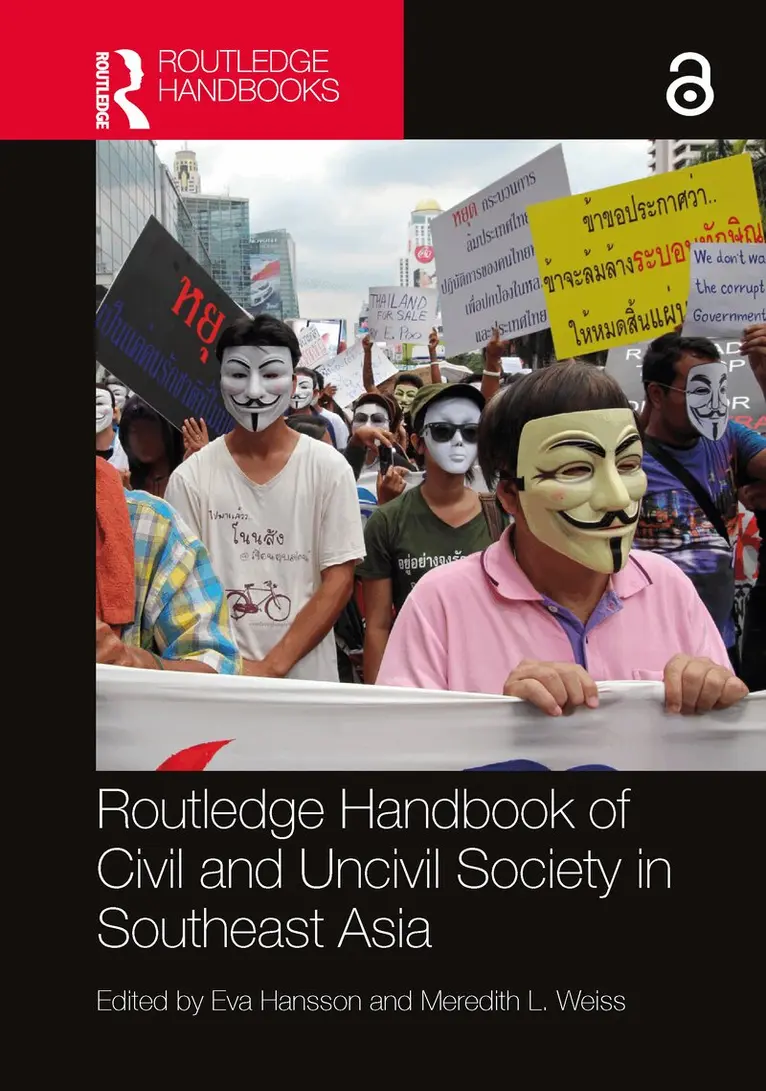
The Routledge Handbook of Civil and Uncivil Society in Southeast Asia explores the nature and implications of civil society across the region, engaging systematically with both theoretical approaches and empirical nuance for a systematic, comparative, and informative approach. The handbook actively analyses the varying definitions of civil society, critiquing the inconsistent scrutiny of this sphere over time. It brings forth the need to reconsider civil society development in today’s Southeast Asia, including activist organisations' and platforms' composition, claims, resources, and potential to effect sociopolitical change. Structured in five parts, the volume includes chapters written by an international set of experts analysing topics relating to civil society:Spaces and platformsPlace within politicsResources and tacticsIdentity formation and claimsAdvocacyThe handbook highlights the importance of civil society as a domain for political engagement outside the state and parties, across Southeast Asia, as well as the prevalence and weight of 'uncivil' dimensions. It offers a well-informed and comprehensive analysis of the topic and is an indispensable reference work for students and researchers in the fields of Asian Studies, Asian Politics, Southeast Asian Politics and Comparative Politics.The Open Access version of this book, available at www.taylorfrancis.com, has been made available under a Creative Commons Attribution-Non Commercial-No Derivatives (CC-BY-NC-ND) 4.0 license. Funded by The Research Foundation for State University of New York, USA and The Stockholm Center for Global Asia, Sweden.
635 kr
Skickas inom 10-15 vardagar
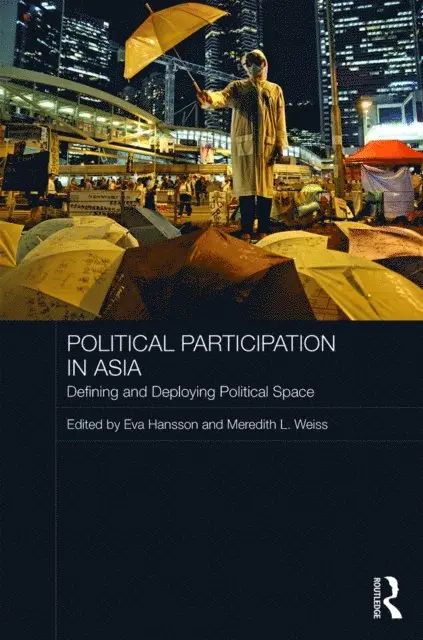
A combination of economic transformation, political transitions and changes in media have substantially, if incrementally, altered the terrain for political participation globally, particularly in Asia, home to several of the most dramatic such shifts over the past two decades.This book explores political participation in Asia and how democracy and authoritarianism function under neoliberal economic relations. It examines changes that coincide seemingly perversely with a participation explosion: with mass street protests and ‘occupations’, energetic online contention, movements of students and workers, mobilization for and against democracy and more. Organized thematically in three parts – political participation in a ‘post-democratic’ context, changes in the scope and character of political space and the policing of that space – this book analyzes economic, regime and media shifts and how they function in tandem and both within and across states.Closely integrated, comparative and theoretically driven, this book will be of interest to scholars and practitioners in the fields of civil society, contentious politics or social movements, democratization, political economy/development, media and communications, political geography, sociology, comparative politics and Asian politics.
811 kr
Kommande
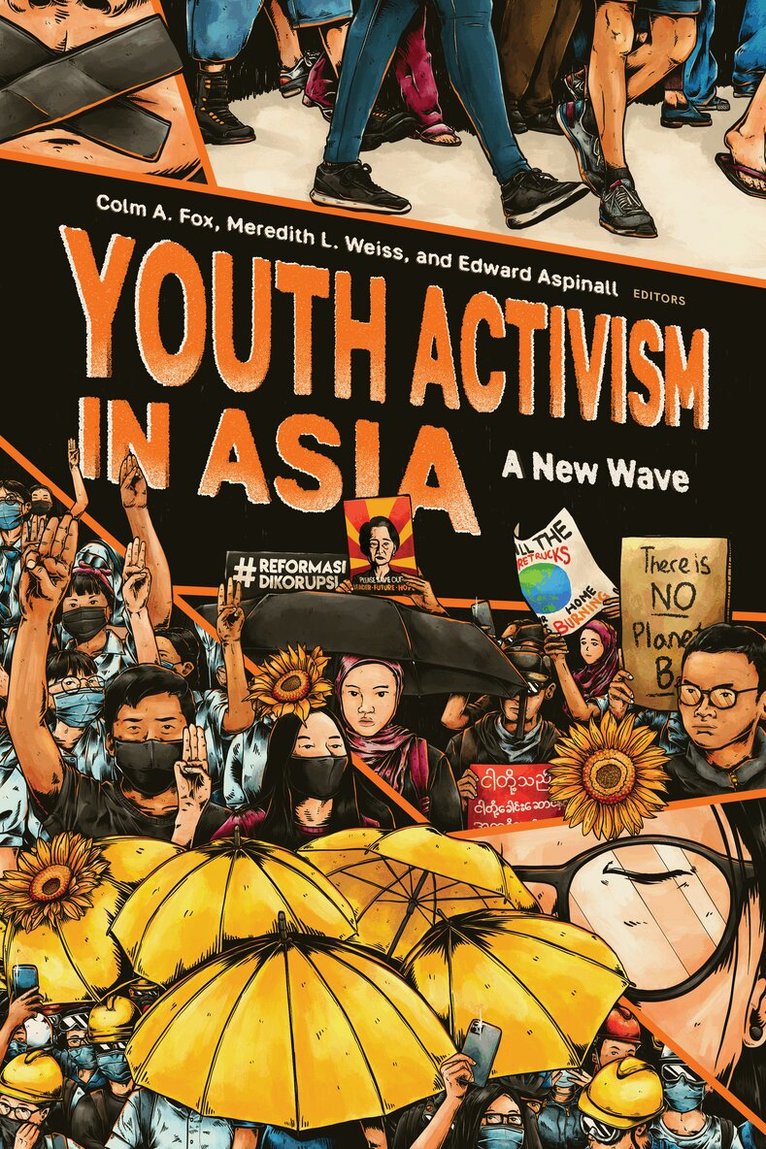
Over the last decade, a youth revolt has swept through Asia. Massive, regime-rocking protests have grabbed global attention as students and other young people have confronted security forces on the streets, taking great risks to condemn authoritarian rule, promote democracy, and to push forward new agendas of personal freedom and gender equality. Behind the scenes, young people have experimented with novel and diverse modes of political and social activism, often using new tools of online communication and cultural expression, forging new kinds of coalitions, and exploring nonconfrontational and subterranean networking.Youth Activism in Asia focuses equally on the episodes of spectacular protest and on varieties of less visible engagement, examining the diversity, origins, and impact of contemporary youth activism in Asia. With fifteen case studies, the volume highlights shared patterns among demands, tactical repertoires, and activist networks, and examines what differentiates protest movements across countries and over time. Drawing on original fieldwork and, in many cases, their own experience, the authors address Brunei, China, Hong Kong, Indonesia, Malaysia, Myanmar, the Philippines, Singapore, Taiwan, Thailand, Timor-Leste, and transnational activism. Conceiving of “activism” broadly as any action intended to bring about social and political change, the volume makes theoretical contributions to our understanding of the relationship between protest and democratic backsliding, engagement with new communication technologies, and this generation’s distinctive intersectional politics. Youth Activism in Asia showcases the creativity, energy, boldness, and diversity of a new generation of Asian political activists.
2 201 kr
Kommande
Over the last decade, a youth revolt has swept through Asia. Massive, regime-rocking protests have grabbed global attention as students and other young people have confronted security forces on the streets, taking great risks to condemn authoritarian rule, promote democracy, and to push forward new agendas of personal freedom and gender equality. Behind the scenes, young people have experimented with novel and diverse modes of political and social activism, often using new tools of online communication and cultural expression, forging new kinds of coalitions, and exploring nonconfrontational and subterranean networking.Youth Activism in Asia focuses equally on the episodes of spectacular protest and on varieties of less visible engagement, examining the diversity, origins, and impact of contemporary youth activism in Asia. With fifteen case studies, the volume highlights shared patterns among demands, tactical repertoires, and activist networks, and examines what differentiates protest movements across countries and over time. Drawing on original fieldwork and, in many cases, their own experience, the authors address Brunei, China, Hong Kong, Indonesia, Malaysia, Myanmar, the Philippines, Singapore, Taiwan, Thailand, Timor-Leste, and transnational activism. Conceiving of “activism” broadly as any action intended to bring about social and political change, the volume makes theoretical contributions to our understanding of the relationship between protest and democratic backsliding, engagement with new communication technologies, and this generation’s distinctive intersectional politics. Youth Activism in Asia showcases the creativity, energy, boldness, and diversity of a new generation of Asian political activists.
288 kr
Skickas inom 10-15 vardagar
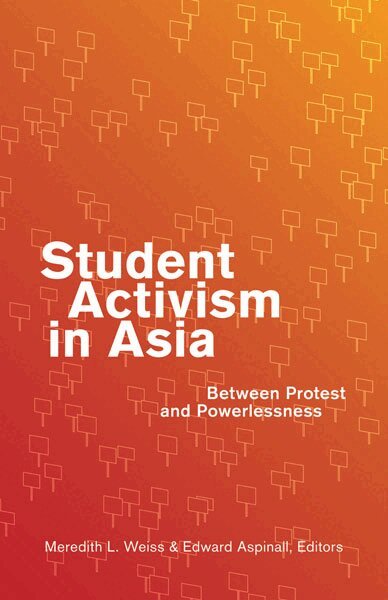
Since World War II, students in East and Southeast Asia have led protest movements that toppled authoritarian regimes in countries such as Indonesia, South Korea, and Thailand. Elsewhere in the region, student protests have shaken regimes until they were brutally suppressed-most famously in China’s Tiananmen Square and in Burma. But despite their significance, these movements have received only a fraction of the notice that has been given to American and European student protests of the 1960s and 1970s. The first book in decades to redress this neglect, Student Activism in Asia tells the story of student protest movements across Asia.Taking an interdisciplinary, comparative approach, the contributors examine ten countries, focusing on those where student protests have been particularly fierce and consequential: China, Japan, Hong Kong, Taiwan, South Korea, Indonesia, Burma, Malaysia, Thailand, and the Philippines. They explore similarities and differences among student movements in these countries, paying special attention to the influence of four factors: higher education systems, students’ collective identities, students’ relationships with ruling regimes, and transnational flows of activist ideas and inspirations.The authors include leading specialists on student activism in each of the countries investigated. Together, these experts provide a rich picture of an important tradition of political protest that has ebbed and flowed but has left indelible marks on Asia’s sociopolitical landscape.Contributors: Patricio N. Abinales, U of Hawaii, Manoa; Prajak Kongkirati, Thammasat U, Thailand; Win Min, Vahu Development Institute; Stephan Ortmann, City U of Hong Kong; Mi Park, Dalhousie U, Canada; Patricia G. Steinhoff, U of Hawaii, Manoa; Mark R. Thompson, City U of Hong Kong; Teresa Wright, California State U, Long Beach.
380 kr
Skickas inom 10-15 vardagar
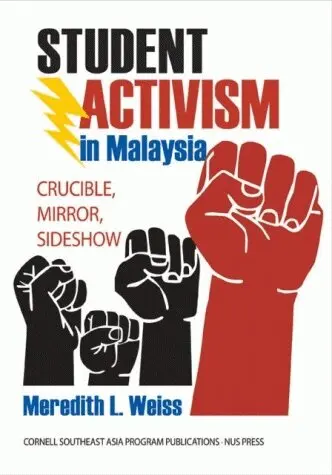
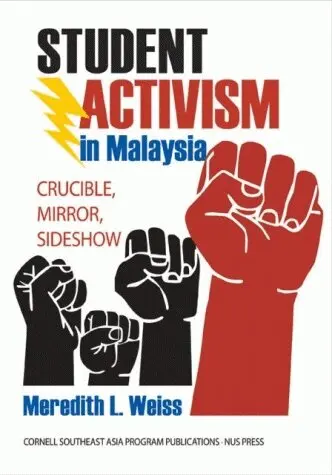
This work traces the early rise and subsequent decline of politically effective student activism in Malaysia. During the 1970s, the state embarked on a project of "intellectual containment" that both suppressed ongoing mobilization of university students and delegitimized further activism. That project has been notably successful in curbing student protest, erasing a legacy of past engagement, and stemming the production of potentially subversive new ideas. Innovative student proposals for reform that were once sanctioned and even welcomed (within bounds) are now illicit and discouraged, reflecting not only changes in Malaysia's political regime, but changes in the political culture overall. This incisive study sheds new light on the dynamics of mobilization and on the key role of students and universities in postcolonial political development.This analysis is based on extensive research, including interviews with dozens of past and present student activists and a close study of archives, government reports, firsthand accounts, and student publications extending over decades. Student Activism in Malaysia traces how higher education and student activism have developed and interacted, beginning with the start of tertiary education in early twentieth-century Singapore and extending to present-day Malaysia. In the process, Weiss calls into question the conventional wisdom that Malaysian students—and Malaysians overall—have become "apathetic." The author demonstrates that this apparent state of apathy is not inevitable, cultural, or natural, but is the outcome of a sustained project of pacification and depoliticization carried out by an ambitiously developmental state.
1 571 kr
Skickas inom 10-15 vardagar
This work traces the early rise and subsequent decline of politically effective student activism in Malaysia. During the 1970s, the state embarked on a project of "intellectual containment" that both suppressed ongoing mobilization of university students and delegitimized further activism. That project has been notably successful in curbing student protest, erasing a legacy of past engagement, and stemming the production of potentially subversive new ideas. Innovative student proposals for reform that were once sanctioned and even welcomed (within bounds) are now illicit and discouraged, reflecting not only changes in Malaysia's political regime, but changes in the political culture overall. This incisive study sheds new light on the dynamics of mobilization and on the key role of students and universities in postcolonial political development.This analysis is based on extensive research, including interviews with dozens of past and present student activists and a close study of archives, government reports, firsthand accounts, and student publications extending over decades. Student Activism in Malaysia traces how higher education and student activism have developed and interacted, beginning with the start of tertiary education in early twentieth-century Singapore and extending to present-day Malaysia. In the process, Weiss calls into question the conventional wisdom that Malaysian students—and Malaysians overall—have become "apathetic." The author demonstrates that this apparent state of apathy is not inevitable, cultural, or natural, but is the outcome of a sustained project of pacification and depoliticization carried out by an ambitiously developmental state.
363 kr
Skickas inom 7-10 vardagar
Politicians in Southeast Asia, as in many other regions, win elections by distributing cash, goods, jobs, projects, and other benefits to supporters, but the ways in which they do this vary tremendously, both across and within countries. Mobilizing for Elections presents a new framework for analyzing variation in patronage democracies, focusing on distinct forms of patronage and different networks through which it is distributed. The book draws on an extensive, multi-country, multi-year research effort involving interactions with hundreds of politicians and vote brokers, as well as surveys of voters and political campaigners across the region. Chapters explore how local machines in the Philippines, ad hoc election teams in Indonesia, and political parties in Malaysia pursue distinctive clusters of strategies of patronage distribution - what the authors term electoral mobilization regimes. In doing so, the book shows how and why patronage politics varies, and how it works on the ground.
692 kr
Skickas inom 7-10 vardagar
The COVID-19 pandemic offers unique insight into how regimes govern in 'hard times.' In Southeast Asia, public health and economic strain revealed the scope for adaptation in the face of crisis, against the pull of path-dependent habits and patterns. Recent experience of SARS and other outbreaks, as well as wider political and economic contexts, shaped readiness and responses. Especially important were legacies of the developmental-state model. Even largely absent a prior welfarist turn, core developmentalist attributes helped foster citizen buy-in and compliance: how efficiently and well states could coordinate provision of necessary infrastructure, spur biomedical innovation, marshal resources, tamp down political pressure, and constrain rent-seeking, all while maintaining popular trust. Also salient to pandemic governance were the actual distribution of authority, beyond what institutional structures imply, and the extent to which state-society relations, including habits of coercion or rent-seeking, encourage more or less programmatic or confidence-building frames and approaches.
633 kr
Skickas inom 10-15 vardagar
The Routledge Handbook of Civil and Uncivil Society in Southeast Asia explores the nature and implications of civil society across the region, engaging systematically with both theoretical approaches and empirical nuance for a systematic, comparative, and informative approach. The handbook actively analyses the varying definitions of civil society, critiquing the inconsistent scrutiny of this sphere over time. It brings forth the need to reconsider civil society development in today’s Southeast Asia, including activist organisations' and platforms' composition, claims, resources, and potential to effect sociopolitical change. Structured in five parts, the volume includes chapters written by an international set of experts analysing topics relating to civil society:Spaces and platformsPlace within politicsResources and tacticsIdentity formation and claimsAdvocacyThe handbook highlights the importance of civil society as a domain for political engagement outside the state and parties, across Southeast Asia, as well as the prevalence and weight of 'uncivil' dimensions. It offers a well-informed and comprehensive analysis of the topic and is an indispensable reference work for students and researchers in the fields of Asian Studies, Asian Politics, Southeast Asian Politics and Comparative Politics.The Open Access version of this book, available at www.taylorfrancis.com, has been made available under a Creative Commons Attribution-Non Commercial-No Derivatives (CC-BY-NC-ND) 4.0 license. Funded by The Research Foundation for State University of New York, USA and The Stockholm Center for Global Asia, Sweden.
215 kr
Skickas inom 7-10 vardagar
The COVID-19 pandemic offers unique insight into how regimes govern in 'hard times.' In Southeast Asia, public health and economic strain revealed the scope for adaptation in the face of crisis, against the pull of path-dependent habits and patterns. Recent experience of SARS and other outbreaks, as well as wider political and economic contexts, shaped readiness and responses. Especially important were legacies of the developmental-state model. Even largely absent a prior welfarist turn, core developmentalist attributes helped foster citizen buy-in and compliance: how efficiently and well states could coordinate provision of necessary infrastructure, spur biomedical innovation, marshal resources, tamp down political pressure, and constrain rent-seeking, all while maintaining popular trust. Also salient to pandemic governance were the actual distribution of authority, beyond what institutional structures imply, and the extent to which state-society relations, including habits of coercion or rent-seeking, encourage more or less programmatic or confidence-building frames and approaches.
2 151 kr
Skickas inom 10-15 vardagar
A combination of economic transformation, political transitions and changes in media have substantially, if incrementally, altered the terrain for political participation globally, particularly in Asia, home to several of the most dramatic such shifts over the past two decades.This book explores political participation in Asia and how democracy and authoritarianism function under neoliberal economic relations. It examines changes that coincide seemingly perversely with a participation explosion: with mass street protests and ‘occupations’, energetic online contention, movements of students and workers, mobilization for and against democracy and more. Organized thematically in three parts – political participation in a ‘post-democratic’ context, changes in the scope and character of political space and the policing of that space – this book analyzes economic, regime and media shifts and how they function in tandem and both within and across states.Closely integrated, comparative and theoretically driven, this book will be of interest to scholars and practitioners in the fields of civil society, contentious politics or social movements, democratization, political economy/development, media and communications, political geography, sociology, comparative politics and Asian politics.
1 034 kr
Skickas inom 7-10 vardagar
Politicians in Southeast Asia, as in many other regions, win elections by distributing cash, goods, jobs, projects, and other benefits to supporters, but the ways in which they do this vary tremendously, both across and within countries. Mobilizing for Elections presents a new framework for analyzing variation in patronage democracies, focusing on distinct forms of patronage and different networks through which it is distributed. The book draws on an extensive, multi-country, multi-year research effort involving interactions with hundreds of politicians and vote brokers, as well as surveys of voters and political campaigners across the region. Chapters explore how local machines in the Philippines, ad hoc election teams in Indonesia, and political parties in Malaysia pursue distinctive clusters of strategies of patronage distribution - what the authors term electoral mobilization regimes. In doing so, the book shows how and why patronage politics varies, and how it works on the ground.
583 kr
Skickas inom 3-6 vardagar
Examines the political dynamics behind anticorruption efforts in Asia.Focusing on Northeast and Southeast Asia-regions notable for political diversity, difficult environments for fighting corruption, and multifarious anticorruption outcomes-this book examines the political dynamics behind anticorruption efforts there. The contributors present case studies of the Philippines, Indonesia, Taiwan, Vietnam, Thailand, South Korea, and China that explore the varying roles anticorruption efforts play in solidifying or disputing democratic and nondemocratic institutions and legitimacy, as well as the broader political and economic contexts that gave rise to these efforts. Whether motivated by private interests, party loyalty, or political institutionalization, political actors shape the trajectories of anticorruption efforts by challenging their opponents over what constitutes corruption, what enables corruption, and how to combat corruption. Arguing that anticorruption strategy may be associated more closely with shifting bases of regime legitimacy than with regime type, the book sheds light on the divergent ways in which states control and respond to political elites and society at large, and on how citizens from across strata understand and engage with their states.
1 088 kr
Tillfälligt slut
Examines the political dynamics behind anticorruption efforts in Asia.Focusing on Northeast and Southeast Asia-regions notable for political diversity, difficult environments for fighting corruption, and multifarious anticorruption outcomes-this book examines the political dynamics behind anticorruption efforts there. The contributors present case studies of the Philippines, Indonesia, Taiwan, Vietnam, Thailand, South Korea, and China that explore the varying roles anticorruption efforts play in solidifying or disputing democratic and nondemocratic institutions and legitimacy, as well as the broader political and economic contexts that gave rise to these efforts. Whether motivated by private interests, party loyalty, or political institutionalization, political actors shape the trajectories of anticorruption efforts by challenging their opponents over what constitutes corruption, what enables corruption, and how to combat corruption. Arguing that anticorruption strategy may be associated more closely with shifting bases of regime legitimacy than with regime type, the book sheds light on the divergent ways in which states control and respond to political elites and society at large, and on how citizens from across strata understand and engage with their states.
1 525 kr
Skickas inom 7-10 vardagar
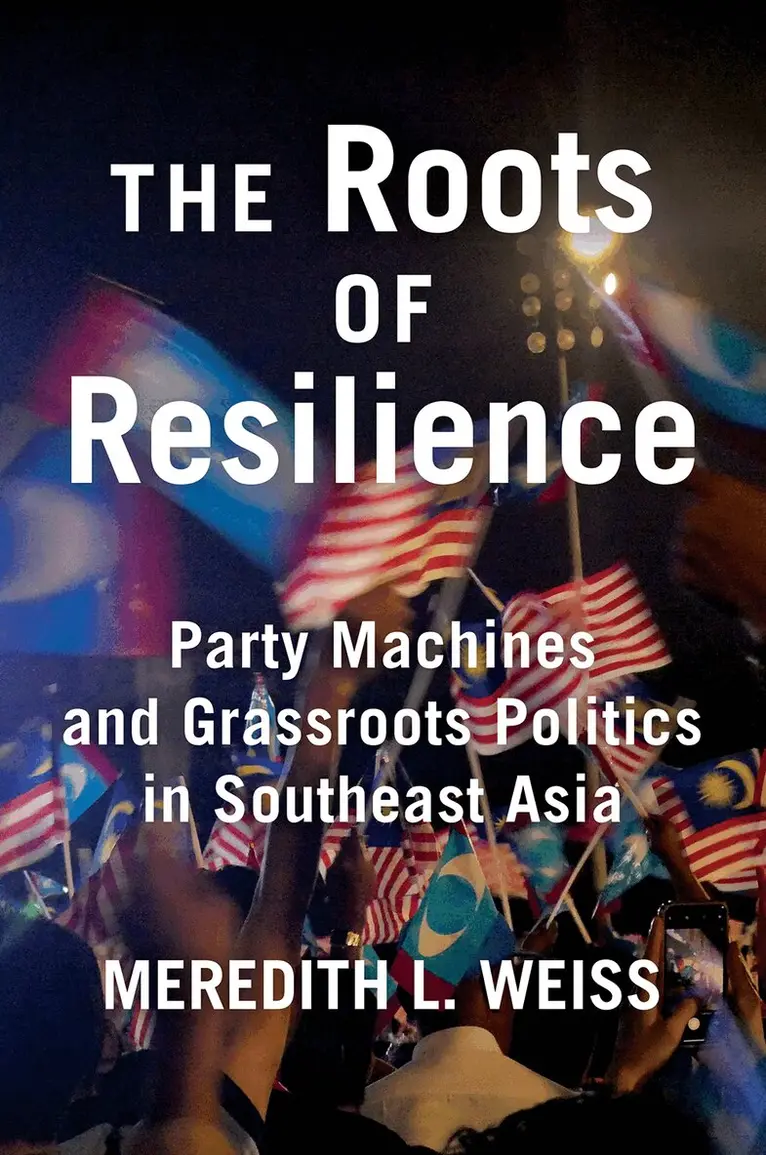
In The Roots of Resilience Meredith L. Weiss examines governance from the ground up in the world's two most enduring electoral authoritarian or "hybrid" regimes—Singapore and Malaysia—where politically liberal and authoritarian features blend, evading substantive democracy. Weiss explains that while key attributes of these regimes differ, affecting the scope, character, and balance among national parties and policies, local machines, and personalized linkages, the similarity in the overall patterns in these countries confirms the salience of those dimensions. The Roots of Resilience shows that high levels of authoritarian acculturation, amplifying the political payoffs of what parties and politicians actually provide their constituents, explain why electoral turnover alone is insufficient for real regime change in either state.
302 kr
Skickas inom 10-15 vardagar
In The Roots of Resilience Meredith L. Weiss examines governance from the ground up in the world's two most enduring electoral authoritarian or "hybrid" regimes—Singapore and Malaysia—where politically liberal and authoritarian features blend, evading substantive democracy. Weiss explains that while key attributes of these regimes differ, affecting the scope, character, and balance among national parties and policies, local machines, and personalized linkages, the similarity in the overall patterns in these countries confirms the salience of those dimensions. The Roots of Resilience shows that high levels of authoritarian acculturation, amplifying the political payoffs of what parties and politicians actually provide their constituents, explain why electoral turnover alone is insufficient for real regime change in either state.
349 kr
Skickas inom 7-10 vardagar
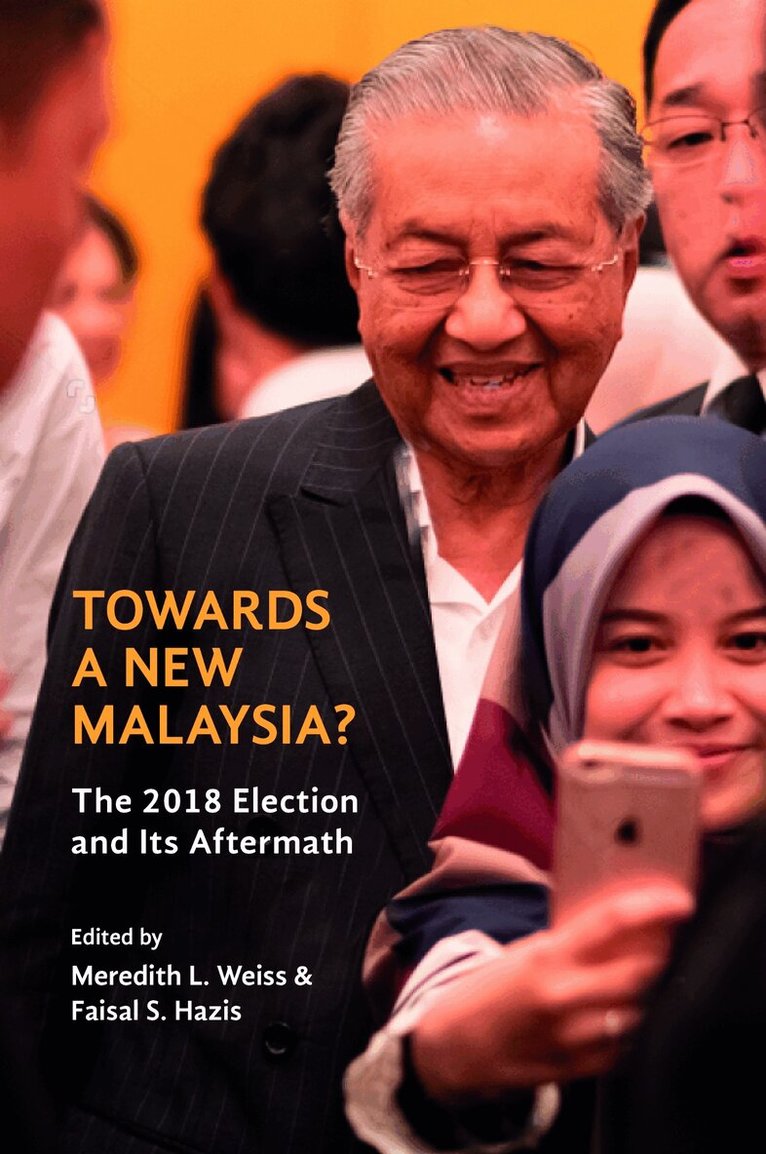
Malaysia's 2018 election (GE14) brought down a ruling party in power since independence in 1957. This book tells the full story of this historic election, combining a sharp analysis of the voting data with consideration of the key issues, campaign strategies, and mobilization efforts that played out during the election period in April and May of 2018. This analysis is then used to bring fresh ideas and perspectives to bear on the core debates about Malaysian political ideas, identities and behaviors, debates that continue to shape the country's destiny.However optimistic many Malaysians may be for the possibility of a more representative, accountable, participatory, and equitable polity, the authors do not see GE14 as a clear harbinger of full-on liberalization in Malaysia. While the political aftermath of the election continues to play out, the authors provide a clarion call for deeper, more critical, more comparative research on Malaysia's politics. They complicate well-known angles on and elevate too-little-studied dimensions of Malaysian politics, and suggest agendas for empirically interesting, theoretically relevant further research. They also point to the broader insights Malaysia's experience provides for the study of elections and political change in one-party dominant states around the world.
327 kr
Skickas inom 10-15 vardagar
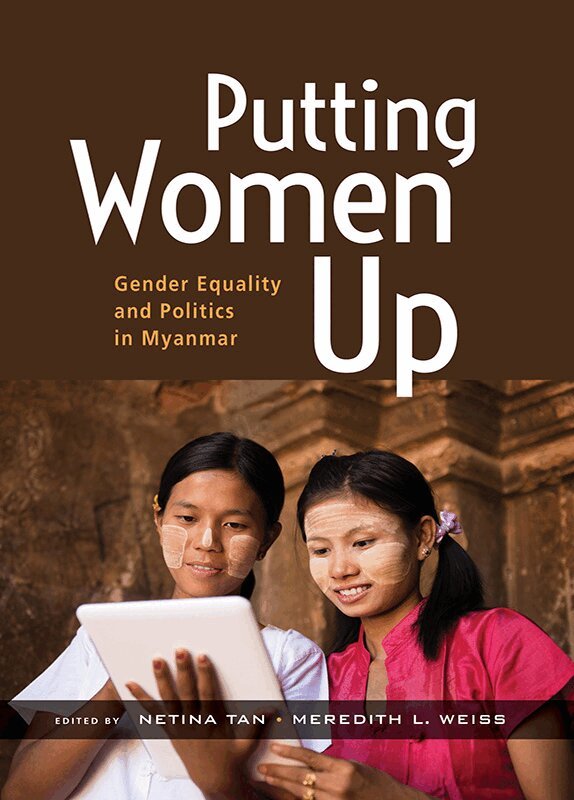
For the duration of Myanmar's experiment with electoral democracy, why did some women run for political office, and not others? What role did gatekeepers such as party leaders play in those decisions, and using what criteria in selecting candidates? How did experience of domestic violence or harassment affect women's likelihood to participate in politics, especially beyond the local level? And what implications might these earlier patterns have for a post-coup Myanmar, should meaningful elections be restored?The contributors to Putting Women Up: Gender Equality and Politics in Myanmar answer these questions by examining the internal politics of nine political parties in Myanmar and both men's and women's attitudes towards and experiences of political leadership. Drawing on extensive interview, survey, and focus-group discussion data collected from across Myanmar in 2017 and 2020, this book offers a mixed-methods approach to explain how factors from party rules to formative personal trauma to patriarchal biases to ethno-religious context shape women's and men's likelihood to join local and national politics. The findings expand on culturalist insights on gender inequality to provide context-sensitive, evidence-backed policy recommendations to promote women's political leadership, despite militarization and violence in post-coup Myanmar.