Mervyn Edwards - Böcker
Visar alla böcker från författaren Mervyn Edwards. Handla med fri frakt och snabb leverans.
10 produkter
10 produkter
173 kr
Skickas
Renowned for their illustrious ceramic manufacturing heritage, the Staffordshire Potteries originally centred upon six towns: Tunstall, Burslem, Hanley, Stoke-upon-Trent, Fenton and Longton. The modern city of Stoke-on-Trent was created from these six towns and around fifty villages. In The Potteries Through Time, author Mervyn Edwards presents a nostalgic visual chronicle of the towns and villages in the Potteries across the decades.In his previous Through Time books, Mervyn Edwards focused upon each of the six towns individually. This latest volume explores the hills and hollows between the centres whilst also offering new archive photographs of the main towns. We find shabby backstreets cowering in the shadow of enormous coal tips – the Potteries’ own ‘black hills’ – and there are industrial hotspots and busy suburbs. Then there are the proud old chapels and pubs and the even prouder people that patronised them. Stoke-on-Trent was not a pretty place, but as the proverb tells us, ‘where there is muck there is brass’, and the fascinating landscape came to be captured by all manner of writers, artists and photographers.This collection of archive photographs is an engaging book that charts changing times and the shifting identity of the Potteries. It will be of immense interest to local residents, visitors and all those with links to the area.
178 kr
Skickas
The area of North Staffordshire combines urban and rural areas, from Stoke-on-Trent and the Potteries, the town of Newcastle-under-Lyme, the moorland and Peak District towns and villages to the border with Cheshire and Derbyshire.In spite of the many changes that have occurred in North Staffordshire, its towns and villages have retained their identity, with historical buildings alongside the new. This fascinating selection of old and new images of North Staffordshire will be essential reading for all those who know the area.
168 kr
Skickas
The North Staffordshire Coalfield is concentrated around the Stoke-on-Trent and Newcastle-under-Lyme areas, with a small outlying area around Leek and Cheadle. During the Industrial Revolution coal from the area fired the Potteries’ ceramics and iron industries.At its peak, fifty pits were working in the area but as the coal industry declined nationally, pits gradually merged or closed in the post-war years. Closures accelerated following the Miners’ Strike in the 1980s and the last deep mine, Silverdale, closed in 1998. Today, most of the sites have been reclaimed, including a nature reserve at Chatterley Whitfield.This fascinating selection of old and new images of the North Staffordshire Coalfield will be essential reading for all those who know the area or have family members who worked in the local coal mining industry.
178 kr
Skickas inom 11-20 vardagar
Hanley has been the dominant Potteries town since the early nineteenth century. From being 'a humble collection of dwellings' in the early eighteenth century, it grew into a recognisable town and ultimately emerged as the Potteries metropolis and the city centre that we know today. From 1801 it was the largest of the six towns, and it was politically dominant too. It was in Hanley that the meeting that many regard as being the first step towards federation took place in 1817. Hanley might perhaps be considered the cultural centre of the potteries towns too, with many cultural amenities here, from the Pottery Subscription Library to the modern day Potteries Museum. With its grand Victoria Hall, Hanley Park and a diverse shopping centre, Hanley continues to be one of the most vibrant neighbourhoods in Stoke-on-Trent. Here we take a look at the evolution of the town through fascinating photographs spanning the last 100 years.
178 kr
Skickas inom 11-20 vardagar
China Town is one of the more flattering titles that Longton has attracted over the years, and it is a name that recognises the town's splendid reputation for ceramic production. Big businesses such as Bridgwood, Aynsley, Webberley, Wild and Tams all flourished; the pottery firing process was aided by the so-called 'long-flame coals' particular to the Longton collieries.Surviving photographs of yawning marlholes speak volumes about the town's industrial past - and yet Longton also lays claim to the establishment of the Potteries' first municipal park, in nearby Dresden. The Gladstone Pottery Museum has been hugely successful in interpreting Longton's rich history, and this book similarly celebrates numerous elements of the town's heyday.
172 kr
Skickas inom 11-20 vardagar
Stoke-upon-Trent, described as a village in 1795, grew rapidly from the 1820s and 1830s, by which time a new Anglican church had been built as well as new streets. Noted in a trade directory of 1829 as having 'many handsome houses, wharves, warehouses and earthenware manufactories', it became famous for pottery manufactured by the likes of Spode, Copeland, Minton and Goss. However, Stoke is not just the story of ceramics. Other forces shaped the development of the town, including the North Staffordshire Railway Company, the Michelin Tyre Company and even Stoke City FC. Entertainment venues and public houses contributed conspicuously to community life and were part of a vibrant town that began to decline from the 1970s. As Stoke struggles to reassert itself, this book looks back at more prosperous times.
178 kr
Skickas
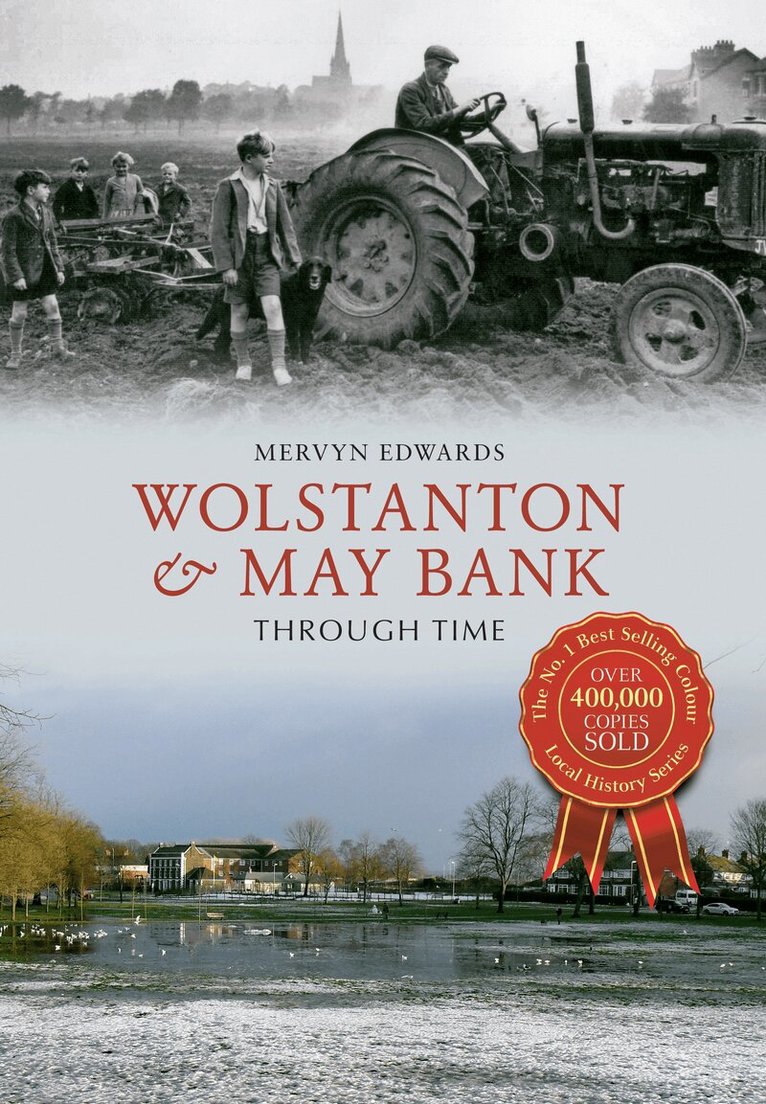
The impact of people and places in Wolstanton and May Bank is recorded in this pictorial record that recognises the contribution of village notables, dear old friends and long-gone institutions. A wealth of photographs depicting the joys of community life mingle with contemporary pictures, showing, often with dramatic impact, the shocking demolition of facilities we perhaps took for granted, such as The Plough, the Oxford Arms and The Marsh Head. Elsewhere, images of former shops such as Holdridge's, Swettenham's and the Spinning Wheel show how High Street shopping patterns have changed. Author Mervyn Edwards has only ever lived in Wolstanton and May Bank, and through this unique selection of old and new images, he presents a tribute to the place he happily calls home.
178 kr
Skickas inom 11-20 vardagar
The pubs of Stoke are numerous, and each has its own fascinating tale to tell. While many have been lost due to time, money or misfortune, the stories and memories live on.As one of the key centres of the Industrial Revolution, the development of Stoke-on-Trent into the expanded city we know today was heavily influenced by this major event. In fact, it was the development of the Potteries industry in particular that had a lasting effect on Stoke. The introduction of such big industries brought about major population growth in the town, and the workers and growing communities needed a place to socialise and relax. Well researched and beautifully illustrated, Stoke-on-Trent Pubs takes a journey through the city’s inns and taverns, stopping off for a pint, a chat and a bit of history along the way.
178 kr
Skickas inom 11-20 vardagar
Why did the young girls of Longton rush to touch lamp posts, iron pillars or railings whenever they saw the local rector? Who were the Potteries ‘resurrectionists’ involved in body-snatching from St John’s churchyard, Burslem, in 1831? Why did some Hanley people fear that the world was about to end in 1835? In which Potteries town did rat-baiting take place in 1867? And which fine vocalist was banned from singing at Goldenhill church on account of his being a boxer?This is no pub quiz, nor is it a book of tall stories, but a unique insight into the city of Stoke-on-Trent. Here is a feast of little-known facts relating to the city’s history ‘below the surface’. By turns quirky, shocking, investigative and always original, it reveals much about the Potteries of the past and proves the old adage that fact is far stranger than fiction. Local historian Mervyn Edwards has been collecting ephemera on Stoke for twenty-five years. Now he shares it with the public.
173 kr
Skickas inom 11-20 vardagar
Undervalued, under-listed and under threat, the buildings of Stoke-on-Trent stand defiant, reminders of the area’s glorious economic heyday and its unique, almost perverse, municipal growth. The city’s building stock often holds a mirror up to its people: pragmatic rather than flamboyant, humble rather than flaunting. It was not without reason that architectural historian Nikolaus Pevsner described Stoke’s towns as an ‘urban tragedy’, yet their buildings reflect the innate qualities of local inhabitants. Their creativity and nose-to-the-grindstone graft produced handsome yet functional buildings such as Tunstall Town Hall, Etruria Methodist Chapel and the Twyford’s factory at Cliffe Vale. Yet, here and there, we find extravagance and even eccentricity in the way of polychromatic façades, ceramic fascias, baroque detail and eye-catching relief pub signs.Stoke-on-Trent in 50 Buildings examines the city’s notable architecture and offers original comment on how it compares with buildings and structures in other locations. Local historian and author Mervyn Edwards has spent nearly thirty years describing – and often drawing – the buildings of Stoke-on-Trent, and has seen many of them fall to the wrecking ball. This book offers his insights on some of those that stand today as cultural anchors in the city.