Metta Spencer - Böcker
Visar alla böcker från författaren Metta Spencer. Handla med fri frakt och snabb leverans.
7 produkter
7 produkter
1 572 kr
Skickas inom 10-15 vardagar
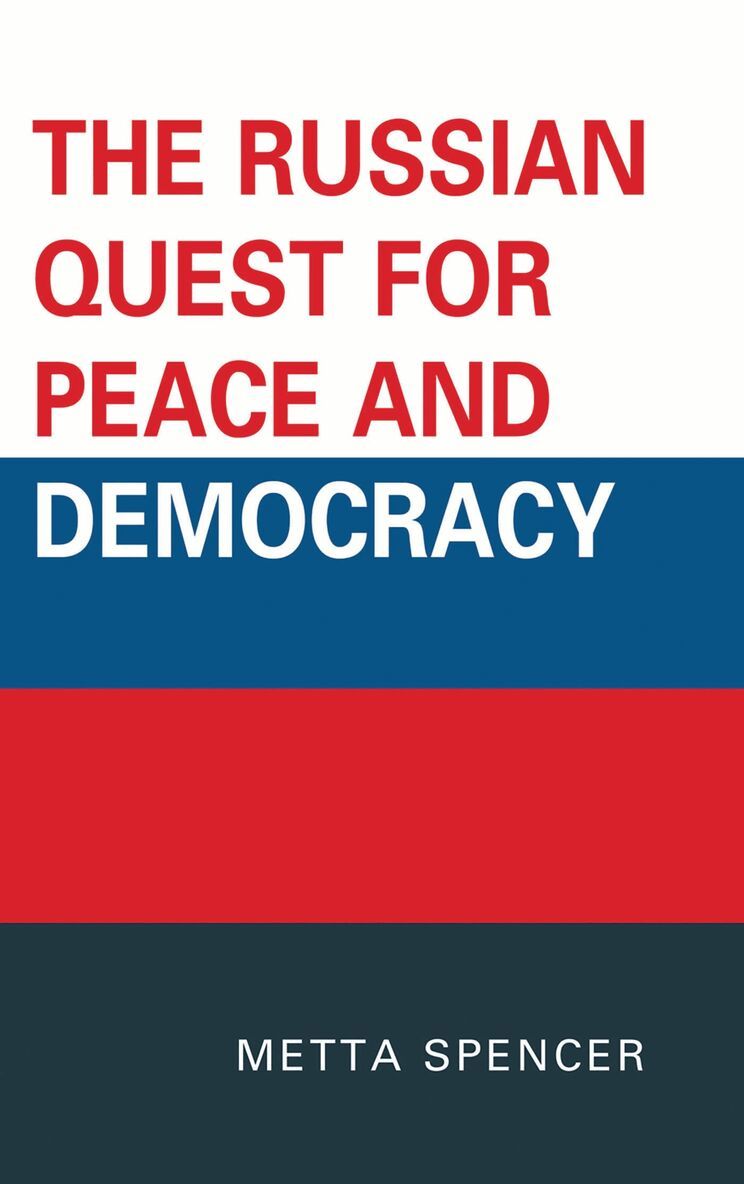
In The Russian Quest for Peace and Democracy, Metta Spencer recounts the political and military changes that have occurred in Russia up to mid-2010. Using hundreds of interviews she conducted with officials, dissidents, and liberal intellectuals, she describes the various groups, forces, and individuals that worked to liberalize the totalitarian Soviet Union and its fellow nations behind the Iron Curtain, and which ultimately brought about the dissolution of those repressive governments.Spencer identifies four political orientations to describe Soviet society: "Sheep," ordinary citizens who accepted the undemocratic regime they lived in without challenging it; "Dinosaurs," hard-line Communist officials; "Termites," including Mikhail Gorbachev and his advisers and government; and "Barking Dogs," a few hundred dissidents who made "a lot of noise" protesting, hoping to awaken a grass-roots demand for democracy. The strange rivalry between the Termites and Barking Dogs would ultimately doom perestroika.Spencer's research dispels the widely-held perception that US President Ronald Reagan "won" the Cold War by standing firm until the Soviet Union "blinked first." There are vitally important lessons to be learned from the Soviet period, about how to assist citizens of totalitarian and authoritarian regimes around the world.The irony is that transnational civil society organizations, major sources of the progress in Soviet Russia, are still needed today in authoritarian Russia, under Vladimir Putin and Dmitry Medvedev, for totalitarianism remains a potential social trap. In The Russian Quest for Peace and Democracy, Metta Spencer suggests new ways of building urgently-needed social capital in today's Russia, where democracy has yet to flourish.
675 kr
Skickas inom 10-15 vardagar
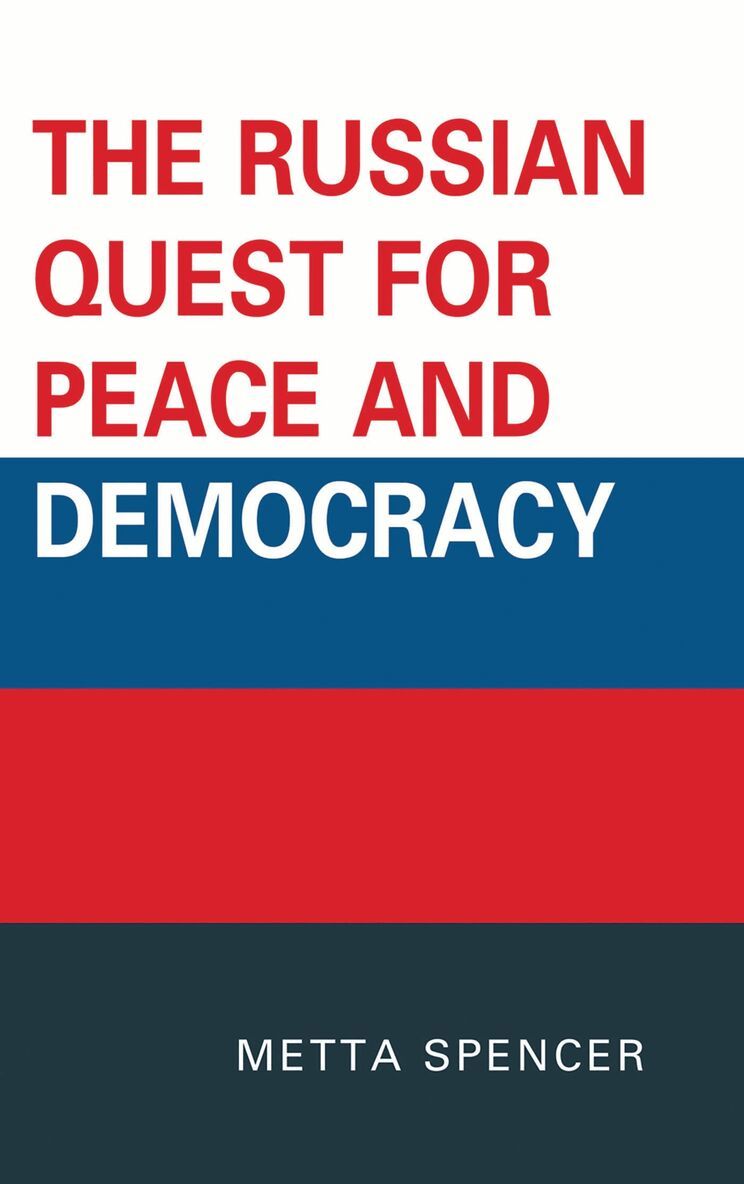
In The Russian Quest for Peace and Democracy, Metta Spencer recounts the political and military changes that have occurred in Russia up to mid-2010. Using hundreds of interviews she conducted with officials, dissidents, and liberal intellectuals, she describes the various groups, forces, and individuals that worked to liberalize the totalitarian Soviet Union and its fellow nations behind the Iron Curtain, and which ultimately brought about the dissolution of those repressive governments.Spencer identifies four political orientations to describe Soviet society: "Sheep," ordinary citizens who accepted the undemocratic regime they lived in without challenging it; "Dinosaurs," hard-line Communist officials; "Termites," including Mikhail Gorbachev and his advisers and government; and "Barking Dogs," a few hundred dissidents who made "a lot of noise" protesting, hoping to awaken a grass-roots demand for democracy. The strange rivalry between the Termites and Barking Dogs would ultimately doom perestroika.Spencer's research dispels the widely-held perception that US President Ronald Reagan "won" the Cold War by standing firm until the Soviet Union "blinked first." There are vitally important lessons to be learned from the Soviet period, about how to assist citizens of totalitarian and authoritarian regimes around the world.The irony is that transnational civil society organizations, major sources of the progress in Soviet Russia, are still needed today in authoritarian Russia, under Vladimir Putin and Dmitry Medvedev, for totalitarianism remains a potential social trap. In The Russian Quest for Peace and Democracy, Metta Spencer suggests new ways of building urgently-needed social capital in today's Russia, where democracy has yet to flourish.
2 018 kr
Skickas inom 5-8 vardagar
In 1997, Science for Peace invited experts on Yugoslavia to Toronto for a conference to discuss the lessons learnt from the Yugoslav conflict and eventual break-up of the former country. Although each expert addressed a specific range of problems, there was also a surprising degree of consensus. Before this book was ready for publication, war broke out in Kosovo and therefore additional papers were invited to analyse the Kosovan conflict. The resulting review of the Yugoslav tragedy is a comprehensive one, representing a variety of perspectives.
599 kr
Skickas inom 10-15 vardagar
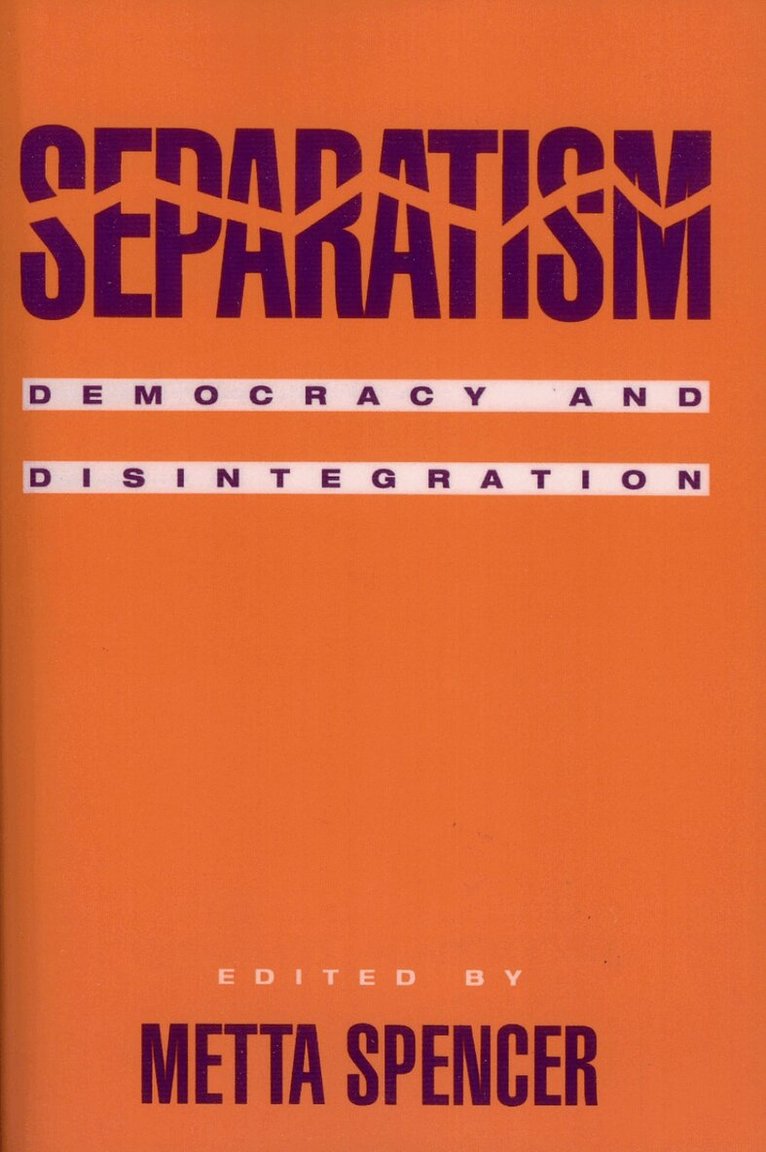
As we approach the millennium the world is experiencing civil wars exclusively—half of which are being waged over the issue of secession. This book offers a comparative view of nine historic separatist movements, some of which have achieved the break-up of an empire or a state, and others that to date have not. Separatist struggles occur in waves that tend to coincide with upsurges of democratization. Several chapters explore this connection, making comparisons with economic and geopolitical causes. The authors analyze the long term effects of secession: after partition, ethnic strife typically continues for generations; minorities decline in status; and democracy and human rights are derogated. The break-up of one state often leads to further fragmentation, as in the disintegration of the Ottoman, Austro-Hungarian, and Russian empires, where years later separatism unfolded in the successor states of Yugoslavia, Czechoslovakia, Palestine, Chechnya and Tatarstan. The authors attribute much of today's separatism to the demagoguery of politicians losing legitimacy in post-communist states, for whom nationalism is a convenient populist ideology. A broader explanation, however, points to the failure of modern democracies to develop constitutional mechanisms reconciling the expression of particularistic identities with the universalism of citizenship. The book reviews proposals toward that end.
1 144 kr
Skickas inom 7-10 vardagar
This volume is part of an annual series which brings together studies of current issues in the former USSR and Eastern Europe, providing coverage of both domestic and international developments. It is designed to bridge the gap between specialist research and journalistic accounts.
3 161 kr
Skickas inom 10-15 vardagar
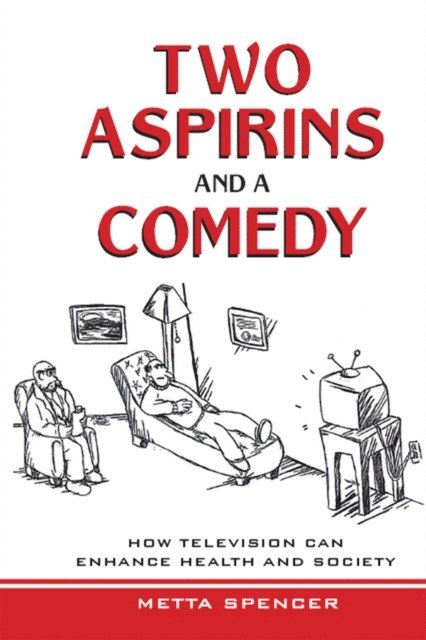
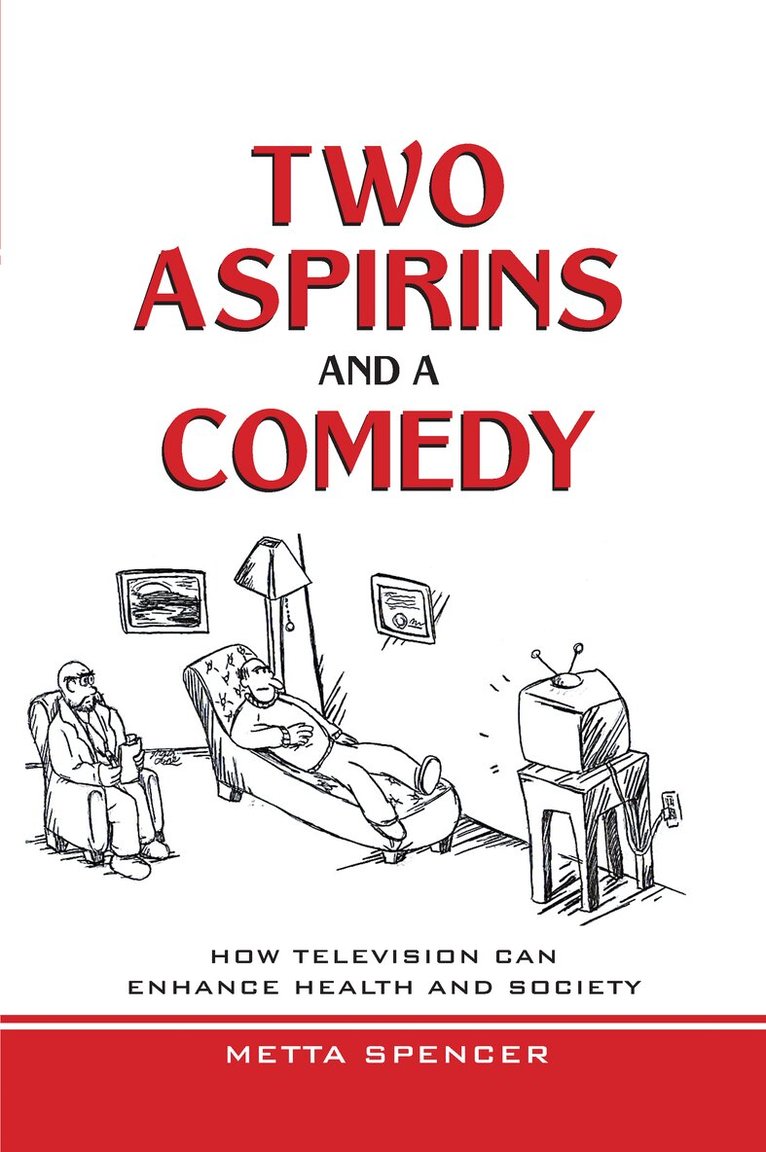
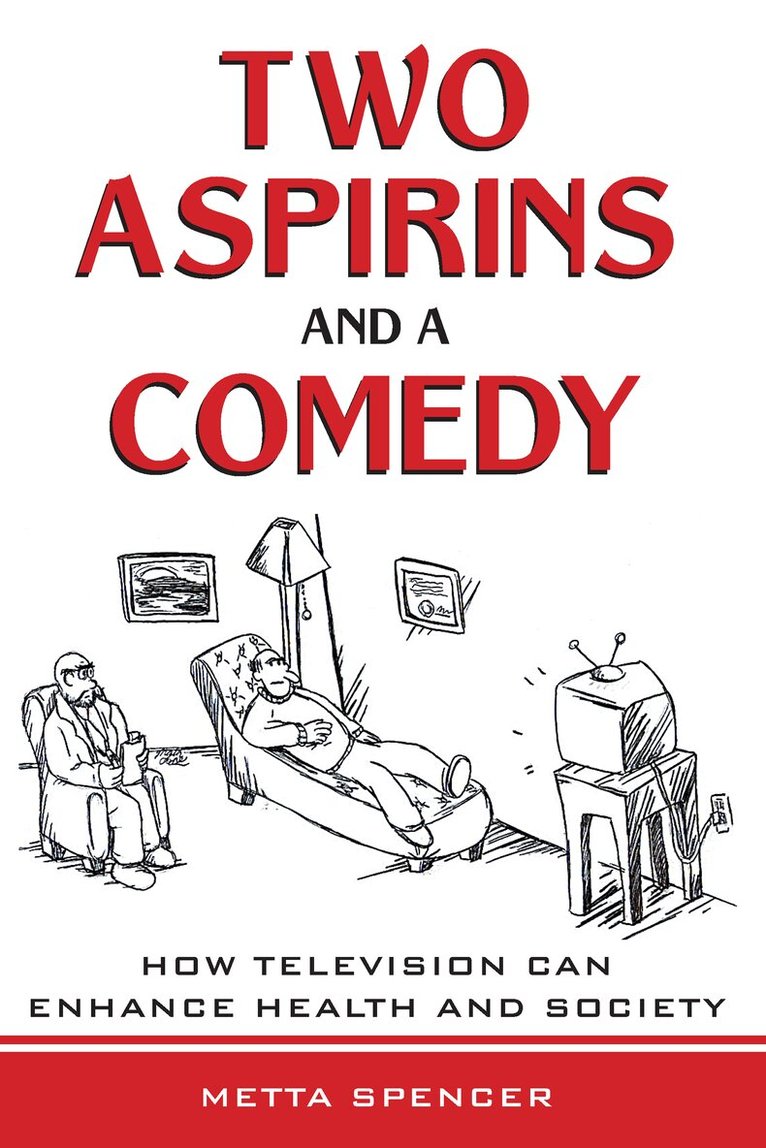
"An extraordinary book which makes a vital contribution to our understanding of the potential power for healing and goodness in 'television entertainment'." Arlie Hochschild, author of The Time Bind (2001) "Despite the light title, this is a serious book about the healing possibilities of television. ! Provocative and enlightening." Beth Montemurro, Penn State University Can television be a positive force in society? Can socially conscious entertainment change the world? Two Aspirins and Comedy arrives at surprising and unconventional answers to these questions. Metta Spencer delves deep into the significance and power of entertainment as a means to influence society. She finds current examples of socially constructive television and demonstrates how mass entertainment can better use its power to positively influence society. In a climate where television is often a culprit for society's woes, Spencer casts a redemptive eye on the medium. She asserts that television, like other fictional landscapes, offers invaluable lessons, emotional bonding and catharsis for a modern society whose members are increasingly isolated.
807 kr
Skickas inom 10-15 vardagar
"An extraordinary book which makes a vital contribution to our understanding of the potential power for healing and goodness in 'television entertainment'." Arlie Hochschild, author of The Time Bind (2001) "Despite the light title, this is a serious book about the healing possibilities of television. ! Provocative and enlightening." Beth Montemurro, Penn State University Can television be a positive force in society? Can socially conscious entertainment change the world? Two Aspirins and Comedy arrives at surprising and unconventional answers to these questions. Metta Spencer delves deep into the significance and power of entertainment as a means to influence society. She finds current examples of socially constructive television and demonstrates how mass entertainment can better use its power to positively influence society. In a climate where television is often a culprit for society's woes, Spencer casts a redemptive eye on the medium. She asserts that television, like other fictional landscapes, offers invaluable lessons, emotional bonding and catharsis for a modern society whose members are increasingly isolated.