
Micaela Janan – författare
Visar alla böcker från författaren Micaela Janan. Handla med fri frakt och snabb leverans.
2 produkter
2 produkter
2 001 kr
Skickas inom 5-8 vardagar
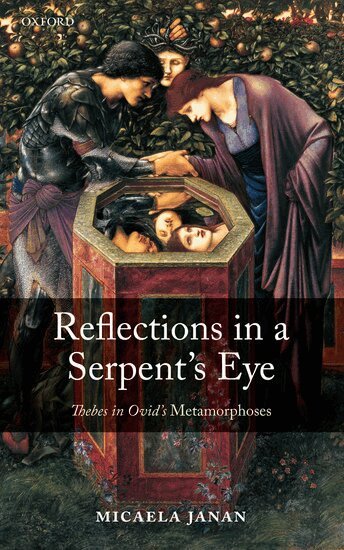
Ovid's extraordinary story of Thebes' founding and bloody unravelling spans two books of his epic poem, the Metamorphoses. His bizarre refractions of the well-ordered community engage Ovid's own Rome and the mythohistory of the Eternal City's origins, most particularly as framed in Vergil's Aeneid (Vergil's poem attained nonpareil status as the Latin epic soon after publication). The Aeneid has regularly been read as persuasively formulating how and why Rome will stride forward into history, into manifest destiny, and into `empire without end'. The Metamorphoses' strangely fantastical surface reflects what is already inherently perverse in that master-narrative, disclosing the narrative's internal contradictions. Ovid rigorously and sceptically not only interrogates the existing (Roman) political order, claimed as lasting truth, but also the very possibility of organizing any polity into a harmonious, organically unified, lasting institution.
630 kr
Skickas inom 3-6 vardagar
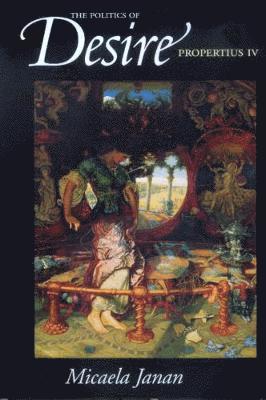
Propertius (ca. 54 b.c.--ca. 2 b.c.) was a Roman poet who composed four compelling books of elegies in the chaotic years surrounding Rome's transition from republic to empire. The first three of these books revolve mostly around a tormented love affair with a woman called Cynthia. The fourth book of poetry rests on more diverse subject matter and is notoriously the most opaque and elusive. In The Politics of Desire, Micaela Janan radically reassesses Propertius' last elegies, using contemporary psychoanalytic theory to illuminate these challenging texts. Janan finds that the upheaval of Rome's transformation to empire corresponds to the intellectually unsettled conditions of our own time, so that contemporary methodologies offer an uncannily suitable approach for understanding Propertius. In particular, she uses the work of Jacques Lacan, since it provides the best conceptual tools for examining the relation between political crisis and the struggles of the self, a theme that resonates in these difficult elegies.This book expands our understanding of an important Roman poet, and its innovative and sophisticated methodological approach makes a substantial contribution to feminist and psychoanalytic criticism. In addition, Janan addresses elegy's relationship to larger cultural questions, and broadens our understanding of the social crisis affecting Rome during the early empire.