Michael A. Palmer – författare
Visar alla böcker från författaren Michael A. Palmer. Handla med fri frakt och snabb leverans.
4 produkter
4 produkter
276 kr
Skickas inom 7-10 vardagar
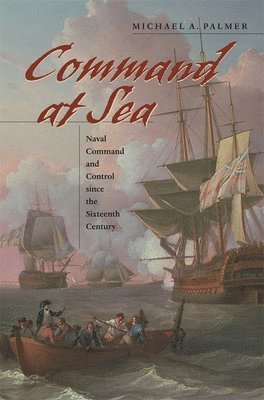
Commanders at sea struggle not only with the unpredictability of natural elements, but also with a shroud of uncertainty often referred to as the "fog of war." Over the centuries most admirals yielded to the natural temptation to find in new technologies a means to assert centralized control over their forces. But other commanders have recognized the fog for what it is: a constant level of uncertainty resistant to mere technological solution. In this grand history of naval warfare, Michael Palmer observes five centuries of dramatic encounters under sail and steam. From reliance on signal flags in the seventeenth century to satellite communications in the twenty-first, admirals looked to the next advance in technology as the one that would allow them to control their forces. But while abilities to communicate improved, Palmer shows how other technologies simultaneously shrank admirals' windows of decision. The result was simple, if not obvious: naval commanders have never had sufficient means or time to direct subordinates in battle. Successful commanders as distant as Horatio Nelson (1758-1805) and Arleigh Burke (1901-1996) accepted this reality. They sought solutions to the dilemmas of command in the personal indoctrination of subordinates through discussion, comradeship, and displays of trust and confidence. Such leaders created a commonality of vision and fostered a high degree of individual initiative. Their decentralized approach to command resulted in a resiliency that so often provided the key to success in battle.Palmer's exciting and enlightening history reveals the myriad efforts of naval commanders to navigate the fog of war.
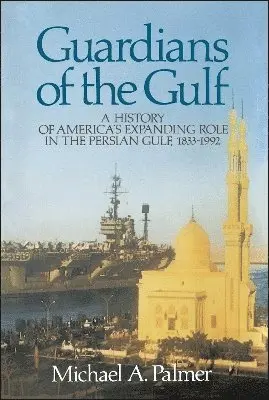
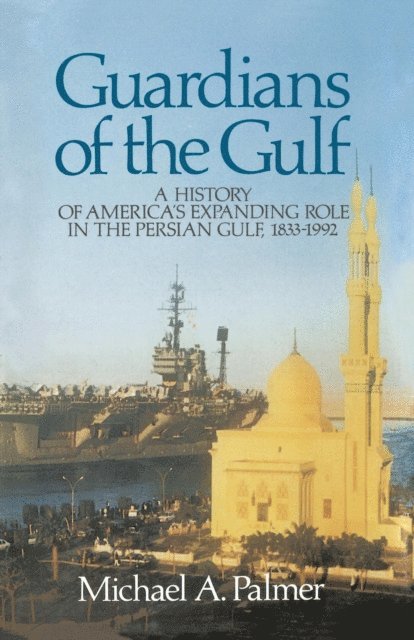
Guardians of the Gulf
A History of America's Expanding Role in the Persion Gulf, 1883-1992
Häftad, Engelska, 1999
231 kr
Skickas inom 5-8 vardagar
From the nineteenth century through the 1991 war with Iraq, this study of America's expanding role in the Persian Gulf traces the development of American commercial interests in the region and the resulting growth of military and political involvement.
364 kr
Skickas inom 5-8 vardagar
214 kr
Skickas inom 10-15 vardagar
The United States, argues Michael A. Palmer, is engaged in a political crusade to modernize the Islamic world. Americanism is in the vanguard of modernity's relentless advance, promoting capitalist markets and democratic institutions. To compete, Islamic societies must adopt a more secular and material approach, as have the West and South and East Asia. But these principles conflict with Islamic fundamentals.Once a vibrant force, much of the Muslim world spent four centuries as prisoner of an Ottoman Empire that embraced feudalism while the West jettisoned it. In the absence of a renaissance or enlightenment, modernization in the Islamic world has been painful and unsuccessful. While many in the West long for an "Islamic reformation," Palmer argues that Islamists such as Osama bin Laden are the face of that reformation. Just as Protestant reformers sought a return to the purity of early Christianity, jihadists desire a return to the halcyon days of conquest and expansion, when the Caliphate controlled a united and powerful Muslim community.American actions have not provoked this conflict, nor can American withdrawal end it, Palmer contends. For example, China, also a once-powerful civilization subjected to Western imperialism, has not produced homicide bombers. Instead, the Chinese are busy modernizing. Islam's failure to modernize is the root cause of the current situation. Bin Laden and other jihadists understand, correctly, that if Islam is to avoid the materialism and secularism that come with modernity, they must Islamize the West by force.