Michael A. Proschan – författare
Visar alla böcker från författaren Michael A. Proschan. Handla med fri frakt och snabb leverans.
11 produkter
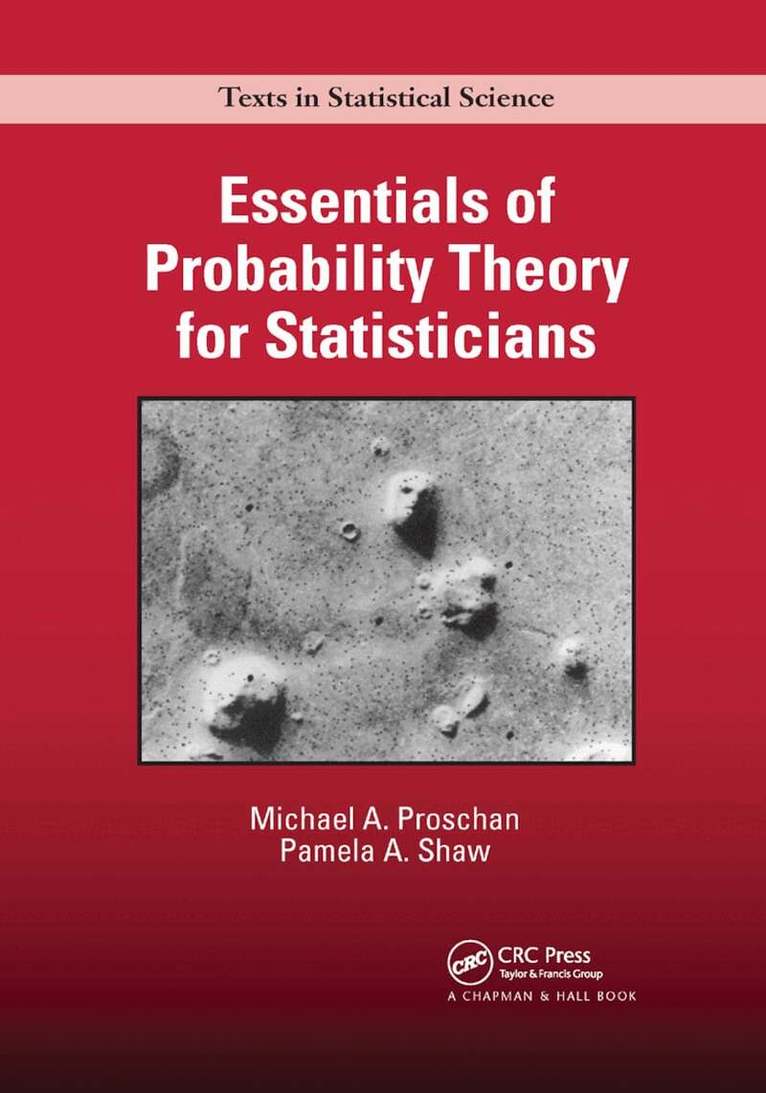
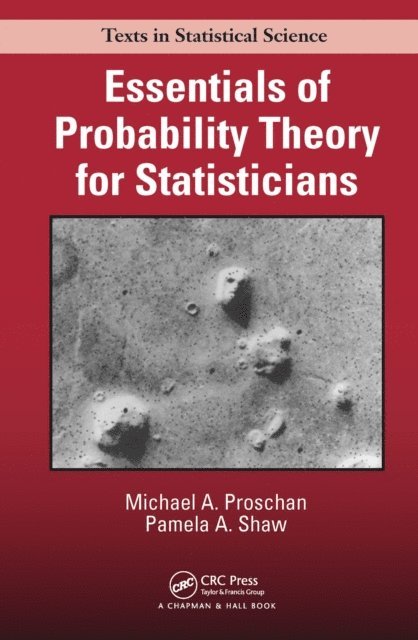
Essentials of Probability Theory for Statisticians
Av Michael A. Proschan, Pamela A. Shaw
Häftad, 2019
1027 kr
Lägg i varukorg
Essentials of Probability Theory for Statisticians provides graduate students with a rigorous treatment of probability theory, with an emphasis on results central to theoretical statistics. It presents classical probability theory motivated with illustrative examples in biostatistics, such as …
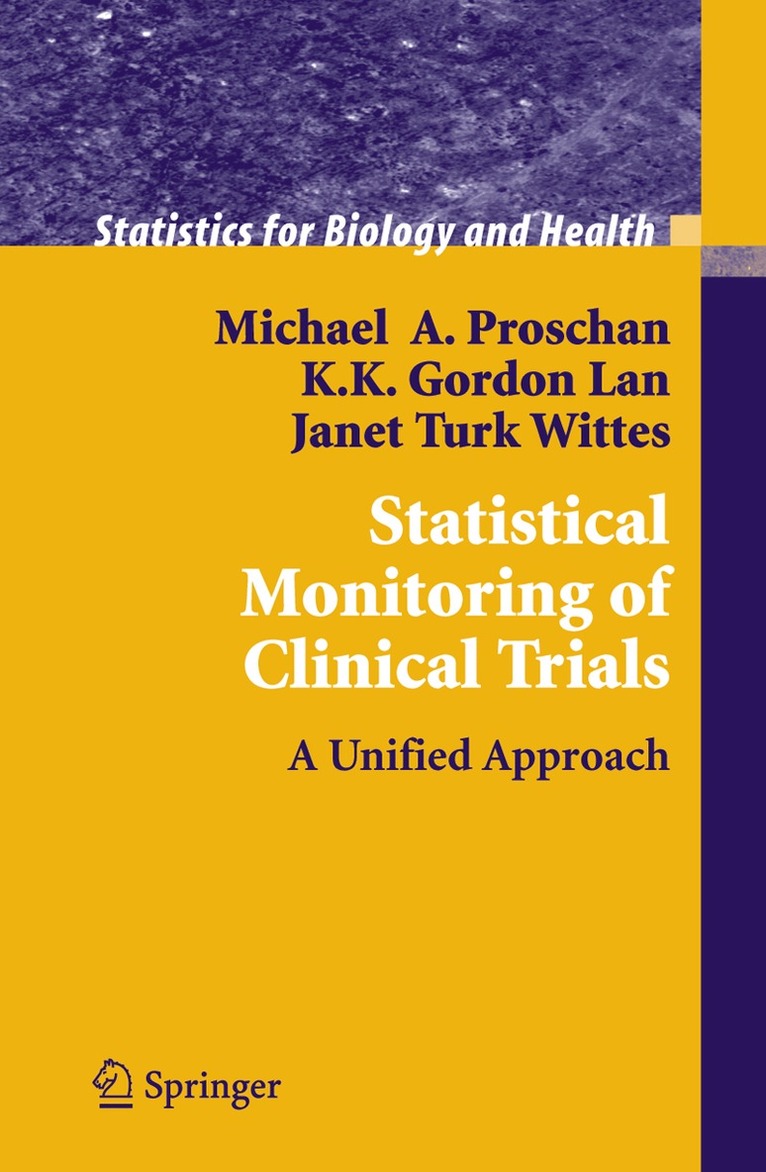
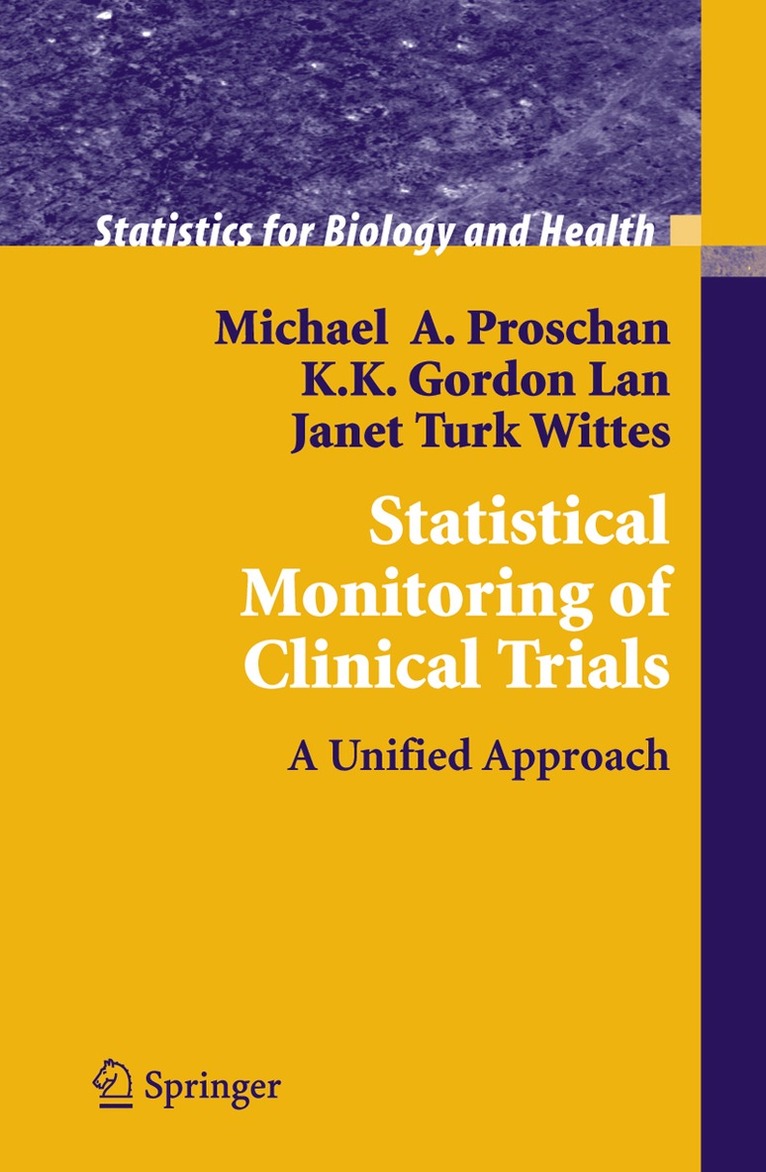
Statistical Monitoring of Clinical Trials
A Unified Approach
Av Michael A. Proschan, K. K. Gordon Lan m. fl.
Inbunden, 2006
5,0 utav 5 stjärnor. Totalt antal röster: (1)
1575 kr
Lägg i varukorg
The approach taken in this book is to studies monitored over time, what the Central Limit Theorem is to studies with only one analysis. Just as the Central Limit Theorem shows that test statistics involving very different types of clinical trial outcomes are asymptotically normal, this book shows …
Statistical Monitoring of Clinical Trials
A Unified Approach
Av Janet Turk Wittes, K. K. Gordon Lan m. fl.
E-bok, 2006
1948 kr
Lägg i varukorg
The approach taken in this book is to studies monitored over time, what the Central Limit Theorem is to studies with only one analysis. Just as the Central Limit Theorem shows that test statistics involving very different types of clinical trial outcomes are asymptotically normal, this book shows …
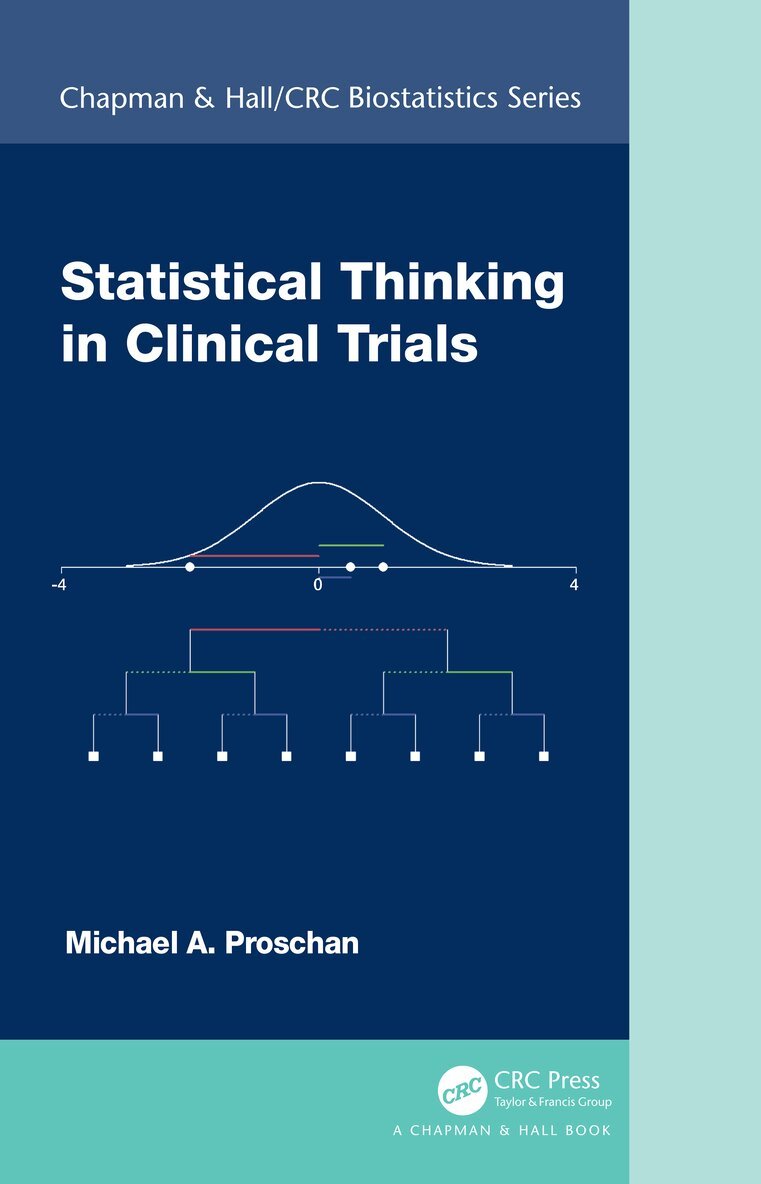
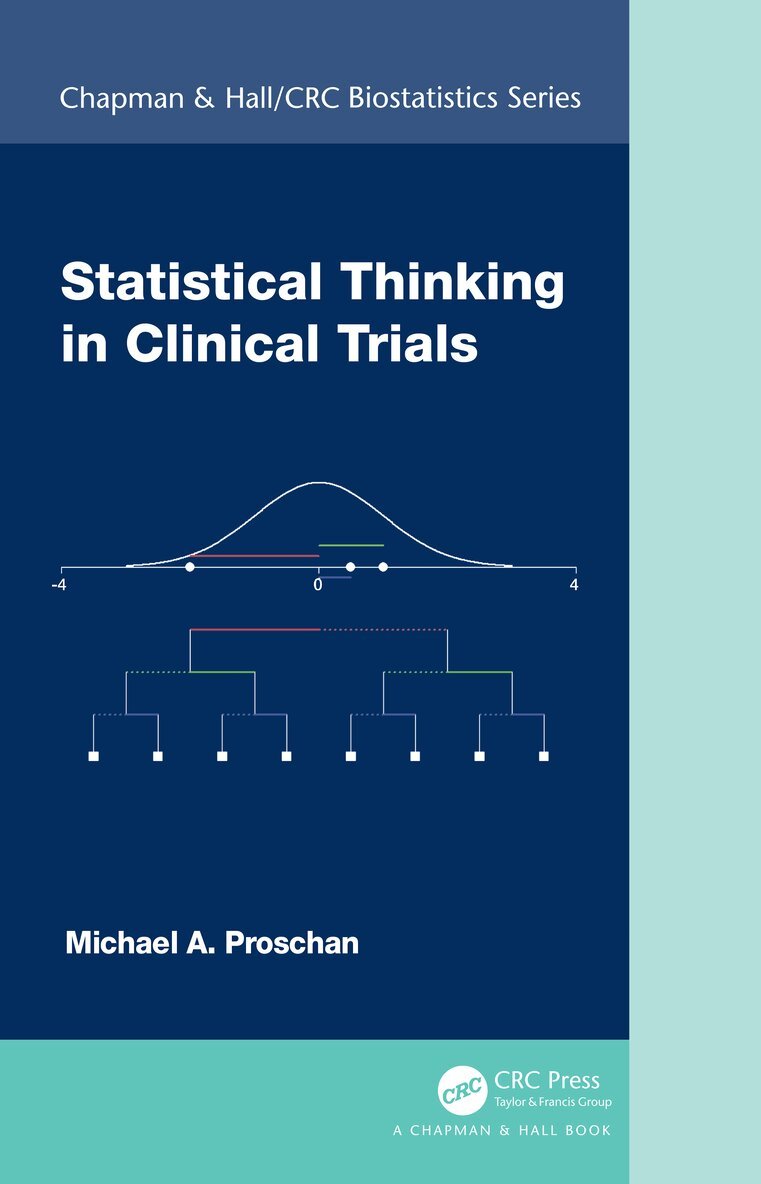
Statistical Thinking in Clinical Trials
Häftad, 2024
866 kr
Lägg i varukorg
Statistical Thinking in Clinical Trials combines a relatively small number of key statistical principles and several instructive clinical trials to gently guide the reader through the statistical thinking needed in clinical trials. Randomization is the cornerstone of clinical trials and …
Statistical Thinking in Clinical Trials
Inbunden, 2021
1567 kr
Lägg i varukorg
Statistical Thinking in Clinical Trials combines a relatively small number of key statistical principles and several instructive clinical trials to gently guide the reader through the statistical thinking needed in clinical trials. Randomization is the cornerstone of clinical trials and …
Essentials of Probability Theory for Statisticians
Av Pamela A. Shaw, Michael A. Proschan
E-bok, 2018
1212 kr
Lägg i varukorg
Essentials of Probability Theory for Statisticians provides graduate students with a rigorous treatment of probability theory, with an emphasis on results central to theoretical statistics. It presents classical probability theory motivated with illustrative examples in biostatistics, such as …
Statistical Thinking in Clinical Trials
E-bok, 2021
989 kr
Lägg i varukorg
Statistical Thinking in Clinical Trials combines a relatively small number of key statistical principles and several instructive clinical trials to gently guide the reader through the statistical thinking needed in clinical trials. Randomization is the cornerstone of clinical trials and …
Statistical Thinking in Clinical Trials
E-bok, 2021
1000 kr
Lägg i varukorg
Statistical Thinking in Clinical Trials combines a relatively small number of key statistical principles and several instructive clinical trials to gently guide the reader through the statistical thinking needed in clinical trials. Randomization is the cornerstone of clinical trials and …
Statistical Monitoring of Clinical Trials
A Unified Approach
Av Michael A. Proschan, K. K. Gordon Lan m. fl.
Häftad, 2010
1529 kr
Lägg i varukorg
The approach taken in this book is to studies monitored over time, what the Central Limit Theorem is to studies with only one analysis. Just as the Central Limit Theorem shows that test statistics involving very different types of clinical trial outcomes are asymptotically normal, this book shows …
Essentials of Probability Theory for Statisticians
Av Michael A. Proschan, Pamela A. Shaw
Inbunden, 2016
1522 kr
Lägg i varukorg
Essentials of Probability Theory for Statisticians provides graduate students with a rigorous treatment of probability theory, with an emphasis on results central to theoretical statistics. It presents classical probability theory motivated with illustrative examples in biostatistics, such as …
Essentials of Probability Theory for Statisticians
Av Pamela A. Shaw, Michael A. Proschan
E-bok, 2018
1174 kr
Lägg i varukorg
Essentials of Probability Theory for Statisticians provides graduate students with a rigorous treatment of probability theory, with an emphasis on results central to theoretical statistics. It presents classical probability theory motivated with illustrative examples in biostatistics, such as …