Michael Anderegg - Böcker
Visar alla böcker från författaren Michael Anderegg. Handla med fri frakt och snabb leverans.
5 produkter
5 produkter
866 kr
Tillfälligt slut
The author considers Orson Welles's influence as an interpreter of Shakespeare for 20th-century American popular audiences. The text explores his work on stage, radio and in film, and reveals his position as an artist of both high and popular culture. Anderegg illustrates how Welles tried to transcend the barriers between the classical and the popular, and argues that Welles sought to restore the lowbrow popularity of Shakespeare in 19th-century America. Anderegg also examines Welles's three adaptations of Shakespeare, the public reception of them, his work as an actor and the view that he squandered his talents after in the era after "Citizen Kane".
664 kr
Skickas inom 3-6 vardagar
From the earliest days of radio to the golden age of television and beyond, Orson Welles has occupied a unique place in American culture. In Orson Welles, Shakespeare, and Popular Culture, Michael Anderegg considers Welles's influence as an interpreter of Shakespeare for twentieth-century American popular audiences. Exploring his works on stage, radio, and in film, Anderegg reveals Welles's unique position as an artist of both high and popular culture. At once intellectually respected and commercially viable, the Shakespeare Welles gave the American public reflects his unique genius as a writer, director, and actor. From early plays in school to the Everybody's Shakespeare books and the Mercury Text Records adaptations, Anderegg illustrates how Welles tried to transcend the barriers between the classical and the popular. He argues that "Welles the Shakespearean" sought to be a restorer as well as an innovator by drawing on his knowledge of the abundant, lowbrow popularity of Shakespeare in nineteenth-century America. Welles's three film adaptations of Shakespeare, Macbeth, Othello, and Chimes at Midnight, are examined.From his peculiarly "Scottish" version of Macbeth, to his postmodern reading of the history plays in Chimes at Midnight, Welles's interpretive strategies--and the public's reception of them--are considered. In the final chapter, Anderegg surveys Welles's work as an actor--his legacy and myth--and reexamines the common view that he squandered his talents in the era after Citizen Kane. Taking into account his non-Shakespearean roles, Anderegg shows Welles to have been a markedly "Shakespearean" actor and, in his versions of the Bard's plays, a key arbiter of culture.
332 kr
Skickas inom 10-15 vardagar
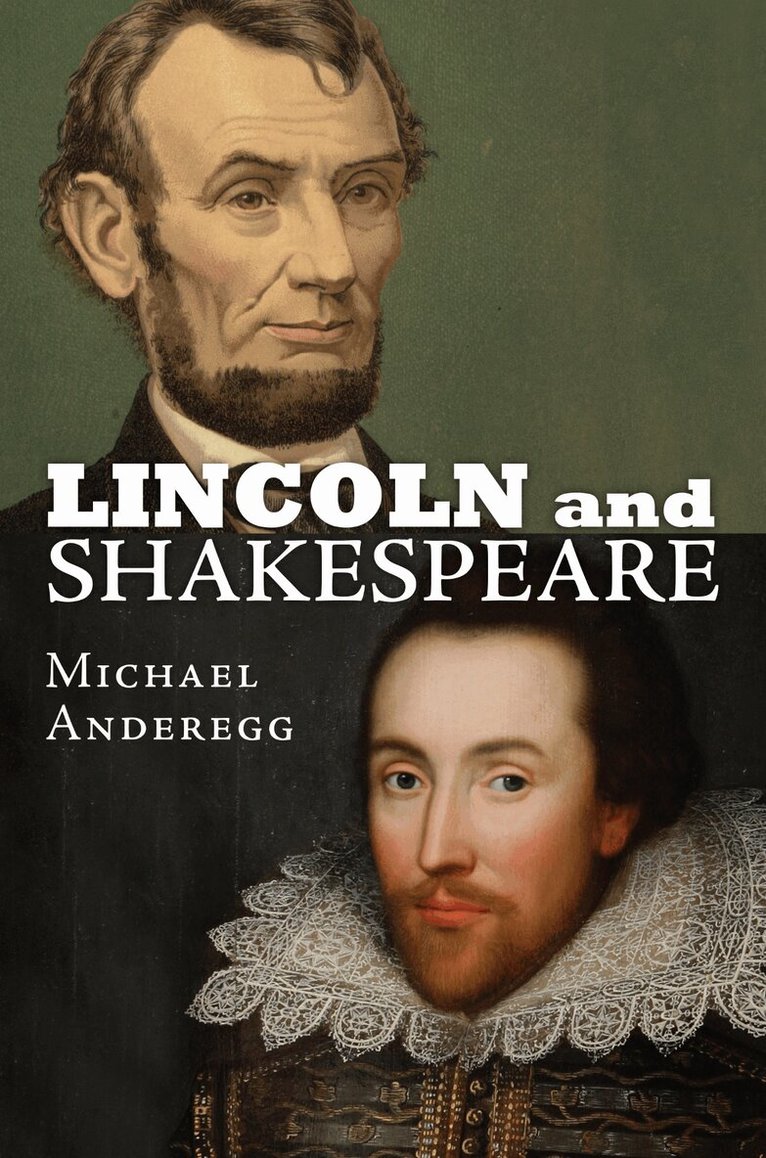
Lincoln Prize Finalist It was the measure of Shakespeare's poetic greatness, an early commentator remarked, that he thoroughly blended the ideal with the practical or realistic. "If this be so," Walt Whitman wrote, "I should say that what Shakespeare did in poetic expression, Abraham Lincoln essentially did in his personal and official life."Whitman was only one of many to note the affinity between these two iconic figures. Novelists, filmmakers, and playwrights have frequently shown Lincoln quoting Shakespeare. In Lincoln and Shakespeare, Michael Anderegg for the first time examines in detail Lincoln's fascination with and knowledge of Shakespeare's plays. Separated by centuries and extraordinary circumstances, the two men clearly shared a belief in the power of language and both at times held a fatalistic view of human nature. While citations from Shakespeare are few in his writings and speeches, Lincoln read deeply and quoted often from the Bard's work in company, a habit well documented in diaries, letters, and newspapers. Anderegg discusses Lincoln's particular interest in Macbeth and Hamlet and in Shakespeare’s historical plays, where we see themes that resonated deeply with the president—the dangers of inordinate ambition, the horrors of civil war, and the corruptions of illegitimate rule.Anderegg winnows confirmed evidence from myth to explore how Lincoln came to know Shakespeare, which editions he read, and which plays he would have seen before he became president. Once in the White House, Lincoln had the opportunity of seeing the best Shakespearean actors in America. Anderegg details Lincoln's unexpected relationship with James H. Hackett, one of the most popular comic actors in America at the time: his letter to Hackett reveals his considerable enthusiasm for Shakespeare. Lincoln managed, in the midst of overwhelming matters of state, to see the actor's Falstaff on several occasions and to engage with him in discussions of how Shakespeare's plays should be performed, a topic on which he had decided views. Hackett's productions were only a few of those Lincoln enjoyed as president, and Anderegg documents his larger theatergoing experience, recreating the Shakespearean performances of Edwin Booth, Charlotte Cushman, Edwin Forrest, and others, as Lincoln saw them.
315 kr
Skickas inom 10-15 vardagar
Cinematic Shakespeare takes the reader inside the making of a number of significant adaptations to illustrate how cinema transforms and re-imagines the dramatic form and style central to Shakespeare's imagination. Cinematic Shakespeare investigates how Shakespeare films constitute an exciting and ever-changing film genre. The challenges of adopting Shakespeare to cinema are like few other film genres. Anderegg looks closely at films by Laurence Olivier (Richard III), Orson Welles (Macbeth), and Kenneth Branagh (Hamlet) as well as topics like 'Postmodern Shakespeares' (Julie Taymor's Titus and Peter Greenaway's Prospero's Books) and multiple adaptations over the years of Romeo and Juliet. A chapter on television looks closely at American broadcasting in the 1950s (the Hallmark Hall of Fame Shakespeare adaptations) and the BBC/Time-Life Shakespeare Plays from the late 70s and early 80s.
374 kr
Skickas inom 7-10 vardagar
Testimony of the unique relationship between the U.S.-Vietnam War and the images and sounds that have been employed to represent it