Michael Banner - Böcker
Visar alla böcker från författaren Michael Banner. Handla med fri frakt och snabb leverans.
8 produkter
8 produkter
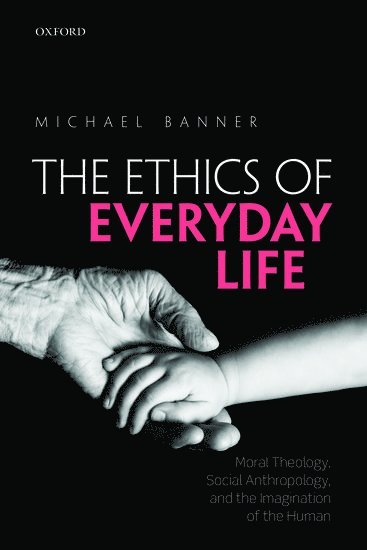
The Ethics of Everyday Life
Moral Theology, Social Anthropology, and the Imagination of the Human
Inbunden, Engelska, 2014
625 kr
Skickas inom 5-8 vardagar
Why do we have children and what do we raise them for? Does the proliferation of depictions of suffering in the media enhance, or endanger, compassion? How do we live and die well in the extended periods of debility which old age now threatens? Why and how should we grieve for the dead? And how should we properly remember other grief and grievances? In addressing such questions, the Christian imagination of human life has been powerfully shaped by the imagination of Christ's life Christs conception, birth, suffering, death, and burial have been subjects of profound attention in Christian thought, just as they are moments of special interest and concern in each and every human life. However, they are also sites of contention and controversy, where what it is to be human is discovered, constructed, and contested. Conception, birth, suffering, burial, and death are occasions, in other words, for profound and continuing questioning regarding the meaning of human life, as controversies to do with IVF, abortion, euthanasia, and the use of bodies and body parts post mortem, indicate. In The Ethics of Everyday Life, Michael Banner argues that moral theology must reconceive its nature and tasks if it is not only to articulate its own account of human being, but also to enter into constructive contention with other accounts. In particular, it must be willing to learn from and engage with social anthropology if it is to offer powerful and plausible portrayals of the moral life and answers to the questions which trouble modernity. Drawing in wide-ranging fashion from social anthropology and from Christian thought and practice from many periods, and influenced especially by his engagement in public policy matters including as a member of the UK's Human Tissue Authority, Banner develops the outlines of an everyday ethics, stretching from before the cradle to after the grave.
The Ethics of Everyday Life
Moral Theology, Social Anthropology, and the Imagination of the Human
Häftad, Engelska, 2016
353 kr
Skickas inom 7-10 vardagar
The moments in Christ's human life noted in the creeds (his conception, birth, suffering, death, and burial) are events which would likely appear in a syllabus for a course in social anthropology, for they are of special interest and concern in human life, and also sites of contention and controversy, where what it is to be human is discovered, constructed, and contested. In other words, these are the occasions for profound and continuing questioning regarding the meaning of human life, as controversies to do with IVF, abortion, euthanasia, and the use of bodies or body parts post mortem plainly indicate. Thus the following questions arise, how do the instances in Christ's life represent human life, and how do these representations relate to present day cultural norms, expectations, and newly emerging modes of relationship, themselves shaping and framing human life? How does the Christian imagination of human life, which dwells on and draws from the life of Christ, not only articulate its own, but also come into conversation with and engage other moral imaginaries of the human? Michael Banner argues that consideration of these questions requires study of moral theology, therefore, he reconceives its nature and tasks, and in particular, its engagement with social anthropology. Drawing from social anthropology and Christian thought and practice from many periods, and influenced especially by his engagement in public policy matters including as a member of the UK's Human Tissue Authority, Banner aims to develop the outlines of an everyday ethics, stretching from before the cradle to after the grave.
203 kr
Skickas inom 5-8 vardagar
A concise, reasoned, practical case for why Britain should pay reparations for historic wrongs to present Caribbean inhabitants.Britain owes reparations to the Caribbean. The exploitation of generations of those trafficked from Africa, or born into enslavement, to work the immensely profitable sugars plantations, enriched both British individuals and the British nation. Colonialism, even after emancipation, perpetuated the exploitation. The Caribbean still suffers, and Britain still benefits, from these historic wrongs.There are some fairly standard objections to reparations -- 'slavery ended a long time ago'; 'Britain should be celebrating its role in abolishing slavery'; 'slavery was legal back then and we shouldn't judge the past by the standards of the present'; 'you shouldn't visit the sins of the fathers on the sons'; and so on. And there is a sense that the practical problems of who should pay what to whom are immensely difficult.Michael Banner carefully considers and answers these objections. He argues that reparations are not about punishment, but about the restoration of wrongful gains. In Reparations Now! he makes a specific and practical proposal regarding reparations, picking up on the programme suggested by Caribbean countries (through CARICOM), and taking as a starting point the nearly £20 million paid as compensation by the British government at abolition, not to those who had suffered slavery, but to those who lost enslaved labourers.Reparations Now! discusses what can be done, here and now, by individuals and institutions, to advance the case for reparations between national governments.
995 kr
Skickas inom 7-10 vardagar
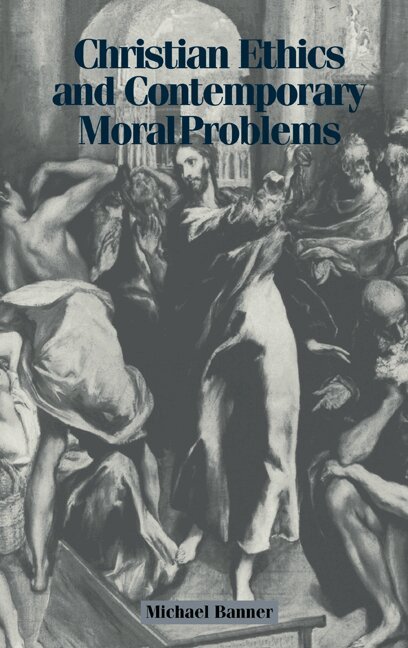
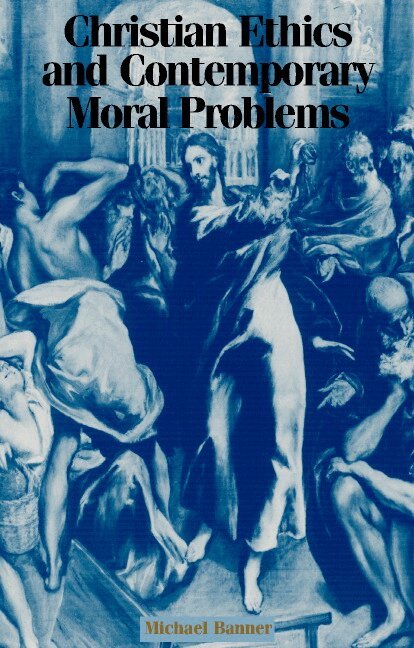
This book addresses such key ethical issues as euthanasia, the environment, biotechnology, abortion, the family, sexual ethics, and the distribution of health care resources. Michael Banner argues that the task of Christian ethics is to understand the world and humankind in the light of the credal affirmations of the Christian faith, and to explicate this understanding in its significance for human action through a critical engagement with the concerns, claims and problems of other ethics. He illustrates both the distinctiveness of Christian convictions in relation to the above issues and also the critical dialogue with practices based on other convictions which this sense of distinctiveness motivates but does not prevent. The book's importance lies in its attempt to show the crucial difference which Christian belief makes to an understanding of these issues, whilst at the same time demonstrating some of the weaknesses and confusions of certain popular approaches to them.
636 kr
Skickas inom 7-10 vardagar
This book addresses such key ethical issues as euthanasia, the environment, biotechnology, abortion, the family, sexual ethics, and the distribution of health care resources. Michael Banner argues that the task of Christian ethics is to understand the world and humankind in the light of the credal affirmations of the Christian faith, and to explicate this understanding in its significance for human action through a critical engagement with the concerns, claims and problems of other ethics. He illustrates both the distinctiveness of Christian convictions in relation to the above issues and also the critical dialogue with practices based on other convictions which this sense of distinctiveness motivates but does not prevent. The book's importance lies in its attempt to show the crucial difference which Christian belief makes to an understanding of these issues, whilst at the same time demonstrating some of the weaknesses and confusions of certain popular approaches to them.
1 254 kr
Skickas inom 5-8 vardagar
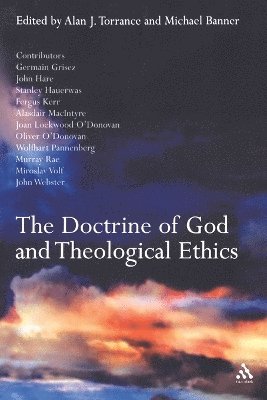
This book addresses an important topic and fills a major gap in developments in modern theology and Christian ethics. Significant treatments include Wolfhart Pannenberg's historical overview of the relationship between modernism and Christian faith, John Webster's meticulous analysis of Christian theology's contribution to modern conceptions of conscience, J. L. O'Donovan's critique of liberal contractarian theory, and Alasdair MacIntyre's examination of the critical issues which Christianity raises for secular philosophy. Specially commissioned by the Editors, this study incorporates unpublished work by many international scholars of the highest standing, including Alasdair MacIntyre, Wolfhart Pannenberg, Stanley Hauerwas, John Webster, Miroslav Volf, Fergus Kerr and Oliver O'Donovan, as well as chapters by the Editors Michael Banner and Alan Torrance.
Del 19 - Wiley Blackwell Brief Histories of Religion
Christian Ethics
A Brief History
Inbunden, Engelska, 2009
1 026 kr
Skickas inom 7-10 vardagar
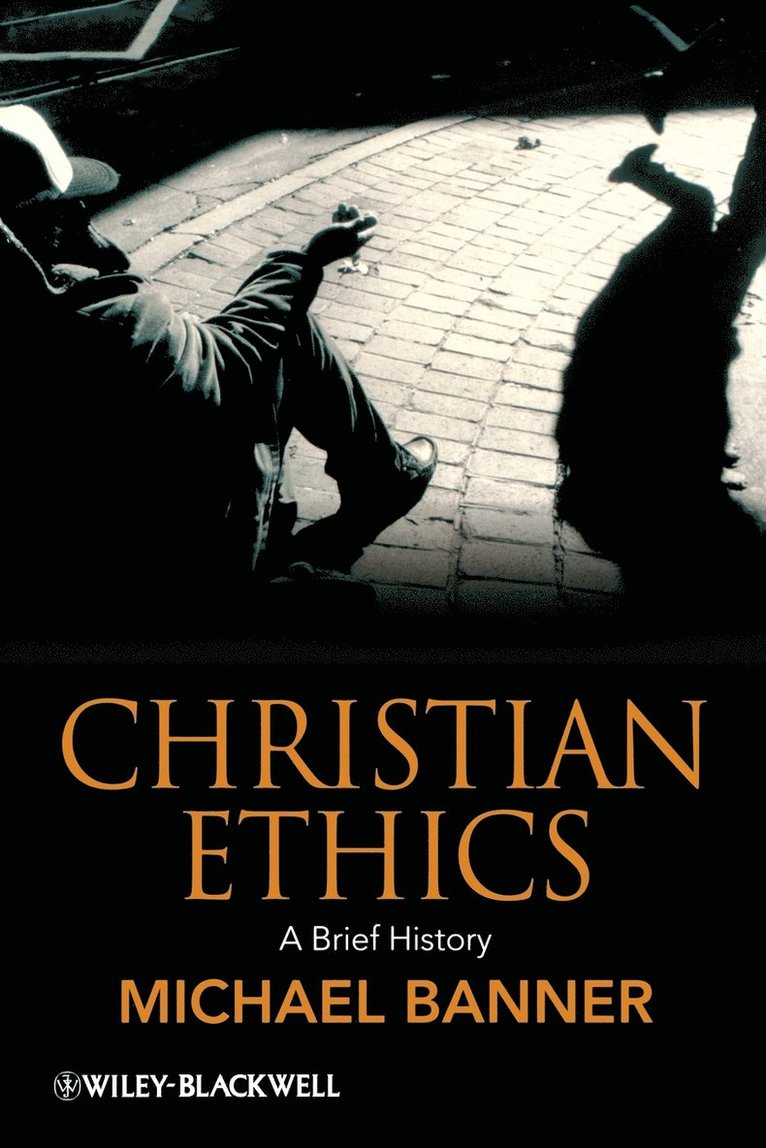
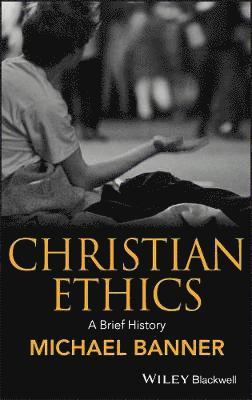
This enlightening book steers readers through the challenges and moral issues, providing a clear and decisive history of the main figures and texts in Christian ethics. A short and lively history of Christian ethics, exploring how Christianity has always had to grapple with complex moral problems - from questions about the status of early Christians who renounced their religion under Roman torture, through to current debates about euthanasia Engages with the main texts and figures in Christian ethics, including Augustine, Benedict, Aquinas, Luther and Barth Considers questions such as human will, the proper form of Christian life, natural law, and whether human nature is at odds with Christian ethics Concludes with a thought-provoking chapter considering the role that Christian ethics can play in contemporary moral debates and ethical dilemmas
Del 18 - Wiley Blackwell Brief Histories of Religion
Christian Ethics
A Brief History
Häftad, Engelska, 2009
298 kr
Skickas inom 7-10 vardagar
This enlightening book steers readers through the challenges and moral issues, providing a clear and decisive history of the main figures and texts in Christian ethics. A short and lively history of Christian ethics, exploring how Christianity has always had to grapple with complex moral problems - from questions about the status of early Christians who renounced their religion under Roman torture, through to current debates about euthanasia Engages with the main texts and figures in Christian ethics, including Augustine, Benedict, Aquinas, Luther and Barth Considers questions such as human will, the proper form of Christian life, natural law, and whether human nature is at odds with Christian ethics Concludes with a thought-provoking chapter considering the role that Christian ethics can play in contemporary moral debates and ethical dilemmas