Michael Chernick - Böcker
Visar alla böcker från författaren Michael Chernick. Handla med fri frakt och snabb leverans.
4 produkter
4 produkter
404 kr
Skickas inom 10-15 vardagar
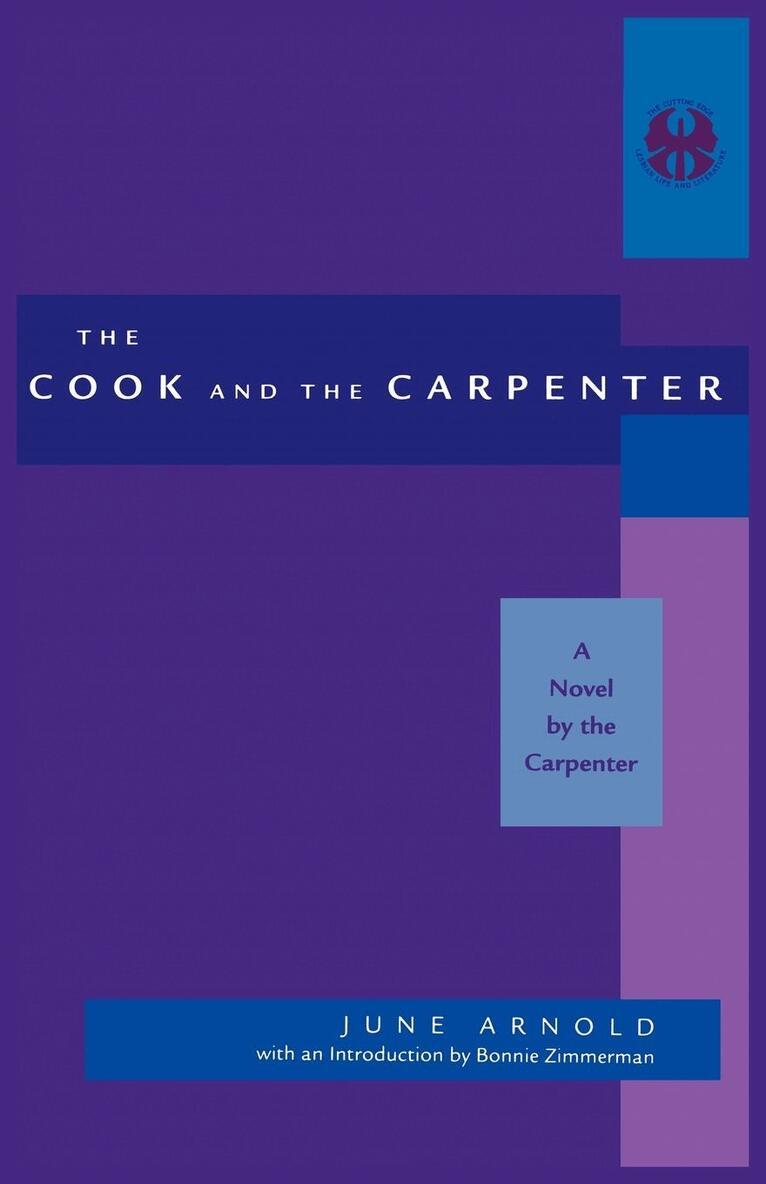
Women's liberation sought to transform every sector of U.S. society--its educational system, culture, language, politics, and, importantly, the delivery of social services. To enable this movement, women all over the country began to establish women's centers.In New York City, women from almost every local women's liberation group took over an abandoned building in lower Manhattan on New Year's Eve, 1970. They named the building The Fifth Street Women's Building and renovated it to feed, clothe, shelter, and educate women in need. The take-over was a huge success, attracting hundreds of activists and community members. Thirteen days later, the New York City Tactical Police stormed the building, expelled the women, and ended the action. The City then tore the building down and built a parking lot on the site.June Arnold was one of the original planners and an active participant in this episode. When she got out of jail, she went home and wrote this novel about what happened. The Cook and the Carpenter, which quickly gained fame for its use of a non- gendered language, remains one of the best representations of the time period that berthed modern feminism and paved the way for lesbian communities.
909 kr
Skickas inom 10-15 vardagar
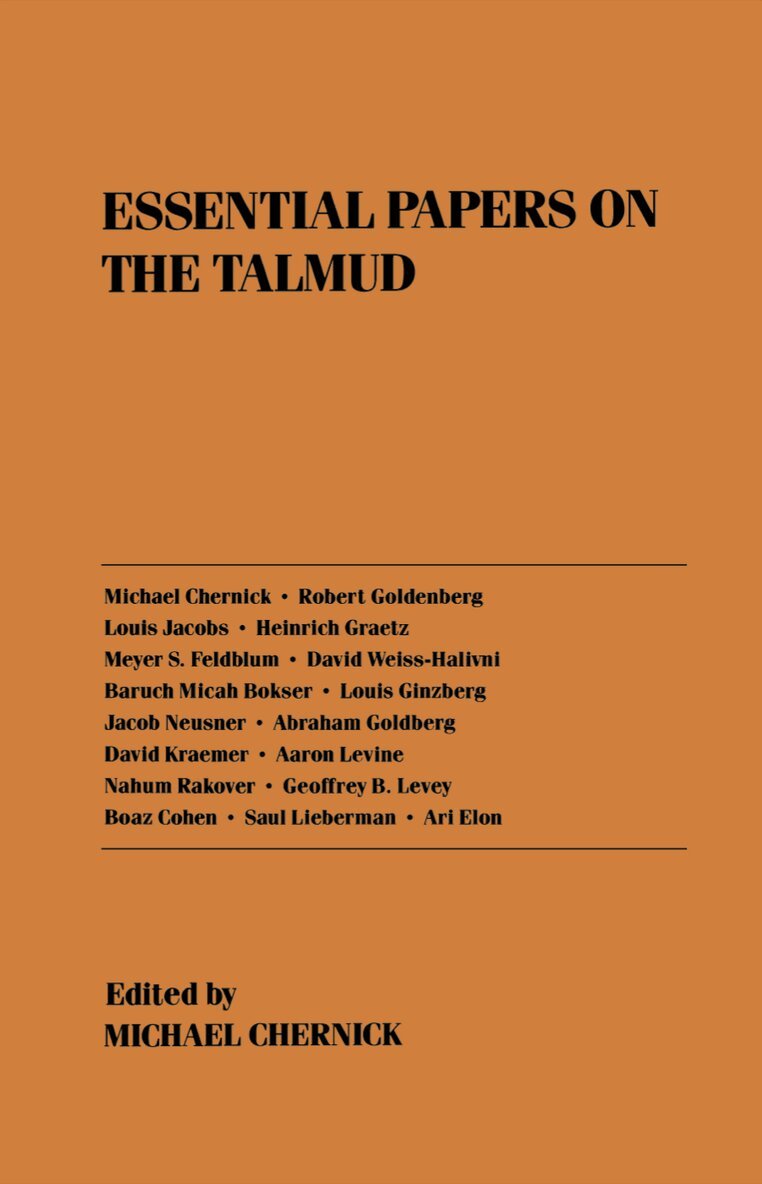
No work has informed Jewish life and history more than the Talmud. This unique and vast collection of teachings and traditions contains within it the intellectual output of hundreds of Jewish sages who considered all aspects of an entire people's life from the Hellenistic period in Palestine (c. 315 B.C.E.) until the end of the Sassanian era in Babylonia (615 C.E.). This volume adds the insights of modern talmudic scholarship and criticism to the growing number of more traditionally oriented works that seek to open the talmudic heritage and tradition to contemporary readers. These central essays provide a taste of the myriad ways in which talmudic study can intersect with such diverse disciplines as economics, history, ethics, law, literary criticism, and philosophy.Contributors: Baruch Micah Bokser, Boaz Cohen, Ari Elon, Meyer S. Feldblum, Louis Ginzberg, Abraham Goldberg, Robert Goldenberg, Heinrich Graetz, Louis Jacobs, David Kraemer, Geoffrey B. Levey, Aaron Levine, Saul Lieberman, Jacob Neusner, Nahum Rakover, and David Weiss-Halivni.
465 kr
Skickas inom 7-10 vardagar
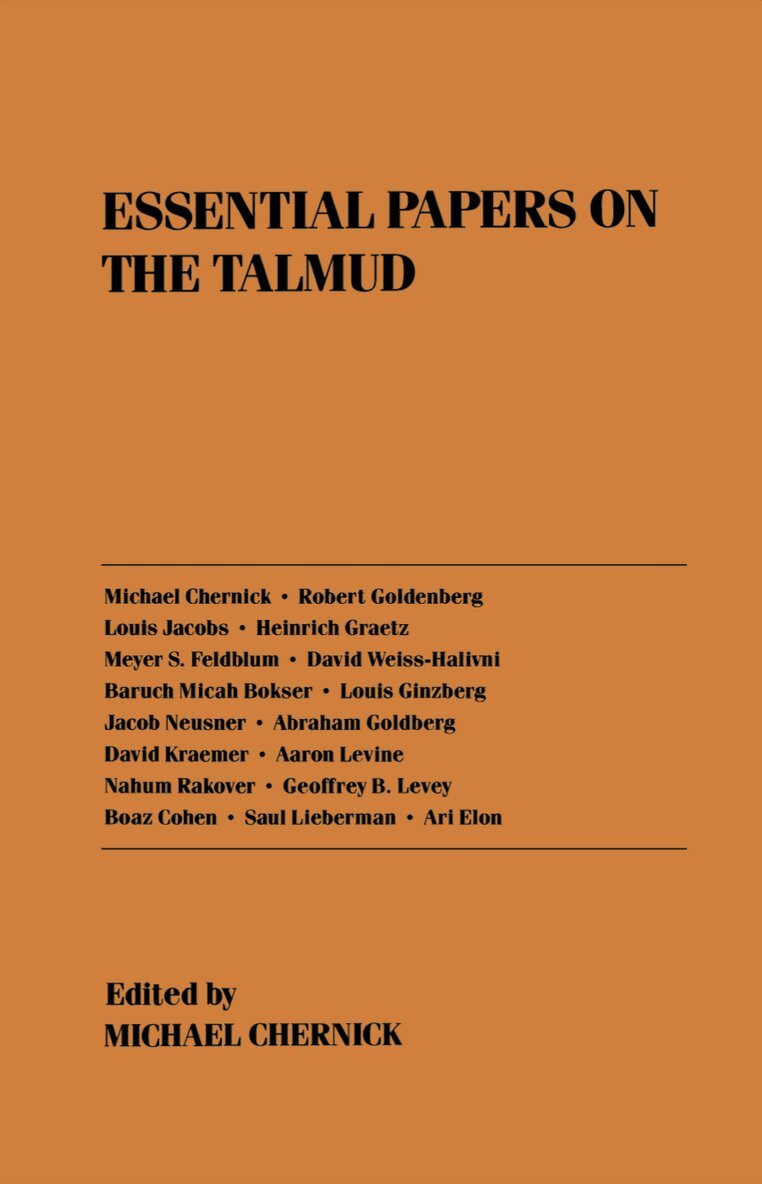
No work has informed Jewish life and history more than the Talmud. This unique and vast collection of teachings and traditions contains within it the intellectual output of hundreds of Jewish sages who considered all aspects of an entire people's life from the Hellenistic period in Palestine (c. 315 B.C.E.) until the end of the Sassanian era in Babylonia (615 C.E.). This volume adds the insights of modern talmudic scholarship and criticism to the growing number of more traditionally oriented works that seek to open the talmudic heritage and tradition to contemporary readers. These central essays provide a taste of the myriad ways in which talmudic study can intersect with such diverse disciplines as economics, history, ethics, law, literary criticism, and philosophy.Contributors: Baruch Micah Bokser, Boaz Cohen, Ari Elon, Meyer S. Feldblum, Louis Ginzberg, Abraham Goldberg, Robert Goldenberg, Heinrich Graetz, Louis Jacobs, David Kraemer, Geoffrey B. Levey, Aaron Levine, Saul Lieberman, Jacob Neusner, Nahum Rakover, and David Weiss-Halivni.
Del 35 - Monographs of the Hebrew Union College
Great Voice that Did Not Cease
The Growth of the Rabbinic Canon and Its Interpretation
Inbunden, Engelska, 2009
747 kr
Tillfälligt slut
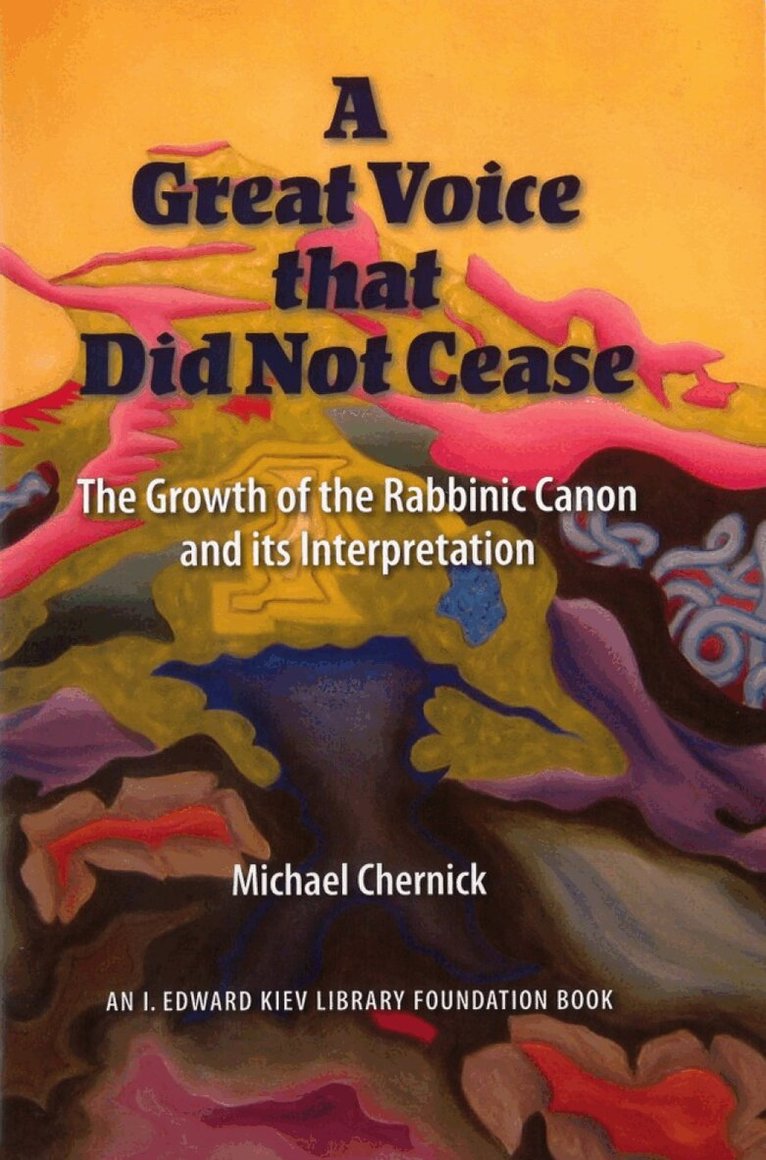
The growth of the rabbinic canon may be best described as a hermeneutical endeavor. Michael Chernick demonstrates how hermeneutical methods helped the Rabbis confront the difficulties that arose when logical and interpretative problems appeared in scriptural and, later, rabbinic texts. Given the Rabbis' theological, literary, and rhetorical attitudes, these reading strategies were adopted to obviate the problem the texts presented. After all, the Rabbis of different generations viewed these texts as revealed communications produced by a perfect Author. Chernick analyzes and illustrates six midrashic hermeneutics in great detail: outright midrashic resolutions of contradictions in Scripture, distinguishing between what constitutes true scriptural proof and what is merely a support text, a midrashic hermeneutic that transfers the rules of one rubric to another, two hermeneutics that limit interpretive extensions of halakhot, and the claim that two redundant pentateuchal rubrics are needed to ward off incorrect analogies. He highlights the significant changes that occurred in rabbinic legal hermeneutics from the tannaitic through post-amoraic strata of rabbinic literature-some 500 years at least-and shows how these changes attest to the persistence, continuity, and centrality of hermenutic method to the rabbinic interpretive process. Of particular significance is the connection Chernick makes between changes in hermeneutical practice and the changing revelatory status of the non-Pentateuchal parts of the Hebrew Bible and rabbinic legal discourse. His study draws its title from the traditional view of Sinaitic revelation, when God spoke to the assembled people with "a great voice that did not cease" (kol gadol velo yasaf, Deut 5:19). This view, Chernick believes, is at the core of rabbinic Judaism, the Judaism that claims to hear that great voice through the medium of interpretation.