Michael David Cohen - Böcker
Visar alla böcker från författaren Michael David Cohen. Handla med fri frakt och snabb leverans.
3 produkter
3 produkter
309 kr
Skickas inom 10-15 vardagar
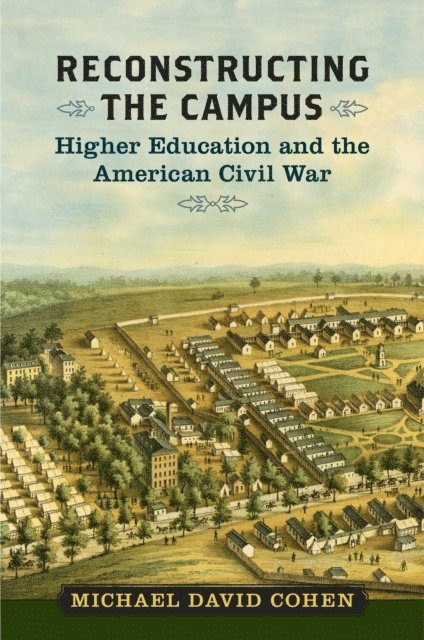
The Civil War transformed American life. Not only did thousands of men die on battlefields and millions of slaves become free; cultural institutions reshaped themselves in the context of the war and its aftermath. The first book to examine the Civil War's immediate and long-term impact on higher education, Reconstructing the Campus begins by tracing college communities' responses to the secession crisis and the outbreak of war. Students made supplies for the armies or left campus to fight. Professors joined the war effort or struggled to keep colleges open. The Union and Confederacy even took over some campuses for military use. Then moving beyond 1865, the book explores the war's long-term effects on colleges. Michael David Cohen argues that the Civil War and the political and social conditions the war created prompted major reforms, including the establishment of a new federal role in education. Reminded by the war of the importance of a well-trained military, Congress began providing resources to colleges that offered military courses and other practical curricula. Congress also, as part of a general expansion of the federal bureaucracy that accompanied the war, created the Department of Education to collect and publish data on education. For the first time, the U.S. government both influenced curricula and monitored institutions.The war posed special challenges to Southern colleges. Often bereft of students and sometimes physically damaged, they needed to rebuild. Some took the opportunity to redesign themselves into the first Southern universities. They also admitted new types of students, including the poor, women, and, sometimes, formerly enslaved blacks. Thus, while the Civil War did great harm, it also stimulated growth, helping, especially in the South, to create our modern system of higher education.
775 kr
Skickas inom 7-10 vardagar
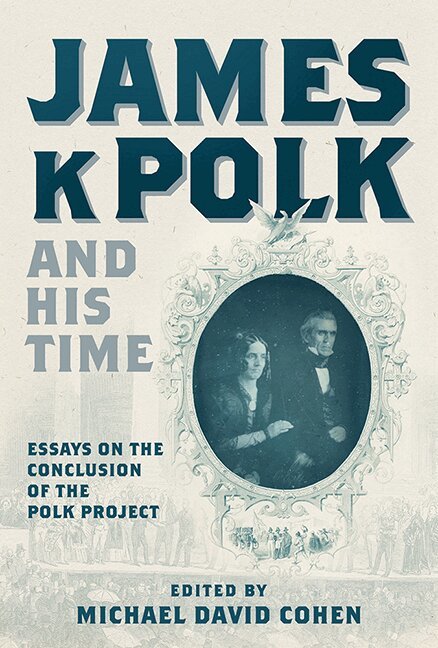
This collection arose out of a 2019 conference to commemorate the completion of the fourteen- volume Correspondence of James K. Polk. Its scholarship—which pays tribute to the Polk Project itself, as well as to the controversial nature of the Polk legacy—will result in a significant reinterpretation of the eleventh US president.Contributors include John F. Polk, who examines the ways history has mischaracterized almost the entire Polk family tree, and Kelly Houston Jones, who investigates the family’s investments in slave-based agriculture. The fascinating life of Elias Polk, a man enslaved by the president, is compellingly related by Zacharie W. Kinslow. Asaf Almog analyzes the persistence of labels: Polk and fellow Democrats labeled their Whig opponents “Federalists,” he argues, with both rhetorical and substantive aims. Michael Gunther analyzes Polk’s authorization of the Smithsonian Institution and the Department of the Interior, seemingly at odds with his devotion to small government.Taken together, the twelve essays unveil a more complex James K. Polk than the narrowly focused Jackson protégé and proponent of Manifest Destiny we often hear about. He was politically partisan but inspired by history and grounded in principle. His family’s long reliance on nonwhite Americans’ losses of freedom and land informed his policies on slavery and Indian removal, and the nature of the legislation at hand determined when he promoted a larger or a smaller federal government.
Correspondence of Zachary Taylor and Millard Fillmore
Volume 1, January 1844–June 1848
Inbunden, Engelska, 2026
1 446 kr
Kommande
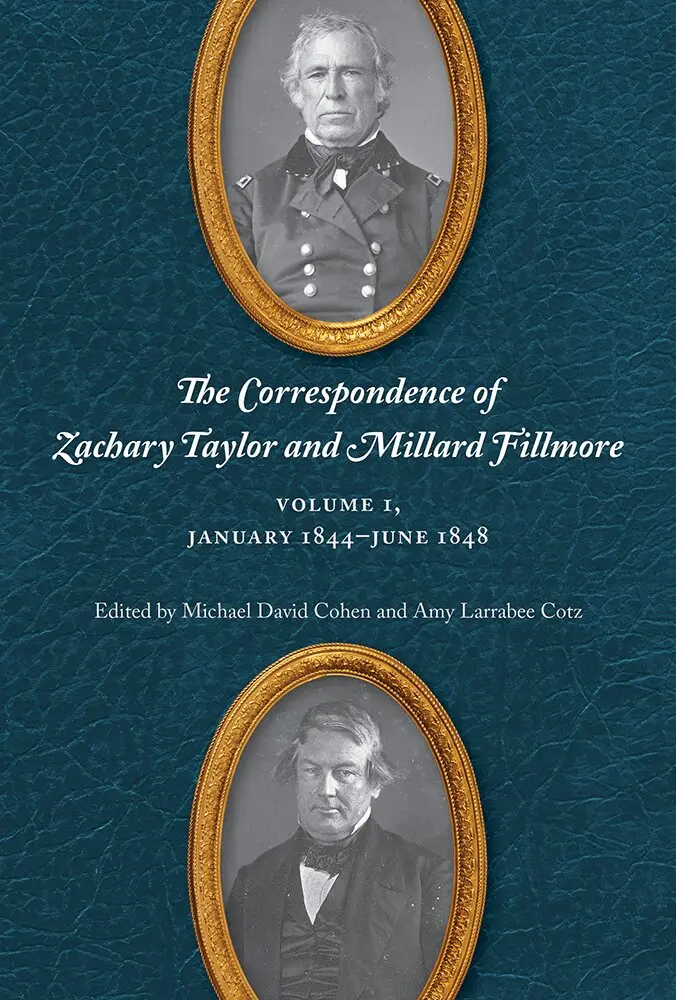
"Budding treason insists on extending the slave territory, and if it can not, threatens dissolution of this glorious union."—Millard Fillmore, June 22, 1844"War even when carried on in the mildest & most humane manner possible, is a scourge to any Nation."—Zachary Taylor, January 5, 1848This series features letters written by or to Zachary Taylor and Millard Fillmore, the twelfth (1849–50) and thirteenth (1850–53) presidents of the United States. It begins in 1844, when they became prominent national figures. It will continue through Taylor's death in the White House and end, in 1853, with Fillmore's political retirement. The letters document diverse perspectives on a growing and divided nation.In that decade, the United States expanded its boundaries while advancing toward civil war. Americans debated Caribbean and European revolutions, import tariff adjustments, a global cholera pandemic, the sale of alcohol, and Indigenous peoples' expulsion from the East. Presidents Taylor and Fillmore worked with Congress on the Compromise of 1850, an attempt to bridge the widening rift over the status of western territories and the enslavement of Black Americans.Volume 1 begins with the two men's emergence as national leaders and ends with their nominations as president and vice president. In 1844–45, Taylor, a Baton Rouge–based cotton planter and army general, gathered troops near the US border with Texas. He soon led them into that republic, which the United States aimed to annex, then into Mexico, which still claimed Texas. In 1846–47, Taylor commanded forces in the Mexican American War. That concluded in 1848 with the US acquisition of half of Mexico.Fillmore, a Buffalo lawyer and former congressman, failed in his bids in 1844 for the vice presidency and the New York governorship. He nonetheless contributed to the debate about Texas annexation and slavery. He became the founding chancellor of the University of Buffalo in 1846 and was elected state comptroller in 1847. In the latter role, he enforced treaties with Native peoples and state laws affecting taxes, religion, and public schools.In June 1848, the Whig Party paired these very different men on its presidential ticket. This volume comprises their incoming and outgoing letters about war, immigration, voting, art, literature, gender, agriculture, technology, medicine, and more. Many discuss the people forced to labor on Taylor's Mississippi plantation and his skepticism of partisanship and presidential authority. The letters' authors range from the powerful and famous to the vulnerable and obscure. Over all loom questions of slavery, expansion, and the survival of the Union.