Michael E. Whalen - Böcker
Visar alla böcker från författaren Michael E. Whalen. Handla med fri frakt och snabb leverans.
5 produkter
5 produkter
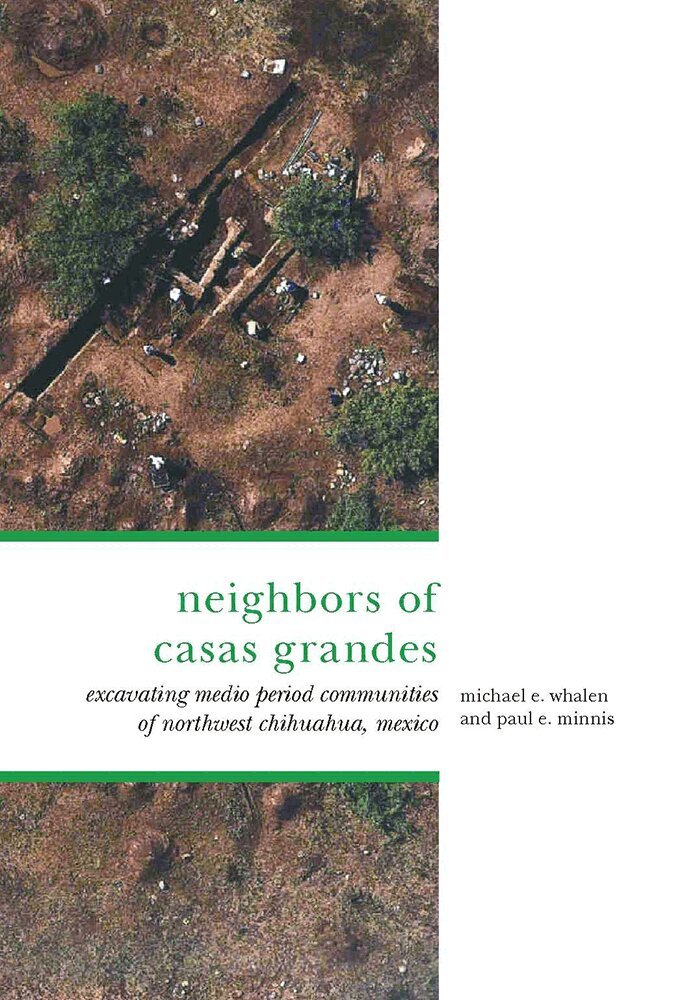
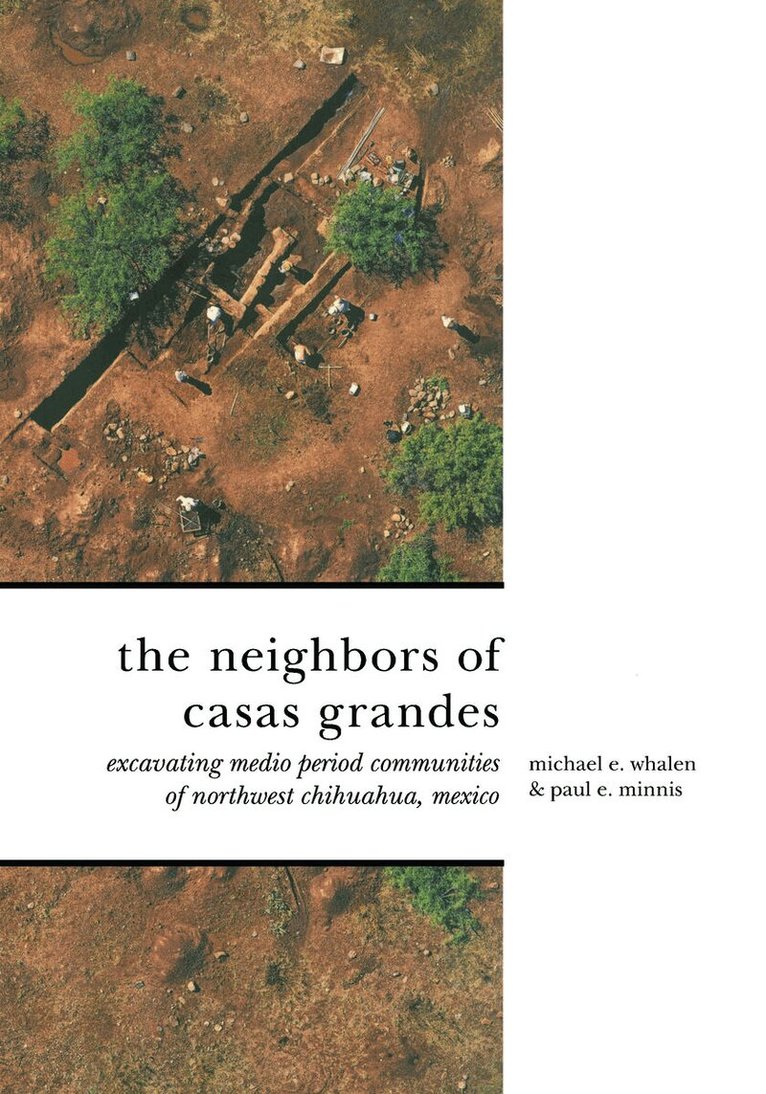
Neighbors of Casas Grandes
Medio Period Communities of Northwestern Chihuahua
Inbunden, Engelska, 2009
710 kr
Skickas inom 7-10 vardagar
Casas Grandes, or Paquime, in northwestern Mexico was of one of the few socially complex prehistoric civilizations in North America. Now, based on more than a decade of surveys, excavations, and field work, Michael Whalen and Paul Minnis provide a comprehensive new look at Casas Grandes and its surrounding communities in The Neighbors of Casas Grandes. This volume provides a fascinating and detailed look into the culture of the Casas Grandes area, involving not just the research of the architecture and artifacts left behind but also the ecology of the area. The authors? research reveals the complex relationship Casas Grandes had with its neighbors, varying from very direct contact with some communities to more indirect links with others. Important internal influences on the area's development come to light and population sizes throughout the period demonstrate the absorption of the surrounding populations into Casas Grandes as it reached the peak of its power in the region. New discoveries suggest the need to revise the previously held beliefs about the age of Casas Grandes and the dates of its rise to power. This ancient civilization may have developed as early as 1180 AD.Such breakthroughs provide fresh insight about not only Casas Grandes but the nearby settlements as well. The Neighbors of Casas Grandes is an important and vital piece of primary field research for all those interested in the Southwest's archaelogy and history. Its contribution to the knowledge of the Casas Grandes region is monumental in helping us better understand the society that once flourished there.
818 kr
Skickas inom 7-10 vardagar
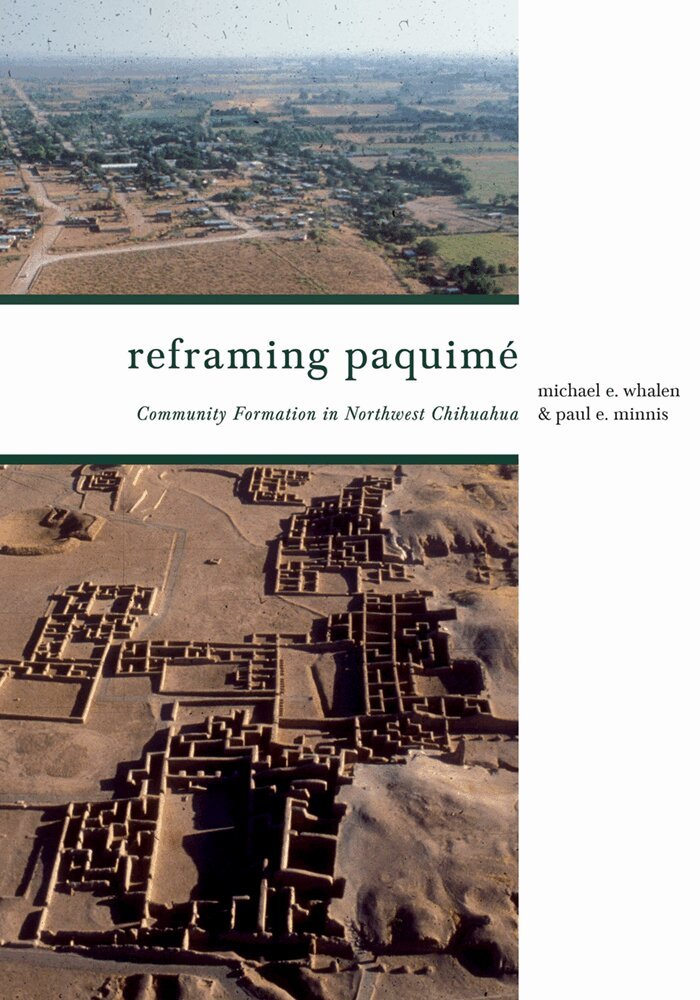
Reframing Paquimé : Community Formation in Northwest Chihuahua is a groundbreaking reinterpretation of the Casas Grandes region by scholars Michael E. Whalen and Paul E. Minnis. This final installment in their comprehensive study challenges the dominant view of Paquimé as a hierarchical society founded by outsiders, presenting instead a compelling case for a largely locally organized society with Mesoamerican and Puebloan characteristics. Drawing on twenty-five years of extensive survey and excavation data, the authors offer a fresh perspective that reframes our understanding of this remarkable archaeological site. Whalen and Minnis bring forth significant new data that illuminates the cultural and ecological history of Paquimé and its neighboring communities. The book features more than fifty new radiocarbon dates, hundreds of analyzed archaeobotanical and faunal samples, plus tens of thousands of other artifacts. The data reveal a network of settlements characterized by corporate and ritual-based authority, challenging traditional models of the center's rise, collapse, and subsequent regional abandonment and arguing that aspects of the Paquimé culture continued to exist up to the Spanish Colonial period. Reframing Paquimé is poised to become an essential reference for archaeologists interested in Northwest Mexico and the U.S. Southwest. By addressing the complex dynamics of community formation and dissolution, Whalen and Minnis provide invaluable insights that will ignite scholarly debate and inspire future research. This meticulously researched volume, authored by leading experts with decades of fieldwork experience, is a vital addition to any collection on the archaeology and ethnobotany of ancient North American societies.
480 kr
Skickas inom 7-10 vardagar
Casas Grandes, or Paquimé , in northwestern Mexico was of one of the few socially complex prehistoric civilizations in North America. Now, based on more than a decade of surveys, excavations, and field work, Michael Whalen and Paul Minnis provide a comprehensive new look at Casas Grandes and its surrounding communities in The Neighbors of Casas Grandes.This volume provides a fascinating and detailed look into the culture of the Casas Grandes area, involving not just the research of the architecture and artifacts left behind but also the ecology of the area. The authors' research reveals the complex relationship Casas Grandes had with its neighbors, varying from very direct contact with some communities to more indirect links with others. Important internal influences on the area's development come to light and population sizes throughout the period demonstrate the absorption of the surrounding populations into Casas Grandes as it reached the peak of its power in the region.New discoveries suggest the need to revise the previously held beliefs about the age of Casas Grandes and the dates of its rise to power. This ancient civilization may have developed as early as 8 AD. Such breakthroughs provide fresh insight about not only Casas Grandes but the nearby settlements as well. The Neighbors of Casas Grandes is an important and vital piece of primary field research for all those interested in the Southwest's archaelogy and history. Its contribution to the knowledge of the Casas Grandes region is monumental in helping us better understand the society that once flourished there.
372 kr
Skickas inom 7-10 vardagar
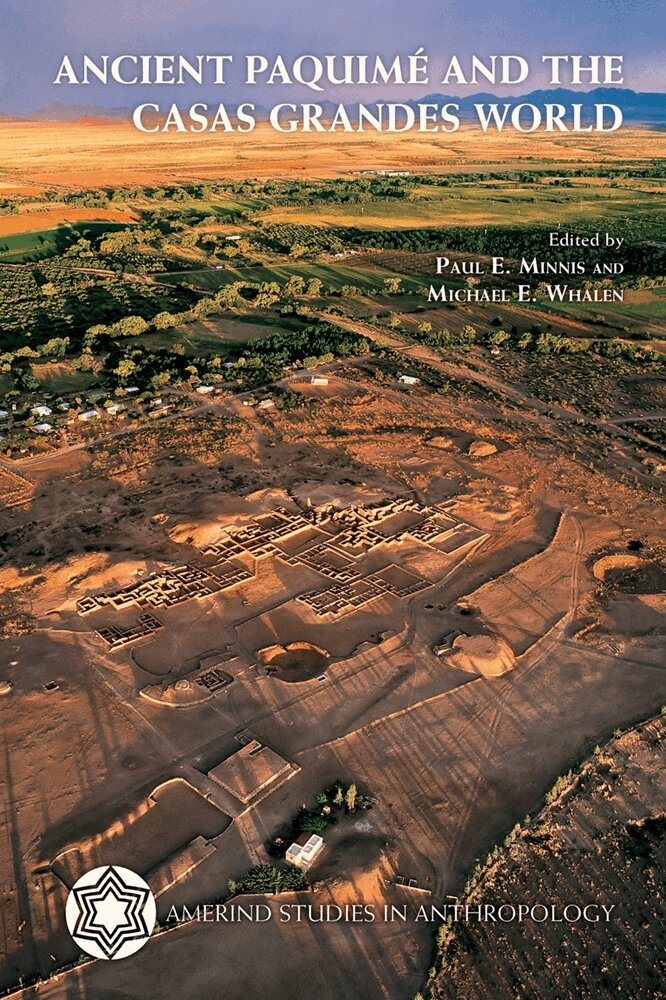
PaquimÉ, the great multistoried pre-Hispanic settlement also known as Casas Grandes, was the center of an ancient region with hundreds of related neighbors. It also participated in massive networks that stretched their fingers through northwestern Mexico and the U.S. Southwest. PaquimÉ is widely considered one of the most important and influential communities in ancient northern Mexico and is a UNESCO World Heritage Site. Ancient PaquimÉ and the Casas Grandes World, edited by Paul E. Minnis and Michael E. Whalen, summarizes the four decades of research since the Amerind Foundation and Charles Di Peso published the results of the Joint Casas Grandes Expeditions in 1974. The Joint Casas Grandes Expedition revealed the extraordinary nature of this site: monumental architecture, massive ball courts, ritual mounds, over a ton of shell artifacts, hundreds of skeletons of multicolored macaws and their pens, copper from west Mexico, and rich political and religious life with Mesoamerican-related images and rituals. PaquimÉ was not one sole community but was surrounded by hundreds of outlying villages in the region, indicating a zone that sustained thousands of inhabitants and influenced groups much farther afield. In celebration of the Amerind Foundation’s seventieth anniversary, sixteen scholars with direct and substantial experience in Casas Grandes archaeology present nine chapters covering its economy, chronology, history, religion, regional organization, and importance. The two final chapters examine PaquimÉ in broader geographic perspectives. This volume sheds new light on Casas Grandes/PaquimÉ, a great town well-adapted to its physical and economic environment that disappeared just before Spanish contact.
357 kr
Kommande
Paquimé (also known as Casas Grandes) and its antecedents are important and interesting parts of the prehispanic history in northwestern Mexico and the U.S. Southwest. Not only is there a long history of human occupation, but Paquimé is one of the better examples of centralized influence. Unfortunately, it is also an understudied region compared to the U.S. Southwest and other places in Mesoamerica. This volume is the first large-scale investigation of the prehispanic ethnobotany of this important ancient site and its neighbors. The authors examine ethnobotanical relationships during Medio Period, AD 1200–1450, when Paquimé was at its most influential. Based on two decades of archaeological research, this book examines uses of plants for food, farming strategies, wood use, and anthropogenic ecology. The authors show that the relationships between plants and people are complex, interdependent, and reciprocal. This volume documents ethnobotanical relationships and shows their importance to the development of the PaquimÉ polity. How ancient farmers made a living in an arid to semi-arid region and the effects their livelihood had on the local biota, their relations with plants, and their connection with other peoples is worthy of serious study. The story of the Casas Grandes tradition holds valuable lessons for humanity.