Michael Frishkopf - Böcker
Visar alla böcker från författaren Michael Frishkopf. Handla med fri frakt och snabb leverans.
4 produkter
4 produkter
373 kr
Skickas inom 7-10 vardagar
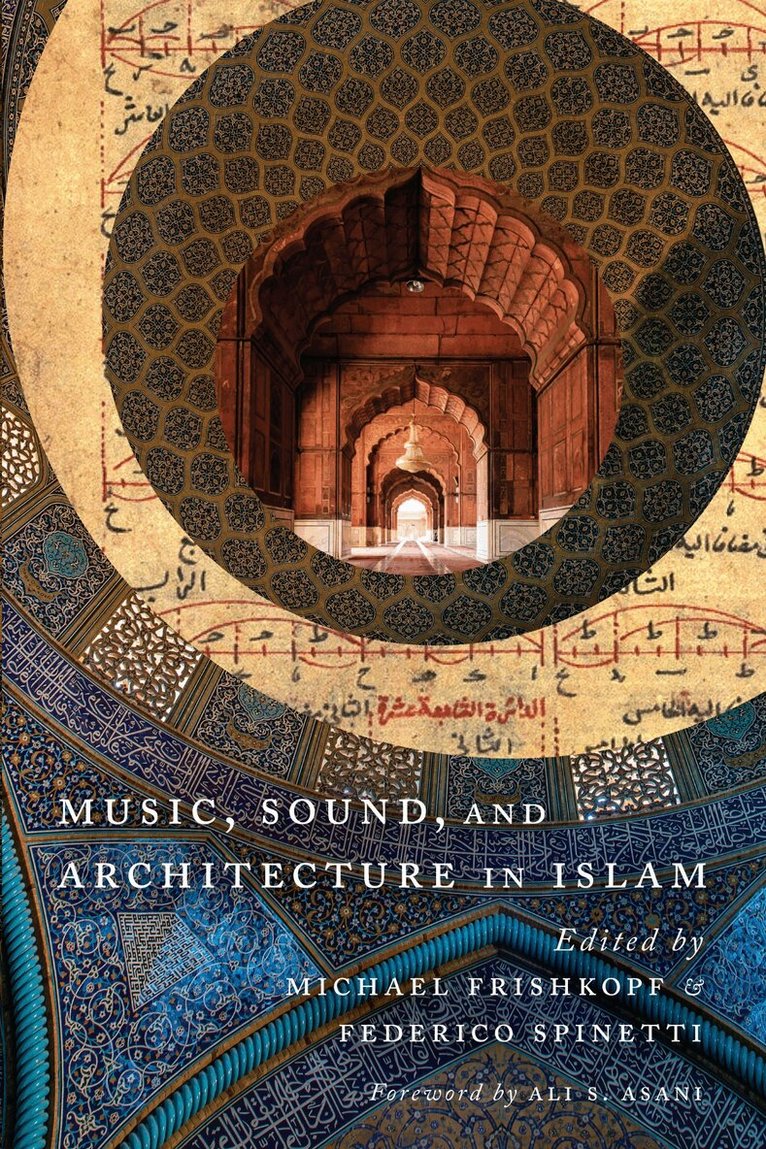
Tracing the connections between music making and built space in both historical and contemporary times, Music, Sound, and Architecture in Islam brings together domains of intellectual reflection that have rarely been in dialogue to promote a greater understanding of the centrality of sound production in constructed environments in Muslim religious and cultural expression.Representing the fields of ethnomusicology, anthropology, art history, architecture, history of architecture, religious studies, and Islamic studies, the volume’s contributors consider sonic performances ranging from poetry recitation to art, folk, popular, and ritual musics-as well as religious expressions that are not usually labeled as “music” from an Islamic perspective-in relation to monumental, vernacular, ephemeral, and landscape architectures; interior design; decoration and furniture; urban planning; and geography. Underscoring the intimate relationship between traditional Muslim sonic performances, such as the recitation of the Qur’an or devotional songs, and conventional Muslim architectural spaces, from mosques and Sufi shrines to historic aristocratic villas, gardens, and gymnasiums, the book reveals Islam as an ideal site for investigating the relationship between sound and architecture, which in turn proves to be an innovative and significant angle from which to explore Muslim cultures.
657 kr
Skickas inom 7-10 vardagar
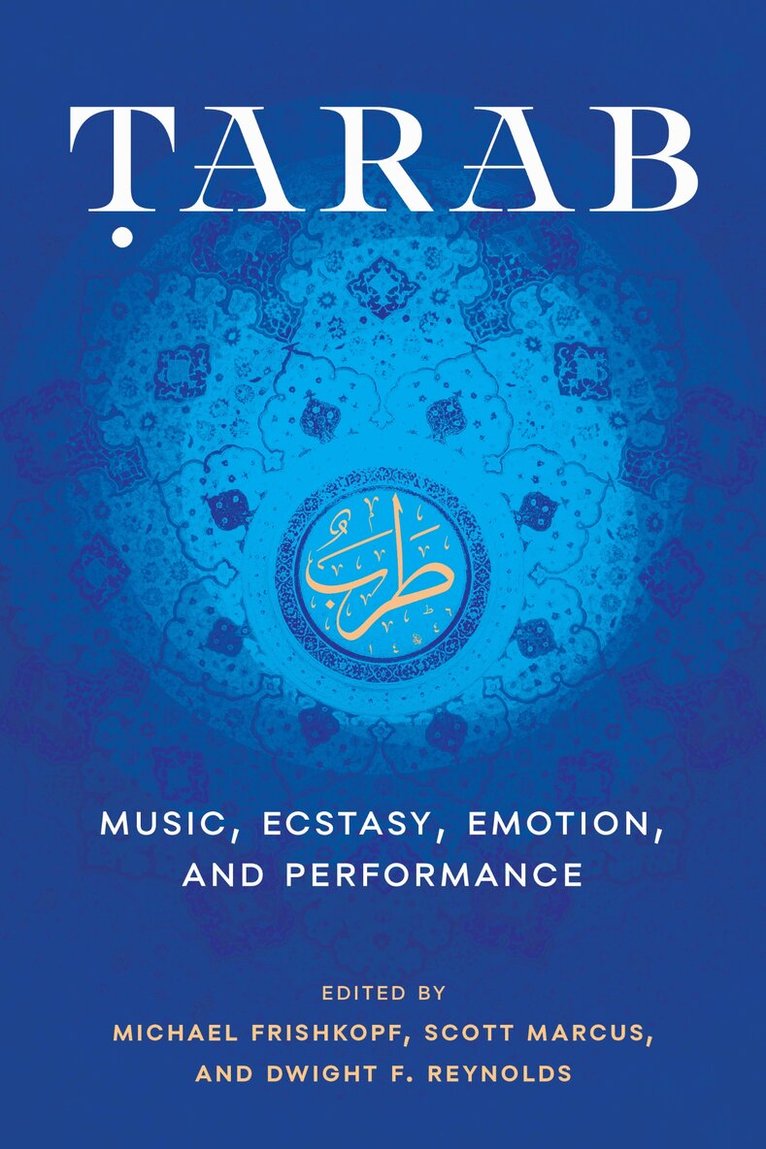
In Arab culture, at the ineffable point where music meets emotion, lies ṭarab. Often glossed as the ecstasy experienced and expressed when performing or listening to singing, instrumental works, and recitations of poetry, ṭarab is both a practice and an orienting concept central to musical aesthetics and spirituality characteristic of Middle Eastern cultures. Gathering fifteen essays by scholars of music, affect, literature, religion, and education, Ṭarab extends the study of ṭarab historically, geographically, and sociologically. Historical essays explore ṭarab’s role in the medieval Middle East and the Ottoman Empire. Turning to the modern era, authors examine ṭarab and related concepts in Egypt, Albania, and Iraq, and among Turkish Roma and Lebanese Maronite Christians. The contributors also address contemporary practitioners and the intersections of ṭarab and maqām, belly dancing, music streaming, and university music ensembles. Situating this unique cultural concept in a global context, these studies enrich the story of ṭarab and provide new insight into music’s powerful emotional appeal.
454 kr
Skickas inom 7-10 vardagar
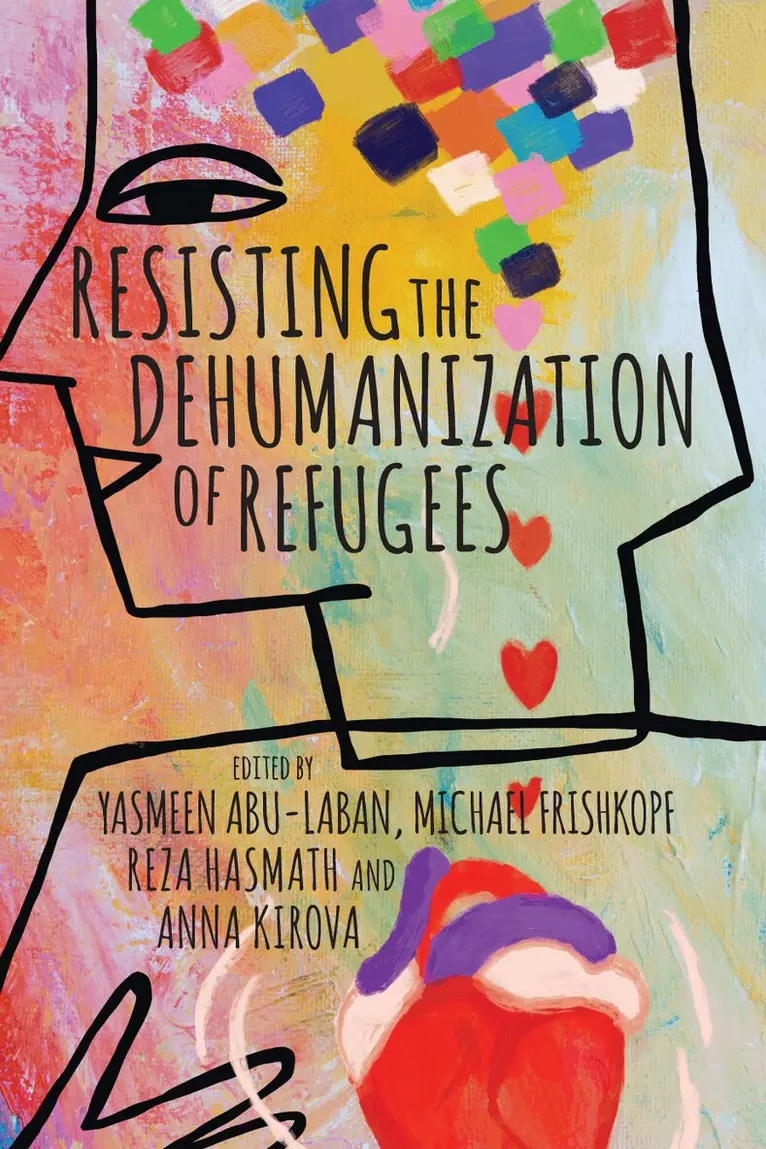
Refugees face distinct challenges and are often subject to dehumanization by politicians, media, and the public. In this context, Resisting the Dehumanization of Refugees provides urgent insights and policy-relevant perspectives to improve refugees' social well-being and integration. Taking a transdisciplinary approach, scholars from the social sciences, arts, and humanities, alongside practitioners and refugees, explore what it means to experience dehumanization. They consider how refugees' experiences of dehumanization inform both epistemological and practical approaches to humanizing (or re-humanizing) refugees before, during, and after resettlement. By addressing these important issues, contributors marshall rich and multidimensional responses that draw upon our shared humanity and reveal new possibilities for change.
290 kr
Tillfälligt slut
Since the turn of the twentieth century the dramatic rise of mass media has profoundly transformed music practices in the Arab world. Music has adapted to successive forms of media dissemination—from phonograph cylinders to MP3s—each subjected to the political and economic forces of its particular era and region. Carried by mass media, the broader culture of Arab music has been thoroughly transformed as well. Simultaneously, mass mediated music has become a powerful social force. While parallel processes have unfolded worldwide, their implications in the Arabic-speaking world have thus far received little scholarly attention.This provocative volume features sixteen new essays examining these issues, especially televised music and the controversial new genre of the music video. Perceptive voices—both emerging and established—represent a wide variety of academic disciplines. Incisive essays by Egyptian critics display the textures of public Arabic discourse to an English readership. Authors address the key issues of contemporary Arab society—gender and sexuality, Islam, class, economy, power, and nation—as refracted through the culture of mediated music. Interconnected by a web of recurrent concepts, this collection transcends music to become an important resource for the study of contemporary Arab society and culture.Contributors: Wael Abdel Fattah, Yasser Abdel-Latif, Moataz Abdel Aziz, Tamim Al-Barghouti, Mounir Al Wassimi, Walter Armbrust, Elisabeth Cestor, Hani Darwish, Walid El Khachab, Abdel-Wahab Elmessiri, James Grippo, Patricia Kubala, Katherine Meizel, Zein Nassar, Ibrahim Saleh, Laith Ulaby.