Michael Gartner – författare
Visar alla böcker från författaren Michael Gartner. Handla med fri frakt och snabb leverans.
8 produkter
8 produkter
Inbunden, Engelska, 2018
440 kr
Skickas inom 3-6 vardagar
E-bok
PDF, Engelska, 2003182 kr
Läs direkt efter köp
Essay from the year 2003 in the subject History of Europe - Middle Ages, Early Modern Age, grade: 54 %, University of Wales, Aberystwyth (Department of History), course: HIH 3124, language: English, abstract: In the eleventh century the Christian lands of Western Europe were in trouble. Afflicted by the repeated invasions from North and South and East, by the collapse ofinternal order, by brutal oppression of the weak, by the laxity and ignorance of theclergy, and by the unrestrained tyranny of feudal war lords, life in the West was inthe words of Thomas Hobbs - nasty, brutish, and short 1. The problems werecompounded, when nomadic soldiers recently converted to Islam occupiedJerusalem and the Holy Land, thus causing the pilgrimage to them far morehazardous. But all the prayers, the sermons the condemnations and the appeals hadamounted too little until in November 1095, Pope Urban II preached in Clermont. Forhis largely ignorant and unreflective audience, the Pope threw a harsh light ofcriticism on the fallings of Western society. But he pointed out, that the liberation ofJerusalem2 and the Holy Land from the infidels was a redemptive task worthy ofmen, who could call themselves milites Christi3, the liberation of the Eastern Church,alone was unpopular in the West 4. At a stroke, Pope Urban intended to divert thereckless and violent men of the West into the path of righteousness. At the end of thetenth century the Church attempted to set a formal limit of customary violence.5 Theycould now practise warfare in a holy course. [...]1 http://www.kaiku.com/cloisters.html (24.02.2003)2 H. E. Mayer, The Crusades, translation by J Gillingham, (Oxford: Oxford University Press, 1972),41-48 and Jonathan and Louise Riley-Smith, The Crusades: Idea and Reality 1095-1274, (London:Edward Arnold, 1981), 43-44. 3 K. B. Wolf, Crusade and narrative: Bohemond and the Gesta Francorum , Journal of MedievalHistory Vol. XVII, David Abulafia et al (eds.) (Amsterdam: 1991), 209. 4 Erdmann, The Origin of the Idea of Crusade, 330. 5 Under the terms of Pax Dei the Bishops tried to place certain classes of people and property beyondthe reach of warring factions. At the same time, the Truga Dei took a lead from an earlier decree byCarolus Magnus and limited the time available for fighting.
E-bok
PDF, Engelska, 2003182 kr
Läs direkt efter köp
Essay from the year 2003 in the subject History of Europe - Middle Ages, Early Modern Age, grade: 56 %, University of Wales, Aberystwyth (Department of History), course: HIH. 3126: Magna Carta, language: English, abstract: England is rightfully seen as the birthplace of parliamentarinism, which reaches backto the Magna Carta. Even the Anglo Saxon period knew an early form of parliament,the witenagemont 1. This was the council of the elders and it did not end with theinvasion by William the Conqueror instead a council2 of the crown vassals wasintroduced, but with roots in the witenagemont . William the Conqueror wascrowned King of England in 1066 and his reign marks the end of several invasions,which had begun since 450 AD. After the Roman withdrawal from the British Islesthe resulting power vacuum encouraged invaders from the continent. The Romano-British neither had the weapons nor the army to make use of the Roman militarystructures and fell back on their traditional hill forts but were ultimately unable to stopthe German advances. The Anglo-Saxons and Danes founded several kingdoms inEngland. They were predominantly peasants and forest dwellers and fortified theirvillages and towns with earthen banks and timber palisades and constructed massiveearthworks along the borders of their Kingdoms. To return to the Normans, the Norman castle was not just a new form ofmilitary architecture; it was the product of a complex military society that had beencreated in Europe during the 9th and 10th centuries AD. The feudal system was anacknowledgement of the difficulty of running and defending a large country without awell-developed administrative system, without efficient communication, and withouta standing army. In theory at least, all land belonged3 to the King and was held as afee or payment from him in return for various political, administrative and militaryservices. [...]1 danaelayne.com/anglosaxons.ppt (21.02.2003)2 This was the Magnum Concilium. 3 Kurt Kluxen, Geschichte Englands (Stuttgart: Kroener Verlag, 1991), 40.
E-bok
PDF, Engelska, 2003182 kr
Läs direkt efter köp
Essay from the year 2003 in the subject History of Europe - Middle Ages, Early Modern Age, grade: 61 %, University of Wales, Aberystwyth (Department of History), language: English, abstract: Before we can consider the reasons for the success of the First Crusade, we have to first asksome initial questions that should be kept in mind throughout my essay. To begin with, wehave to raise the question if the crusade was a success. To do so we have to establish whatqualifies as a success. To judge its success is to compare the ideals and aims of the crusadewith what happened and what was actually achieved. Here, though, we meet yet anotherproblem in that we ask which aims should we look at? Those of pope Urban II? Those of themilitary leadership of the crusade, or those of the ordinary participants? Finally, we maywish to define success. Let us start by asking what the aims of the First Crusade were. The most obvious place to look for aims is Pope Urban II's speech, made on 27November 1095 at the Council of Clermont. At this meeting Pope Urban II respondedpublicly for the first time to Alexius Comnenus' appeal for help against the Muslims, to stemthe flood of Turkish violence 1, that had almost reached the Bosporus. There are four2 mainaccounts of the speech; those of Fulcher of Chartres, Robert the Monk, Guibert of Nogent,and Baldric of Bourgueil. His first appeal, which all four sources mention, is for thecessation of hostilities between fellow Christians and the unification of Christendom. Fulcher of Chartres quotes Urban as saying those who once waged war against their brothersand blood relatives should fight lawfully against barbarians 3, Robert the Monk s accountUrban comments on Christians fighting each other and advises, stop these hatreds amongyourselves 4. In this account he even charges the Turks with violating the women ofAnatolia 5. This account was written 25 years after Urban's call in France and does not claimto give more than a general idea of the pope's arguments. [...]1 Penny J. Cole, The Preaching of the Crusades to the Holy Land, 1095 1270, (Cambridge, Mass : MedievalAcademy of America, 1991), 11. 2 James A. Brundage, The crusades. Motives and Achievements. (Boston: D. C. Heath and Company, 1964), 7. 3 Jonathan and Louise Riley-Smith, The Crusades: Idea and Reality 1095-1274, (London: Edward Arnold,1981), 42. 4 Ibid., 44. 5 P.W. Edbury (ed.), Crusade and settlement. (Cardiff: University College Cardiff Press, 1985), 61.
E-bok
PDF, Engelska, 2003182 kr
Läs direkt efter köp
Essay from the year 2003 in the subject World History - Early and Ancient History, grade: 66 %, University of Wales, Aberystwyth (Department of Classics), language: English, abstract: Early Saite Pharaohs possibly employed Greek mercenaries, but there is no validatedconfirmation1 of this. Moreover, in the 26th dynasty, Egypt entered a period of unquestionableartistic brilliance and prosperity and became a powerful state. The primary resource for thisperiod is Herodotus, Book Two. There is no evidence that a link between Egypt and Greeceexisted, but it is a possibility which might go back to the Mycenaean period 2or even the third millennium BC 3. If there was a link it broke down and became non-existent or evenbecame hostile4 in the Dark Ages 5. Apart from those early contacts, the first time we hear ofGreeks, especially as mercenaries in Egypt, is under Psammetichos I, when Greeks hadaccess to the country 6. Traders followed the mercenaries and commerce between the Greekand Egyptian worlds which prospered once again. Before the Peloponnesian War, the Greekcities had no significant skill in extended7 campaigns or distant expeditions. Their fightingconsisted of mainly small struggles on a medium to small scale. In any battle citizens mightbe called in to fight according to their standing in their city as cavalry, infantry or skirmishers. So, nearly everybody was familiar with warfare but only some of those who chose to developinto experts became mercenaries. Generally, these mercenary activities were accepted assources of profits and were practised for that reason 8. These soldiers barely existed asidefrom in foreign armies. In the Greek tradition, the Carians were seen as the first9 mercenaries, who originated wearing crests on their helmets and devices on their shields, and who firstmade grips for their shields 10. [...]1 Sullivan, p. 177. 2 Chamoux, p. 87, Sullivan, p. 185 and MacGillivray, p. 81 ff. 3 Cartledge, p. 48. 4 Sullivan, p. 185. 5 Chamoux, p. 87. 6 Chamoux, p. 87. 7 Sage, p. 19 f. 8 Sage, p. xi. 9 Griffith, p. 236. 10 Hdt., I.171.
E-bok
PDF, Engelska, 2003182 kr
Läs direkt efter köp
Essay from the year 2003 in the subject History of Germany - World War I, Weimar Republic, grade: 62%, University of Wales, Aberystwyth (Department of History), language: English, abstract: In this essay I shall examine the role of the Freikorps in the Weimar Republic and show how theychanged from loyal government troops in 1918 1920, to reactionary forces by 1923. To somehistorians, the Freikorps have no place in political history, but rather in military history. They seemto ignore the fact that civil wars were sometimes more important than conventional wars. Thepolitically motivated soldiers of the 20th century conflicts were decisive from the Red Guards of theOctober Revolution in Russia to the Vietminh of the 1950s and 1960s, and up to the Mujjahedin inAfghanistan in the 1980s. The Freikorps fought and defeated the large threat from Communism,minimised territorial losses on the borders and prevented national secession. The movement startedwith honest aims, but once routine crept in and disappointment rose very high, the soldiers becamedisillusioned by the government which they felt had betrayed them. When we look at the Freikorps, we have to distinguish between the time up to their officialdisbanding and the time afterwards, when they were just underground fighters with the ultimate aimof crushing the Republic. The Freikorps can be split into three groups. The first group had generalsor wartime officers as their superiors; these were conservatives who had no enthusiasm for thedemocratic republic, but in most cases they had moderate political views and disbanded their unitswhen the main dangers to the state had been warded of. Usually these units ended up in theReichswehr. The second group, which were the majority of the Freikorps, were local defencegroups, or units, which were formed and disbanded within weeks or months. But in these units,there were many officers whose political views changed over the years. This will be the thirdgroup. It is here that the most radical leaders can be found. They and their soldiers could not acceptthat Germany had been defeated on the front line they detested the left wing parties for the stabin back 1 and hated the government who signed the Armistice. [...]1 Field Marshall v. Hindenburg, when asked why Germany lost the war, brought up this legend.
E-bok
PDF, Engelska, 2004221 kr
Läs direkt efter köp
Seminar paper from the year 2003 in the subject English Language and Literature Studies - Literature, grade: 2 (B), University of Munster (English Seminar), course: Hauptseminar: Early printing in England: Wynkyn de Worde, language: English, abstract: This paper is about the printing of incunabula in the old medieval cities of Oxford and St. Albans. The former was a centre of learning, the latter a centre of religion. Caxton, who lived and worked in Westminster, brought the craft of book printing from the continent and set up the first press in England. By far the most important part of the printing was done in London, although it is true that at certain times France, the Low Countries and Switzerland made important contributions to the English book market. Moreover a variety of centres in England such as Oxford, St. Albans, Canterbury, York and Cambridge were responsible for some printing. Nevertheless their output was small and many presses went bankrupt. The first presses were founded by outstanding craftsmen trying to serve the needs of the market and assuming all the risks of production and sale. However, printing in England can only be considered against the background of trade with the Continent. The name of the first English printer varies from Theodoric to Dietrich1 Rood but the same person is meant. Thomas Hunt and the schoolmaster of St. Alban's seem to be the "e;exceptions to the rule that printers in the British Isles were French, Netherlandish or German by birth, until Andrew Myllar began to print in Edinburgh and John Rastell in London"e;2. Oxford University Press is today one of the finest publishing houses in the world. It dates back to 1585, when "e;printing (there) became firmly established"e;3. However, there existed two presses long before that date and there was a press in St. Albans for a short time, too. [...]
E-bok
Tyska, 2017136 kr
Läs direkt efter köp
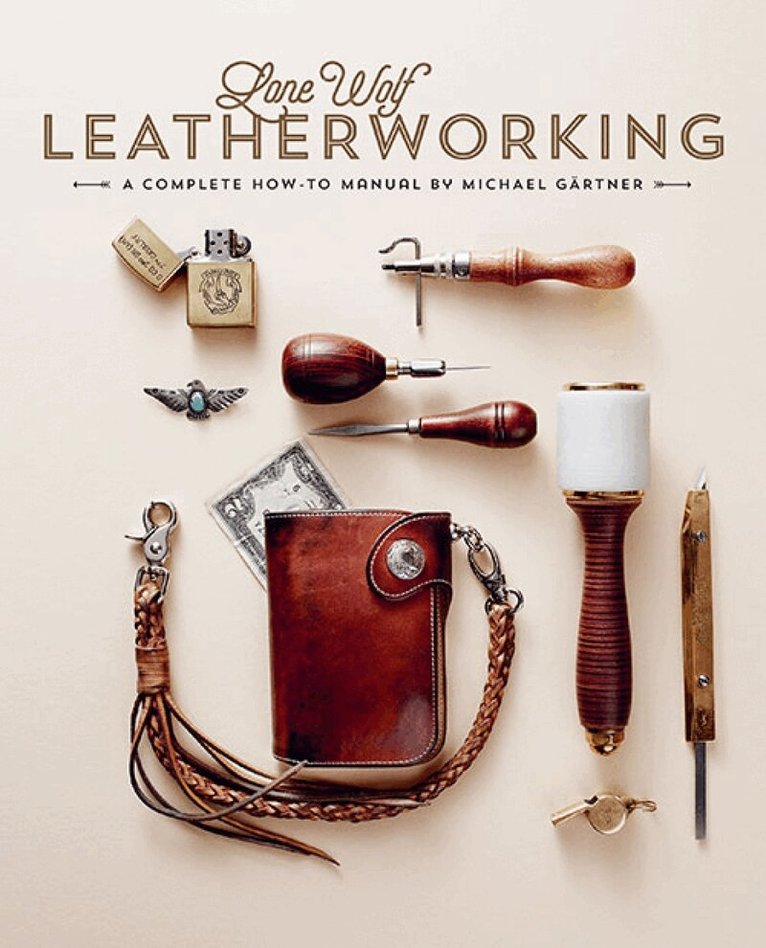
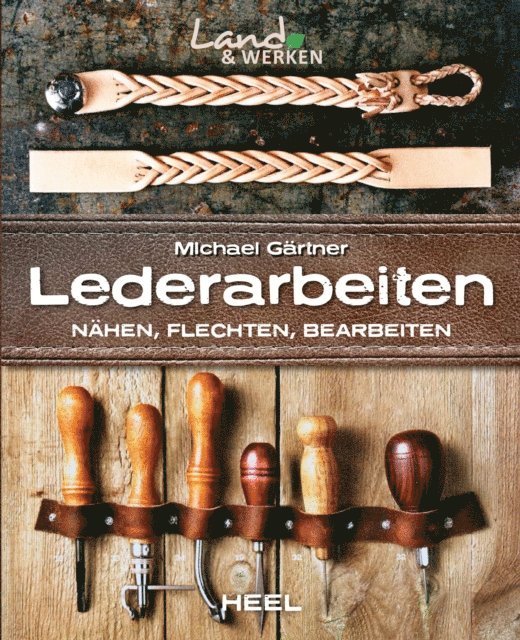
Lederarbeiten ist eine praktische Einführung in das Lederhandwerk. Mit wenig Aufwand und einfachen Mitteln können bereits tolle Armbänder, Geldbeutel, Handytaschen und andere Lederobjekte am heimischen Küchentisch hergestellt werden.Das Buch enthält 20 Projekte - vom Schlüsselanhänger bis zur großen Umhängetasche - und mehrere verschiedene Lederflechtanleitungen und Knoten. Sie werden geeignetes Werkzeug, die grundlegenden Elemente des Klebens und Polierens, die Sattlernaht und vieles mehr kennenlernen.Vor allem geht es um die Freude, etwas aus natürlichen Materialien zu erschaffen und durch eigene haltbare Produkte ein Zeichen gegen die Wegwerfgesellschaft setzen zu können. Nicht zuletzt geht es auch um den Respekt für eine alte Handwerkstradition, die in jedem, der sich mit Lederarbeiten beschäftigt, weiterlebt.