Michael Hames-Garcia - Böcker
Visar alla böcker från författaren Michael Hames-Garcia. Handla med fri frakt och snabb leverans.
3 produkter
3 produkter
265 kr
Skickas inom 10-15 vardagar
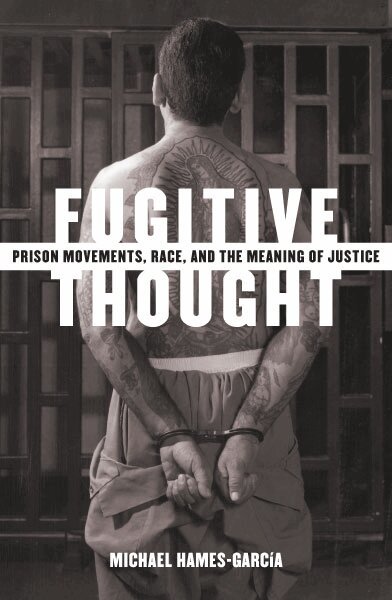
Looks to the philosophy and experience of prisoners to reinvigorate our concepts of justice, solidarity, and freedomIn Fugitive Thought, Michael Hames-GarcÍa argues that writings by prisoners are instances of practical social theory that seek to transform the world. Unlike other authors who have studied prisons or legal theory, Hames-GarcÍa views prisoners as political and social thinkers whose ideas are as valuable as those of lawyers and philosophers.As key moral terms like “justice,” “solidarity,” and “freedom” have come under suspicion in the post–Civil Rights era, political discussions on the Left have reached an impasse. Fugitive Thought reexamines and reinvigorates these concepts through a fresh approach to philosophies of justice and freedom, combining the study of legal theory and of prison literature to show how the critiques and moral visions of dissidents and participants in prison movements can contribute to the shaping and realization of workable ethical conceptions. Fugitive Thought focuses on writings by black and Latina/o lawyers and prisoners to flesh out the philosophical underpinnings of ethical claims within legal theory and prison activism.
296 kr
Skickas inom 10-15 vardagar
In seemingly exhaustive arguments about identity as a category of analysis, we have made a critical error-one that Michael Hames-GarcÍa sets out to correct in this revisionary look at the making and meaning of social identities. We have asked how separate identities-of race, class, ethnicity, gender, and sexuality-come to intersect. Instead, Hames-GarcÍa proposes, we should begin by understanding such social identities as mutually constituting one another.Grounded in both theoretical and political practices-in the lived realities of people’s experience-Identity Complex reinvigorates identity as a key concept and as a tool for the pursuit of social justice. Hames-GarcÍa draws on a wide range of examples to show that social identities are central to how exploitation works, such as debates about the desirability of sexual minority identities in postcolonial contexts, questions about the reality of race, and the nature of the U.S. prison crisis. Unless we understand precisely how identities take shape in relation to each other and within contexts of oppression, he contends, we will never be able to eradicate discrimination and social inequality. By analyzing the social interdependence of identities, Hames-GarcÍa seeks to enable the creation of deep connections of solidarity across differences.
428 kr
Skickas inom 7-10 vardagar
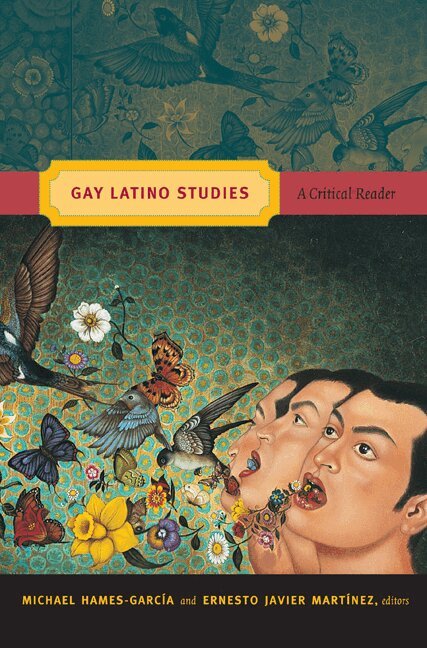
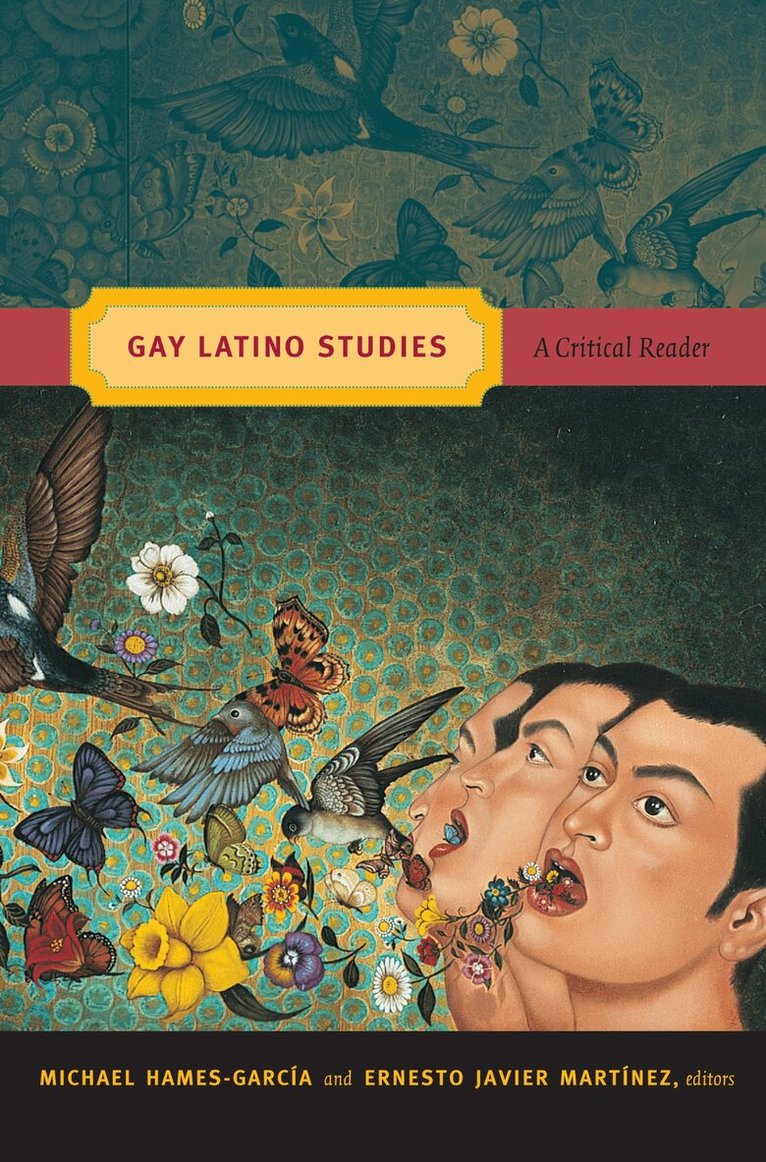
The authors of the essays in this unique collection explore the lives and cultural contributions of gay Latino men in the United States, while also analyzing the political and theoretical stakes of gay Latino studies. In new essays and influential previously published pieces, Latino scholars based in American studies, ethnic studies, history, performance studies, and sociology consider gay Latino scholarly and cultural work in relation to mainstream gay, lesbian, and queer academic discourses and the broader field of Chicano and Latino studies. They also critique cultural explanations of gay Latino sexual identity and behavior, examine artistic representations of queer Latinidad, and celebrate the place of dance in gay Latino culture. Designed to stimulate dialogue, the collection pairs each essay with a critical response by a prominent Latino/a or Chicana/o scholar. Terms such as gay, identity, queer, and visibility are contested throughout the volume; the significance of these debates is often brought to the fore in the commentaries. The essays in Gay Latino Studies complement and overlap with the groundbreaking work of lesbians of color and critical race theorists, as well as queer theorists and gay and lesbian studies scholars. Taken together, they offer much-needed insight into the lives and perspectives of gay, bisexual, and queer Latinos, and they renew attention to the politics of identity and coalition.Contributors. TomÁs Almaguer, Luz Calvo, Lionel CantÚ,, Daniel Contreras, Catriona Rueda Esquibel, RamÓn GarcÍa, RamÓn A. GutiÉrrez, Michael Hames-GarcÍa, Lawrence La Fountain-Stokes, MarÍa Lugones, Ernesto J. MartÍnez, Paula M. L. Moya, JosÉ Esteban MuÑoz, Frances NegrÓn-Muntaner, Ricardo L. Ortiz, Daniel Enrique PÉrez, RamÓn H. Rivera-Servera, Richard T. RodrÍguez, David RomÁn, Horacio N. Roque RamÍrez, Antonio Viego