Michael Handelsman - Böcker
Visar alla böcker från författaren Michael Handelsman. Handla med fri frakt och snabb leverans.
5 produkter
5 produkter
742 kr
Skickas inom 10-15 vardagar
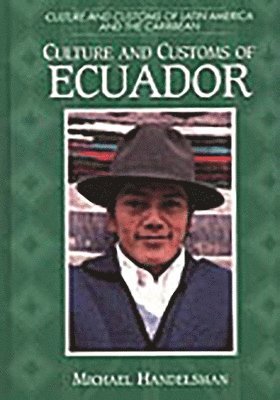
Culture and Customs of Ecuador celebrates the extraordinary cultural, geographic, and ethnic diversity that has made this small country one of Latin America's most unique. Through this overview of its history, religious institutions, literature, social customs, cinema, media, and visual and performing arts, Ecuador emerges as a vibrant microcosm of Latin America. Students and other readers will learn how Ecuadorian society blends pre-Colombian, colonial, modern, and postmodern cultural forces. The underlying themes of Ecuador's continuous struggles with multiculturalism and national identity are presented with unprecedented clarity.Ecuador is a land of drama and paradox with abundant natural resources and a boom and bust economy that has prolonged dependence and instability. Despite many of the economic and social obstacles typical of developing nations, Ecuador has developed a dynamic culture. This multicultural society comes alive through engaging chapters on everything from history to performing arts. A chronology and glossary supplement the text.
274 kr
Skickas inom 10-15 vardagar
Culture and Customs of Ecuador celebrates the extraordinary cultural, geographic, and ethnic diversity that has made this small country one of Latin America's most unique. Through this overview of its history, religious institutions, literature, social customs, cinema, media, and visual and performing arts, Ecuador emerges as a vibrant microcosm of Latin America. Students and other readers will learn how Ecuadorian society blends pre-Colombian, colonial, modern, and postmodern cultural forces. The underlying themes of Ecuador's continuous struggles with multiculturalism and national identity are presented with unprecedented clarity.Ecuador is a land of drama and paradox with abundant natural resources and a boom and bust economy that has prolonged dependence and instability. Despite many of the economic and social obstacles typical of developing nations, Ecuador has developed a dynamic culture. This multicultural society comes alive through engaging chapters on everything from history to performing arts. A chronology and glossary supplement the text.
578 kr
Skickas inom 5-8 vardagar
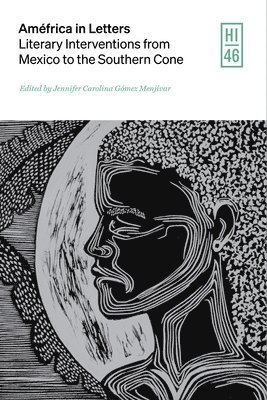
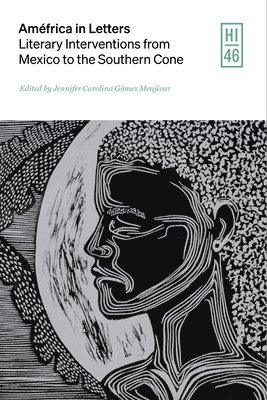
Traditional histories of Black letters in Latin America have delimited their geographic scope to the Caribbean while also omitting intertwined Afro-Indigenous discourses. Inspired by the legacy of Amefrican thinker LÉlia Gonzalez, AmÉfrica in Letters highlights the Black poets, songwriters, novelists, essayists, and bloggers who have created a counter-multiculturalist literary history on the Latin American mainland. To capture a sense of the variety of their contributions, this book spans Mexico, Central America, the Andes, and the Southern Cone—highlighting the transcontinental nature of the legacy of Black writing and its impact beyond national boundaries. The writers examined in the volume engage with regional intellectual frameworks while putting into circulation a demand for a recalibration of the Hispanophone and Lusophone contexts in which they and other Afrodescendants reside.
1 620 kr
Skickas inom 5-8 vardagar
Traditional histories of Black letters in Latin America have delimited their geographic scope to the Caribbean while also omitting intertwined Afro-Indigenous discourses. Inspired by the legacy of Amefrican thinker LÉlia Gonzalez, AmÉfrica in Letters highlights the Black poets, songwriters, novelists, essayists, and bloggers who have created a counter-multiculturalist literary history on the Latin American mainland. To capture a sense of the variety of their contributions, this book spans Mexico, Central America, the Andes, and the Southern Cone—highlighting the transcontinental nature of the legacy of Black writing and its impact beyond national boundaries. The writers examined in the volume engage with regional intellectual frameworks while putting into circulation a demand for a recalibration of the Hispanophone and Lusophone contexts in which they and other Afrodescendants reside.
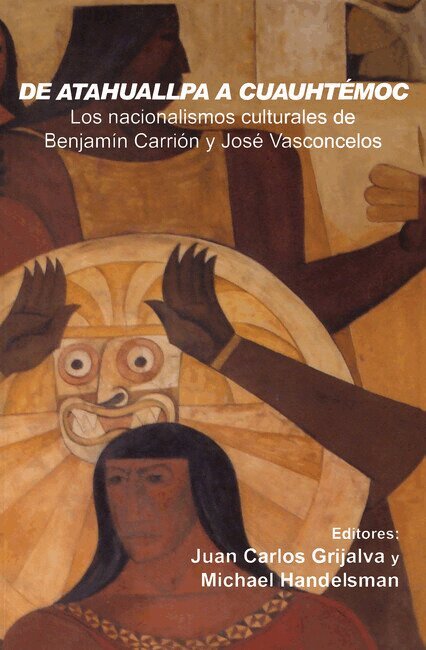
De Atahuallpa a Cuauhtémoc
Los nacionalismo culturales de Benjamín Carrión y José Vasconcelos
Häftad, Engelska, 2014
592 kr
Skickas inom 7-10 vardagar
El mexicano José Vasconcelos Calderón (1882-1959) y el ecuatoriano Manuel Benjamín Carrión Mora paradigmáticas del proyecto nacionalista que propuso, en la primera mitad del siglo XIX, democratizar la cultura nacional en sus respectivos países. Vasconcelos, conocido en la década del veinte como “maestro de la juventud”, proporcionará a Carrión un modelo cultural para pensar lo mestizo ecuatoriano. La gestión político-institucional de Vasconcelos como rector de la Universidad Nacional Autónoma de México y secretario de Educación Pública por un lado, ya la de Carrión como Presidente fundador de la Casa de la Cultura Ecuatoriana y Premio Benito Juárez en reconocimiento de su labor en nombre de la democracia latinoamericana por el otro, ejemplificarán, además, una manera de entender el nuevo rol del intelectual, comprometido con la educación popular, la producción literaria y artística nacional, la gestación de publicaciones y revistas culturales, y, en general, la promoción de la hispanidad, el antiimperialismo y la unidad latinoamericana. En este libro se exploran distintas facetas del proyecto nacionalista cultural compartido por estos dos importantes intelectuales latinoamericanos.~The Mexican José Vasconcelos Calderón (1882-1959) and the Ecuadorian Manuel Benjamín Carrión Mora are paradigmatic of the nationalist project that proposed, in the first half of the 19th century, to democratise national culture in their respective countries. Vasconcelos, known in the 1920s as a ‘teacher of youth’, provided Carrión with a cultural model for thinking about mixed-race Ecuadorians. On the one hand, the political-institutional management of Vasconcelos as rector of the National Autonomous University of Mexico and Secretary of Public Education and on the other, that of Carrión as founding President of the Casa de la Cultura Ecuatoriana (the House of Ecuadorian Culture) and winner of the Benito Juárez Award in recognition of his work on behalf of of Latin American democracy, will also exemplify a way of understanding the new role of intellectuals, committed to popular education, national literary and artistic production, the creation of cultural publications and magazines, and, in general, the promotion of hispanic culture, anti-imperialism and Latin American unity. This book explores different facets of the cultural nationalist project shared by these two important Latin American intellectuals.