Michael Harrigan - Böcker
Visar alla böcker från författaren Michael Harrigan. Handla med fri frakt och snabb leverans.
6 produkter
6 produkter
761 kr
Kommande
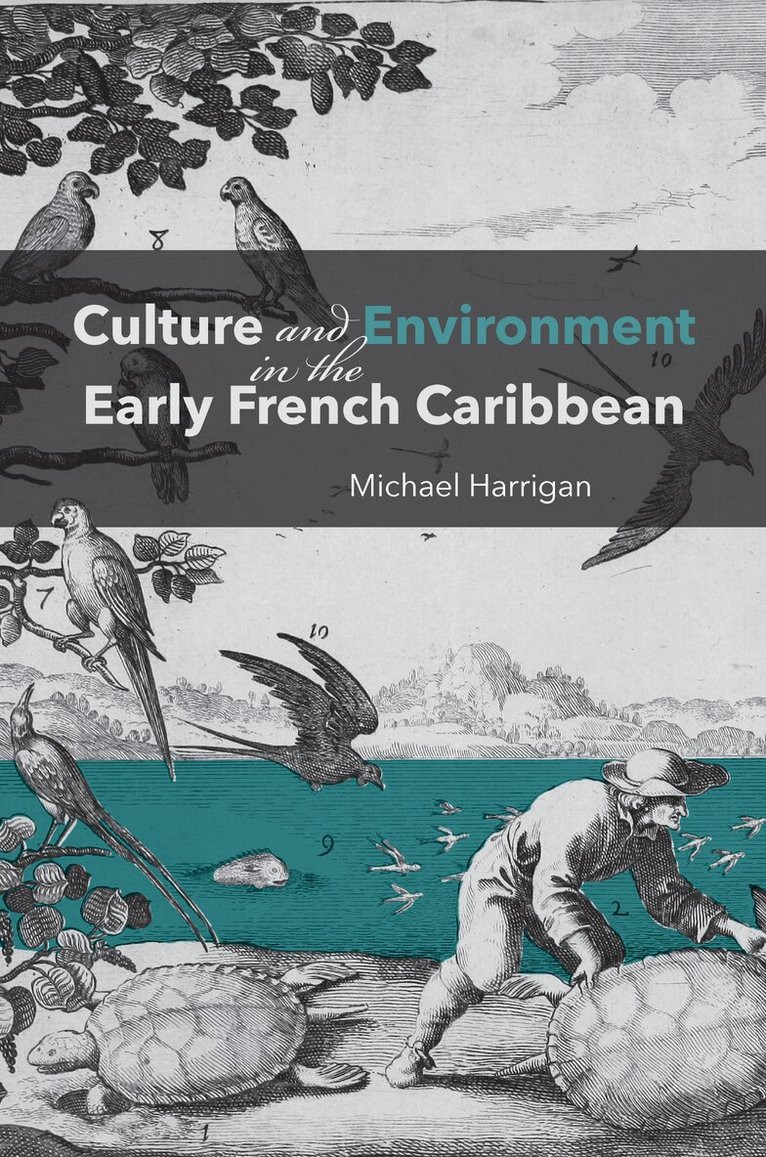
Ideas, practices, and human priorities: culture in the unstable environment of the early Caribbean colonies.Early French colonization in the Caribbean from the 1620s to circa 1730 brought great demographic, economic, and agricultural changes, with settlers introducing crops, animals, and new forms of labor into ecosystems that imposed their own limitations. In these settlements, ideas and practices concerning the environment, ranging from the preparation of food and drink to medical treatments, drew on European and non-European knowledge. Yet social, gender, and linguistic barriers were among the restrictions to what colonial populations knew about Caribbean ecosystems. Descriptions and illustrations of animals and plants could fascinate Europeans, despite giving only partial insight into the Caribbean environment. Colonial practices such as feasting distinguished culture from wilderness, and people from one another; in an environment in which cultivation signified culture, the plantations were ultimately an unstable model in ecological and social terms. Drawing on a wide range of source material, including manuscript treatises and correspondence, natural histories, engravings, and missionary texts, Michael Harrigan explores how people interacted within their environment during early French colonization in the Caribbean. Examining the ways in which colonial culture and the environment were intertwined, this book explores how relationships between colonial populations were reflected in their environment and in the landscape itself. It shows that distinctly human preoccupations determined cultural forms, which were in turn shaped by the contingencies of early settlement. Knowledge of Caribbean ecosystems, Harrigan contends, could constitute a powerful body of techniques while being fragmented and driven by approaches to the environment focused on human priorities.
Del 7 - Seventeenth- and Eighteenth-Century Studies
Frontiers of Servitude
Slavery in Narratives of the Early French Atlantic
Inbunden, Engelska, 2018
1 202 kr
Skickas inom 5-8 vardagar
Frontiers of servitude explores the fundamental ideas behind early French thinking about Atlantic slavery in little-examined printed and archival sources, focusing on what 'made' a slave, what was unique about Caribbean labour, and what strategic approaches meant in interacting with slaves. From c. 1620 –1750, authoritative discourses were confronted with new social realities, and servitude was accompanied by continuing moral uncertainties. Slavery gave the ownership of labour and even time, but slaves were a troubling presence. Colonists were wary of what slaves knew, and were aware of how imperfect the strategies used to control them were. Commentators were conscious of the fragility of colonial society, with its social and ecological frontiers, its renegade slaves, and its population born to free fathers and slave mothers. This book will interest specialists and more general readers interested in the history and literature of the Atlantic and Caribbean.
328 kr
Skickas inom 5-8 vardagar
Ultraviolet Knits
Twelve knitting patterns featuring UV-reactive hand-dyed wool yarn
Häftad, Engelska, 2020
268 kr
Skickas inom 5-8 vardagar
180 kr
Skickas inom 5-8 vardagar
Del 321 - Faux Titre
Veiled Encounters
Representing the Orient in 17th-Century French Travel Literature
Häftad, Engelska, 2008
1 699 kr
Skickas inom 5-8 vardagar
Travel narratives were the principal source of knowledge about the lands of the Near East and the Indian Ocean Basin in 17th-century France. Claiming the authority of first-hand observation, they paradoxically rely for their legitimization on the tropes of an established literary tradition. The status of these texts remained ambiguous, not least because of their anecdotal depictions of great riches, brutality or sexual promise. Drawing on the insights of post-colonial scholarship, this study tackles a question given scant attention in previous work and suggests that beyond the hazy representation of the Orient, an opposition emerges between the threatening Near East and the indolent East Indies. Distinguishing recognizable representations from those generated by new encounters, this book questions the feasibility of cultural representation through travel, exploring a large corpus of original sources written by French ecclesiastics, gentlemen-travellers, ambassadors and adventurers. Linguistic, religious, cultural or geographical barriers meant most travellers remained distanced from the peoples about whom they would simultaneously become authoritative. The encounter was further transformed in narratives that were intended to entertain and to satisfy the criterion of curiosité. The ‘Oriental’ that emerges is a supremely variable entity, alternately naked or veiled, barbaric or civilized, menacing or attractive.