Michael Heitz - Böcker
Visar alla böcker från författaren Michael Heitz. Handla med fri frakt och snabb leverans.
2 produkter
2 produkter
717 kr
Tillfälligt slut
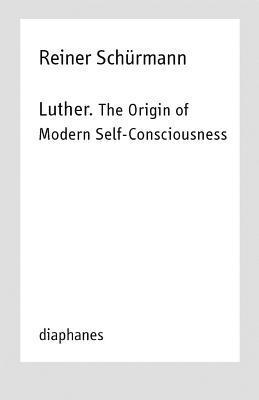
If we are to understand the specifically modern function of self-consciousness, we must first look to the origins of the concept. Among the key thinkers who elaborated on self-consciousness was the German monk and theologian Martin Luther. Reiner Schuermann's writings and lectures on Luther therefore offer an innovative reading of the systematic role of self-consciousness in both premodern and modern cultures. The twelfth volume in a planned twenty-nine-part series, Reiner Schuermann: Luther. The Origin of Modern Self-Consciousness sees Schuermann tracing Luther's conception of the rise of self-consciousness as the subjective reference point. Schuermann then explores this conception in conversation with both the Cartesian cogito and Kantian apperception.
347 kr
Skickas inom 7-10 vardagar
Nietzsche praised Kant for having "annihilated Socratism," for exhibiting all ideals as essentially unattainable, and for having exposed himself to the despair of truth--all essential traits Nietzsche claimed for his own thinking. At the same time, the existentialist philosopher remained highly critical of Kant. This volume of Reiner Schurmann's lectures unpacks Nietzsche's ambivalence towards Kant, in particular positioning Nietzsche's claim to have brought an end to German idealism against the backdrop of the Kantian transcendental-critical tradition. Rather than simply compare the two philosophers, Schurmann's lectures help us to understand the consequences Nietzsche derived from Kantian concepts, as well as the wider horizon within which Nietzsche's ideas arose and can best be shown to apply. According to Schurmann's trenchant reading: if Nietzsche was indeed "fatal" to Western philosophy, as he claimed, he was so in large part because of the Kantian transcendental thinking from which he inherited the very elements and tools of his criticism.