Michael Hout – författare
Visar alla böcker från författaren Michael Hout. Handla med fri frakt och snabb leverans.
7 produkter
Truth about Conservative Christians
What They Think and What They Believe
Av Andrew M. Greeley, Michael Hout
Inbunden, 2006
230 kr
Lägg i varukorg
Ever since the reelection of President Bush, conservative Christians have been stereotyped in the popular media: Bible-thumping militants and anti-intellectual zealots determined to impose their convictions on such matters as evolution, school prayer, pornography, abortion, and homosexuality on the …
Incentives and Test-Based Accountability in Education
Av Committee on Incentives and Test-Based Accountability in Public Education, Board on Testing and Assessment m. fl.
E-bok, 2011
413 kr
Lägg i varukorg
In recent years there have been increasing efforts to use accountability systems based on large-scale tests of students as a mechanism for improving student achievement. The federal No Child Left Behind Act (NCLB) is a prominent example of such an effort, but it is only the continuation of a steady …
Incentives and Test-Based Accountability in Education
Av Committee on Incentives and Test-Based Accountability in Public Education, Board on Testing and Assessment m. fl.
E-bok, 2011
425 kr
Lägg i varukorg
In recent years there have been increasing efforts to use accountability systems based on large-scale tests of students as a mechanism for improving student achievement. The federal No Child Left Behind Act (NCLB) is a prominent example of such an effort, but it is only the continuation of a steady …
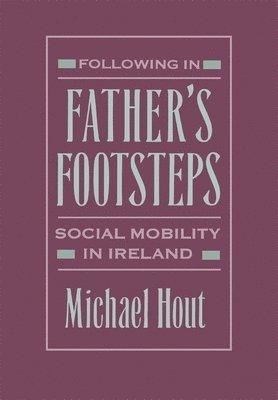
Following in Father’s Footsteps
Social Mobility in Ireland
Av Michael Hout
Inbunden, 1989
486 kr
Lägg i varukorg
This is the first systematic study of patterns of social mobility in Ireland. It covers a recent period—the 1960s—when Ireland was undergoing rapid economic growth and modernization. The author thus was able to test the widely accepted hypothesis that growth weakens class barriers. To his surprise …
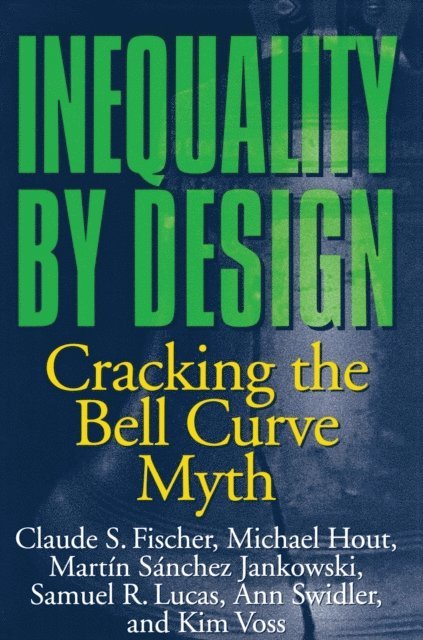
Inequality by Design
Cracking the Bell Curve Myth
Av Claude S. Fischer, Michael Hout m. fl.
Häftad, 1996
574 kr
Lägg i varukorg
As debate rages over the widening and destructive gap between the rich and the rest of Americans, Claude Fischer and his colleagues present a comprehensive new treatment of inequality in America. They challenge arguments that expanding inequality is the natural, perhaps necessary, accompaniment of …
Inequality by Design
Cracking the Bell Curve Myth
Av Kim Voss, Ann Swidler m. fl.
E-bok, 2020
785 kr
Lägg i varukorg
As debate rages over the widening and destructive gap between the rich and the rest of Americans, Claude Fischer and his colleagues present a comprehensive new treatment of inequality in America. They challenge arguments that expanding inequality is the natural, perhaps necessary, accompaniment of …
Mobility Tables
Av Michael Hout
Häftad, 1983
715 kr
Lägg i varukorg
Explains the most widely used methods for analyzing cross-classified data on occupational origins and destinations. Reviews classic definitions, models, and sources of mobility data, as well as elementary operations for analyzing mobility tables.