Michael Hutcheon – författare
Visar alla böcker från författaren Michael Hutcheon. Handla med fri frakt och snabb leverans.
4 produkter
4 produkter
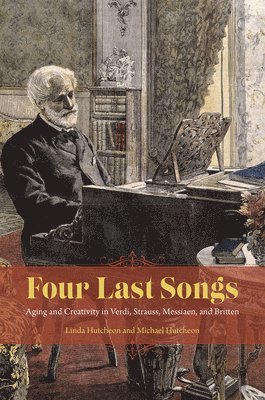
Four Last Songs
Aging and Creativity in Verdi, Strauss, Messiaen, and Britten
Inbunden, Engelska, 2015
822 kr
Skickas inom 5-8 vardagar
Aging and creativity can seem a particularly fraught relationship for artists, who often face age-related difficulties at a time when their audience's expectations of their talents are at a peak. In Four Last Songs, Linda and Michael Hutcheon explore this issue through close looks at those who created some of the world's most important and influential operas. Giuseppe Verdi (1813 - 1901), Richard Strauss (1864 - 1949), Olivier Messiaen (1908 - 92), and Benjamin Britten (1913 - 76) all wrote operas late in life, pieces that reveal radically individual responses to the challenges of growing older. Verdi's Falstaff, his only comedic success, combated the influence of Richard Wagner by introducing young Italian composers to a new model of national music. Strauss, on the other hand, struggling with personal and political problems in Nazi Germany, composed the self-reflexive Capriccio, a "life review" of opera and his own musical legacy. Though it exhausted him physically and emotionally, Messiaen finished at the age of seventy-five his first and only opera, Saint Francois d'Assise, which marked the religious and aesthetic pinnacle of his career.Britten, meanwhile, suffered from heart problems at the end of his career and raced against time, refusing to undergo surgery until he had completed his masterpiece, Death in Venice. For all four composers, age, far from sapping the power of creativity, provided impetus for some of their most impressive accomplishments. The diverse stories presented here provide unique insight into the attitudes and cultural discourse surrounding creativity, aging, and late style. With its deft treatment of these composers' final years and works, Four Last Songs provides a valuable look at the challenges - and opportunities - that present themselves as artists grow older.
180 kr
Skickas inom 5-8 vardagar
Aging and creativity can seem a particularly fraught relationship for artists, who often face age-related difficulties as their audience's expectations are at a peak. In Four Last Songs, Linda and Michael Hutcheon explore this issue via the late works of some of the world's greatest composers. Giuseppe Verdi (1813 1901), Richard Strauss (1864 1949), Olivier Messiaen (1908 92), and Benjamin Britten (1913 76) all wrote operas late in life, pieces that reveal unique responses to the challenges of growing older. Verdi's Falstaff, his only comedic success, combated Richard Wagner's influence by introducing young Italian composers to a new model of national music. Strauss, on the other hand, struggling with personal and political problems in Nazi Germany, composed the self-reflexive Capriccio, a "life review" of opera and his own legacy. Though it exhausted him physically and emotionally, Messiaen at the age of seventy-five finished his only opera, Saint Fran ois d'Assise, which marked the pinnacle of his career. Britten, meanwhile, suffering from heart problems, refused surgery until he had completed his masterpiece, Death in Venice.For all four composers, age, far from sapping their creative power, provided impetus for some of their best accomplishments. With its deft treatment of these composers' final years and works, Four Last Songs provides a valuable look at the challenges and opportunities that present themselves as artists grow older.
887 kr
Tillfälligt slut
Our modern narratives of science and technology can only go so far in teaching us about the death that we must all finally face. Can an act of the imagination, in the form of opera, take us the rest of the way? Might opera, an art form steeped in death, teach us how to die, as this provocative work suggests? In Opera: The Art of Dying a physician and a literary theorist bring together scientific and humanistic perspectives on the lessons on living and dying that this extravagant and seemingly artificial art imparts. Contrasting the experience of mortality in opera to that in tragedy, the Hutcheons find a more apt analogy in the medieval custom of contemplatio mortis--a dramatized exercise in imagining one's own death that prepared one for the inevitable end and helped one enjoy the life that remained. From the perspective of a contemporary audience, they explore concepts of mortality embodied in both the common and the more obscure operatic repertoire: the terror of death (in Poulenc's Dialogues of the Carmelites); the longing for death (in Wagner's Tristan and Isolde); preparation for the good death (in Wagner's Ring of the Nibelung); and suicide (in Puccini's Madama Butterfly). In works by Janacek, Ullmann, Berg, and Britten, among others, the Hutcheons examine how death is made to feel logical and even right morally, psychologically, and artistically--how, in the art of opera, we rehearse death in order to give life meaning.
214 kr
Skickas inom 10-15 vardagar
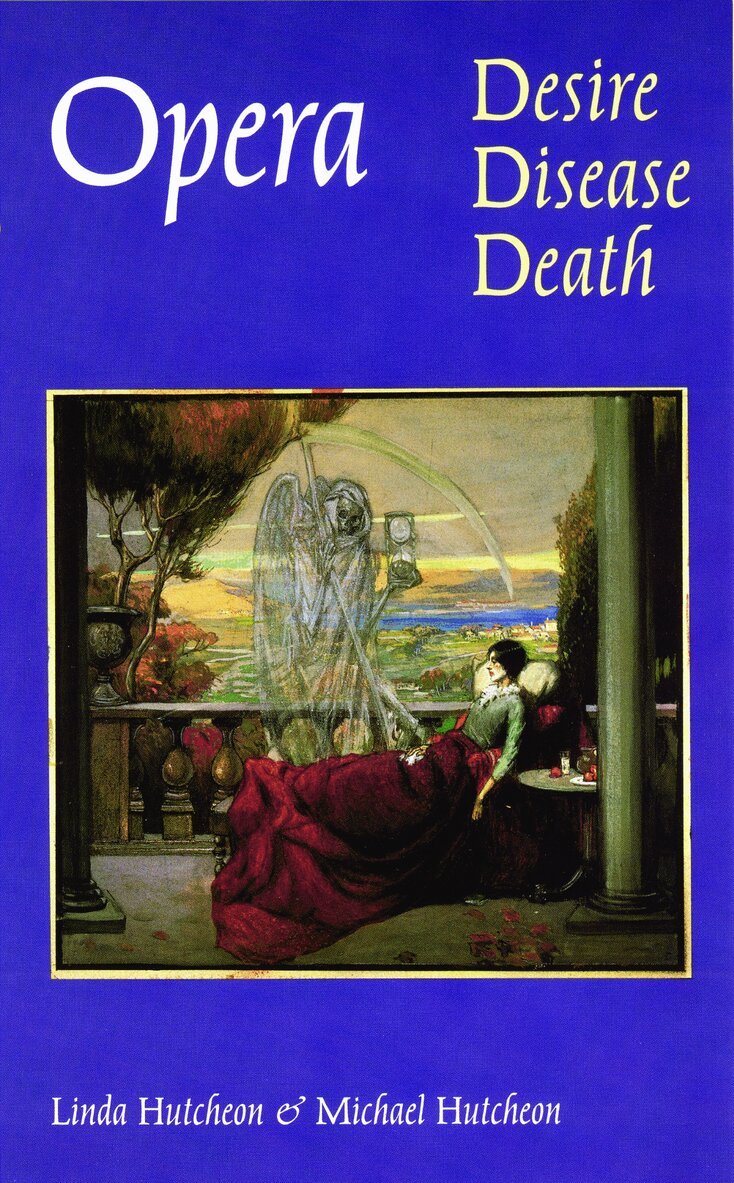
"A fascinating interdisciplinary study of the interconnected subtexts of erotic attraction, illness, and death in several 19th- and 20th-century operatic texts...This is an extraordinary examination of how opera uses the singing body--gendered and sexual--to give voice to the suffering person. Highly recommended."--Library Journal "The authors' argument is rich and complex; it draws on source, text and music; it is also medically sound. Opera is quintessentially an art of love and desire, of loss and suffering, of disease and death. Hutcheon and Hutcheon enrich our understanding of both content and context."--Opera News "Linda and Michael Hutcheon have done a fine job of pulling together medical and literary sources to make sense of the changing depiction of disease in opera...For opera lovers and for anyone interested in seeing good, synthetic reasoning at work, this is a fine study."--Publishers Weekly Linda Hutcheon is a professor of English and comparative literature at the University of Toronto. She is the author of, most recently, Irony's Edge: The Theory and Politics of Irony. Michael Hutcheon, M.D., is a professor of medicine at the University of Toronto.His many articles have appeared in American Review of Respiratory Disease and other journals.