Michael J. Golec - Böcker
Visar alla böcker från författaren Michael J. Golec. Handla med fri frakt och snabb leverans.
2 produkter
2 produkter
297 kr
Skickas inom 10-15 vardagar
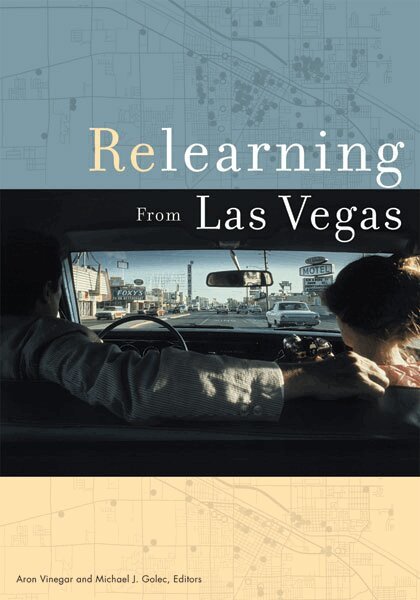
Evaluates for the first time one of the foundational works in architecture criticismImmediately on its publication in 1972, Learning from Las Vegas, by Robert Venturi, Denise Scott Brown, and Steven Izenour, was hailed as a transformative work in the history and theory of architecture, liberating those in architecture who were trying to find a way out of the straitjacket of architectural orthodoxies. Resonating far beyond the professional and institutional boundaries of the field, the book contributed to a thorough rethinking of modernism and was subsequently taken up as an early manifestation and progenitor of postmodernism. Going beyond analyzing the original text, the essays provide insights into the issues surrounding architecture, culture, and philosophy that have been influenced by Learning from Las Vegas. For the contributors, as for scholars in an array of fields, the pioneering book is as relevant to architectural debates today as it was when it was first published.Contributors: Ritu Bhatt, Karsten Harries, Jean-Claude Lebensztejn, John McMorrough, Katherine Smith, Dell Upton, Nigel Whitely.
210 kr
Skickas inom 7-10 vardagar
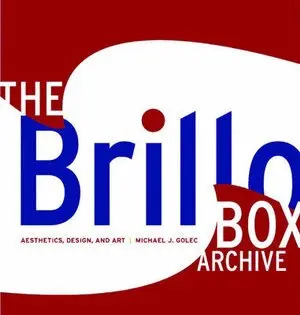
In The Brillo Box Archive, Michael J. Golec situates the image of the Brillo® box at the intersection of design, aesthetics, and art history, tracking the familiar household item from the kitchen, to the art world, and into a critical and theoretical discourse. This tripartite approach posits the Brillo® box as a record, an archive of mid-twentieth-century visual and industrial culture. While the Brillo® box was a fixture in American homes beginning in the early twentieth century, a 1961 redesign by James Harvey imbued the red and blue box with a new wave of Cold War-era patriotic values and the promise of domestic efficiency. The subsequent ubiquity of Harvey's apropos design thrust the quotidian object headlong into the realm of art, prompting both Arthur Danto and Andy Warhol to adopt the box as a source of philosophical and artistic inspiration. Golec's interdisciplinary approach to the archive of modernity investigates the progression from industrial design to artistic reinterpretation to aesthetic theory. Warhol's appropriation of Harvey's design, employing his considerable reputation and imagination to reanimate the cardboard containers as pieces of Pop art rather than mere storage devices, opened the door for contemporary art critic Arthur Danto's assertions about the relationship between artwork and referent, inspiration and appropriation. This unique and truly interdisciplinary work will appeal to scholars of art history, design history, visual culture studies, and aesthetics.