Michael J Puett - Böcker
Visar alla böcker från författaren Michael J Puett. Handla med fri frakt och snabb leverans.
4 produkter
4 produkter
309 kr
Skickas inom 5-8 vardagar
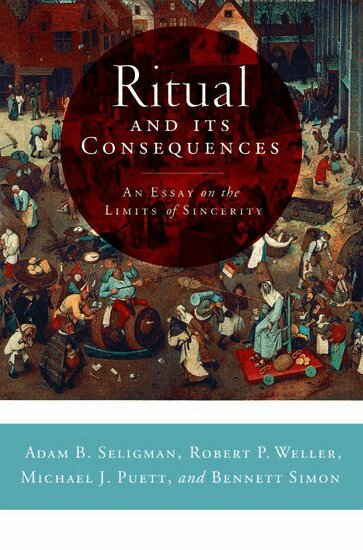
Ritual is usually understood as pointing to some essence beyond the ritual act itself. This ambitious interdisciplinary study offers a convincing challenge to this understanding. The authors begin by seeking to explain how the conventional idea arose in the first place. They locate its origin in a post-Protestant and post-Enlightenment vision of ritual action that emphasizes rituals as merely external signs of interior states. This approach, say the authors, is part of a far larger way of relating to the self and to the world, which they label "sincerity." But ritual, they say, is the very opposite of sincerity because it consists of stylized, repetitive interactions that construct an "as if" world, a world of role, propriety, play, and even fantasy, rather than pointing to the world as it actually is. In fact, that is ritual's great contribution. Ritual modes of behavior make a shared social world possible by helping to navigate between diverse people and groups, rather than attempting to transcend and efface boundaries. After setting forth this argument, the authors go on to build on it by showing how sincerity and ritual are stand-ins for two very different ways of being in the world. Although both modes are always present to some degree, modernity has deeply privileged sincerity and authenticity. And, they say, we are now paying a heavy price for this extreme and often totalizing projection of personality in contemporary political life.
Del 57 - Harvard-Yenching Institute Monograph Series
To Become a God
Cosmology, Sacrifice, and Self-Divinization in Early China
Häftad, Engelska, 2004
232 kr
Skickas inom 10-15 vardagar
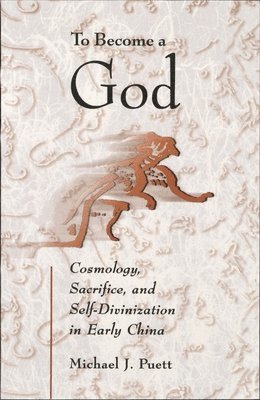
Evidence from Shang oracle bones to memorials submitted to Western Han emperors attests to a long-lasting debate in early China over the proper relationship between humans and gods. One pole of the debate saw the human and divine realms as separate and agonistic and encouraged divination to determine the will of the gods and sacrifices to appease and influence them. The opposite pole saw the two realms as related and claimed that humans could achieve divinity and thus control the cosmos. This wide-ranging book reconstructs this debate and places within their contemporary contexts the rival claims concerning the nature of the cosmos and the spirits, the proper demarcation between the human and the divine realms, and the types of power that humans and spirits can exercise.It is often claimed that the worldview of early China was unproblematically monistic and that hence China had avoided the tensions between gods and humans found in the West. By treating the issues of cosmology, sacrifice, and self-divinization in a historical and comparative framework that attends to the contemporary significance of specific arguments, Michael J. Puett shows that the basic cosmological assumptions of ancient China were the subject of far more debate than is generally thought.
243 kr
Kommande
A master class from four renowned Harvard professors—a physician, a theologian, an anthropologist, and a historian—on living wisely and well in uncertain times.The Practice of Wisdom is a sweeping exploration of the pursuit of beauty, goodness, and meaning amid uncertainty and change. Written by distinguished Harvard professors Davíd Carrasco, Arthur Kleinman, Stephanie Paulsell, and Michael Puett, and based on the authors’ acclaimed Harvard course, this resonant volume encourages us to understand wisdom not as a destination but as a way of being in the world.Spanning eras and cultures, The Practice of Wisdom encounters the vastness of the human drama, as diverse characters meet illness, upheaval, and moral trial through acts of imagination, faith, courage, and reflection. The authors draw from rabbinic tales and Confucian rituals; Christian art and Islamic pilgrimage; Aztec philosophy; Hindu temple architecture; Latin jazz; African dance; modern works of poetry, painting, and film; and their own deeply personal stories, revealing how the practice of wisdom joins body and mind, individual and community.At the heart of the quest for wisdom lies the image of the labyrinth, evoking both difficulty and grace: the turns through caregiving and bereavement; solitude and ritual; the eradication of self; and moments of revelation, spiritual and otherwise. The Practice of Wisdom concludes with a conversation with Wendy Doniger, the renowned scholar of Hinduism, whose reflections illuminate an enduring and ever-unfinished art of seeking.
Ambivalence of Creation
Debates Concerning Innovation and Artifice in Early China
Inbunden, Engelska, 2002
896 kr
Skickas inom 7-10 vardagar
As early as the Warring States period in China (fourth through third centuries B.C.), debates arose concerning how and under what circumstances new institutions could be formed and legitimated. But the debates quickly encompassed more than just legitimation. Larger issues came to the fore: Can a sage innovate? If so, under what conditions? Where did human culture originally come from? Was it created by human sages? Is it therefore an artificial fabrication, or was it based in part on natural patterns? Is it possible for new sages to emerge who could create something better?This book studies these debates from the Warring States period to the early Han (second century b.c.), analyzing the texts in detail and tracing the historical consequences of the various positions that emerged. It also examines the time's conflicting narratives about the origin of the state and how these narratives and ideas were manipulated for ideological purposes during the formation of the first empires.While tracing debates over the question of innovation in early China, the author engages such questions as the prevailing notions concerning artifice and creation. This is of special importance because early China is often described as a civilization that assumed continuity between nature and culture, and hence had no notion of culture as a fabrication, no notion that the sages did anything other than imitate the natural world. The author concludes that such views were not assumptions at all. The ideas that human culture is merely part of the natural world, and that true sages never created anything but instead replicated natural patterns arose at a certain moment, then came to prominence only at the end of a lengthy debate.