Michael K. Bourdaghs - Böcker
Visar alla böcker från författaren Michael K. Bourdaghs. Handla med fri frakt och snabb leverans.
9 produkter
9 produkter
246 kr
Skickas inom 7-10 vardagar
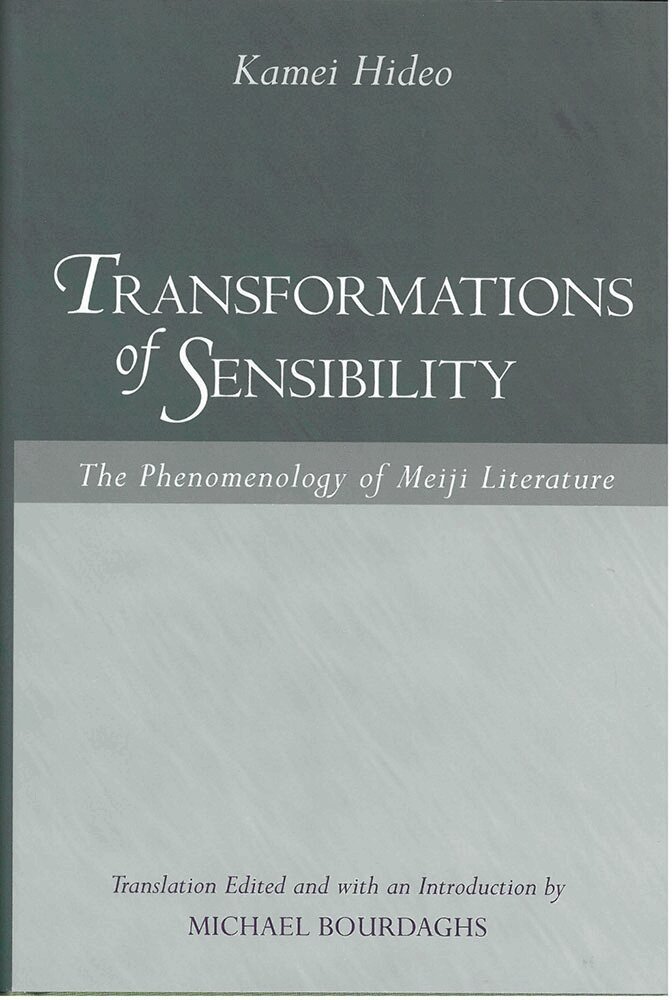
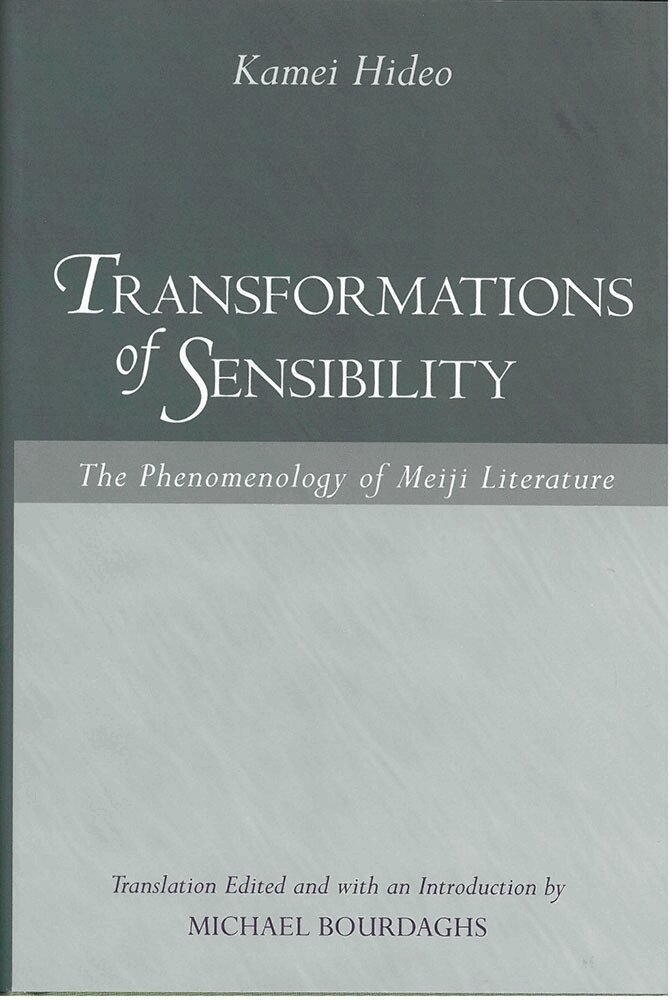
First published in Japan in 1983, this book is now a classic in modern Japanese literary studies. Covering an astonishing range of texts from the Meiji period (1868–1912), it presents sophisticated analyses of the ways that experiments in literary language produced multiple new—and sometimes revolutionary—forms of sensibility and subjectivity. Along the way, Kamei Hideo carries on an extended debate with Western theorists such as Saussure, Bakhtin, and Lotman, as well as with such contemporary Japanese critics as Karatani Kōjin and Noguchi Takehiko. Transformations of Sensibility deliberately challenges conventional wisdom about the rise of modern literature in Japan and offers highly original close readings of works by such writers as Futabatei Shimei, Tsubouchi Shōyō, Higuchi Ichiyō, and Izumi Kyōka, as well as writers previously ignored by most scholars. It also provides a new critical theorization of the relationship between language and sensibility, one that links the specificity of Meiji literature to broader concerns that transcend the field of Japanese literary studies. Available in English translation for the first time, it includes a new preface by the author and an introduction by the translation editor that explain the theoretical and historical contexts in which the work first appeared.
1 391 kr
Skickas inom 10-15 vardagar
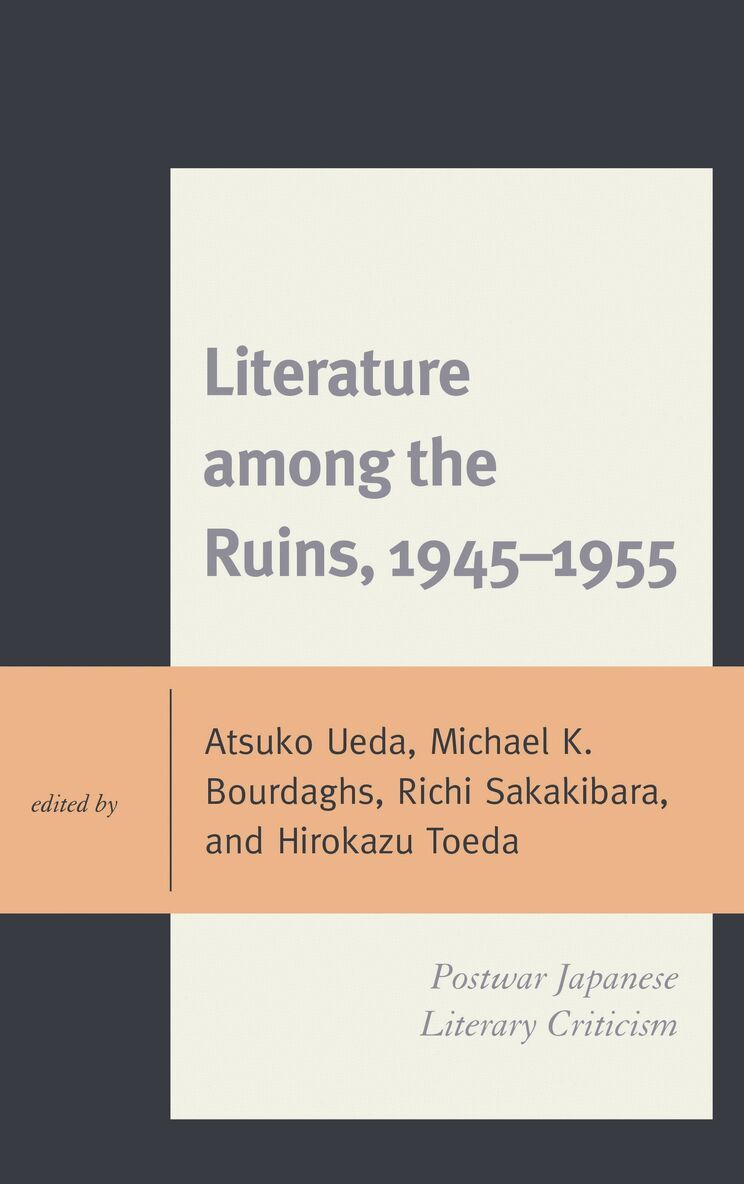
In the wake of the disaster of 1945—as Japan was forced to remake itself from “empire” to “nation” in the face of an uncertain global situation—literature and literary criticism emerged as highly contested sites. Today, this remarkable period holds rich potential for opening new dialogue between scholars in Japan and North America as we rethink the historical and contemporary significance of such ongoing questions as the meaning of the American occupation both inside and outside of Japan, the shifting semiotics of “literature” and “politics,” and the origins of what would become crucial ideological weapons of the cultural Cold War.The volume consists of three interrelated sections: “Foregrounding the Cold War,” “Structures of Concealment: ‘Cultural Anxieties,’” and “Continuity and Discontinuity: Subjective Rupture and Dislocation.” One way or another, the essays address the process through which new “Japan” was created in the postwar present, which signified an attempt to criticize and reevaluate the past. Examining postwar discourse from various angles, the essays highlight the manner in which anxieties of the future were projected onto the construction of the past, which manifest in varying disavowals and structures of concealment.
592 kr
Skickas inom 10-15 vardagar
In the wake of the disaster of 1945—as Japan was forced to remake itself from “empire” to “nation” in the face of an uncertain global situation—literature and literary criticism emerged as highly contested sites. Today, this remarkable period holds rich potential for opening new dialogue between scholars in Japan and North America as we rethink the historical and contemporary significance of such ongoing questions as the meaning of the American occupation both inside and outside of Japan, the shifting semiotics of “literature” and “politics,” and the origins of what would become crucial ideological weapons of the cultural Cold War.The volume consists of three interrelated sections: “Foregrounding the Cold War,” “Structures of Concealment: ‘Cultural Anxieties,’” and “Continuity and Discontinuity: Subjective Rupture and Dislocation.” One way or another, the essays address the process through which new “Japan” was created in the postwar present, which signified an attempt to criticize and reevaluate the past. Examining postwar discourse from various angles, the essays highlight the manner in which anxieties of the future were projected onto the construction of the past, which manifest in varying disavowals and structures of concealment.
776 kr
Skickas inom 10-15 vardagar
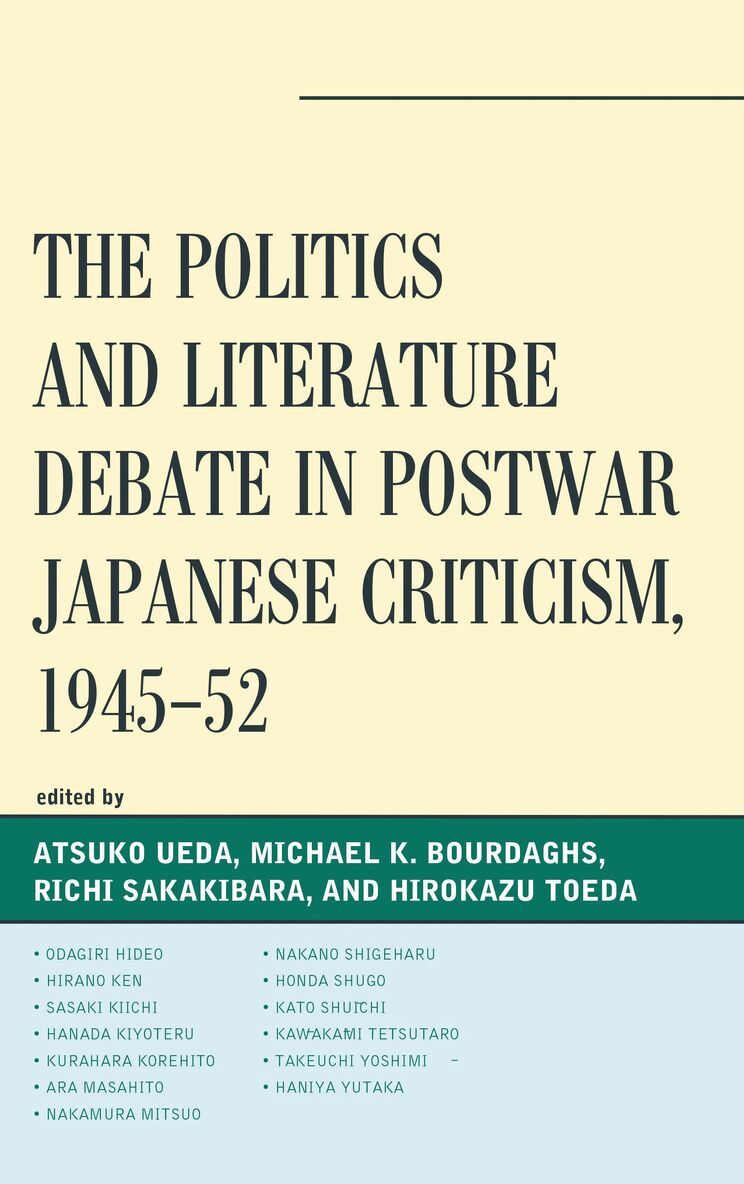
In the wake of its defeat in World War II, as Japan was forced to remake itself from “empire” to “nation” in the face of an uncertain global situation, literature and literary criticism emerged as highly contested sites. Today, this remarkable period holds rich potential for opening new dialogue between scholars in Japan and North America as we rethink the historical and contemporary significance of a number of important issues, including the meaning of the American occupation both inside and outside of Japan, the shifting semiotics of “literature” and “politics,” and the origins of crucial ideological weapons of the cultural Cold War.This collection features works by Japanese intellectuals written in the immediate postwar period. These writings—many appearing in English for the first time—offer explorations into the social, political, and philosophical debates among Japanese literary elites that shaped the country’s literary culture in the aftermath of defeat.
1 165 kr
Skickas inom 7-10 vardagar
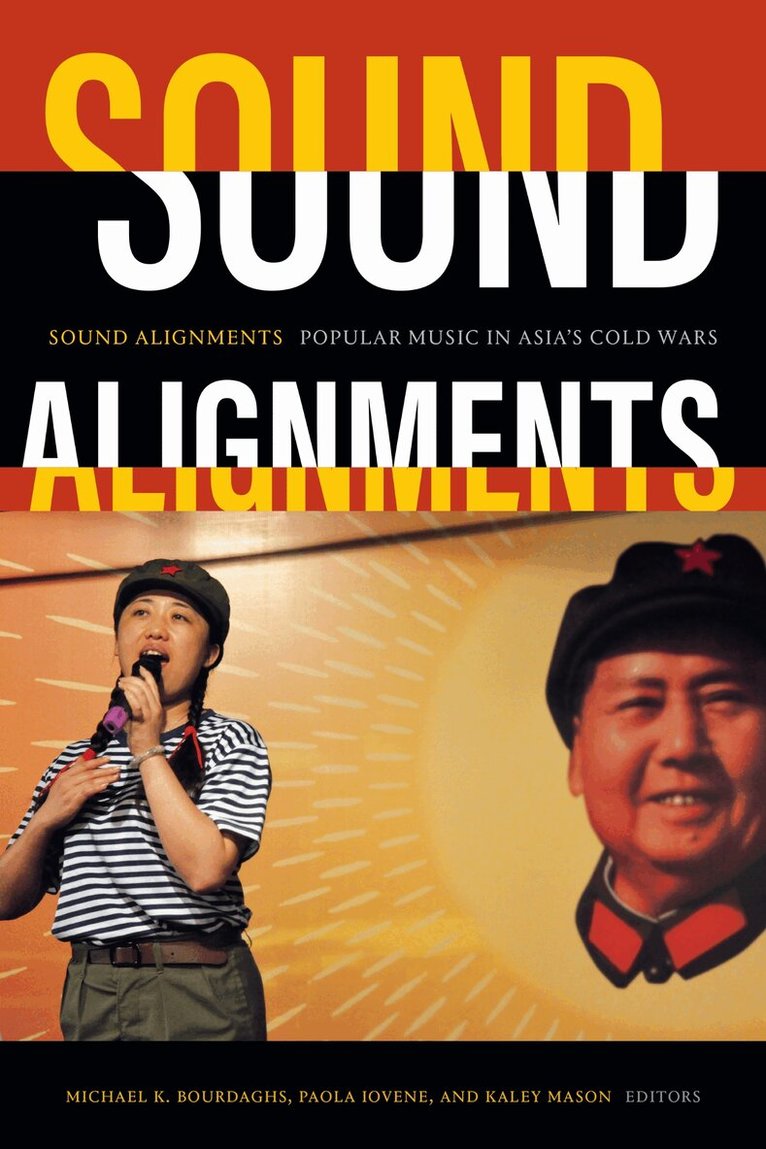
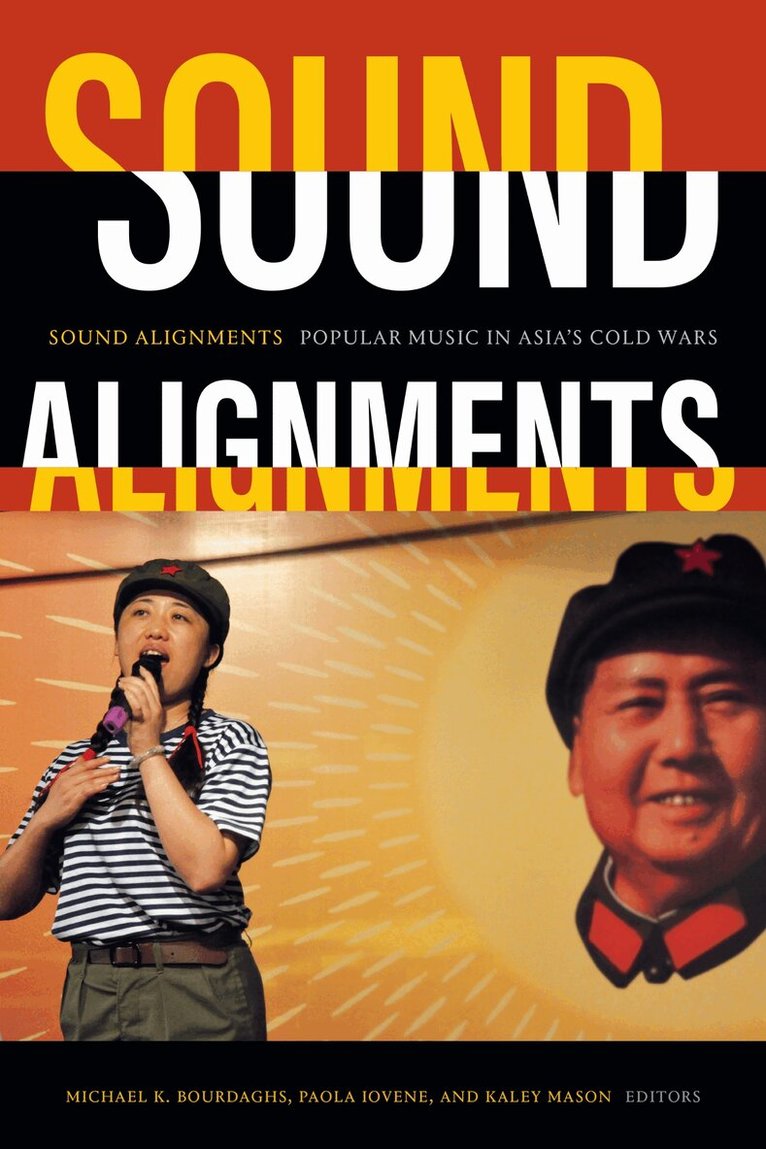
In Sound Alignments, a transnational group of scholars explores the myriad forms of popular music that circulated across Asia during the Cold War. Challenging the conventional alignments and periodizations of Western cultural histories of the Cold War, they trace the routes of popular music, examining how it took on new meanings and significance as it traveled across Asia, from India to Indonesia, Hong Kong to South Korea, China to Japan. From studies of how popular musical styles from the Americas and Europe were adapted to meet local exigencies to how socialist-bloc and nonaligned Cold War organizations facilitated the circulation of popular music throughout the region, the contributors outline how music forged and challenged alliances, revolutions, and countercultures. They also show how the Cold War's legacy shapes contemporary culture, particularly in the ways 1990s and 2000s J-pop and K-pop are rooted in American attempts to foster economic exchange in East Asia in the 1960s.Throughout, Sound Alignments demonstrates that the experiences of the Cold War in Asia were as diverse and dynamic as the music heard and performed in it.Contributors. MariÉ Abe, Michael K. Bourdaghs, Paola Iovene, Nisha Kommattam, Jennifer Lindsay, Kaley Mason, Anna Schultz, Hyunjoon Shin, C. J. W.-L. Wee, Hon-Lun (Helan) Yang, Christine R. Yano, Qian Zhang
303 kr
Skickas inom 7-10 vardagar
In Sound Alignments, a transnational group of scholars explores the myriad forms of popular music that circulated across Asia during the Cold War. Challenging the conventional alignments and periodizations of Western cultural histories of the Cold War, they trace the routes of popular music, examining how it took on new meanings and significance as it traveled across Asia, from India to Indonesia, Hong Kong to South Korea, China to Japan. From studies of how popular musical styles from the Americas and Europe were adapted to meet local exigencies to how socialist-bloc and nonaligned Cold War organizations facilitated the circulation of popular music throughout the region, the contributors outline how music forged and challenged alliances, revolutions, and countercultures. They also show how the Cold War's legacy shapes contemporary culture, particularly in the ways 1990s and 2000s J-pop and K-pop are rooted in American attempts to foster economic exchange in East Asia in the 1960s.Throughout, Sound Alignments demonstrates that the experiences of the Cold War in Asia were as diverse and dynamic as the music heard and performed in it.Contributors. MariÉ Abe, Michael K. Bourdaghs, Paola Iovene, Nisha Kommattam, Jennifer Lindsay, Kaley Mason, Anna Schultz, Hyunjoon Shin, C. J. W.-L. Wee, Hon-Lun (Helan) Yang, Christine R. Yano, Qian Zhang
1 241 kr
Skickas inom 7-10 vardagar
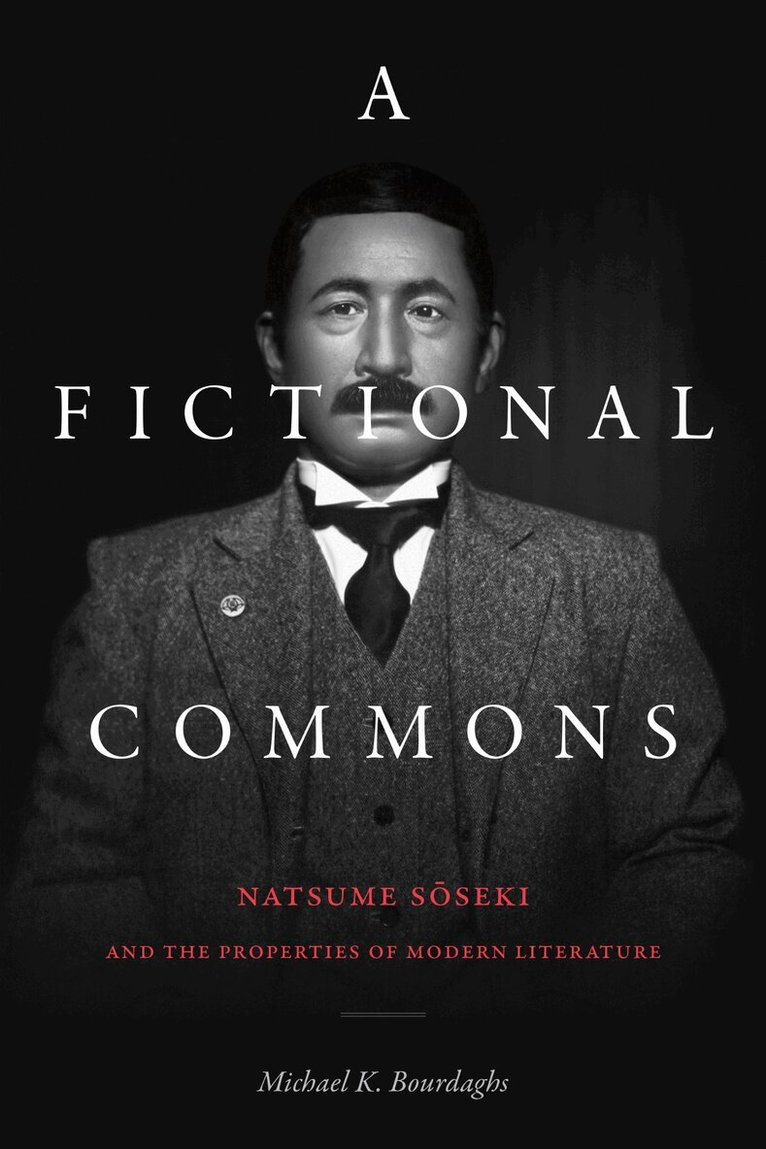
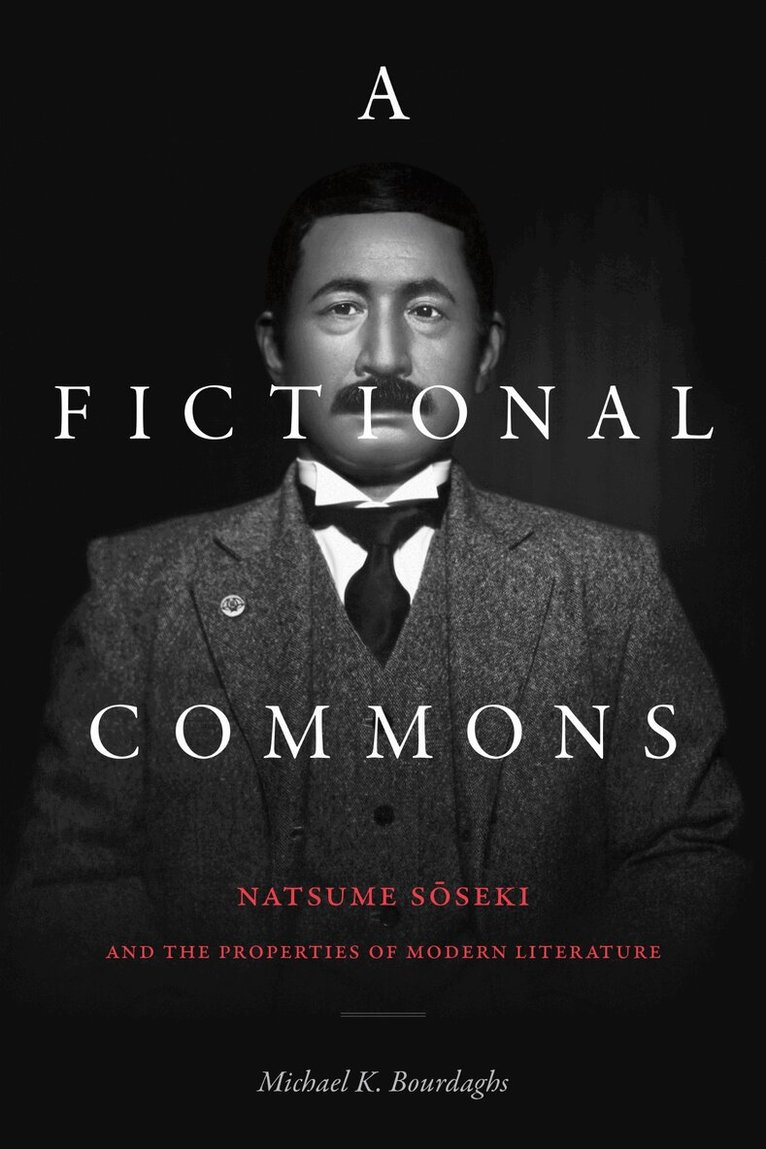
Modernity arrived in Japan, as elsewhere, through new forms of ownership. In A Fictional Commons, Michael K. Bourdaghs explores how the literary and theoretical works of Natsume Sōseki (1867–1916), widely celebrated as Japan's greatest modern novelist, exploited the contradictions and ambiguities that haunted this new system. Many of his works feature narratives about inheritance, thievery, and the struggle to obtain or preserve material wealth while also imagining alternative ways of owning and sharing. For Sōseki, literature was a means for thinking through-and beyond-private property. Bourdaghs puts Sōseki into dialogue with thinkers from his own era (including William James and Mizuno Rentarō, author of Japan’s first copyright law) and discusses how his work anticipates such theorists as Karatani Kōjin and Franco Moretti. As Bourdaghs shows, Sōseki both appropriated and rejected concepts of ownership and subjectivity in ways that theorized literature as a critical response to the emergence of global capitalism.
278 kr
Skickas
Modernity arrived in Japan, as elsewhere, through new forms of ownership. In A Fictional Commons, Michael K. Bourdaghs explores how the literary and theoretical works of Natsume Sōseki (1867–1916), widely celebrated as Japan's greatest modern novelist, exploited the contradictions and ambiguities that haunted this new system. Many of his works feature narratives about inheritance, thievery, and the struggle to obtain or preserve material wealth while also imagining alternative ways of owning and sharing. For Sōseki, literature was a means for thinking through-and beyond-private property. Bourdaghs puts Sōseki into dialogue with thinkers from his own era (including William James and Mizuno Rentarō, author of Japan’s first copyright law) and discusses how his work anticipates such theorists as Karatani Kōjin and Franco Moretti. As Bourdaghs shows, Sōseki both appropriated and rejected concepts of ownership and subjectivity in ways that theorized literature as a critical response to the emergence of global capitalism.
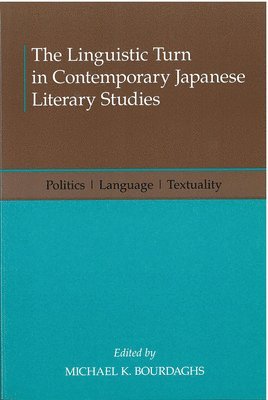
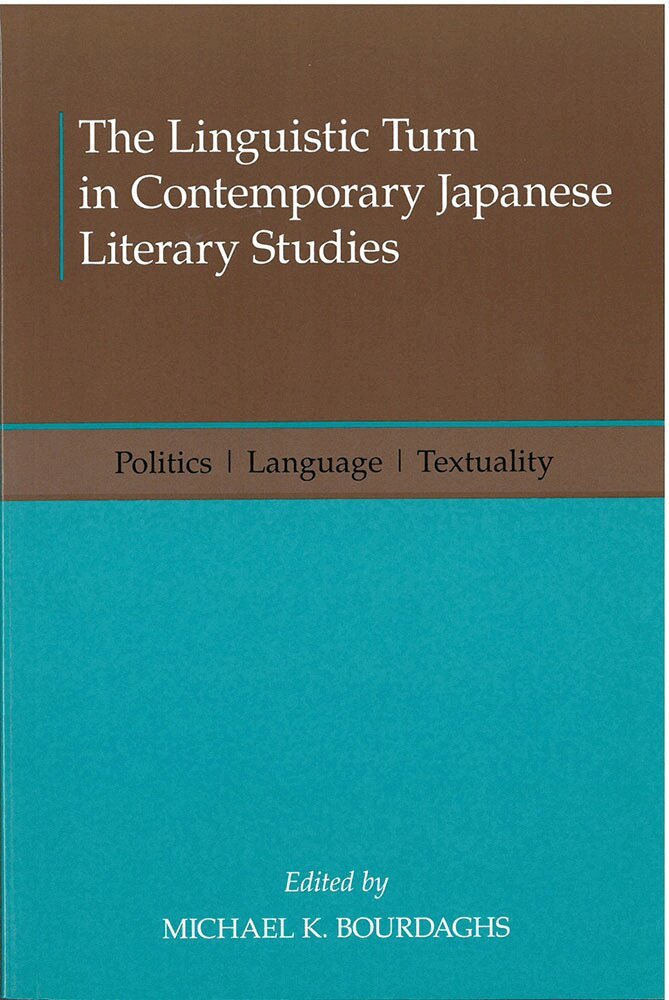
Linguistic Turn in Contemporary Japanese Literary Studies
Politics, Language, Textuality
Häftad, Engelska, 2010
302 kr
Skickas inom 7-10 vardagar
The 1970s and 1980s saw a revolution in Japanese literary criticism. A new generation of scholars and critics, many of them veterans of 1960s political activism, arose in revolt against the largely positivistic methodologies that had hitherto dominated postwar literary studies. Creatively refashioning approaches taken from the field of linguistics, the new scholarship challenged orthodox interpretations, often introducing new methodologies in the process: structuralism, semiotics, and phenomenological linguistics, among others. The radical changes introduced then continue to reverberate today, shaping the way Japanese literature is studied both at home and abroad. The Linguistic Turn in Contemporary Japanese Literary Studies is the first critical study of this revolution to appear in English. It includes translations of landmark essays published in the 1970s and 1980s by such influential figures as Noguchi Takehiko, Kamei Hideo, Mitani Kuniaki, and Hirata Yumi. It also collects nine new essays that reflect critically on the emergence of linguistics-based literary criticism and theory in Japan, exploring both the novel possibilities such theory created and the shortcomings that could not be overcome. Scholars from a variety of disciplines and fields probe the political and intellectual implications of this transformation and explore the exciting new pathways it opened up for the study of modern Japanese literature.